Trump clashes ahead as new Supreme Court term begins
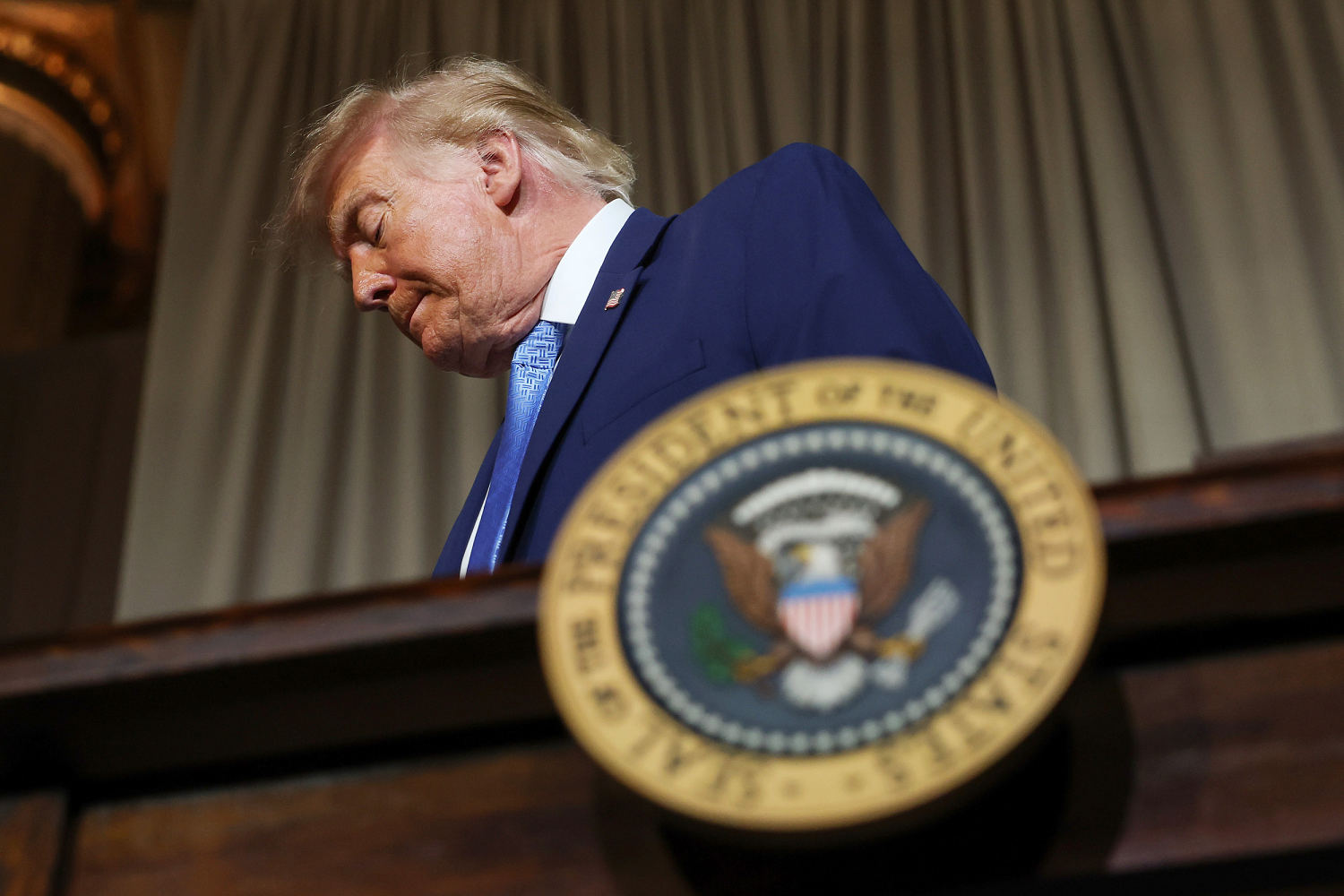
WASHINGTON — President Donald Trump’s harsh criticisms may still be ringing in the ears of Supreme Court justices when they return to the bench for a new nine-month term next week.
In the final months of its previous term and over its summer break, the conservative-majority court, which includes three Trump appointees, ruled against Trump on some of the issues he holds most dear.
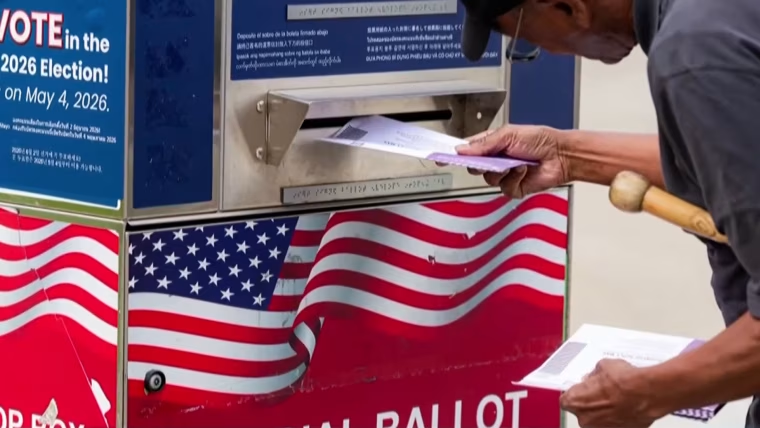
The justices blocked his sweeping tariffs, ended his plan to curb birthright citizenship, prevented him from firing a member of the Federal Reserve and blocked his plan to exert control over mail-in ballots ahead of this fall’s election.
The Supreme Court has “let our country down,” Trump said in a Truth Social post after the mail-in ballots ruling. The very justices he appointed — Neil Gorsuch, Brett Kavanaugh and Amy Coney Barrett — are “a shell of their previous selves,” he added. The president made similar claims in a Time magazine interview published Thursday, saying: “I gave them the position of a lifetime, and they vote against me often.”
04:27
The president still desperately needs justices’ votes when key parts of his agenda come before the court in the coming months, in particular multiple cases arising from his hard-line immigration crackdown.
The court could also weigh in on his administration’s ban on transgender people in the military, which the justices in a previous decision allowed to go into effect. Another appeal is pending in Trump’s effort to overturn a defamation verdict against him in a case brought by writer E. Jean Carroll, who accused him of sexual abuse. The court in June rejected an earlier Trump appeal concerning a separate case that Carroll won.
Trump’s complaints about the court mask the fact that the administration has had plenty of wins, in particular in emergency cases that reach the court via what is known colloquially as the “shadow docket.”
The court’s interim rulings have allowed the administration to move forward with immigration enforcement, restructuring of the federal government and even construction of a ballroom at the White House in emergency rulings while litigation continues.
Lauren Bis, a White House spokesperson, said in a statement that overall “the administration’s policies have been consistently upheld as lawful.”
“President Trump will not stop implementing the America First agenda that he was elected on,” she added.
The court resumes oral arguments Monday as it formally opens the new session, which runs until June, by hearing a major case about whether cities and counties can sue oil companies for the impacts of climate change.
Those who regularly challenge Trump policies in court say their recent wins have them hopeful about this term, showing that even though the court has a 6-3 conservative majority, it is not a rubber stamp for the president.
“Even with this court, you can go too far beyond the bounds,” said Norm Eisen, co-founder of Democracy Defenders Fund, which has challenged Trump on multiple fronts. The justices would not, for example, “allow Trump to hijack mail-in voting,” he added.
Cecillia Wang, national legal director of the American Civil Liberties Union, was similarly relieved by some of the court’s recent decisions.
“I think the court has proved it is willing to stand up to the Trump administration’s excesses. And that gives us confidence going into this term,” she said.
Two key parts of Trump’s immigration policy are already lined up for Supreme Court review. In one, the justices will consider the administration’s ongoing efforts to deport immigrants to “third countries” they have no previous connection to if they cannot be returned to their home nations. The Supreme Court already allowed the policy to go ahead twice, suggesting the administration has a good chance of prevailing.
The other case concerns the administration’s attempt to detain indefinitely thousands of people in deportation proceedings, a break from previous administrations, which would release those immigrants while their cases were adjudicated.
Other Trump-related cases are likely to be added to the docket in time to be ruled on by next summer, with several appeals already pending.
Among them is another potentially significant immigration case arising from the Trump administration’s shutdown of asylum claims at the U.S.-Mexico border. Lower courts ruled against the administration, although the policy currently remains in effect.
Robert Luther III, who served in the White House during the first Trump term and is now a professor at Antonin Scalia Law School at George Mason University, said that, as with the previous term, much of the focus will be on Trump’s broad interpretation of executive power.
“He’s always staked out an aggressive view of executive power. The court’s relationship with that view continues to unfold. Some of those cases he is winning and some he is losing,” he added.
Although the court has been on its customary summer recess since the end of June, the justices have remained busy dealing with cases brought on the shadow docket. Such cases are typically dealt with swiftly, with no oral arguments or detailed written opinions.
The shadow docket has increasingly become a key part of the court’s operations in recent years, with some of the rulings proving more consequential than those on the court’s traditional docket, in which the justices hear arguments and spend months deliberating before issuing long rulings.
During the summer, the Trump administration filed seven shadow docket requests on a variety of issues. The court ruled for Trump on four of them and against him once, while one was withdrawn and one is pending.
The administration’s most high-profile win of the summer recess allowed Trump to continue with his construction of a ballroom at the White House.
But his single loss on his mail-in ballots executive order was a significant one, prompting some of his strongest criticism of the justices to date.
Luther said the justices are likely able to put the president’s colorful rhetoric to one side.
“I think the justices know the president is a politician,” he added. “I don’t think they take it personally.”
KioskNews shows a cleaned-up reading view extracted from the publisher’s page — the original always lives on their site, not ours.