Deepathoon: Why the Supreme Court ordered the Karthigai Deepam to be lit on November 28
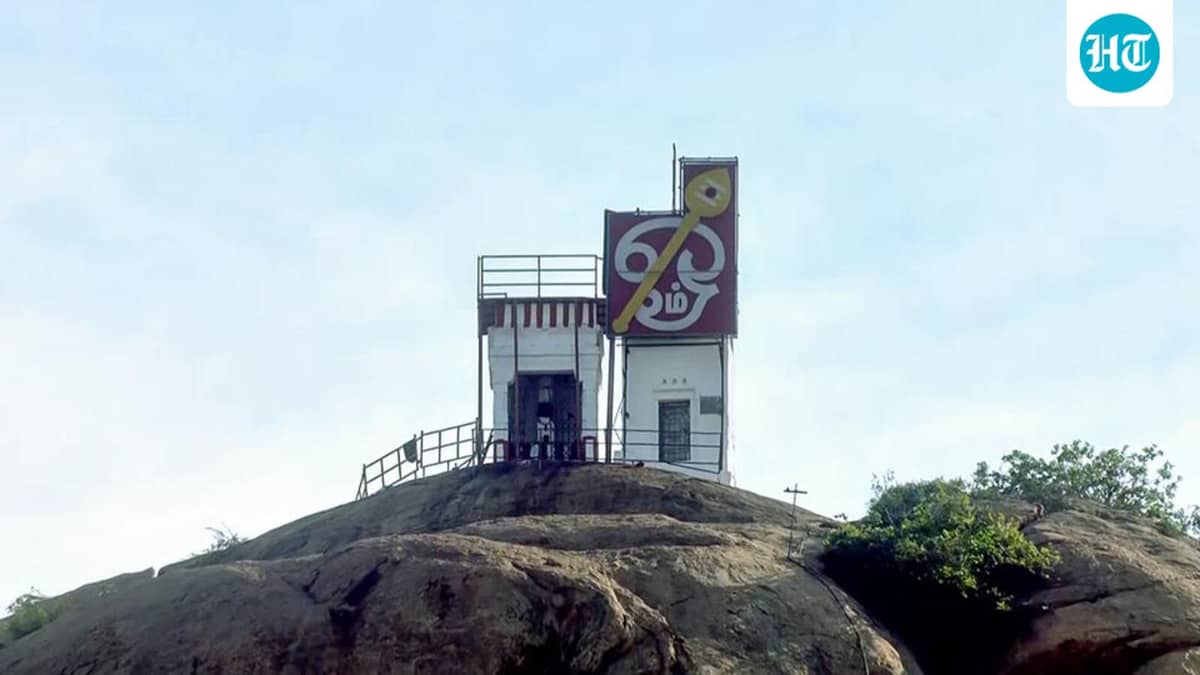
The Supreme Court’s “extraordinary intervention” in the Thiruparankundram Karthigai Deepam dispute — suspending the temple’s Board of Trustees, appointing judicial receivers to take over its administration and handing security of the temple and the hill to the CRPF — followed what it described as a “complete failure” of the authorities entrusted with implementing its November 20 order.
In a detailed order passed on Friday, November 27, a bench of Justices Aravind Kumar and VM Pancholi held that the conduct of the Tamil Nadu government, Madurai district administration and temple authorities prima facie amounted to “brazen and wilful disobedience” of its directions and a “flagrant disregard” of an undertaking given before the Madras High Court.
The Court said the sequence of events suggested that executive authorities had acted at the “dictates of their political superiors”. It said it was necessary to “unearth the alleged interference to preserve the dignity of the Court and the administration of justice”.
Why did the Supreme Court order the Deepam to be lit at Deepathoon on November 28?
The Court acknowledged that the auspicious occasion for which it had originally directed the lighting of the lamp — November 24, when the “Krittika nakshatra coincided with Pournami (full moon)” — had passed because the authorities failed to implement its November 20 order.
However, devotees who approached the Court argued that the Deepam should still be lit at Deepathoon during the Tamil month of Karthigai. The bench agreed, holding that the significance of the festival warranted lighting the lamp within the month.
“The applicants in these proceedings have submitted that the Deepam should nevertheless be lit during the month of Karthigai itself. We find force in the said contention,” the Supreme Court said.
It directed the newly appointed receivers to ensure that the Karthigai Deepam was lit at Deepathoon on November 28, at a time decided in consultation with the sthanikars.
The Court initially asked the receivers to use the flame lit at the Uchipillaiyar Mandapam on November 24, provided it was still burning. However, after Senior Advocate Guru Krishan Kumar informed the bench that the flame had gone out, it directed the receivers to make fresh arrangements to light the Deepam in accordance with its November 20 order.
Why did the Court suspend the temple board and appoint receivers?
The bench found that the Board of Trustees had attempted to “overreach” its November 20 order by adopting a resolution to light the lamp at Uchipillaiyar Mandapam, where it had traditionally been lit, instead of at Deepathoon.
The Court took particular exception to the Board’s assertion that the temple traditions should be brought to its notice. It said it had heard both sides at length on the traditions before passing its November 20 order. The Board, which had neither appeared before the Supreme Court nor challenged its January 6 order, had effectively “questioned the Court’s understanding of the traditions” while refusing to implement its directions, it said.
The resolution, the Court held, disclosed “wilful and flagrant disobedience” of its interim order and a deliberate attempt to undermine its authority.
“An executive authority that presumes to decide whether an order of this Court deserves to be obeyed arrogates to itself a power the Constitution has never conferred upon it,” the Court said.
It also held that the Board’s conduct demonstrated a complete failure to administer the temple. While the protection of public institutions “ordinarily fell within the responsibilities of the authorities under the applicable State legislation”, the Court said its intervention was a “measure of last resort” after those entrusted with the temple’s administration failed to discharge their duties.
It consequently suspended the functioning of the Board of Trustees and appointed former Meghalaya High Court Chief Justice S Vaidyanathan and former Madras High Court judge V Parthiban as joint receivers to take “immediate charge” of the temple administration.
The receivers have been directed to administer the temple in accordance with its traditions and rituals, preserve its sanctity and comply with the applicable Act, rules and regulations.
Why did the Supreme Court hand over security to the CRPF?
The Court said the State police administration had failed to implement its directions. It noted that police personnel had prevented Archaeological Survey of India officials from proceeding beyond the dargah to reach Deepathoon and ascertain the location for lighting the lamp.
Holding that the police administration could no longer be entrusted with implementing its directions, the bench ordered the Commandant of the CRPF, Chennai, to immediately take over security at the temple and across the entire hill.
The CRPF must ensure the “peaceful functioning of both the temple and the dargah and enable devotees at both places of worship to perform their respective religious rituals without obstruction,” the Court said.
The State police will continue to provide security to the surrounding area. The Court directed the Tamil Nadu director general of police, Madurai police commissioner and superintendent of police to ensure a smooth transfer of security arrangements to the CRPF.
Why did the Court issue contempt notices to senior officials?
The Supreme Court issued contempt show-cause notices to 13 people, including the Tamil Nadu chief secretary, the director general of police and Madurai collector Nishant Krishna.
The bench said the sequence of events prima facie suggested that “executive authorities had acted at the dictates of their political bosses”.
It directed the chief secretary to file an affidavit detailing communications between officials before the lighting of the Deepam, including “emails, telephone calls, exchanged messages and call detail records”. The chief secretary must also appear personally before the Court.
The bench said it was not satisfied with the Madurai collector’s preliminary report and apology, and had yet to ascertain whether the account of events in the report reflected what had actually transpired. It said it was prima facie satisfied that its November 20 order had been wilfully disobeyed, despite the undertaking given before the Madras High Court to comply with it in letter and spirit.
The Court was particularly critical of the collector’s report.
“However, it would suffice to state that the stand of the Collector reminds us of the saying, ‘You play dead, and I’ll pretend to grieve.’ This report prima facie is nothing but shredding crocodile tears and the preliminary report is taken on record for statistical purposes only,” it said.
The Court added that the extraordinary intervention could have been avoided had the authorities “demonstrated bona fide compliance and purged the contempt”.
The matter will be heard next on December 15.
KioskNews shows a cleaned-up reading view extracted from the publisher’s page — the original always lives on their site, not ours.