Ken Ashigbey rejoins Kofi Bentil’s Facebook post on Gold Fields
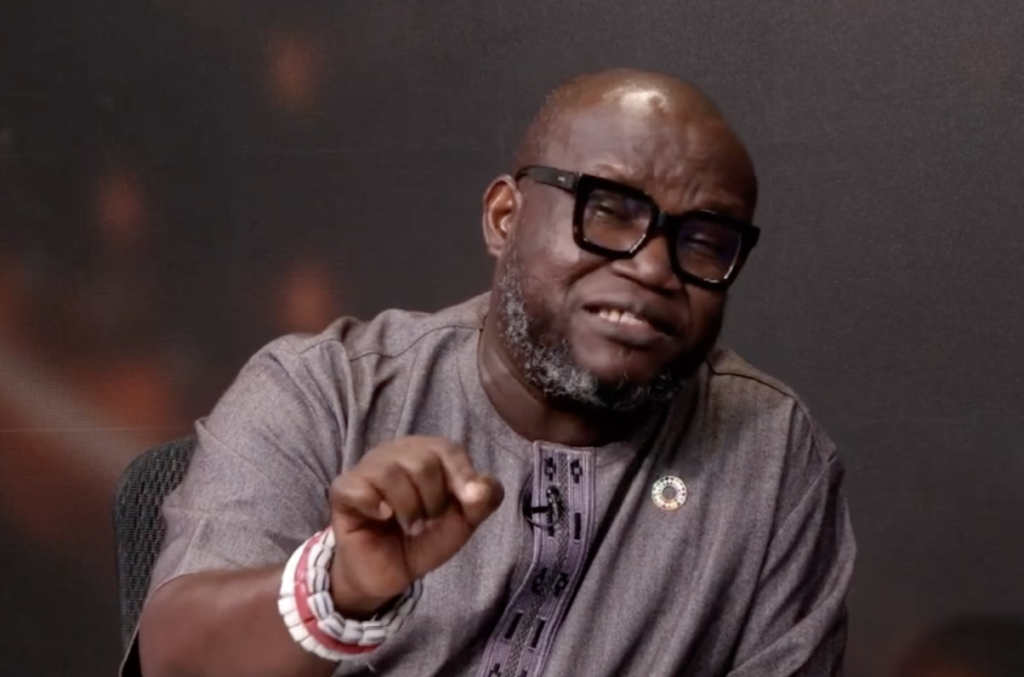
Kofi Bentil, my brother, I have responded to the issues you raised, but let me reiterate a few important points. We must be careful not to present selective information in a manner that creates a misleading impression.
First, on the US$30,000 purportedly paid for the mining lease. Ghana has historically used standard mining lease agreements, and Gold Fields' lease was not materially different from those issued to other mining companies at the time. The consideration provision in the lease must therefore be understood within that context. It is misleading to isolate the US$30,000 figure and present it as the total amount Gold Fields paid to acquire and maintain its mining rights.
There are several statutory payments associated with obtaining and maintaining mining rights, including application and processing fees, annual mineral rights fees, ground rent and other applicable charges. These obligations are not necessarily captured in the consideration clause of the standard lease. We must distinguish between contractual consideration, statutory payments and subsequent investments rather than treating one figure as representing the entire financial commitment.
For context, Gold Fields paid approximately US$3 million in 1992/93 to access geological and technical information on the then underground Tarkwa Mine, which was loss-making and producing approximately 12,000–24,000 ounces of gold annually. I am not suggesting that this payment constituted consideration for the lease. My point is that it formed part of the wider financial commitments and risks associated with evaluating and developing the mining opportunity.
Gold Fields paid an additional amount for the State Gold Mining Corporation (SGMC) Tarkwa Mine assets, based on an independent valuation.
Second, on investments made to develop the mine. You are right that these investments were made in Gold Fields' commercial interest. I have never suggested otherwise. But that does not mean Ghana and other stakeholders have not benefited from them.
What Gold Fields initially encountered was an underground mining operation. The company subsequently invested substantial capital in establishing the surface mining potential and developing the large-scale operation we know today. This included relocating affected surface rights holders to newly developed communities, including New Atuabo, which is among the better-planned residential areas in Tarkwa.
These investments benefited Gold Fields, certainly, but they also created value for Ghana through taxes, royalties, the State's 10% free-carried interest, employment, local procurement and economic opportunities for host communities and other stakeholders.
Again, I am not arguing that development expenditure constitutes payment for the mining lease. I am arguing that any assessment of the economic value generated from mining must account for the capital invested, the risks assumed and the benefits distributed among stakeholders. This principle applies not only to Gold Fields but to all mining companies licensed by the Minerals Commission.
Your singling out of Gold Fields creates the erroneous impression that the Company was treated differently from other mining companies.
Third, on the revenues generated over the past 30 years. When you refer to the billions of dollars generated by the mine, we must distinguish between gross revenue and profit. The purported US$30billion (this figure is doubtful and cannot be from any authentic source) cannot represent profit made by Gold Fields.
Assuming that this was even revenue (which I insist it is not) it is not money that goes into the pockets of mining companies. Mining operations incur substantial capital and operating costs, including wages, energy, equipment, maintenance, financing, environmental management and payments to the State. These expenses must be accounted for before profit is made and part of it distributed as dividend.
If we want to assess how much value Gold Fields has derived from the mine, let us examine the actual profits, capital invested, taxes, royalties, dividends and other economic contributions over the period. That would provide a more meaningful and balanced assessment than comparing cumulative gross revenue with an isolated figure in a lease agreement.
Nearly three-quarters (about 74 cents of every dollar) of the value generated by Gold Fields stays in Ghana through corporate taxes, royalties, government dividends, employee compensation, local procurement and community investment.
Fourth, on reclamation. You ask who will reclaim the land after 30 years. The responsibility for reclamation rests with the mining company, subject to regulatory oversight. Responsible mining companies, including members of the Ghana Chamber of Mines, undertake progressive or concurrent reclamation during operations and are required to make financial provisions for mine closure and rehabilitation.
These provisions include reclamation bonds and other financial assurances, which may comprise cash-backed and insurance-backed instruments. The Minerals Commission and Environmental Protection Authority are the appropriate institutions to verify the specific arrangements and compliance obligations applicable to Gold Fields.
That which you ignorantly refer to as a ‘hole’ is actually an open pit and no different from other open pit operations in Ghana and around the world.
Since 2016, Gold Fields has invested approximately US$46million in progressive rehabilitation, with annual rehabilitation expenditure averaging US$4.2million.
As part of its reclamation obligations, Gold Fields has had a Reclamation Security Agreement (RSA) with the Government, through the EPA, since 2003.
- Under the RSA, the mine’s closure liability is calculated annually based on disturbed areas that cannot be reclaimed immediately due to operational requirements. Financial provision for the calculated liability is secured through cash bonds and bank guarantees held with a bank in Ghana.
- These bonds are reviewed and adjusted annually based on the closure liability estimated at the end of each year.
- The Company’s closure liability was estimated at US$82.47 million in 2023 and US$92.74 million in 2024. As of 31st December 2025, the closure liability was estimated at US$107.19 million.
- The mine’s current closure security bond with Absa Bank Ghana Limited is US$83.9 million, comprising US$36.78 million in bank guarantees and US$47.12 million in cash.
- Gold Fields is currently adjusting the bond to align with the December 2025 liability of US$107.19 million.
- To ensure adequate funding, the mine sets aside US$500,000 each month toward its eventual closure liability.
Kofi, my brother, I welcome scrutiny of mining agreements and the value Ghana derives from its mineral resources. Indeed, we must continuously ask whether Ghana and its citizens are receiving a fair share of the wealth generated from our mineral resources. But that discussion must be grounded in the full facts, sound economic analysis and an accurate understanding of how mining leases and investments work.
We can legitimately debate whether Ghana has received sufficient value from its mineral resources without misrepresenting what mining companies have paid, invested or contributed.
In fact, this is precisely the kind of discussion we are having at the Ghana Chamber of Mines. We believe the conversation must go beyond how much revenue the State collects to how effectively that revenue is managed and translated into sustainable development, improved livelihoods and lasting economic opportunities for Ghanaians.
We must also confront the question of transgenerational equity. Our mineral resources are finite, and the benefits of their extraction must not end with our generation. We owe it to generations yet unborn to ensure that today's mineral wealth is converted into enduring national assets, productive investments and sustainable prosperity. I would welcome the opportunity to engage you and others on how we can collectively advance this important national agenda.
This brings me to the fundamental issue of security of tenure and the renewal of the Gold Fields mining lease.
Ghana must be able to attract and retain responsible long-term investment while ensuring that its mineral resources deliver increasing value to its people. These objectives are not mutually exclusive. Indeed, achieving both requires a predictable regulatory environment, respect for contractual obligations and consistency in the application of our laws.
Mining is a capital-intensive, high-risk and long-term business. Investors commit substantial resources on the understanding that the legal and regulatory framework governing their investments will be applied fairly and consistently. Where our laws provide that a mining lease shall be renewed upon the holder materially satisfying the prescribed conditions, we must respect that framework. Otherwise, we risk undermining the very investment confidence on which the industry's future depends.
Our position at the Chamber is that Gold Fields, having materially complied with the terms of its lease, should have its lease renewed in accordance with the law. However, renewal should not mean simply perpetuating every condition of the original agreement. It presents an opportunity to agree on appropriate terms that reflect today's economic, environmental and social realities, consistent with the applicable legal framework.
Such terms should secure greater and more sustainable benefits for Ghana and Ghanaians, including host communities, while providing Gold Fields with the certainty required to continue investing, creating jobs and generating economic value.
The choice is not between protecting Ghana's interests and respecting investors' rights. We must do both.
That is how we build a credible, competitive and responsible mining jurisdiction. It is also how we ensure that the mineral wealth entrusted to our generation becomes a foundation for the prosperity of generations yet unborn.
Kofi, let us have this debate. Let us challenge the numbers, interrogate the agreements and demand greater value for Ghana. But let us do so on the basis of evidence, fairness and a shared commitment to our country's long-term development.
Ultimately, our common objective should be a mining industry that works for Ghana, its people, responsible investors and future generations.
What Kofi Bentil said :
My dear brother Ken Edem Ashigbi,
you refer to payments to acquire information FOR THE BENEFIT OF GOLFIELDS. but you want us to believe it was part of payment for the mine?!! That’s wrong
You refer to investments to develop the mine, FOR THE BENEFIT OF GOLFIELDS!!’ And you want us to consider that as payment for the mine??!
All miners pay these so why are you suggesting these are payments to acquire the mine?? How would goldfields have made their 30 billion without obtaining the information or making the investments??
And tell me who will reclaim the land goldfields have gutted for 30 years ??
https://web.facebook.com/603671513/posts/10166217298111514/?rdid=g6nbPyvyn3rSmncZ
DISCLAIMER: The Views, Comments, Opinions, Contributions and Statements made by Readers and Contributors on this platform do not necessarily represent the views or policy of Multimedia Group Limited.
Tags:
DISCLAIMER: The Views, Comments, Opinions, Contributions and Statements made by Readers and Contributors on this platform do not necessarily represent the views or policy of Multimedia Group Limited.
KioskNews shows a cleaned-up reading view extracted from the publisher’s page — the original always lives on their site, not ours.