Massive Arab-Israeli Poll Turnout, Netanyahu's "End To Jewish State" Charge
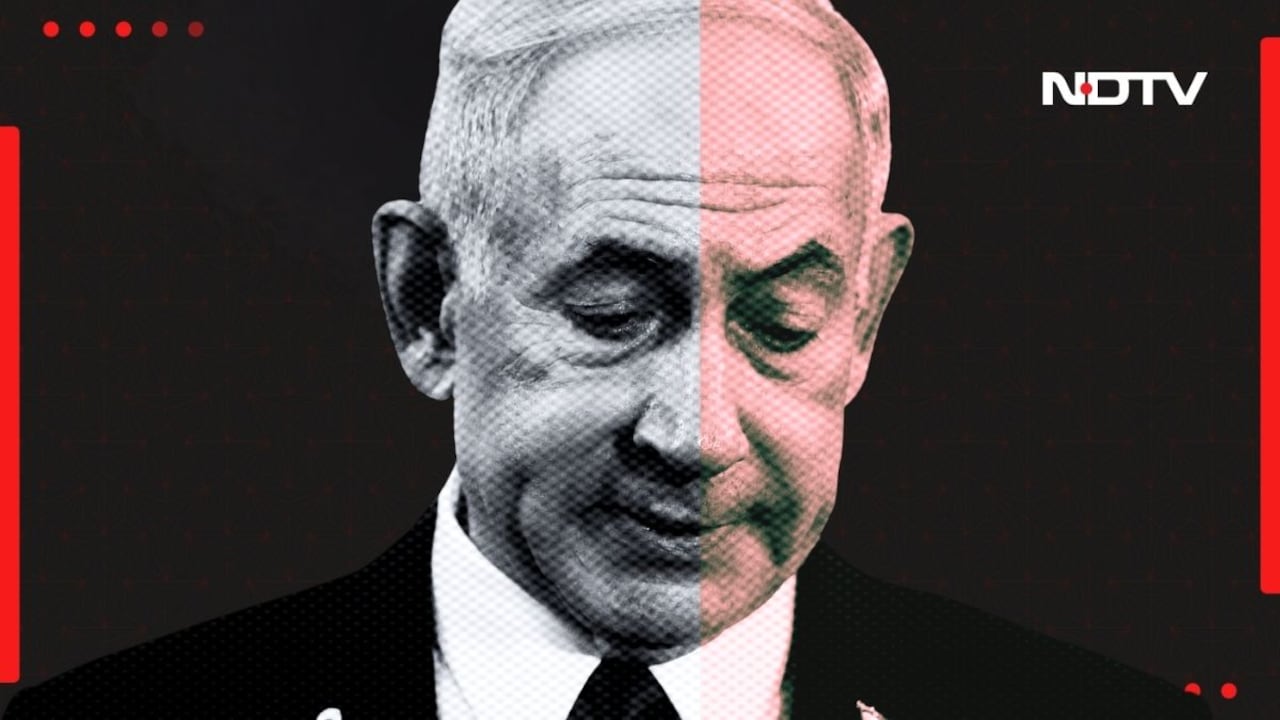
Israel's Prime Minister Benjamin Netanyahu faces a major test of his political future as voters cast ballots in the country's first legislative election since the October 7, 2023, Hamas attacks.
Polling published on Friday showed Netanyahu running almost neck-and-neck with former military chief Gadi Eisenkot in the race for prime minister. The election has drawn an unusually large number of voters, with turnout crossing 55.7 per cent by late afternoon, according to election officials. The figure is among the highest recorded in decades.
Around 70,000 Israelis have reportedly returned from abroad to vote, while hundreds of thousands are casting their ballots for the first time.
Netanyahu Warns Of Possible Right-Wing Defeat
Netanyahu has made voter turnout a central part of his final campaign push. In video messages, he highlighted rising participation in Arab communities and warned his supporters that low turnout among right-wing voters could allow Arab political leaders to form the next government.
He called the election an "emergency" and a "matter of life or death" for the Israeli right, urging supporters to vote.
"We cannot leave this battle here in the hands of the left and the Arab parties that want to bring an end to the Jewish state," Netanyahu said.
"So no barbecues, don't go to the beach -- go to the polling station and vote Likud," he said of his party.
In southern Israel, many Arab voters arrived at polling stations on camels and donkeys to cast their ballots. https://t.co/wJuytxkJjv
— Open Source Intel (@Osint613) October 27, 2026
The remarks drew sharp criticism from opposition leaders and Arab political figures, who accused him of racist incitement and using fear to mobilise his base.
Minister of National Security of Israel, Itamar Ben-Gvir, posted a photo on X, of women in hijabs at a polling station.
"In Rahat, people are flocking to the polling stations - go out and vote on the 2nd!", he wrote.
ברהט נוהרים לקלפיות - צאו להצביע ב׳! https://t.co/xNoFbBQvKD
— איתמר בן גביר (@itamarbengvir) October 27, 2026
Netanyahu's Likud party also asked the Central Elections Committee to extend voting beyond the scheduled 10 pm closing time. Eisenkot's camp criticised the move, calling it an attempt to "lay the groundwork for allegations challenging the integrity of the election".
Netanyahu Banks On Security Record
Throughout the campaign, Netanyahu has tried to present himself as the leader best placed to protect Israel. He has pointed to what he describes as strategic successes in conflicts across the Middle East and his close relationship with US President Donald Trump.
Iran became a major issue in the final days of the campaign. Israel's Channel 12 reported on Sunday that Netanyahu had pushed for last-minute military action that could lead to a confrontation with Iran, but military chief Eyal Zamir opposed it. CNN reported the next day that Netanyahu had also tried to persuade Trump to authorise fresh strikes on Iran, but the US president refused. Netanyahu denied both reports.
He also faced criticism after posting an AI-generated image of a nuclear bomb hitting Tel Aviv. Netanyahu warned that he was the only leader who could protect Israel "if the Iranians acquire nuclear weapons".
Where Eisenkot Stands On Gaza
Eisenkot's position on Gaza is broadly similar to Netanyahu's. He has promised to end Hamas rule in the territory within 18 months, either through a US-led peace plan or military action.
He largely supports Israeli settlements in the occupied West Bank, which are illegal under international law. However, he has called for action against extremist Jewish settlers, whose attacks have reached record levels, according to UN figures.
Eisenkot has also spoken of creating conditions for Palestinian "autonomy or a state-minus", while keeping ultimate security control in Israeli hands.
Meanwhile, Israeli strikes in Gaza have continued almost daily despite a ceasefire agreed last year, with the military saying it targets Hamas operatives. More than 74,000 people have been killed since the war began, according to Gaza's Hamas-run health ministry. The UN considers its figures reliable.
KioskNews shows a cleaned-up reading view extracted from the publisher’s page — the original always lives on their site, not ours.