Why India’s missile deals in Central Asia matter to Russia and China
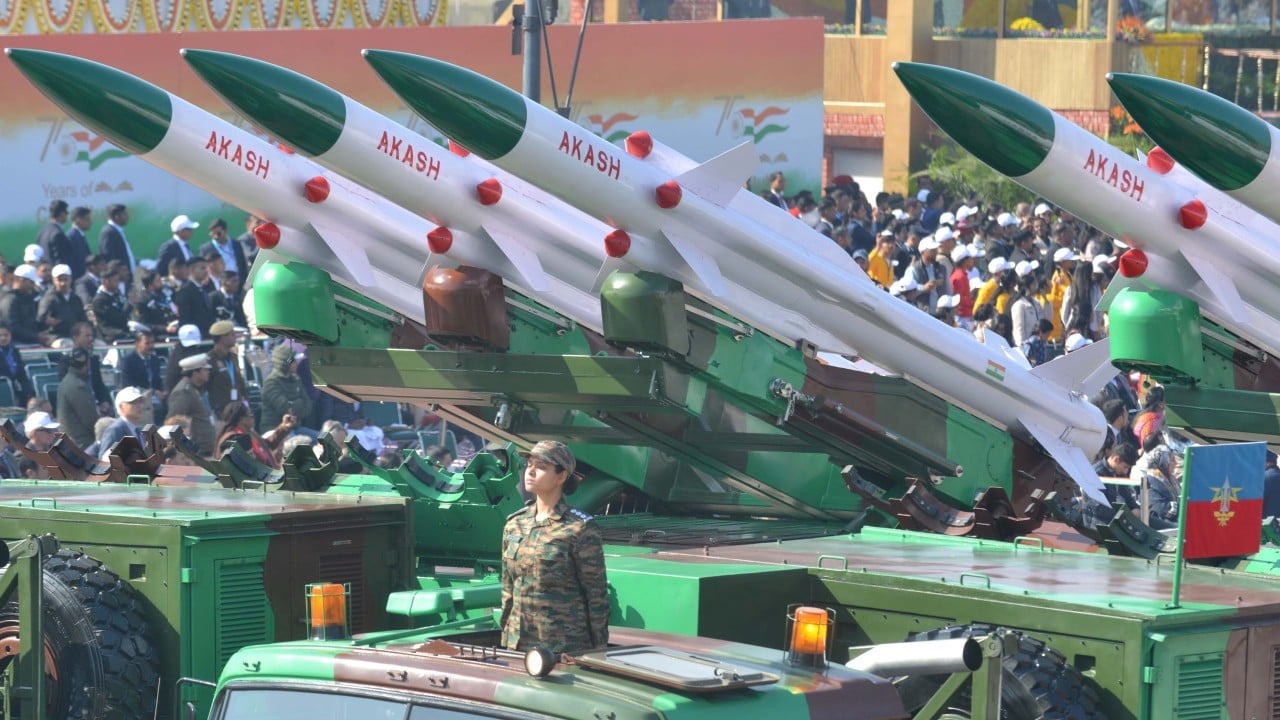
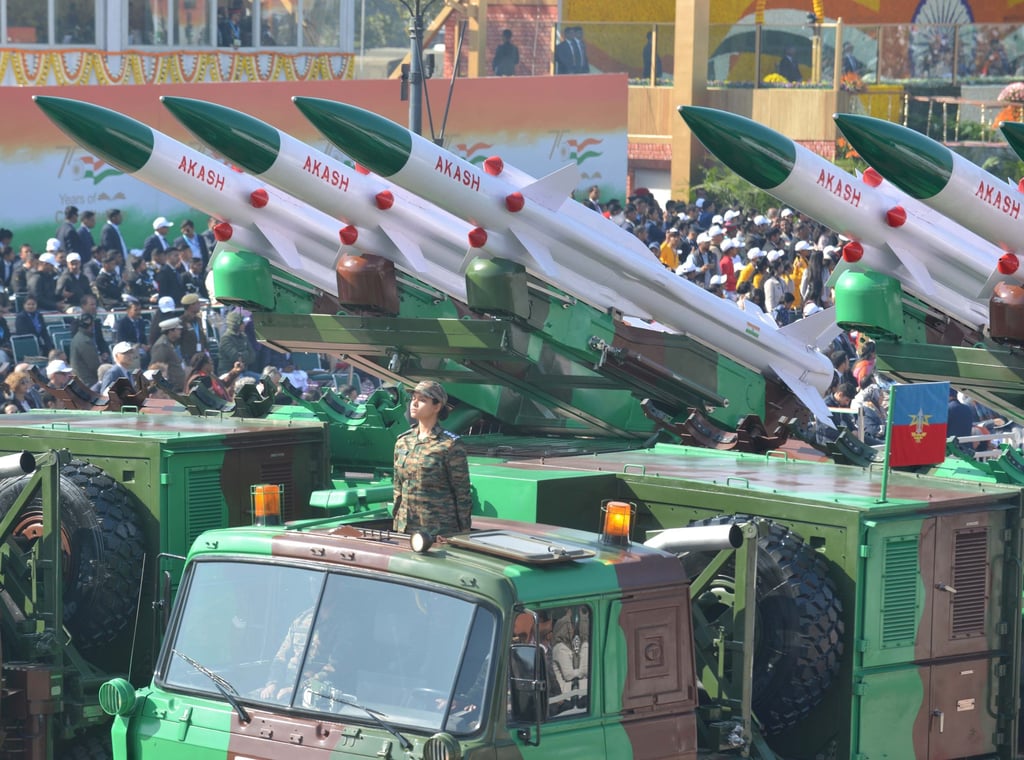
India has sold its Akash air-defence missile system to Tajikistan and Turkmenistan, giving it a foothold in Central Asia as it seeks to become a major global arms exporter.
Defence Secretary Rajesh Kumar Singh confirmed the latest sales on Thursday last week, hinting at interest from elsewhere as he called the Akash “one of our success stories”.
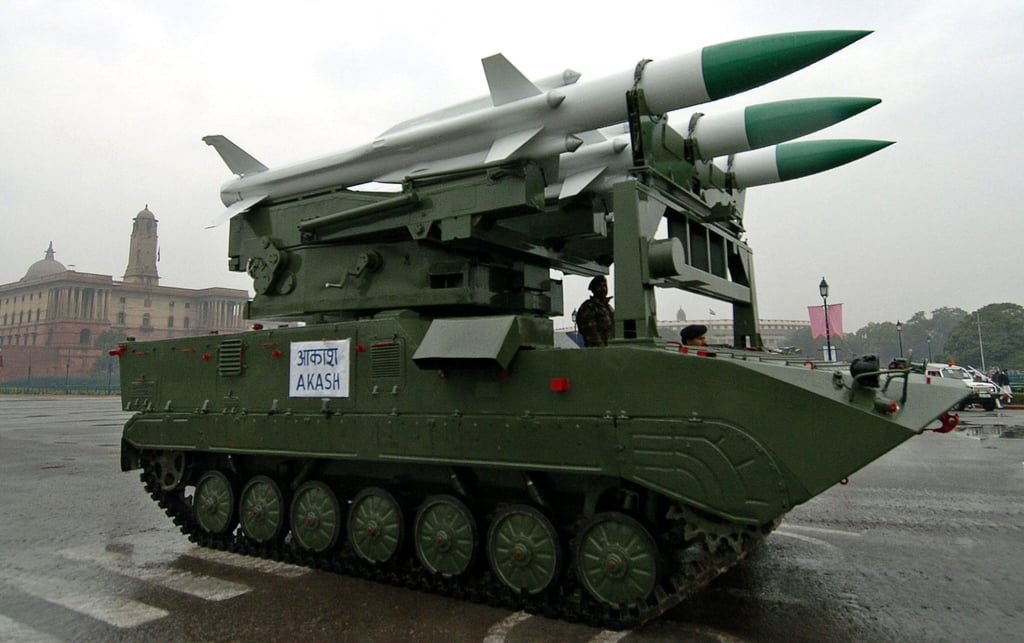
Developed by India’s Defence Research and Development Organisation, the Akash is a home-grown, short-range surface-to-air missile system that can hit multiple targets at once and includes built-in protection against electronic jamming.
It can hit aerial targets between 100 metres and 20km (328 feet to 12½ miles) high, with an operational range of 4.5km to 25km, according to the Defence Ministry. Each 5.87-metre (19-foot) long missile weighs roughly 710kg (1,565lbs) and use command guidance to lock onto targets.
The Akash programme has also been updated with newer variants, such as Akash Prime and Akash-NG, which feature upgraded sensors and other improvements.
Its export to Central Asia comes amid India’s wider push to sell its air defence systems to a region where Russia has traditionally been the dominant arms supplier and China has been gaining ground.
Armenia became the first international customer for the Akash in 2022, attracted by the system’s relatively low cost as well as Russian supply shortages and rival Azerbaijan’s growing drone fleet, said Atul Kumar, a fellow at the Delhi-based Observer Research Foundation’s strategic studies programme.
For Tajikistan and Turkmenistan, Kumar said acquiring the system was a way for them to diversify their defence suppliers beyond Russia and China.
“Turkmenistan has already acquired a number of Chinese air-defence systems and the Akash is expected to complement them by fulfilling the mid-layer role in its air-defence architecture,” he said.
For Russia, Kumar said India entering the Central Asian defence market was likely preferable to the region moving close to Nato or Chinese military standards.
But the presence of Indian military hardware along China’s western flank would be an unwelcome development for Beijing, he said – not least because it had sought to establish itself as the region’s preferred military supplier.
“India is actively promoting defence exports and expanding private-sector participation through various policy initiatives, incentives and defence corridors,” Kumar said.
A third option
Russia’s weapons exports have decreased since it invaded Ukraine, but data from the Stockholm International Peace Research Institute shows the Kremlin is still Central Asia’s main arms supplier.
China has reportedly been catching up, however, especially in Uzbekistan and Turkmenistan.
Kazakhstan bought 11 per cent of Russia’s major arms exports between 2020 and 2024, while Tajikistan still heavily relies on Russian equipment and military assistance, the institute’s data shows.
Armenia, meanwhile, has been cutting back on Russian weapons and turning to new suppliers such as India and France.
The Akash offered high-end air defence capabilities at a fraction of the cost of Western alternatives, said Rahul Wankhede, a research analyst at the Manohar Parrikar Institute for Defence Studies and Analyses in India.
“The system is supported by domestic manufacturing lines … and additional orders placed by India’s own armed forces,” Wankhede said. “So this assures potential buyers of supply chain reliability, quick replenishment and a comprehensive training package.”
In addition to its own arms, India could provide Central Asian nations like Tajikistan and Turkmenistan with support for Russian-origin systems, Wankhede said. “So it’s a dual advantage for both sides.”
Unlike China, Russia or the United States, India was not looking to create dependencies through weapons sales, he said, making it an attractive partner for nations looking to balance their strategic relationships.
“The Akash system will have a wider export base in the future since it’s a purely defensive system,” Wankhede said. “This marks India’s emergence as a credible defence exporter on the global stage.”
‘Battle-hardened’
Russia’s current preoccupation with preserving surface-to-air missile supplies for its own use had created an opening for India, said Aleksei Zakharov, a fellow at the Observer Research Foundation think tank in Delhi.
“After procuring the Akash-1S systems, Tajikistan and Turkmenistan, similar to Armenia, are likely to consider importing other Indian military equipment, including radar systems, artillery and missiles,” Zakharov said.
Part of the appeal of the Akash was that it was “a battle-hardened system”, said Antoine Levesques, senior fellow for South and Central Asian defence at the International Institute for Strategic Studies, citing its use in last year’s brief air war with Pakistan.
“Foreign sales of Akash provide added evidence that India’s exports of defence articles are picking up pace,” he said. “Feedback from those sales will allow India to fine-tune other defence products it is preparing for export markets.”
Foreign sales of Akash provide added evidence that India’s exports of defence articles are picking up pace
India’s friendly relations with Central Asia meant it could position itself as a reliable partner, said Rajiv Kumar Narang, a senior fellow at the Manohar Parrikar Institute for Defence Studies and Analysis.
India wanted to increase its defence exports but it would take time to achieve this, he said, as Delhi worked to improve its offerings.
The South Asian nation currently ranks 31st for global arms exports, shipping an estimated US$4 billion of weapons last financial year.
C. Uday Bhaskar, director of the Society for Policy Studies think tank and a former Indian naval officer, said that “modest exporter” India was unlikely to try to directly compete with Russia.
Given the two countries’ work on the Brahmos missile system, Delhi “would proceed in a prudent manner”, Bhaskar said, adding that competition with “China is a different story”.
KioskNews shows a cleaned-up reading view extracted from the publisher’s page — the original always lives on their site, not ours.