National Arts Council seeks operator for new 1,000-seat Tanglin theatre
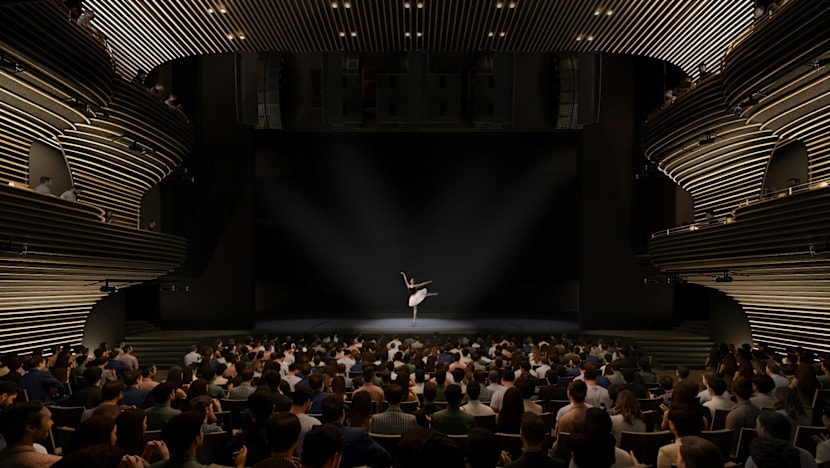
Applicants must allocate at least 30 per cent of the theatre’s utilised days to local arts groups, while bringing in high-quality international acts.
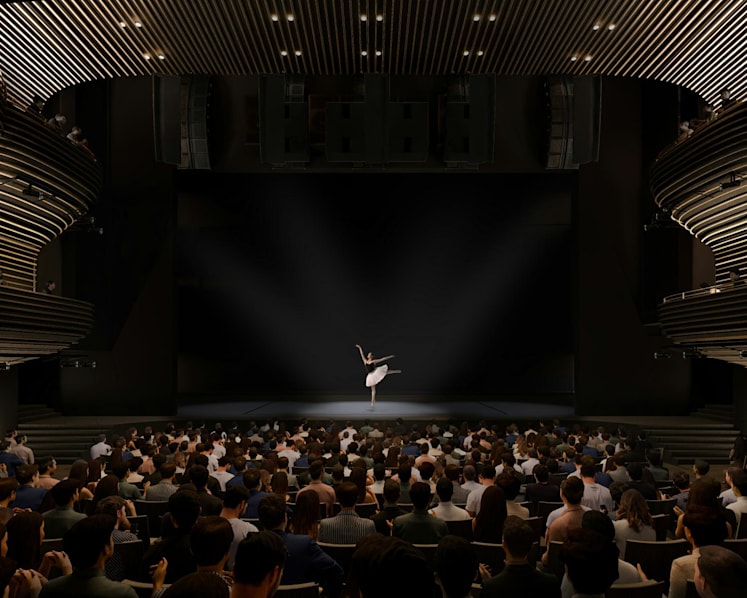
An artist’s impression of the performing arts theatre that will be part of the redeveloped Tanglin Shopping Centre, slated for completion by 2030. (Image: Pacific Eagle Real Estate)
New: You can now listen to articles.

This audio is generated by an AI tool.
24 Sep 2026 07:08PM
SINGAPORE: The National Arts Council (NAC) is seeking an operator for the upcoming 1,000-seat theatre in Tanglin, with the successful applicant expected to bring in high-quality international acts while supporting the local arts ecosystem.
Supported by the Ministry of Culture, Community and Youth (MCCY), NAC launched an Expression of Interest (EOI) on Wednesday (Sep 23), open to local and international venue operators, arts organisations and cultural institutions.
The operator will be responsible for areas including artistic direction and programming, venue management and financial sustainability, while overseeing functions such as food and beverage, technical production and facilities.
Applicants must also allocate at least 30 per cent of the theatre’s utilised days each year to at least four local arts groups, while supporting Singapore’s arts ecosystem with initiatives such as residencies and mentorships.
They must also demonstrate experience in financially managing operations of a similar scale.
But arts observers said the scale of the project and its requirements could pose challenges for local groups hoping to operate the venue.
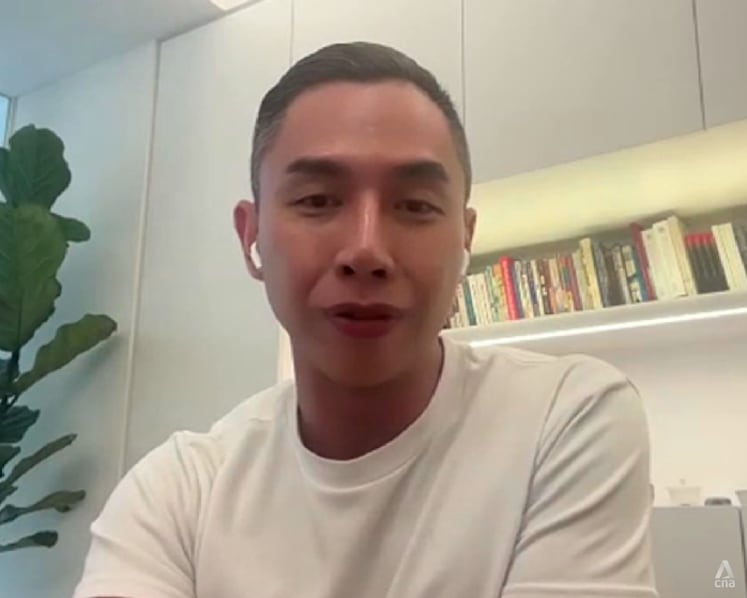
“I think the requirements are demanding,” said Dr Samuel Wong, co-founder and creative director of The TENG Company, a non-profit arts organisation.
“For local groups, the hard part isn't artistry or ambition. It's actually having to run a venue at this scale, and the capital and the international reach that comes with such a venue.”
He added that not many local groups have the “firepower and the weight” to take on such a project and may need to partner or collaborate with an international operator or a consortium of several local organisations.
Still, such partnerships could give homegrown arts groups access to international networks and expertise, said Ms Usha Chandradas, co-founder of online art magazine Plural Art Mag.
“Local partners that come on board get a chance to see what business looks like from the international organisations' perspective,” said Ms Chandradas, who is also a former Nominated Member of Parliament (NMP).
For Dr Wong, such global partnerships could help local arts groups take their works overseas.
“Works are commissioned and they're premiered here, and then they are toured out to the region and the world,” he said.
“So, it's not just international acts coming into Singapore, but that the operator has networks ... to bring local works out from Singapore to the world as well.”
LOCAL PARTNERSHIP REQUIRED
International organisations can bid to operate the theatre, but they must have a local arts partner in roles such as artistic direction.
For joint ventures or consortiums, domestic arts companies must account for at least 30 per cent of ownership or co-investment.
Dr Wong said the requirement could help prevent the venue from gravitating towards commercially safer imported productions but pointed out that meeting a quota alone would not necessarily translate into meaningful native support.
“We are looking at not the amount of local work but the depth of local work. To me, we need to invest in local talent, which includes commissioning, residencies, rehearsal space, co-productions,” he said.

Ms Chandradas also noted that the requirement stipulates how many days local groups should receive, but offers no guidance on how those dates are allocated.
“If you want to really be quite cynical about it, you might say, well, the international operators may take all the good commercially viable dates and just sort of allocate the less commercially viable dates to the local operators,” she said.
However, she noted that such issues could be monitored once the theatre begins operating.
BALANCING INTERNATIONAL AND LOCAL ACTS
Dr Wong said bringing major international productions to Singapore need not come at the expense of local artists.
“If they are done well, they actually create an engine that pays for and platforms local work,” he said.
“Let's say a sold-out show on Friday gives us the freedom to be able to take a risk on a Singaporean premiere on a Tuesday, for example. So, if we think of venues in such a perspective, there's a win-win that we can create from this.”
BEYOND THE BOTTOM LINE
Pacific Eagle Real Estate (PERE), which is funding and building the theatre, had earlier announced a waiver of the base rent for the 20-year tenancy period.
“The waiver of the rental is quite a substantial factor. It's a huge fixed cost that's taken out of the picture,” said Ms Chandradas.
But she noted that the operator would still have to bear operating costs and other obligations, including asset management and upgrades.
The operator will be chosen through a two-stage selection process, with the successful applicant expected to be announced in the second quarter of 2027.
For Ms Chandradas, the bigger question is what the new theatre could ultimately bring to Singapore’s arts scene.
“If at the end of this scheme, we are able to do things in the local art scene that we were not able to do before, that to me would be a very, very good measure of success,” she said.
KioskNews shows a cleaned-up reading view extracted from the publisher’s page — the original always lives on their site, not ours.