‘Sometimes it’s not perfect, but it works’: film-maker Charles Burnett on his chronicling of Black working-class life
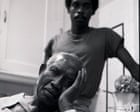
A restored version of his 1983 film My Brother’s Wedding, set in South Central LA, brings Burnett’s vision to a new audience
Charles Burnett had a dilemma. He had agreed to attend the wedding of a co-worker, but the wedding was scheduled for the same day and time as a funeral for a childhood friend.
Initially, the film-maker – a landmark chronicler of Black working-class lives – decided he’d go to the funeral. But when he tried to break the news to the co-worker, she was so dejected that he couldn’t go through with it. He tried asking the bride to change the wedding – which was “ridiculous to think of trying to do”, he says decades later – but that didn’t work either. He decided he’d go to both events.
But when the day came, he got trapped at the wedding. He “suffered through that” and, in the process, missed the funeral.
This dilemma is at the heart of My Brother’s Wedding, Burnett’s tragicomic 1983 film. Like Burnett, character Pierce Mundy has committed to going to a wedding when a childhood friend suddenly dies. Like Burnett, Pierce feels an obligation to be at both places, though the wedding and funeral were scheduled for the same time. Like Burnett, Pierce even, unsuccessfully, tries to change the wedding.
“The idea was the fact that if you want to be someone’s brother’s keeper, you have to have principles and you have to be mature enough to make decisions and say, yes or no,” Burnett says. “You may have good thoughts and be a decent person, but you have to have more than that. If you’re going to be responsible for someone, you have to have a certain amount of maturity. It means making just decisions, proper decisions in your life.”
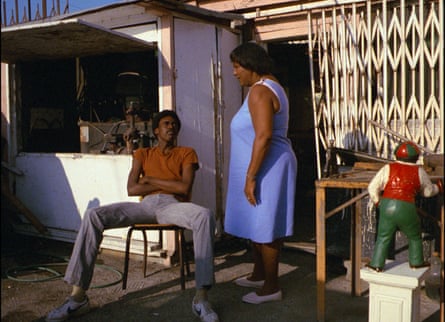
My Brother’s Wedding was beset with production problems that limited the film’s release. The main actor disappeared from set after demanding more pay (when Burnett tracked the actor down, he had reinvented himself as a pastor).
In post-production, a German broadcaster asked Burnett for a finished cut of the film. He rushed through a rough cut, which the production company accepted as the final cut against his wishes. That longer, unfinished version of the film was shown to mixed reviews at the New Directors/NewFilms festival in New York City in 1983, and was essentially impossible to view for many years.
“It would have been better just to say, start all over again,” Burnett said. “The days were gone by that time. Rather than re-edit the film, I had to make terms with the material I had. That’s what film-making is about. You run into all these problems, and in each one, you have a whole set of different problems. Sometimes it’s not perfect, but it works, it works.”
At 82, Burnett, once called “the nation’s least-known great film-maker” by the New York Times, is enjoying a resurgence of interest in and celebration of his career. In 2025, his 1978 debut film Killer of Sheep, considered a masterpiece, was restored, introducing the director and his oeuvre to newer audiences. And this year, after several decades, My Brother’s Wedding, the director’s sophomore film, was digitally restored and remastered by Milestone Films, the largest Black-owned film distributor in the US, UCLA Film & Television Archive, the Berkeley Art Museum & Pacific Film Archive, and Kino Lorber.
Burnett supervised the restoration of My Brother’s Keeper in consultation with Maya S Cade, president of Milestone Films, and Jillian Borders, head of preservation at the UCLA Film & Television Archive. The restored film has enjoyed sold-out screenings at New York’s Film Forum, is being shown at theatres across the country and is available to stream on the Criterion Channel. The film is also slated to be screened across the United Kingdom and Europe later this year.
Cade said that the restorations of both films “feel like resurrections”. Both Burnett’s debut and sophomore films are, decades after their initial release, able to be presented as originally intended. “We’re trying to use the tools available to ensure that Charles’s vision lasts not only our lifetimes, but many other lifetimes to come,” Cade said. “The goal of restoration is to use every tool in our arsenal to make the song that you may be familiar with, if you will, sing anew.”
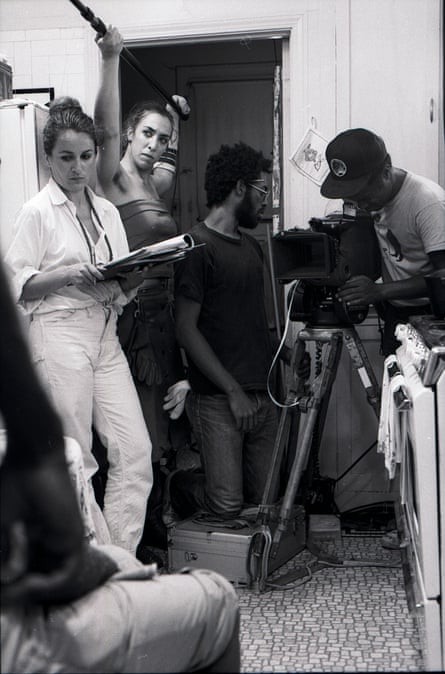
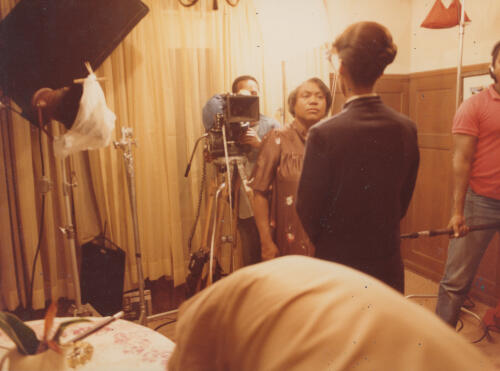
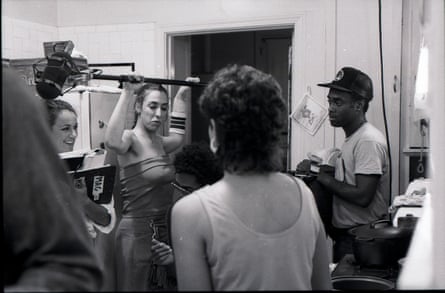
Cade, who also runs Black Film Archive, an online database of Black films made between 1898 and 1999, has been Burnett’s archivist for more than one and a half years. Recently, while sorting through his materials, she uncovered never-before-seen images made on the set of My Brother’s Keeper. The images, printed here, are raw and intimate. They’re testaments, Cade said, to the number of people required to make a film and “its own kind of archival repair”.
They are also ways for the non-professional actors and everyday people who participated in the making of the film to be honored. For Burnett, the restorations and the images allow him to reminisce about his experiences with old friends, many of whom are now dead. It’s both a painful and joyous experience for the auteur. “It’s nice to see them again,” he said. “I do appreciate what they’ve done because most of the independent films I made were done with non-actors, and I’m always so guilty about not having the money to pay them. But I’m glad [about] the restoration because I’m sure they see it and they can see it again in a positive way. It looks good and it’s their story.”
Burnett wrote, directed and produced My Brother’s Wedding on location in south central Los Angeles, where he grew up. His realism frankly depicts Black life in LA, using non-professional actors who, like the director, are firmly rooted in a time and place. In his original treatment for the film, Burnett wrote that “the story communicates to all persons.”
Making the film allowed Burnett to explore his feelings about class differences that he saw and experienced while growing up in Watts, a neighborhood in south LA. In the film, Pierce’s brother, Wendell, is engaged to Sonia, an upper-middle-class woman whose “sweetness”, Pierce thinks, is “about as fake as a $3 bill”.
In one scene, Wendell and Sonia’s families share dinner together. Sonia’s family’s wealth is on display – “signifying”, Pierce calls it, elsewhere in the film – from their fine wine to a maid who serves the family dinner. Pierce, who “has a romantic view of the ‘have-nots’”, is over it.
He lists various jobs he’s held, from driving a cement truck, working as a brakeman at the railroad and driving explosives and “all sorts of dangerous materials”. Pierce’s mother says that she wishes her sons were a doctor and lawyer, like Sonia’s parents’ children, instead. The scene culminates in a fiery exchange between Pierce, Wendell and Sonia.
“When we were growing up in LA, there was this class difference. We had this romantic notion about the poor and the middle class,” Burnett says. He said that class limited the opportunities available to lower-income people in his community.
Burnett, who was born in Vicksburg, Mississippi, said there was a “porch life”, when he was growing up, where people talked and told stories about their lives in the south. Like him, most of his neighbors were southerners – from Mississippi, Louisiana, Texas and Arkansas – who moved to California.
“My grandmother and mother and them would always be talking about their experiences in Mississippi,” he said. “They were from Natchez and Vicksburg … It was this vision of the south. It was so mystical, in a way, because of the way they told it and their relationships with people … It was like this story of this place that had this magical quality about it.”
In his films, Burnett maintains this culture of storytelling, and an intrinsic understanding of the importance of the mundane, translating it to the screen. The characters in My Brother’s Wedding are just people. They have wants and desires; they are not caricatures of good or evil, even if they are in conflict with each other. The film’s humor is found in the simple moments, much like it is in real life.
Much of the film follows Pierce as he lives his life. Burnett’s decision to focus on a narrative about a young Black man and his experiences in south central LA was revolutionary. Pierce isn’t a larger-than-life character from a Blaxploitation film, nor is he a caricature. He is just a young man with a difficult decision.
Burnett was a central figure in the LA Rebellion film movement, in which several Black film-makers, including Julie Dash, Haile Gerima and others, rejected Hollywood norms and instead prioritized realism and a focus on Black life. “The whole idea was telling stories about Black experience,” Burnett said. The directors were pushing back against racist films that shaped American cinema, like DW Griffith’s 1915 film The Birth of a Nation, which led to a resurgence of the Ku Klux Klan and anti-Black violence. “[In the] LA Rebellion, we’re responding to the negative images of Hollywood, particularly Birth of a Nation and things like that, that really destroy who we are … We were fighting against those negative images and Blackface and things like that.”
It’s worth considering how Burnett’s career might have developed differently had his sophomore film received the distribution it deserved. His first film inspired generations of artists, such as Ava DuVernay, Sean Baker, Yasiin Bey and Barry Jenkins. Though his career was not allowed to flourish as it should have, in many ways, Burnett is responsible for generations of film-makers, though he speaks about himself and his career with a humbleness that doesn’t hint at the weight of his impact. Arthur Jafa and Dash, both of whom would go on to shape cinema in their own right, first met while working as assistants on My Brother’s Wedding. Jafa was first assistant camera, on his first-ever film set, while Dash was first assistant director. Years ago, while he was casting for a professional acting crew, Burnett said that he ran into many older Black actors. When they walked into the room, he asked, “Where have you been?”
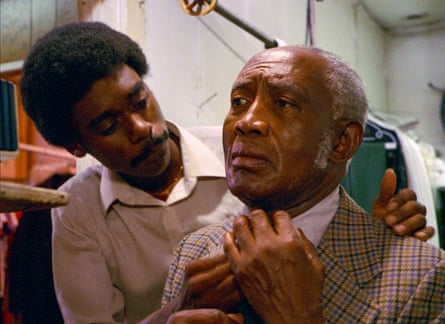
“It’s a dumb question to ask, because you know where they’ve been,” he said. “Not given an opportunity to express themselves [even though they] are so talented. That was one of the most difficult experiences, realizing this wasted talent.”
But, in some cases, their stories are preserved in the archives. They’re in photos, like the ones from the set of My Brother’s Wedding, or in other documents Cade has found in Burnett’s archive.
Burnett was always focused on telling stories, on being a director – he eschewed any notion that he himself was or should be a brand. And yet, he subconsciously created an archive, allowing himself and others to step back in time and appreciate the largely under-sung work he and other Black artists did for American cinema.
KioskNews shows a cleaned-up reading view extracted from the publisher’s page — the original always lives on their site, not ours.