‘SC not a platform for political influence’: 200 lawyers object to Rahul Gandhi's march
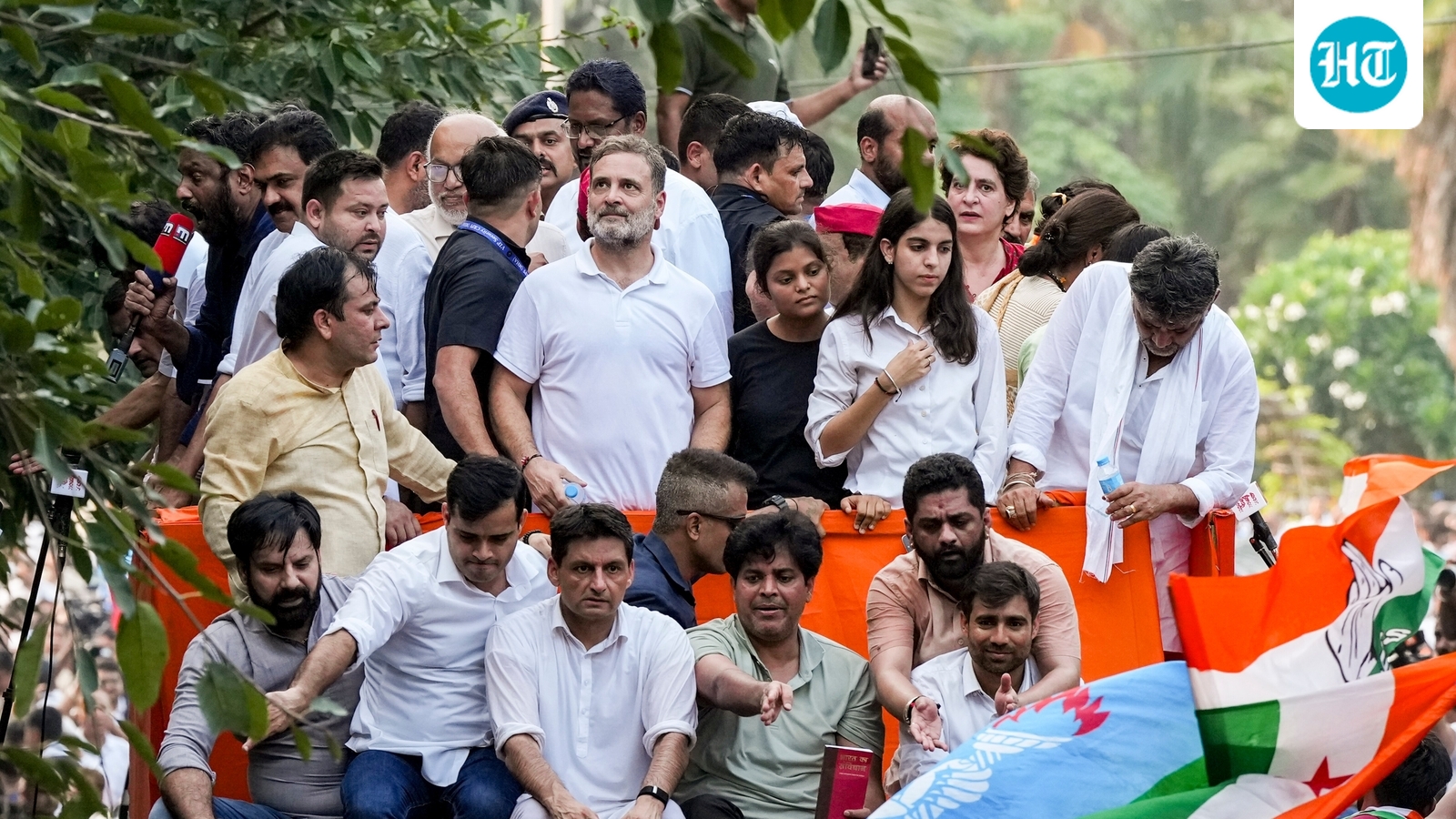
Nearly 200 members of the Supreme Court Bar Association (SCBA) have reportedly sought a resolution condemning Congress leader Rahul Gandhi's march to the Supreme Court on October 12, when thousands of party workers accompanied him as he moved to file a petition against the Election Commission of India (ECI).
According to Bar and Bench, the members have written to the SCBA secretary and its executive committee, arguing that the march amounted to a display of political and numerical strength that could exert indirect pressure on judges and undermine the rule of law.
The representation states that the Supreme Court is “not a platform for demonstrating political influence, financial power or numerical strength”.
It warns that allowing such practices could encourage similar displays of political power in high courts and district courts.
The members have also called for any resolution condemning such conduct to apply equally to all individuals and political parties, rather than targeting a particular political group.
Why Rahul Gandhi marched to the Supreme Court
On October 12, Gandhi led a march from the Constitution Club in central Delhi towards the Supreme Court, accompanied by thousands of Opposition supporters and party workers. The mobilisation was part of protests against Chief Election Commissioner Gyanesh Kumar and alleged irregularities in the Election Commission's functioning.
Gandhi subsequently entered the Supreme Court to file a petition seeking an independent, time-bound investigation into decisions allegedly taken unilaterally by Kumar.
The plea also sought a suspension of the ongoing Special Intensive Revision (SIR) of electoral rolls until the inquiry was completed.
The petition named the Election Commission of India, Kumar and two other election commissioners as respondents. It was flagged for 14 defects, including a shortfall of ₹220 in court fees, an illegible photocopy of Congress president Mallikarjun Kharge's identity card and missing vakalatnamas for nine of the 11 petitioners.
The march followed days of Opposition protests demanding Kumar's resignation, with political leaders alleging electoral roll manipulation and raising concerns over the SIR exercise.
Several Opposition leaders, including Kharge, Samajwadi Party chief Akhilesh Yadav, former West Bengal chief minister Mamata Banerjee and Rashtriya Janata Dal chief Tejashwi Yadav, had gathered at the Constitution Club before the march.
The protest drew large crowds to central Delhi, prompting police to erect barricades and divert traffic as demonstrators moved towards the Supreme Court complex.
KioskNews shows a cleaned-up reading view extracted from the publisher’s page — the original always lives on their site, not ours.