Paid $9,055 to save cousin's home, court upheld oral deal over $150K offer
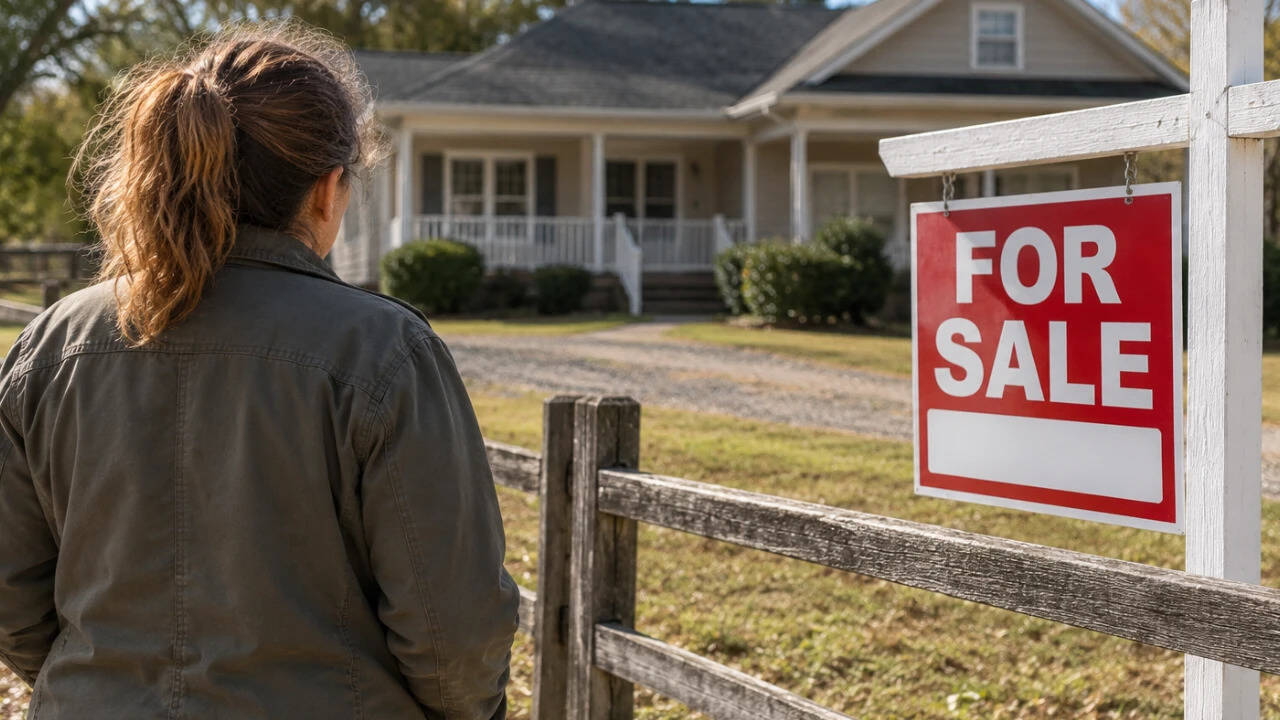
The dispute escalated in March 2024 when Miller spotted a sale sign outside the property. (AI image)
A Kansas man who received a $150,000 offer for his property has lost a legal battle with his cousin, who claimed he had already agreed to sell her the house and about five acres of land four years earlier.
Tiffany Miller said she took responsibility for the property in 2020 after discovering that her cousin, Aaron Harvey, had fallen behind on mortgage payments. Although they never signed a sale agreement, the Kansas Court of Appeals ruled on Friday that their verbal arrangement could be enforced.The dispute began when Harvey decided to sell the property in 2024. By then, Miller and her son had been paying the mortgage and looking after the house for several years.
They had also spent money repairing the building and improving the surrounding land. Harvey, however, maintained that he had never agreed to sell it to them.According to the court ruling available on Justia, the disagreement came to a head in March 2024, when Miller noticed a sale sign outside the Kansas City property. Harvey later told the court that he had received a $150,000 offer from another buyer, who had also provided a cashier's cheque.
At the time of the trial, around $49,000 remained outstanding on the mortgage.
How a mortgage problem led to the agreement
Harvey had owned the property since 2004. He had previously lived there and borrowed $75,000 in 2005 to renovate the house and build an arena for cattle roping. Miller was familiar with the land because her son, Demetre, kept horses there.In January 2020, while visiting to feed the horses, Miller came across a letter addressed to Harvey. She testified that it warned the property was at risk of foreclosure and that $9,055.68 was needed to bring the mortgage payments up to date.Miller contacted Harvey about the letter and said he indicated that he no longer wanted the property. She then offered to buy it.According to Miller, they agreed on a price of $80,000. With approximately $61,000 still owed on the mortgage, she would take responsibility for the loan and pay Harvey the remaining $19,000 by January 1, 2025. He would then transfer ownership to her.The overdue mortgage amount was not paid as a single upfront payment.
Instead, Miller arranged a modification of the loan, which added the overdue amount to the mortgage balance. The lender approved the arrangement in May 2020.Harvey gave a different account. He said he had simply allowed Miller's family to use the property in exchange for paying the mortgage and utility bills. He denied agreeing to sell it.
Years of repairs became important to the case
The condition of the house became an important part of the dispute. Miller testified that when she first received the keys in January 2020, she found mud, mould and mildew in the basement, along with a sewer smell.
When she told Harvey about the problems, she said he responded, "That's your deal now."Miller and her son subsequently carried out extensive work. They repaired plumbing, replaced household appliances, improved fencing and worked on the driveway and cattle arena. They also installed a French drain to prevent water from entering the basement. Her son began contributing towards the mortgage, utilities and repairs after moving into the property in 2022.Harvey argued that he had not been informed about the improvements. However, the trial court found that his actions supported Miller's account, particularly because he had given her access to the mortgage account and allowed her to take possession of the property.
Why court rejected Harvey's appeal
Harvey argued that the original arrangement was unfair because the property had subsequently attracted a $150,000 offer. He pointed out that Miller would pay him only $19,000 directly, even though the property's value had increased considerably.The appeals court disagreed with that comparison. The judges explained that the agreed purchase price was $80,000, including the mortgage Miller had undertaken to pay. They also considered the repairs and improvements made over the years.Another issue involved Miller's bankruptcy filing in 2022. She admitted that she had not disclosed the property agreement or mortgage payments, describing the omission as an "honest mistake".
Harvey argued that this should prevent her from claiming the property, but the appeals court found that he had not properly raised that defence during the earlier proceedings.The judges also considered whether an agreement that was never written down could still be enforced. Although Kansas law generally requires property-sale agreements to be in writing, exceptions can apply when someone has already acted substantially on an agreement.In this case, the court found sufficient evidence that Miller had acted on the arrangement by taking possession, arranging the mortgage payments and making significant improvements.The judges also concluded that simply paying her back for the repairs would not adequately compensate her for losing the property she had agreed to buy.
KioskNews shows a cleaned-up reading view extracted from the publisher’s page — the original always lives on their site, not ours.