Giving Halo to the Call of Duty Publisher Is the Best Move for the Franchise

Randy Rhodes' first gaming memory is Kirby's Adventure on the NES, and his love for gaming only rose from there. Playing games eventually wasn't enough for him. He began following the industry closely. In 2024, he finally started putting that to use by launching the Project Untitled Gaming Podcast and later the Dual-Wield Gaming Podcast. Covering the news week to week turned out to be something he loved, but a weekly show only has so much room in it, and writing was already something he wanted to do more of.
Randy has written for Lords of Gaming since March 2025 and already has over 200 articles published to show for it. His coverage centers on Nintendo, Xbox, and indies, and runs across news, reviews, previews, and editorial. He enjoys writing about and critiquing the games that he's played, but analyzing the industry brings just as much enjoyment for him. He tends to write editorials that try to dig deeper into the news instead of just restating it.
Randy reviews and previews games broadly across all genres. He has a soft spot for co-op games, 3D platformers, and the majority of Nintendo's first-party output, but he also adores cozy and niche titles that don't always get a serious look: visual novels, farming sims, life sims, etc. He's always looking for up-and-coming indie games worth writing about.
Outside of games, Randy is into DnD, cooking, music and music production, which inspired one of his favorite pieces to write: 50 Songs Leveled Up By Video Game Samples. He also cares about Black representation in games and in the industry behind them, and he's always looking for opportunities to cover it.
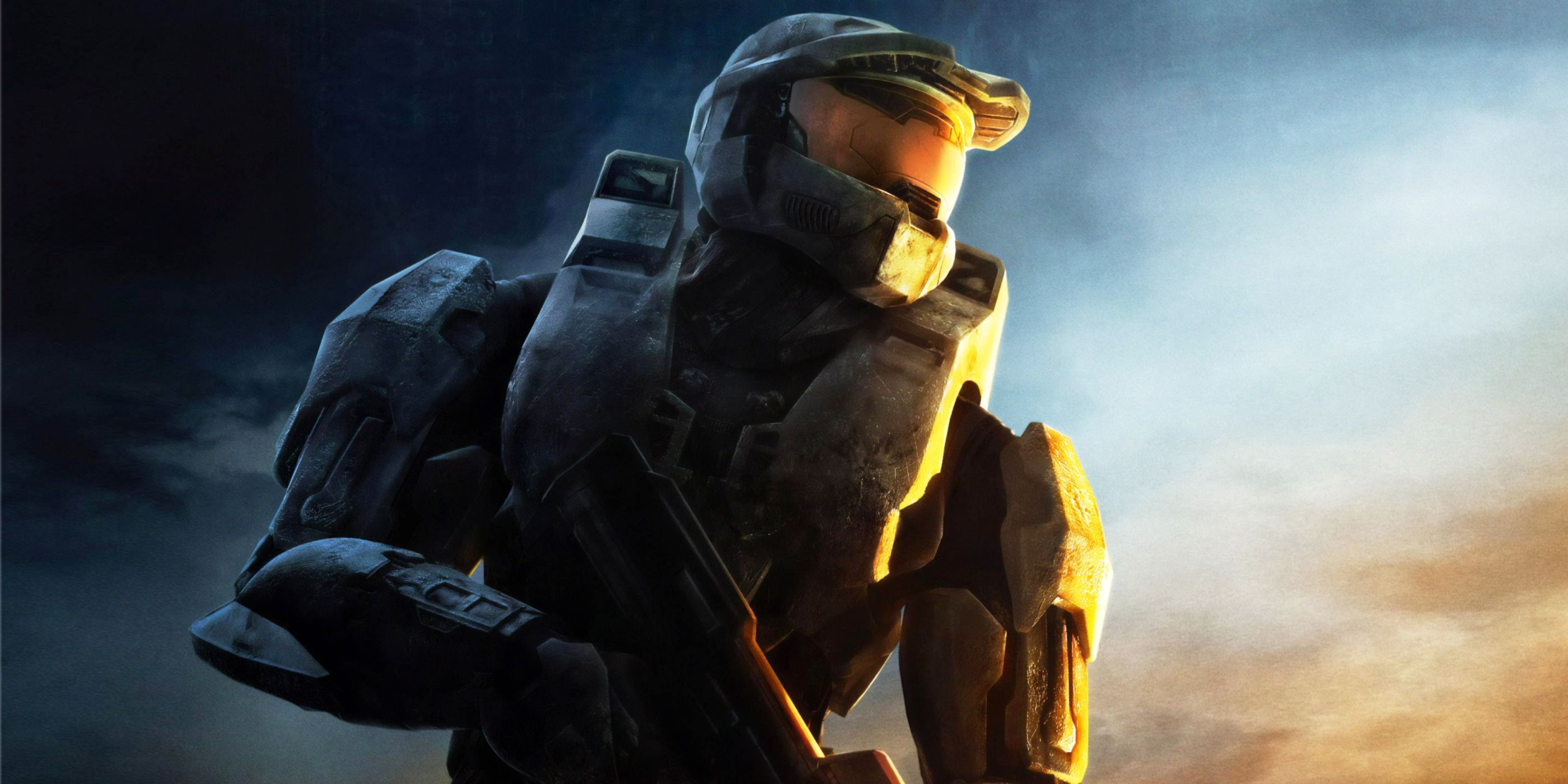
On September 22, Xbox Chief Content Officer Matt Booty confirmed that the Halo franchise would undergo a massive shake-up. The next mainline game will leave Halo Studios and the Xbox Game Studios umbrella to be developed by a purpose-built team under Activision, kept separate from the Call of Duty teams. Halo Studios, the team created specifically to steward the franchise after Bungie's exit, drops to supporting the currently active Halo titles.
It is a strange outcome for the premier series that defined Xbox to get to this state. The restructuring cost 268 jobs across Microsoft's first-party studios, which shouldn't be taken lightly. But once the dust settles, this may be the best thing to happen to Halo since Bungie walked away. Fifteen years of evidence says the franchise needed a big change, and Activision may be the only one with the infrastructure to deliver it.
343 Industries Never Shipped a Complete 'Halo'

343 Industries, rebranded to Halo Studios in 2024, had 15 years, three mainline games, and three remake projects to prove it could carry the franchise forward. Contrary to what some may say, 343 Industries never released a bad game. The issue is that Halo comes with lofty expectations that most developers would be hard-pressed to meet. Fans expect a game that delivers a stellar narrative-driven campaign with co-op, a robust competitive arena multiplayer suite, a PvE mode, and tools to build and share their own maps and game modes. The absence or inadequacy of one of these pillars could mark the game as a failure in the eyes of fans, and that's what 343 dealt with after Bungie's near-perfect trilogy.
Halo 4 delivered a spectacular campaign and narrative. The Master Chief and Cortana story was emotional, well-executed, and arguably the best character work the series has produced. The multiplayer is where it fell apart. Loadouts and ordnance drops pulled the sandbox too close to Call of Duty, and it stopped feeling like Halo. The game still performed well financially and was a graphical showcase for the Xbox 360.
Halo 5: Guardians flipped the script entirely. The campaign was universally panned, telling a story that bore almost no resemblance to the "Hunt the Truth" marketing campaign and completely wasting the newly introduced Spartan Locke. The multiplayer, though, was a fast-paced evolution that still felt unmistakably like Halo, and Arena remains one of the best competitive suites in the series. Unfortunately, with the mix of the mediocre campaign and Halo fans' strange aversion to change, the multiplayer did not receive as much love as it deserved.
Then came Halo Infinite, which had every piece in place to be the best Halo ever made. The open world campaign was a smart reinvention, the grappleshot was the best traversal tool the series ever shipped, and the multiplayer nailed a modernized version of the classic feel that appeased new and old fans alike. It should have been the one. Instead, it launched incomplete: no campaign co-op, no Forge, no Firefight, only 10 multiplayer maps, and a story that ended like a season one finale. Updates arrived slowly, the campaign DLC was canceled outright, and the player base drained before the content caught up. Halo Infinite eventually reached a far better state than it launched in, but it was too little too late when it came to bringing players back.
Activision Is the Shooter King for a Reason

Most skeptics' first criticism would be that Activision only makes Call of Duty. That may be true today, but it underestimates how deep the pedigree runs. Before the annual COD factory, Activision was building spectacular shooters left and right. From Raven Software's Singularity to High Moon Studios' Transformers duology, Activision is still packed with the talented developers who created these games.
However, the talent is only one part of the equation. Halo's failures under 343 were rarely due to the creative side. The issues were usually operational, rooted in engine problems, heavy contractor reliance, and a live service cadence the studio wasn't prepared for. Activision solved those exact problems years ago, because it has to solve them every single year. Activision president Rob Kostich says the goal is to make the greatest Halo game ever made, which is easy to say but much harder to deliver.
The biggest takeaway is that the next Halo will be developed by a team built from the ground up to make Halo. We won't be seeing the franchise absorbed into the Call of Duty support pipeline alongside the dozen studios that already feed it. It will be handled by a dedicated team with access to Activision's infrastructure, which is exactly what Halo Studios lacked.
The Future of 'Halo' Had No Better Option Inside Xbox

Some have argued that there were better options within Xbox to develop Halo. The obvious alternative was id Software, now sitting under Bethesda within Microsoft. On paper, it's a perfect fit: a legendary first-person shooter studio with a pedigree in successfully modernizing the classic arena gameplay. Doom (2016), Doom Eternal, and Doom: The Dark Ages are masterclasses in shooter design.
The problem is that Halo is not a franchise that can survive with a campaign alone, and id hasn't shipped a successful multiplayer component in over a decade. Doom (2016) and Eternal's multiplayer modes weren't received well and died off quickly, Quake Champions never found its stride, and Doom: The Dark Ages skipped multiplayer entirely. Handing id the most important competitive shooter in Xbox history would mean they'd have to overcome a hurdle they have consistently struggled with.
Certain Affinity was another candidate, having contributed to Halo multiplayer for years, but it is an independent support studio without the scale to lead a mainline title. It also wouldn't feel right passing your flagship IP to a third-party company. The Coalition would be a reasonable one as well if they were to scale up and build a new team, much like Playground Games did for Fable. However, Gears of War: E-Day is their big chance to prove they can bring the franchise back to its former glory. Although things are looking good for the game at launch, it's still too early to tell.
When you really examine Microsoft's gaming subsidiaries, Activision is the only one that makes sense. They ship a complete, content-rich, competitively supported shooter every year without fail. Call of Duty may have its issues, but it's a sales juggernaut for a reason. Since Halo will more than likely not be a yearly release, there's no need to worry that the new title will experience the same issues as COD. Activision was not the most glamorous option, but it's the only right choice.
'Halo' Deserved Better Than Another 15 Years of Almost

The skepticism is earned, and anyone celebrating this outright is moving too fast. Activision's record with non-Call of Duty properties is thin post-360, the purpose-built team does not exist yet, and Halo Studios had talented developers who loved the franchise and are now out of the job. Those are definitely reasons for caution, and the people who lost their jobs in this restructuring don't deserve to be shrugged off. But Halo has spent 15 years underdelivering, and the team behind it needed to be held accountable for that. 343 cycled through leadership, engines, and branding while the franchise that once sold Xbox consoles continued to dwindle toward irrelevance. Handing it to a publisher that has shipped the biggest shooter almost every year for over a decade was the right choice, because the alternative was watching the same cycle repeat for the fourth time.
KioskNews shows a cleaned-up reading view extracted from the publisher’s page — the original always lives on their site, not ours.