Anti-Sacrilege Act: Akal Takht-formed panel fails to meet Punjab’s committee
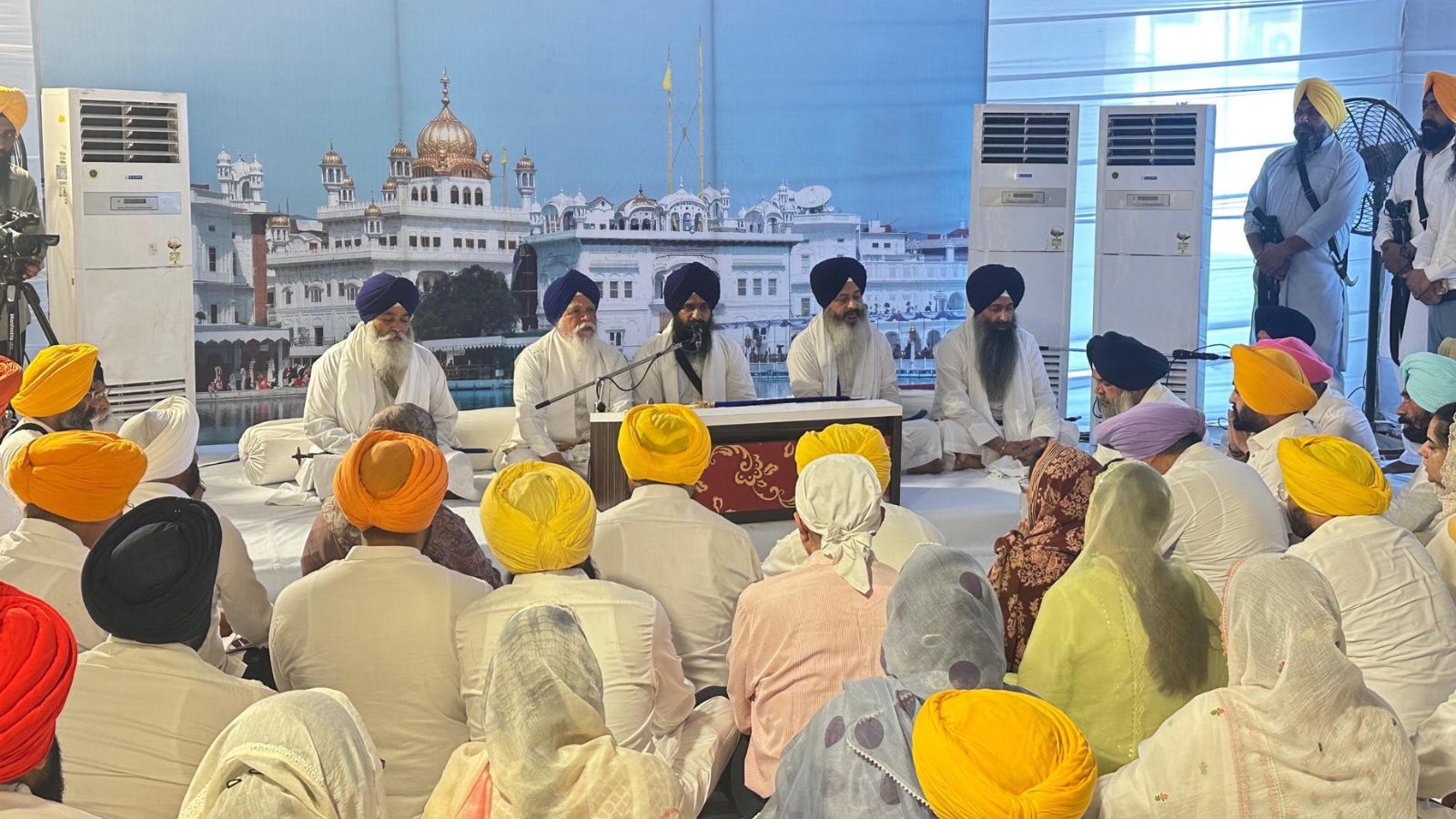
The government committee decided to “write another letter inviting Akal Takht Sahib’s coordination committee for the next meeting so that a mutually agreeable solution to this dispute can be found through bilateral discussions”. (File)
AI Narration
Listen
00:00
The Akal Takht-formed panel didn’t turn up for the first meeting with the committee formed by the Punjab government to discuss the differences over the Anti-Sacrilege ‘Jagat Jot Sri Guru Granth Sahib Satkar (Amendment) Act, 2026’.
A seven-member coordination committee formed by the Punjab government had invited the Akal Takht panel for the meeting, which was for Wednesday in Amritsar.
The meeting faced a major roadblock when no representatives from the Akal Takht-appointed panel turned up. The panel’s stance was that the government should first put the law on hold before any formal negotiations can proceed.
Both sides wrote a series of letters to each other before today’s meeting. The Akal Takht panel had already declined to attend any meeting. Yet the government formed a committee with members, including the former Akal Takht Jathedar Giani Raghubir Singh and Damdami Taksal head Harnam Singh Dhuma.
The government’s committee members at the venue expressed disappointment, emphasising that face-to-face dialogue remains the only viable path forward. Giani Raghbir Singh remarked that “the government’s committee is fully prepared to address the objections raised by Sri Akal Takht Sahib” and maintained that “sitting face-to-face between both committees is the only way to clear all confusions and doubts, while staying the law falls under the domain of the government, not the committee”.
Elaborating on the legal complexities, Punjab’s Advocate General and committee member Maninderjit Singh claimed that there were administration constraints regarding the legal framework. Maninderjit explained that “it is not possible to directly stay a law passed by the Vidhan Sabha” since the legislation was formulated as an amendment to the existing 2008 Satkar Act.
According to the Advocate General, “if a stay is imposed, it could carry legal consequences and potentially affect the provisions of the older act as well,” further adding that “it is inappropriate to put conditions before a committee formed for dialogue”.
Story continues below this ad
The government committee decided to “write another letter inviting Akal Takht Sahib’s coordination committee for the next meeting so that a mutually agreeable solution to this dispute can be found through bilateral discussions”.
The legislation, passed during a special session of the Punjab Vidhan Sabha on April 13, 2026, and notified on April 20, was designed to address incidents of sacrilege. Under the law, offenses related to the desecration, conspiracy, or abetment concerning Sri Guru Granth Sahib carry severe penalties, ranging from ten years to life imprisonment, alongside fines spanning from Rs 5 lakh to Rs 25 lakh.
However, the act quickly became a focal point of friction between the state administration and religious authorities, particularly Akal Takht Sahib, which raised significant objections regarding several of its provisions. Critics and religious bodies argued that the law was enacted without sufficient deliberation with the Sikh Panth, Akal Takht Sahib, and the Shiromani Gurdwara Parbandhak Committee (SGPC)
© The Indian Express Pvt Ltd

Kamaldeep Singh Brar is a Principal Correspondent at The Indian Express, primarily covering Amritsar... Read More
KioskNews shows a cleaned-up reading view extracted from the publisher’s page — the original always lives on their site, not ours.