Why curved TVs failed but curved gaming monitors thrived
Chris Farina/Getty Images
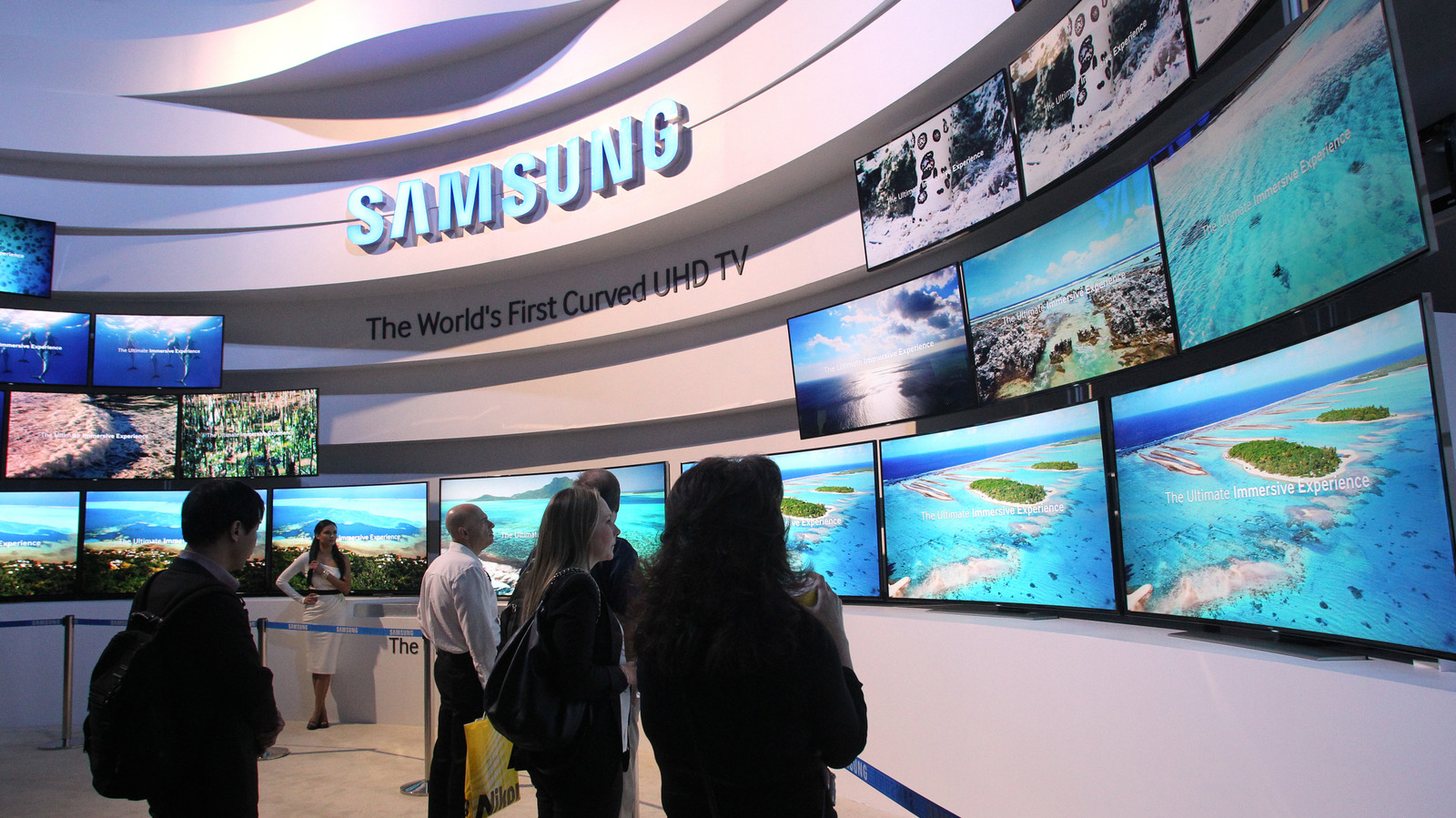
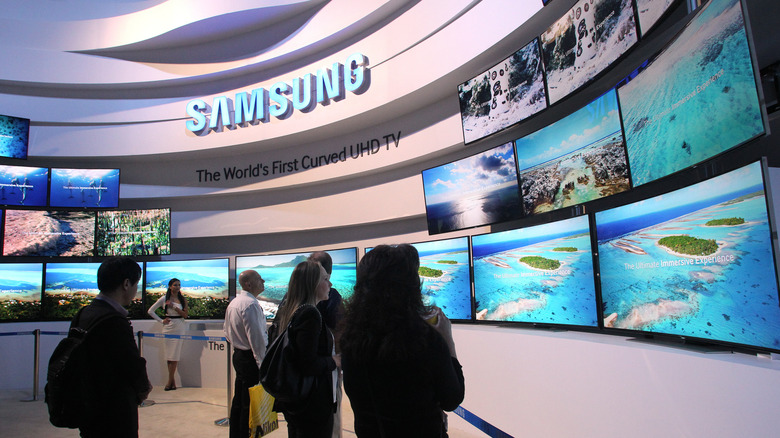
Much like 3D sets, curved TVs at one point seemed like they were everywhere. Throughout the 2010s, many TV makers tried to market curved TVs as a more immersive way of viewing your new flat screen set. And simply put, they also looked pretty cool, especially if they were replacing a clunky first-gen LCD. But by 2020, even Samsung, the last holdout for curved TVs, gave up on the idea.
Aside from a few concepts that will likely never reach production, curved TVs are effectively dead. Instead, the dream of that technology lives on in gaming monitors, which offer more extreme curved angles than we've ever seen on televisions.
So what went wrong with curved TVs? There's an obvious short answer, and a few more complicated reasons.
Curved TVs weren't that immersive
Ethan Miller/Getty Images
The notion of gaining immersion with large curved screens isn't anything new. We've seen it for decades in IMAX theaters and other large format screens, like the Cinerama Dome in Hollywood. It's easy to feel drawn into The Odyssey when you're sitting very close to a concave 65-foot tall screen. But there's a big difference between those massive theaters and a 55- to 65-inch flat panel in your living room, which is likely six to ten feet away from your couch.
Unless you were lucky enough to have a 78-inch curved set and sat fairly close, it was simply hard to replicate the sense of immersion from theaters. And even those large TVs, which were very rare, were still surrounded by everything else in your living room. You can't exactly get lost in The Lord of the Rings if your TV is surrounded by decorations, family photos and pets eager for your attention.
Curved LCD TVs had a limited sweet spot
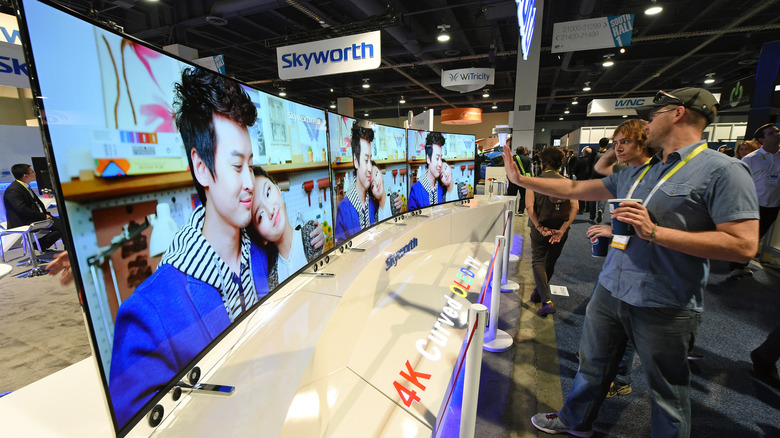
Even if you were completely satisfied by your curved set, there's a good chance your friends and family weren't. Curved LCDs had a sweet spot directly in the middle of their viewing angle, but once you drifted away from that, you instantly lost contrast and color saturation. If you were to watch Game of Thrones' infamously dark night scenes while sitting off-center from a curved TV, you'd likely have a hard time making out anything happening. (Curved OLED TVs didn't have the same sweet spot problem, but they were also typically more expensive than standard OLEDs.)
I noticed this myself while watching countless CES TV demos – some curved TVs practically looked greyscale when you were sitting at extreme angles. It was genuinely painful to see what those awful angles did to vibrant and colorful films like the majestic Life of Pi.
Curved sets were also hard to make
Chris Farina/Getty Images
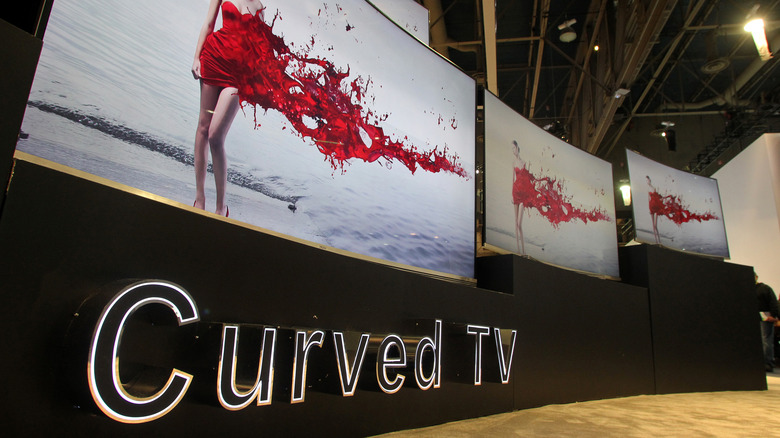
According to Dipin Sehdev, founder and CEO of the consumer electronics aggregator CE Critic, it wasn't just viewers taking issue with curved TVs. "I remember hearing from manufacturers that they were a pain to manufacture at scale," he said in an interview. "It's one thing to do a 30- or 32-inch TV, but when you start to get to 55, 65, or even 75-inch curved TVs, they were very difficult to manufacture and ship and keep the uniformity as best as they can."
Even enormous companies like Samsung can only justify manufacturing losses for so long. When taken together with the other issues around curved TVs, it's easy to see why TV makers were quick to give up on them.
Curved TVs were tough to mount
As flatscreen TVs became slimmer and lighter, consumers were also eager to start mounting them on walls, above fireplaces and wherever they could to save a bit of floor space. But curved TVs also made that difficult, according to Sehdev. "Having a curved TV where the corners stick out, almost up to 6 inches with some of these manufacturers, that was pretty significant when you're thinking about putting it above a mantle or and trying to have a clean or contemporary look," he said.
Curved gaming monitors avoid all of these issues
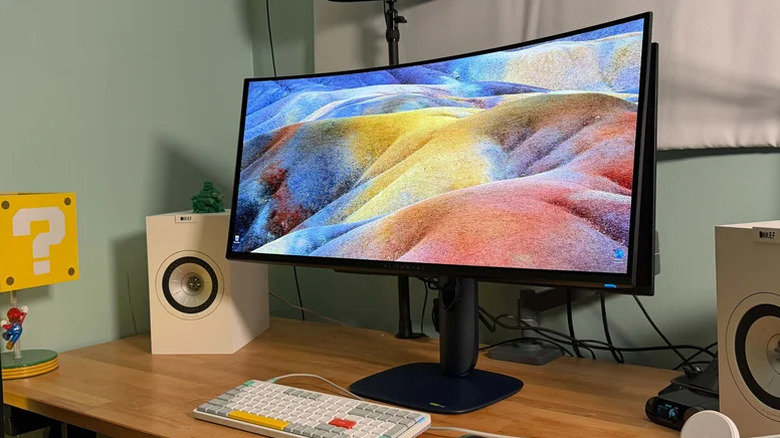
Devindra Hardawar for Engadget
It's no wonder why curved gaming monitors took off. Since they're usually meant for a single viewer, their central viewing sweet-spot was a feature, not a bug. We also sit much closer to our monitors, so a 27-inch or 32-inch curved gaming screen can feel genuinely more immersive than a 65-inch TV that you're sitting far away from.
Curved gaming screens also serve a very functional purpose: They put more of the screen within your direct view, so you don't have to crane your neck to see the far edges of the screen. That's particularly useful for online shooters, where you could easily die if you spent an extra half-second noticing someone flanking you from the side. That's one of many reasons it's a bad idea to use a standard 32-inch or 40-inch TV as a monitor.
Without curved screens, we likely wouldn't have extreme ultrawide monitors either. Just imagine how tough it would be to use something like Alienware's 34-inch ultrawide or Samsung's 55-inch Odyssey Ark behemoth if they were completely flat screens.
"As soon as we get to ultrawides... obviously the more curved it is, the better it's going to be," Sehdev added. "You're now starting to see some folks that are getting very heavy into simulation gaming with things like Gran Turismo or Flight Simulator from Microsoft. That's where people want curved screens for those types of gaming experiences."
Curved TVs died so curved gaming monitors could live
One thing I've learned after covering the technology world for 16 years is that many people, even the folks at massive global corporations, don't really have a clue how a new technology is meant to be implemented. Curved TVs mostly served as a marketing gimmick at a time when companies were desperate to sell new TVs. But without the experience of making those sets, those same companies would likely have a harder time making curved gaming monitors today, resulting in something consumers actually want.
KioskNews shows a cleaned-up reading view extracted from the publisher’s page — the original always lives on their site, not ours.