Path clear for 2025 batch, about 100 candidates whose OBC certificates were rejected since 2016
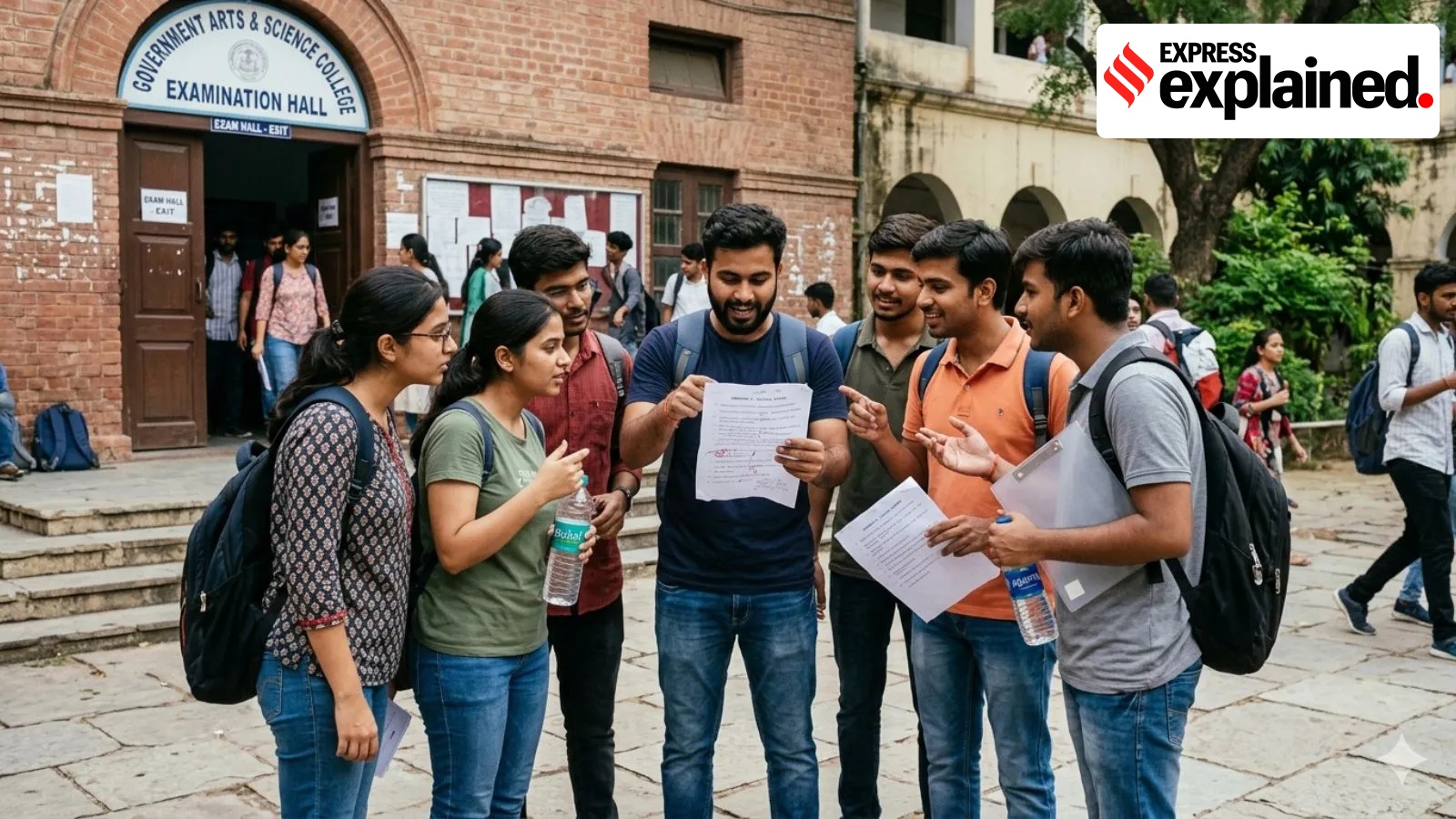
IF THE Central government follows Friday’s Supreme Court ruling, it could pave the way for service allocation and training and induction of the 2025 batch of 958 candidates selected in the Civil Services Examination (CSE) and of 148 candidates selected in the Indian Forest Service Examination.
The decision could also enable nearly 100 OBC candidates to enter various civil services in accordance with their merit in the respective examinations. Their caste certificates had been rejected over the years since 2016 on the ground that they belonged to the creamy layer, resulting in the rejection of their CSE selections.
A bench of Justices P S Narasimha and R Mahadevan said there was “no convincing or reasonable justification” for deferring the implementation of its March 11 judgment. While the court had originally given the Centre six months to implement the verdict retrospectively, the government approached it on August 24, citing difficulties in doing so. On Friday, the court granted the Centre an additional two months.
The bench said its March 11 judgment had held that the respondent candidates “fall within the non-creamy layer of the OBC category and are entitled to the benefit of reservation together with consequential placement and allotment of posts in the selection processes in which they participated.”
This means that salary or income alone cannot be used to determine creamy-layer status in the case of candidates whose parents work in PSUs, private-sector establishments, schools and other institutions. The status and category of the posts held by their parents must also be taken into account in accordance with the 1993 government order.
The 1993 order had excluded salary and agriculture income from the income wealth test deciding the creamy layer. In 2004, however, the government included the salary income of PSU and private sector employees, following which petitions were filed before the Supreme Court.
The Court ruled that excluding the children of such OBC parents working in PSUs and the private sector from reservation benefits solely on the basis of their salary income and not considering the category of posts – Group A or B, or Group C or D – would amount to “hostile discrimination”.
Story continues below this ad
The Indian Express had first reported on August 24 the Centre’s move to seek relief from the Supreme Court. In October, it reported that the Foundation Course and service allocation of CSE-2025 candidates had been put on hold for the first time in the history of the Civil Services Examination.
The 2004 clarification of the Department of Personnel and Training provided that where equivalence between posts in the private or public sector and government posts had not been evaluated, creamy-layer status would be determined by assessing parental salary income separately from income from other sources. This formula was not implemented during the Congress-led UPA regime but began to be applied in 2016, two years after the BJP came to power.
The creamy-layer concept, introduced by the Supreme Court in the landmark Indra Sawhney case to ensure that reservation benefits reach the genuinely backward sections among OBCs, has long been the subject of debate over how social status and income should be assessed across different forms of employment.
The income ceiling for those not in government service, set at Rs 1 lakh per annum in 1993, was revised in 2004, 2008 and 2013. In 2017, it was raised to Rs 8 lakh per annum. It has remained at this level since then. The last meeting to consider revising the ceiling was held in July 2020, but no revision has followed.
Story continues below this ad
The creamy-layer criteria cover persons occupying constitutional posts; Group A/ Class I officers of the All India Services and Central and state services (either of parents direct recruitee or by promotion before age of 40); Group B/Class II officers of the Centre and states (both parents); employees of PSUs of similar ranks; officers of the armed forces (above Lt Colonel); professionals and those engaged in trade and industry; property owners; and those covered by the income/ wealth test.
While equivalence between posts in some central PSUs and government positions was settled in 2017, the question remains unresolved for the private sector, universities, educational institutions and various state government organisations. Employees in these sectors were consequently being classified as creamy layer on the basis of their parental income.
The March 11 judgment in Union of India vs Rohith Nathan held that the salary or income of a parent employed in a PSU or the private sector could not, by itself, determine creamy-layer exclusion. The status and category of the parent’s post, along with the prescribed income or wealth test, had to be considered in accordance with the 1993 Office Memo.
The Supreme Court said on Friday that the government remained free to formulate its reservation and creamy-layer policies in accordance with the Constitution and the principles laid down by the court.
Story continues below this ad
“This court is not inclined to prescribe any timeline for establishing equivalence between posts or consulting stakeholders in the formulation of the creamy layer policy, as these matters fall within the domain of the executive and the legislature,” the bench said.
The Centre had argued that giving the March 11 judgment retrospective effect would have “harsh and unjust unintended consequences” for employees and appointees who were not parties to the litigation, besides causing “complete administrative chaos”. The Supreme Court rejected the plea.
KioskNews shows a cleaned-up reading view extracted from the publisher’s page — the original always lives on their site, not ours.