Global anti-fraud plan unveiled
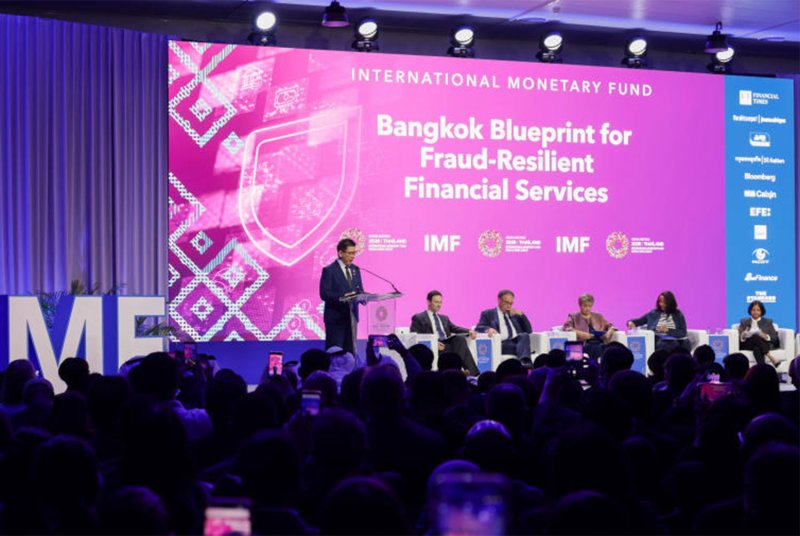
The International Monetary Fund and World Bank have unveiled a global roadmap to help countries prevent, detect and tackle the growing threat of cyber-enabled fraud in digital financial services.
The Bangkok Blueprint, developed in coordination with the Bank of Thailand and released on Wednesday during the 2026 IMF and World Bank Group annual meetings, aims to strengthen trust in digital financial services and accelerate financial inclusion.
The blueprint comprises five pillars: establishing strategic and legal foundations; strengthening fraud mitigation throughout its life cycle; leveraging existing risk mitigation and enforcement frameworks; expanding domestic and cross-border cooperation; and promoting consumer protection and resilience.
Recognising that fraud schemes often involve social media, digital platforms, e-commerce and telecom networks, the roadmap emphasises clear accountability and timely cooperation between the public and private sectors, both within and across borders. It encourages countries to adapt its 12 key considerations to their respective legal, institutional and market conditions.
The blueprint highlights the need for clear national strategies, appropriate legal and regulatory frameworks, effective supervision and stronger coordination to enable swift responses to emerging threats.
It also calls for fraud prevention to be embedded in financial services, supported by real-time intelligence, operational capabilities and adequate consumer protection, the Bank of Thailand said. These efforts should balance innovation, financial inclusion and risk management.
Central bank governor Vitai Ratanakorn said digital finance had expanded access, innovation and efficiency, but had also enabled fraud to occur at greater speed, scale and sophistication.
“Cyber-enabled fraud has become a global challenge that no country or institution can tackle alone,” he said.
“The Bangkok Blueprint reflects our shared commitment to strengthen cooperation, build trust, and promote a safe and inclusive digital financial future for all.” (Story continues below)
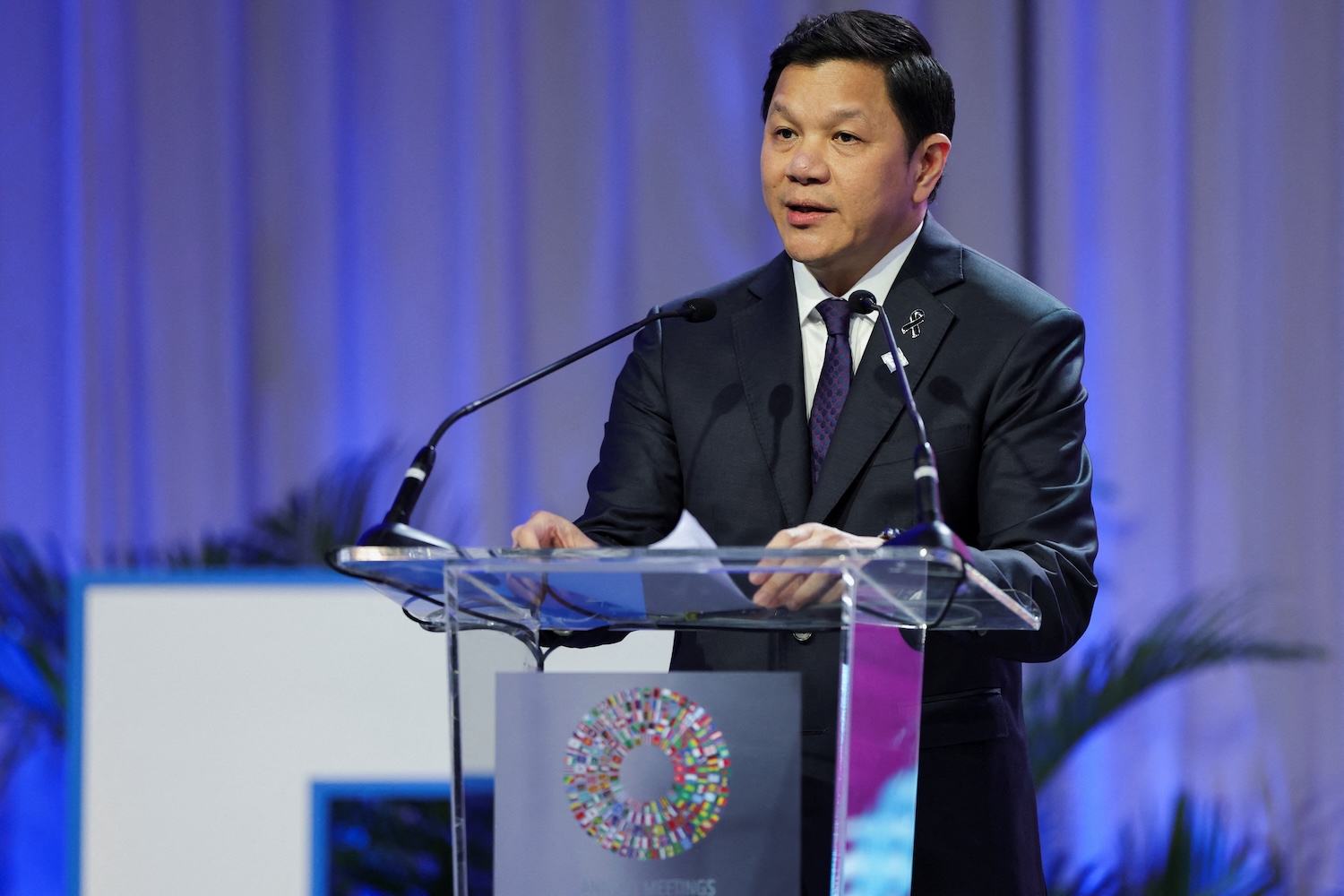
Bank of Thailand governor Vitai Ratanakorn addresses participants at the launch of the Bangkok Blueprint for Fraud-Resilient Financial Services at the IMF-World Bank 2026 annual meetings at the Queen Sirikit National Convention Center in Bangkok on Wednesday. (Photo: Reuters)
Trust at the core
IMF managing director Kristalina Georgieva said trust was the foundation of every financial system. As digital finance expands, countries must work together to combat cyber-enabled fraud and preserve confidence in the technologies that support economic growth and financial inclusion.
Countries should adapt the blueprint’s 12 key considerations to their domestic circumstances, taking into account differences in legal and regulatory frameworks, institutional capacity, fraud risks and the structure of their digital financial ecosystems, she said.
Anshula Kant, managing director and chief financial officer of the World Bank, said digital financial services could be a powerful driver of economic opportunity, job creation and financial inclusion in developing economies.
Strengthening protection against fraud was essential to ensuring people could use these services with confidence and fully benefit from the opportunities they offer, she said.
Finance Minister Ekniti Nitithanprapas said responses to fraud must be as interconnected as digital financial services.
“The Bangkok Blueprint provides a foundation for stronger cooperation and collective action to protect people and strengthen trust in the digital economy,” Mr Ekniti said.
“I hope the blueprint can be improved by international organisations, leading to closer cooperation among countries.”
Digital fraud and scams cost the global economy around US$1 trillion annually, equivalent to about 3% of global GDP, the Bank of Thailand said.
“Fraud and scams are inherently international in nature. Victims may be in one country, scammers may operate from another, and the money may pass through a third,” Mr Vitai said.
“Yet our responses remain largely national, with limited coordination across borders. Scammers exploit these gaps, which is why no country can tackle these challenges alone.”
KioskNews shows a cleaned-up reading view extracted from the publisher’s page — the original always lives on their site, not ours.