As MCU Reveals Doctor Doom's Witch Allies, His Loyal 'Black Swans' Explained

Hannah is a senior writer and self-publisher at ScreenRant. There, she focuses on writing news, features, and list-style articles about all things comics, books, anime, and manga. She works as a freelance writer in the entertainment industry, focusing on video games, anime, and literature.
Her published works can be found on Screen Rant, FinanceBuzz, She Reads, and She Writes.
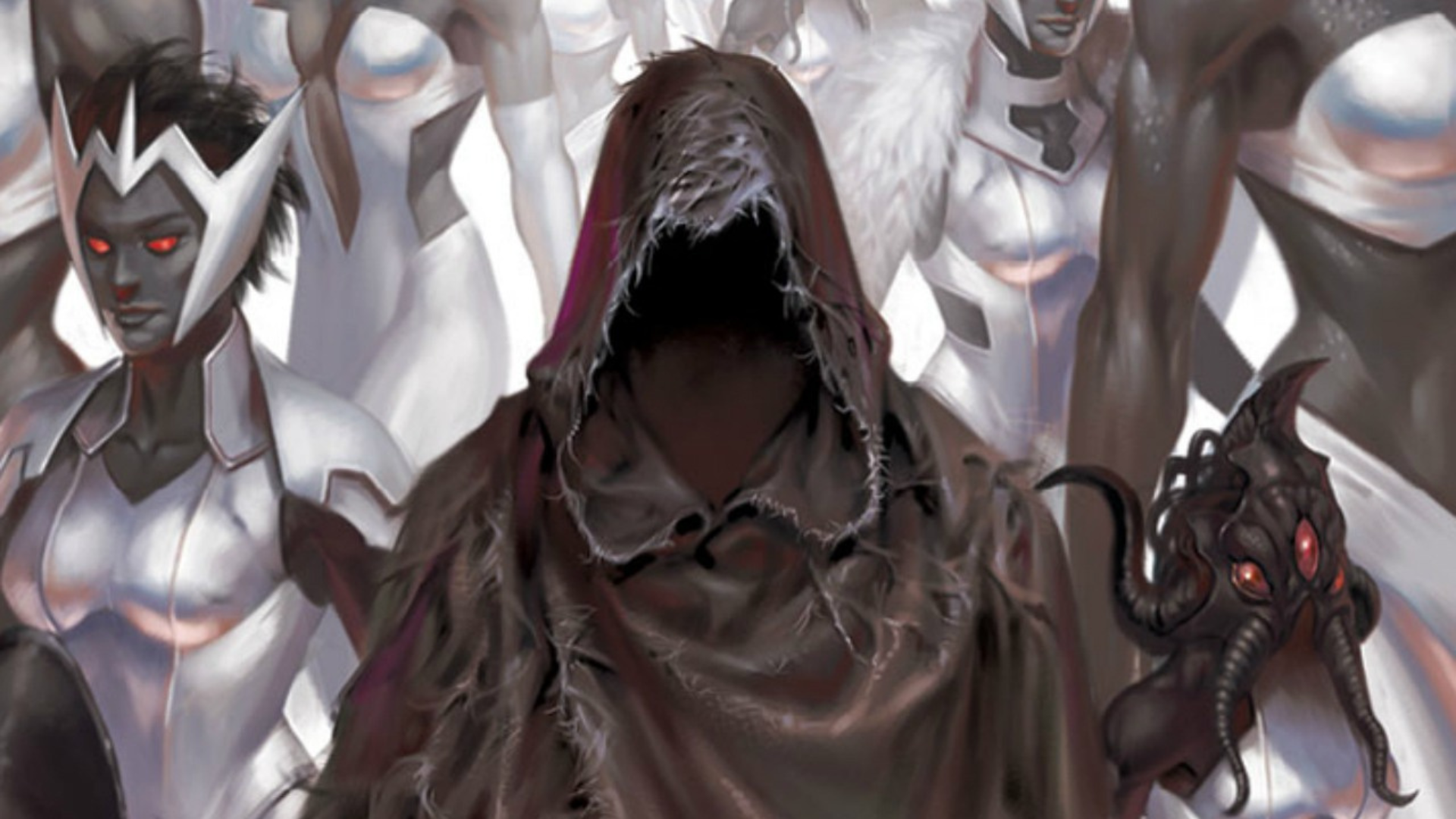
New Doctor Doom artwork raises a question rooted in Marvel Comics, about whether the masked figures around Latveria’s ruler could be the Black Swans, an order devoted to Rabum Alal? Illustrator Jorge Molina’s promotional image for Avengers: Doomsday shows Doom accompanied by three hooded women described as Latverian witches, prompting speculation about their place in his plans. It accompanies a limited-edition Magic: The Gathering card promotion tied to screenings.
Marvel has not confirmed that these characters are Black Swans, and promotional art alone is not proof of a specific plot twist. Still, the resemblance is intriguing because the group played an important role in the comics leading into 2015’s Secret Wars. To understand why Doom might surround himself with masked devotees, it helps to revisit the multiversal crisis that turned him into a godlike ruler.
Who Are Doctor Doom’s Black Swans?

The Black Swans are not simply a squad of spellcasters or guards stationed in Doom’s castle. In Jonathan Hickman’s Avengers-era stories, they are members of a secretive, interdimensional order who worship Rabum Alal, a figure they call the Great Destroyer. Their faith gives Doom agents willing to cross realities, carry out brutal assignments, and accept mass destruction as part of a supposedly greater mission.
One of the best-known members, as detailed in Marvel’s Black Swan profile, is Yabbat Ummon Turru, whose history helps show how the group recruits and shapes its followers. Her home was devastated by the Black Priests, and she escaped through a portal before being taken in by the Swans. They taught her about the multiverse and their doctrine, turning a survivor of catastrophe into a committed servant of Rabum Alal.
The Swans’ devotion is useful to Doom because his ambitions depend on more than brute force. They have knowledge of alternate worlds and the means to travel among them, making them valuable scouts and operatives during the multiverse’s collapse. Their loyalty is ideological as well as practical: they believe they serve a cosmic purpose, even when their orders demand the destruction of entire worlds. Their doctrine recasts those atrocities as necessary sacrifices rather than conquest.
Rabum Alal Was Doctor Doom’s Secret Identity

Rabum Alal initially appears to be a distant god whose identity is hidden behind a religious mystery. The revelation in New Avengers #33 is that he is Victor von Doom himself. Doom had adopted the identity and established the Black Swans as part of a secret campaign to stop the Beyonders, immensely powerful beings from outside the multiverse who intended to bring every reality to an end.
Doom’s plan began with Owen Reece, better known as the Molecule Man. The Beyonders had created a version of Reece in each reality as a living bomb, with the potential to destroy that universe when activated. Doom and the Molecule Man sought to get ahead of that threat by killing these counterparts before the Beyonders could use them. The Black Swans helped carry out the campaign across countless realities.
Their mission, however, had disastrous consequences. The deaths of Molecule Men helped trigger incursions, events in which two universes collide at their Earths and threaten to destroy both realities. Doom was trying to prevent a greater catastrophe, but his chosen solution accelerated the multiverse’s breakdown. That contradiction is important to the character, as he sees himself as the one person willing to make impossible choices, even when his decisions create new suffering.
How The Black Swans Fit Into Secret Wars

As the crisis worsens, Doom recognizes that killing the Molecule Men is not enough to defeat the Beyonders. His approach changes, and he begins gathering rather than destroying the remaining Molecule Men, keeping the shift secret from many of the Swans. This detail matters because the group’s devotion does not mean its members understand the full strategy. They serve a leader who withholds information whenever he believes secrecy gives him an advantage.
Doom ultimately confronts the Beyonders with the Molecule Man’s help and takes their power, but he cannot preserve the multiverse as it was. Instead, he assembles the surviving fragments into Battleworld, a patchwork planet where he reigns as God Emperor Doom. As Marvel’s guide to Secret Wars explains, the event explores the price of that victory as a patchwork realm built from defeated realities and kept under Doom’s absolute authority.
Doctor Strange also occupies a pivotal place in that story, serving as one of Doom’s closest allies and helping maintain order on Battleworld. That relationship is part of why fans are watching the masked figures in Doomsday artwork so closely: the MCU may be drawing from the same comic-book era in which Doom gathers unusual followers and powerful advisers. Yet a parallel does not confirm a one-to-one adaptation of every faction.
Could The MCU’s Latverian Witches Be Black Swans?

The three hooded figures in Molina’s art could be an original group, a visual nod to the Black Swans, or a different interpretation of Doom’s supporters altogether. In the comics, the Black Swans are defined by their role in the multiversal conflict, not by a simple label of “witches.” Their beautiful robes and religious devotion could translate visually to the MCU, but the underlying lore would need to be adapted to fit the film’s story.
If the women are connected to the Black Swans, their presence could suggest that Doom’s influence extends beyond Latveria and into the wider multiverse. Rather than relying only on armor, advanced technology, and personal combat, he might command people who can investigate alternate realities or carry out work beyond the Avengers’ reach. That would make his support network feel like an organized movement, not merely a royal entourage.
For now, it is best to treat the connection as informed speculation. The promotional image offers a glimpse of Doctor Doom with masked allies, but it does not establish their names, origins, powers, or allegiance to Rabum Alal. The comics provide a very interesting blueprint for what such a reveal might mean, especially with Secret Wars looming, but Marvel Studios could change the details from the comics substantially when the film finally releases on December 18, 2026.
KioskNews shows a cleaned-up reading view extracted from the publisher’s page — the original always lives on their site, not ours.