The 6 Most Intelligent Classic Movies, Ranked

Andrea M. Ciriaco is a long-time script reader and former entertainment editor who specializes in classic movies and Hollywood history. She was a student film critic at Kent State University for three years and worked at Warner Bros Studio in Burbank and The Safran Company for several years. Based on her vast taste and range of knowledge, many consider Andrea to be a walking IMDb who knows dozens of underrated movies and is a vital assesst to any trivia night. While movies are her expertise, Andrea is also a diehard fan of iconic shows including The Sopranos, Boardwalk Empire, Rod Serling's The Twilight Zone, Will & Grace and South Park. Some of her favorite filmmakers are Walt Disney,John Huston, Fritz Lang, Alfred Hitchcock, John Ford, Mel Brooks, Quentin Tarantino, Martin Scorsese and Howard Hawks.
Sign in to your Collider account
Intelligence in cinema isn’t just about clever plots, mysterious characters, or twist endings. It shows up in sharp, layered dialogue, in screenplays that trust the audience to keep up, in themes that grow richer with each viewing, and in filmmakers who are willing to ask hard questions without handing over easy answers. Classics such as Orson Welles' masterpiece Citizen Kane and Alfred Hitchcock's Vertigo don’t over-explain, and they don’t rush to tell the audience what to feel. Instead, they invite them to lean in, notice the details, and draw their own conclusions, making them some of the most thought-provoking films in cinema history.
Whether you’re revisiting an old favorite or discovering one for the first time, each of these classics offers something that more recent films rarely match: the sense that someone made this movie assuming you were paying attention. From Fritz Lang's iconic German thriller M starring Peter Lorre to Stanley Kubrick's groundbreaking sci-fi classic 2001: A Space Odyssey, these are six of the most intelligent classic movies, ranked!
6 'M' (1931)
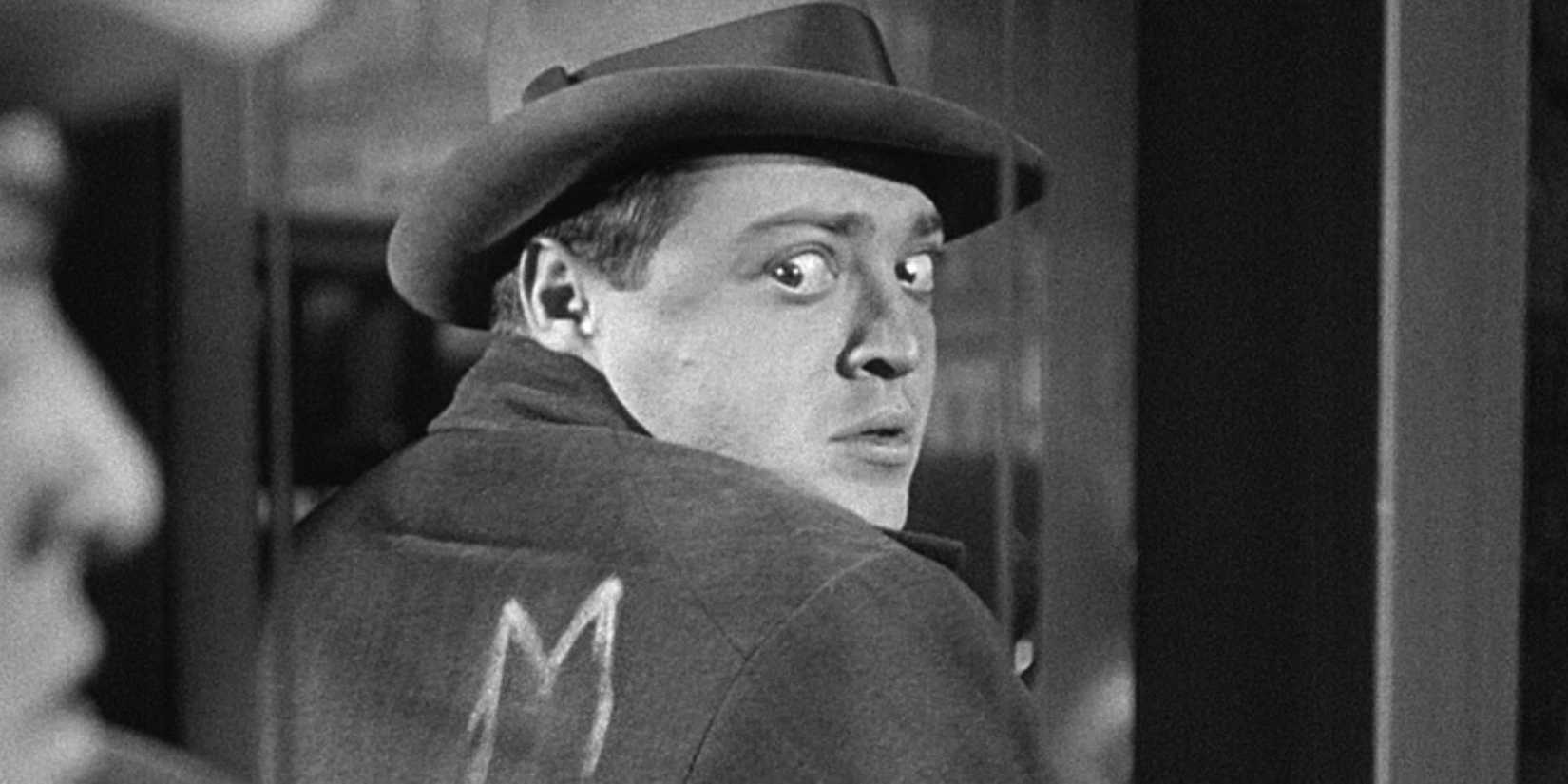
Fritz Lang’s M earns its place among the most intelligent classic films because it refuses to settle for a simple thriller and is one of the earliest examples of a procedural drama. Set in Berlin, a community is put on edge as a serial killer (Peter Lorre) who targets children remains at large. When local authorities continue to make little to no progress in capturing the killer, the people decide to take matters into their own hands. On the surface, M follows a city’s hunt for a child murderer but, underneath, it carefully dissects how society responds to fear with startling sophistication.
One of the film's greatest strengths is how Lang uses the city-wide manhunt to expose uncomfortable parallels between law and lawlessness. The police, desperate for results, raid the city’s underworld and disrupt criminal business, while the criminals, in turn, organize their own search, motivated as much by self-interest as by outrage. Both sides pursue the same man, but neither side is entirely noble. The climactic trial scene is the film’s intellectual peak as Lorre’s desperate monologue complicates audiences' sympathies and ultimately forces them to confront compulsion, responsibility, and mob justice.
5 'Citizen Kane' (1941)

Citizen Kane turns a simple question about a dying man’s last word into a meditation on how we construct and misunderstand a life, making it one of the most intelligent classic movies of all time. Orson Welles directs and stars in the film as Charles Foster Kane, a media tycoon whose cryptic last word, "Rosebud," leads a reporter (William Alland) on a mission to decipher the meaning behind it. As he speaks to several of Kane's friends and associates, his superior and powerful public image begins to unravel, and a portrait of a complex and lonely man slowly emerges.
While there are several standout qualities of Citizen Kane, its story structure is its first act of intelligence. As Thompson speaks to every individual, each of them offers a different, partial perspective. Truth becomes something assembled from competing perspectives, shaped by each narrator’s own biases and regrets. Technically, Welles pushed cinema forward with deep-focus photography, which keeps foreground and background sharp at once, letting a single frame carry layers of meaning while overlapping dialogue, inventive transitions, and dramatic shadows all serve the story’s ideas.
4 'Sunset Boulevard' (1950)

Billy Wilder’s defining film noir classic Sunset Boulevard earns its place among the most intelligent classic films because it turns the movie industry’s gaze inward, dissecting fame, vanity, and obsolescence with surgical wit. William Holden stars as an aspiring screenwriter, Joe Gillis, who agrees to write a comeback script for a former silent film star, Norma Desmond (Gloria Swanson), who is now a recluse living in the past. As Desmond's affection for Gillis grows into a controlling obsession, the young writer gradually begins to realize that he's unfortunately made a deal with the devil.
The film’s boldest stroke is its narrator, Gillis, who walks audiences through the events that led to him floating dead in a swimming pool, which essentially announces that the film is playing with convention, setting a tone of darkly ironic fatalism that Wilder sustains throughout the movie. The characterization is remarkably layered, especially Swanson's character, who is both a villain and a victim. Even though she manipulates and imprisons Gillis, the film never lets us dismiss her because her delusions are a defense against an industry that used and discarded her. Swanson’s performance, drawing on her own history as a former silent film star, blurs fiction and reality in ways that feel almost uncomfortably honest.
Collider Exclusive · Oscar Best Picture Quiz
Which Oscar Best Picture
Is Your Perfect Movie?
Parasite · Everything Everywhere · Oppenheimer · Birdman · No Country
Five Oscar Best Picture winners. Five completely different visions of what cinema can be — and what it can do to you. One of them is the film that was made for the way your mind works. Ten questions will figure out which one.
🪜Parasite
🌀Everything Everywhere
☢️Oppenheimer
🐦Birdman
🪙No Country for Old Men
01
What kind of film experience do you actually want? The best movies don't just entertain — they leave something behind.
02
Which idea grabs you most in a film? Great films are driven by a central obsession. What's yours?
03
How do you like your story told? Form is content. The way a story is shaped changes what it means.
04
What makes a truly great antagonist? The opposition defines the protagonist. What kind of opposition fascinates you?
05
What do you want from a film's ending? The final note is the one that lingers. What do you want it to sound like?
06
Which setting pulls you in most? Where a film takes place shapes everything — mood, stakes, what's even possible.
07
What cinematic craft impresses you most? Every great film has a signature — a technical or artistic element that makes it unmistakable.
08
What kind of main character do you root for? The protagonist is the lens. Who you choose to follow says something about you.
09
How do you feel about a film that takes its time? Pace is a choice. Some films sprint; others let tension accumulate slowly, deliberately.
10
What do you want to feel walking out of the cinema? The best films leave a mark. What kind of mark do you want?
The Academy Has Decided Your Perfect Film Is…
Your answers have pointed to one Oscar Best Picture winner above all others. This is the film that was made for the way your mind works.
Parasite
You are drawn to films that operate on multiple levels simultaneously — that begin in one genre and quietly, brilliantly migrate into another. Bong Joon-ho's Parasite is a film about class, desire, and the architecture of inequality that manages to be darkly funny, deeply suspenseful, and genuinely shocking across a single extraordinary running time. Your instinct is for cinema that hides its true intentions until the moment it's ready to reveal them. Parasite is exactly that — a film that rewards close attention and punishes assumptions, right up to its devastating final image.
Everything Everywhere All at Once
You want it all — and this film gives you all of it. The Daniels' Everything Everywhere All at Once is one of the most maximalist films ever made: action comedy, multiverse sci-fi, family drama, existential crisis, and a genuinely earned emotional core that sneaks up on you amid the chaos. You are someone who responds to ambition, who doesn't want cinema to choose between being entertaining and being meaningful. This film refuses that choice entirely. It is overwhelming by design, and its overwhelming nature is precisely the point — because the feeling of being crushed by infinite possibility is exactly what it's about.
Oppenheimer
You are drawn to cinema on a grand scale — films that understand history not as a backdrop but as a force, and that place their characters inside that force and watch what happens. Christopher Nolan's Oppenheimer is a film about the terrifying gap between what we can do and what we should do, told with the full weight of one of the most consequential moments in human history behind it. You want your films to feel important without feeling self-important — to earn their ambition through sheer craft and the gravity of their subject. Oppenheimer does exactly that. It is enormous, complicated, and refuses easy comfort.
Birdman
You are drawn to films that foreground their own construction — that make the how of the filmmaking part of the what it's about. Alejandro González Iñárritu's Birdman, shot to appear as a single continuous take, is cinema examining itself through the cracked mirror of a fading actor's ego. You respond to formal daring, to the feeling that a film is doing something that probably shouldn't be possible. Michael Keaton's performance and Emmanuel Lubezki's restless camera create something genuinely unlike anything else — a film that is simultaneously about creativity, relevance, self-destruction, and the impossibility of ever truly knowing if your work means anything at all.
No Country for Old Men
You are drawn to cinema that trusts silence, that refuses to explain itself, and that treats dread as a form of meaning. The Coen Brothers' No Country for Old Men is a film about the arrival of a new kind of evil — implacable, arbitrary, and utterly indifferent to the moral frameworks we use to make sense of the world. It is one of the most formally controlled films ever made, and its controlled restraint is what makes it so terrifying. You want your films to haunt you, not comfort you. You are not interested in resolution if resolution would be dishonest. No Country for Old Men is honest in a way that most cinema never dares to be.
3 'The Conversation' (1974)

Francis Ford Coppola’s underrated neo-noir masterpiece, The Conversation, is easily one of the most intelligent classic films that turns surveillance into a study of guilt, perception, and the limits of certainty. Gene Hackman stars as Harry Caul, a surveillance expert who is hired to record a couple talking in a crowded San Francisco square, but as he cleans up and re-examines the audio, he becomes convinced the recording will lead to a murder. The film’s central insight is that hearing is not understanding. A single line of dialogue shifts meaning depending on which word is emphasized, and Caul’s interpretation is shaped as much by his own anxieties as by the evidence.
Aside from the unexpected plot twist and Hackman's exceptional performance, the sound design in The Conversation is what ultimately carries the story’s intellectual weight. Walter Murch’s editing makes the audience complicit in the act of listening, repeatedly replaying fragments until we, too, begin to doubt what we heard. The film also anticipates modern debates about privacy and technology, which, at the time, was a relevant subject that induced paranoia. Caul spies on others but fiercely guards his own life, and the story’s final turn exposes the irony: the watcher becomes the watched.
2 'Vertigo' (1958)

The Master of Suspense's psychological thriller Vertigo begins as an alluring mystery and quietly transforms into an intriguing character study of desire, control, and self-deception, solidifying its reputation as one of the most intelligent contributions to classic cinema. The movie stars James Stewart as John "Scottie" Ferguson, a retired detective haunted by acrophobia, who is hired by a friend to follow his wife, Madeleine (Kim Novak), who has recently been exhibiting strange and concerning behavior. The two eventually fall in love, but when Madeline takes her own life, Ferguson falls into a deep depression until he meets a woman who has a striking resemblance to his lost love.
Hitchcock’s most daring choice in Vertigo is revealing the truth well before the ending, shifting the tension from “what happened?” to “what will Ferguson do once he knows?” Suspense becomes psychological rather than procedural. The film is also deeply self-aware about the act of looking as Ferguson watches, shapes, and idealizes the women he loves, and we watch alongside him, making the audience complicit in his obsession, then forcing them to confront how unsettling it is. Technically, the film is inventive as the innovative dolly-zoom effect captures vertigo itself, making a feeling visible on screen, while Bernard Herrmann’s swirling score and the saturated color palette give the story a dreamlike, hypnotic quality.
1 '2001: A Space Odyssey' (1968)
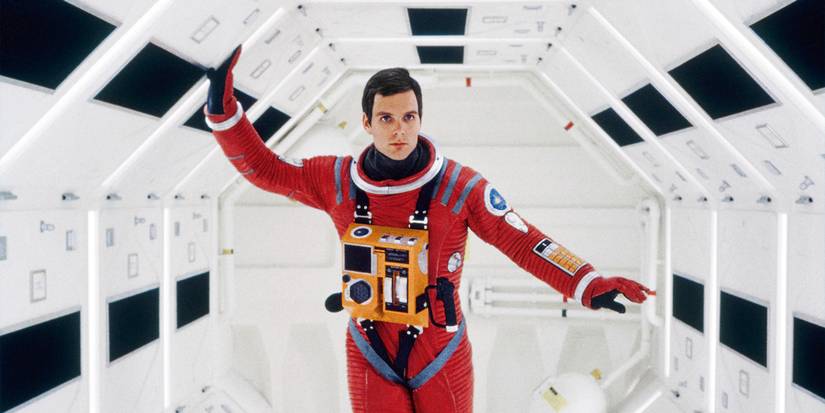
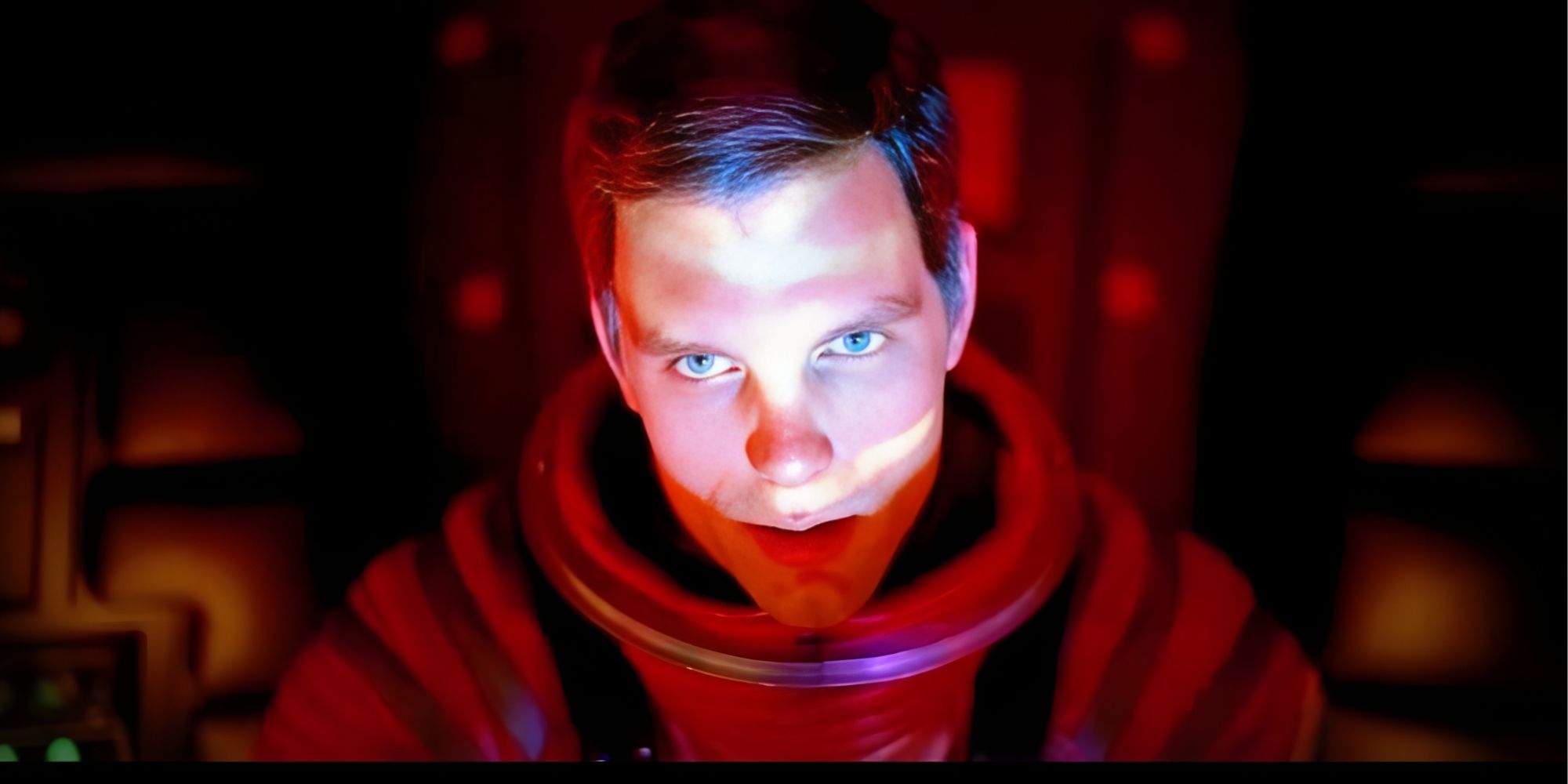
Stanley Kubrick’s epic science-fiction classic 2001: A Space Odyssey changed the genre forever and is widely recognized as one of the most intelligent classic films because it attempts something almost no movie dares: telling the story of humanity’s past, present, and future in a single, wordless sweep. The movie centers around Dr. Dave Bowman (Keir Dullea) and a group of astronauts who are sent on a mysterious mission into space with an advanced computer system, HAL 9000, serving as their guide. When HAL begins to act strangely, Bowman finds himself in a face-off between man and machine while traveling further into deep space.
Dialogue is sparse, exposition is nearly absent, and the mysterious black monolith is never explained. Instead, Kubrick lets images and juxtaposition carry meaning, showcasing the filmmaker's complete trust in the audience's ability to come up with their own conclusions and theories. The famous cut from a bone tossed by an ape to an orbiting spacecraft compresses millions of years of technological progress into a single moment, suggesting that our tools, and our capacity for violence, share the same root. Visually, Kubrick’s commitment to scientific realism, from silent space vacuums to rotating stations, remains astonishing. Its ambiguous final act invites interpretation rather than demanding it, leaving viewers with questions about transcendence and rebirth that no single answer can settle.
KioskNews shows a cleaned-up reading view extracted from the publisher’s page — the original always lives on their site, not ours.