Nepal hedges between ‘two Asian giants’ as ties with India thaw
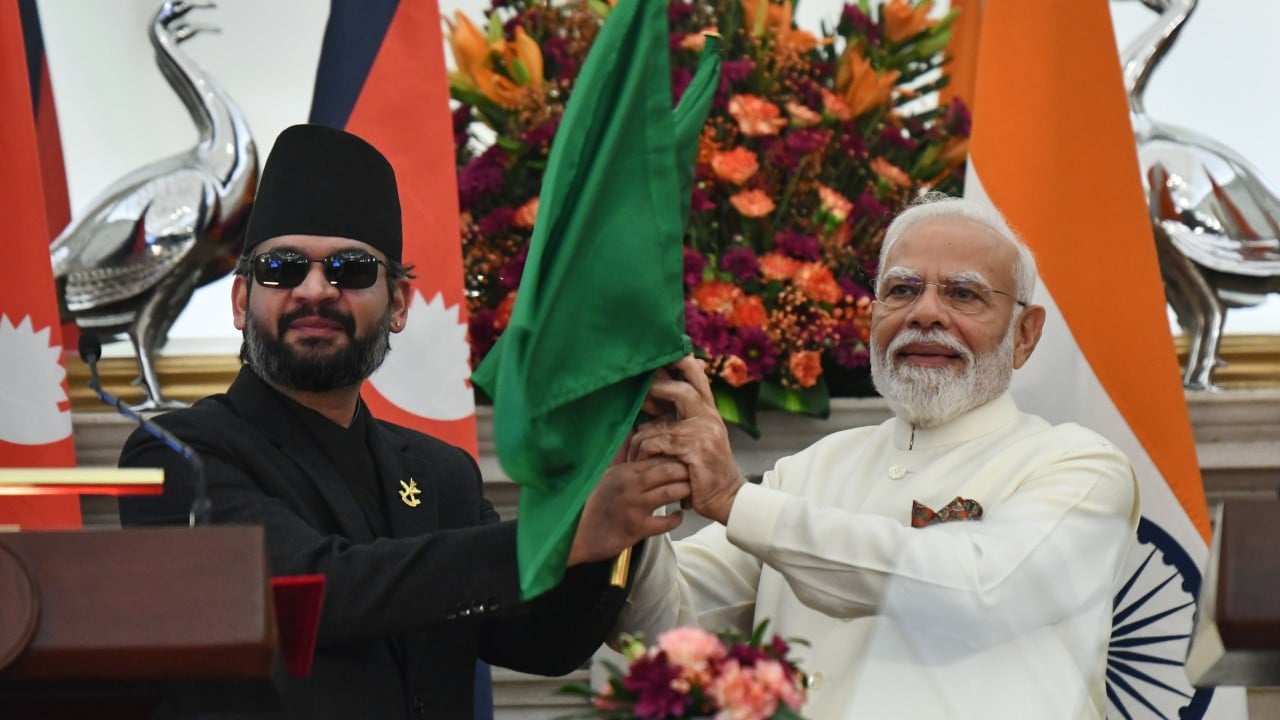
Nepalese Prime Minister Balendra Shah’s rapprochement with India highlights what analysts call the Himalayan nation’s delicate balancing act between two powerful neighbours, as Kathmandu eyes stronger ties with New Delhi without alienating Beijing.
During Shah’s two-day visit to India this week, when he met Indian Prime Minister Narendra Modi, he secured a US$1.62 billion economic aid package from Delhi as Nepal struggles to recover from devastating floods in August.
It was Shah’s first visit to India after he became prime minister in late March following his Rastriya Swatantra Party’s victory in the March 5 general election.
The trip marked a departure from his reluctance to engage with Delhi after campaigning on a more independent Nepali foreign policy, according to analysts.
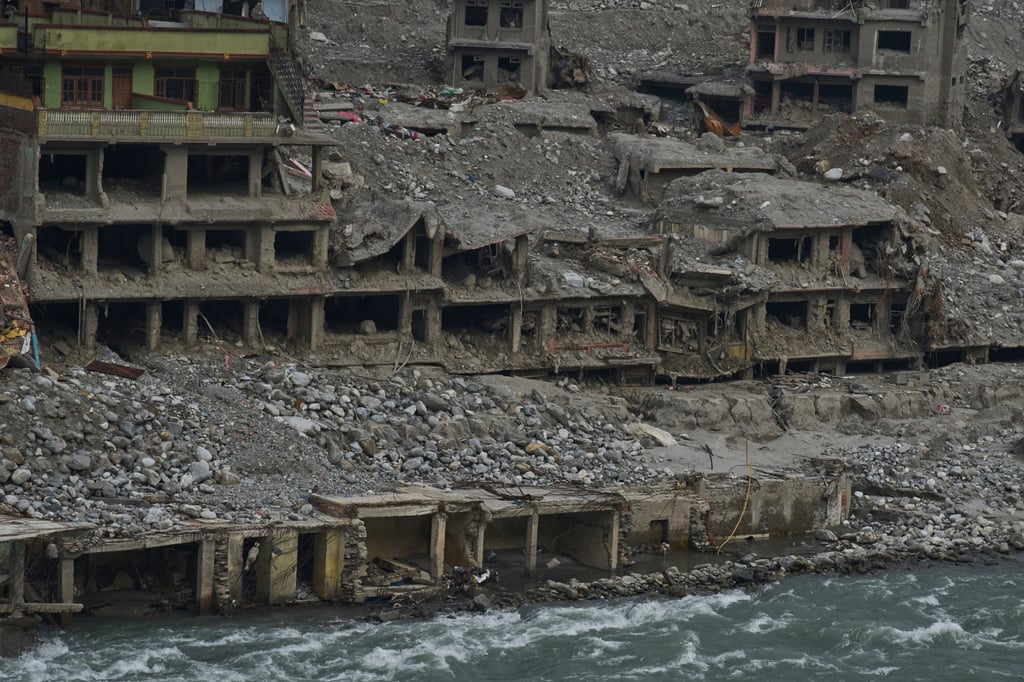
Shah’s visit from Sunday to Monday came after the floods killed 1,500 people and left 5,200 people missing. India sent rescue teams and relief materials to help Nepal recover from the disaster.
On Monday, India said it would provide Nepal with a US$1.62 billion economic package – one of its largest ever extended to any country – including a US$377 million grant for post-disaster reconstruction and new infrastructure projects.
During the visit, both countries also signed agreements on energy cooperation and hydropower projects.
To boost tourism, Shah and Modi jointly flagged off the Saryu-Kamala express train on Monday, connecting Hindu pilgrimage sites in the Nepali city of Janakpur with the northern Indian city of Ayodhya.
Swaran Singh, an international relations analyst, said the bilateral meeting reflected India’s humanitarian help and “quiet diplomacy”.
“Shah recognises that keeping India at arm’s length can be economically costly. The rapprochement should endure, provided they can address sensitive issues like disputed territorial claims,” said Singh, a former professor of diplomacy and disarmament at Jawaharlal Nehru University.
While both countries enjoy long-standing economic and cultural ties, with hundreds of thousands of Nepalis living and working in India, they have disputed over their common borders and trade.
Nepal has objected to India’s use of the Lipulekh Pass, a Himalayan mountain pass in a district of the Indian state of Uttarakhand, for a pilgrimage route.
Compulsory laboratory testing on all imported tea consignments imposed by India’s Tea Board in May effectively halted tea shipments from Nepal for about two months, forcing Nepali factories to shut down before Delhi allowed exports to resume in late June.
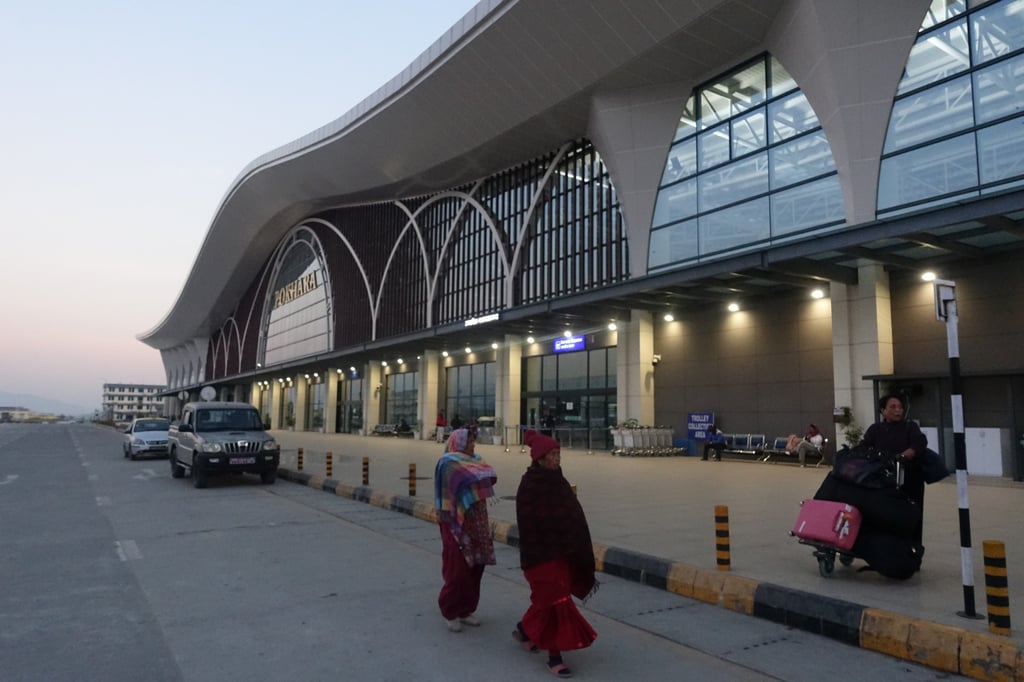
Over the past decade, China has expanded trade with Nepal, exporting more electronic products and electric vehicles, and has developed its sectors, including infrastructure such as the Pokhara International Airport, health and education.
Among the key projects in the pipeline is the China-Nepal Friendship Industrial Park, backed by Chinese investment under the Belt and Road Initiative.
“Shah’s visit marks a consequential diplomatic recalibration, but it will be a bit too ambitious to call it a complete reset or diplomatic breakthrough. There still exist serious structural differences,” Singh said.
Nonetheless, the visit signalled the importance of the two countries’ cultural and economic ties anchored by their shared history and geography, Singh added.
Nepal’s government has estimated the flood damage at US$5 billion. The World Bank has assessed the physical damage to be US$1.7 billion, with Nepal requiring US$4.8 billion to fund its recovery and reconstruction.
In a report on November 12, Fitch Ratings projected Nepal’s GDP to fall to 3.4 per cent in the financial year ending mid-July 2027, from 3.9 per cent in the previous financial year. The floods, which affected more than 10 per cent of the country’s power capacity and hit tourism and transport, would weigh on its near-term growth, Fitch said.
Uday Chandra, a professor at India’s Ashoka University, said Shah came to power after promising a break with Nepal’s political establishment, including its traditional dependence on India.
Chandra noted that about 80 per cent of Nepal’s external trade involved India, whether as direct exports or reshipment.
The visit reflected Shah’s “acknowledgement of the unavoidable economic and geographical realities that bind the two countries together”, with the economic aid package as well as plans for closer energy and transport connectivity emerging as “the fruits of rapprochement”, he added.
Shah’s visit signalled that Nepal would remain “a hedge between two Asian giants”, with the country needing India and China for its continuous development, Chandra said.
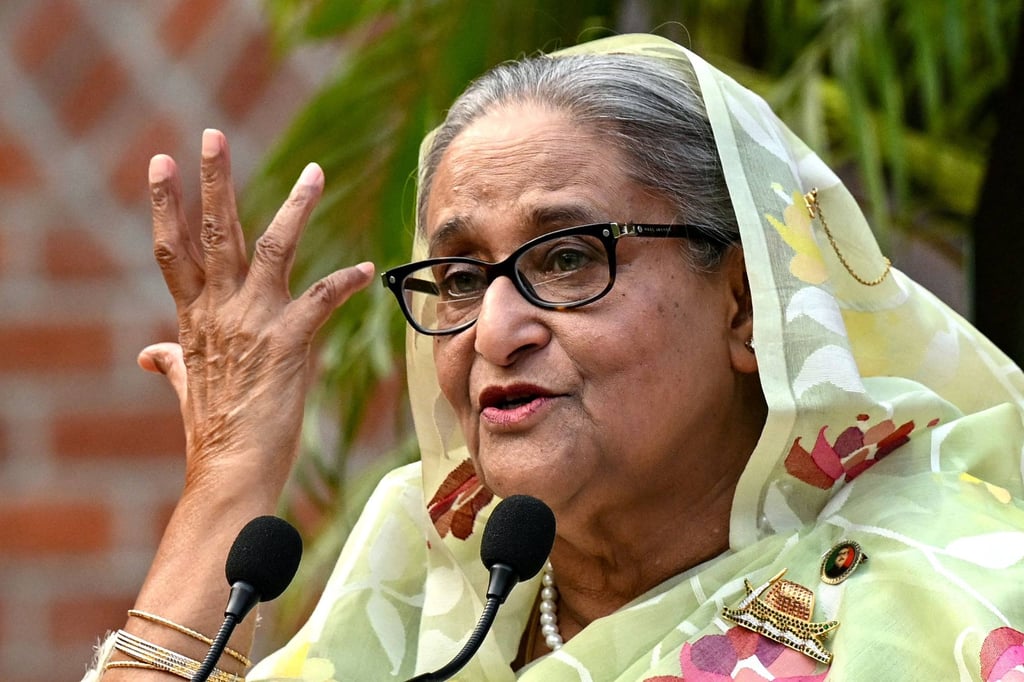
The visit happened against the backdrop of India’s continuously strained relations with Bangladesh, where an uprising led to the downfall of then prime minister Sheikh Hasina in 2024 and a new government took office in February after a general election.
The two countries have disagreed over issues including Dhaka’s call for the extradition of Hasina from India and the 1996 Ganga water-sharing treaty, which is set to expire on December 12.
Priyajit Debsarkar, a London-based geopolitical analyst specialising in South Asia, noted that Bangladesh needed to boost cooperation with India to address its economic challenges, including its energy crisis.
In August, Delhi confirmed that Bangladesh had requested India’s help to supply extra fuel.
Chandra said that the new governments in Nepal and Bangladesh were aiming for “rapprochement on pragmatic grounds” towards India.
Nonetheless, this had to be balanced with what voters in the two countries wanted over ties with India, he added.
“Political transitions in Nepal and Bangladesh have brought to power leaders with their own domestic middle-class constituencies, national priorities, and expectations of greater autonomy from New Delhi.”
KioskNews shows a cleaned-up reading view extracted from the publisher’s page — the original always lives on their site, not ours.