Gulliver fans celebrate three centuries of Jonathan Swift’s classic satire
In March 1726, an Irish clergyman visited London and arranged for a courier to deliver a manuscript to a publisher under cover of night. The dean of St Patrick’s Cathedral in Dublin knew his novel would cause trouble and wanted to publish it anonymously.
His name was Jonathan Swift and the story was called Travels into Several Remote Nations of the World. The satirical work was published that October and is better known 300 years on as Gulliver’s Travels.
An immediate sensation, it skewered Georgian pretensions and entered popular culture through translations, children’s versions, comics and films. The anniversary is now being celebrated at Swift’s alma mater, Trinity College Dublin, and at events around Ireland.
Exhibitions, festivals, seminars, art competitions and workshops are exploring the origins of Swift’s masterpiece, its retelling through a feminist lens, and its prophetic depiction of a society in thrall to a form of artificial intelligence.
“Lemuel Gulliver’s first voyage to the land of Lilliput is the one most familiar to audiences today,” said Stephanie Breen, an assistant librarian and co-curator of the exhibition at Trinity. “This exhibition, however, brings viewers on a journey to all of the lands Gulliver encountered – Lilliput, Brobdingnag, Laputa and beyond and the country of Houyhnhnms.”
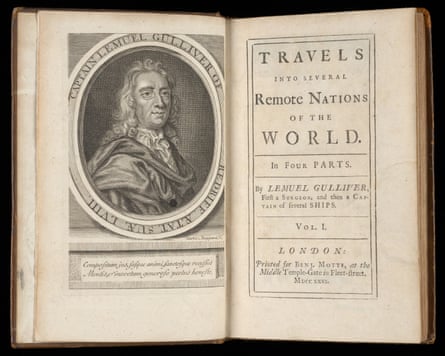
The exhibition, which runs until December and is available online, draws on the university’s collection of hundreds of editions and popularisations of Gulliver’s Travels, including engraved illustrations, pop-up versions, a 1976 Marvel comic and the only known surviving copy of an abridgement printed in 1761.
The voice of Gulliver’s wife, Mary, who is neglected and left at home “big with child” until his eventual, grumpy return, was imagined through contemporary works such as Alison Fell’s The Mistress of Lilliput and Lauren Chater’s Gulliver’s Wife, said Aileen Douglas, a professor of English and exhibition co-curator.
Gulliver’s experiences in Laputa, a floating island dedicated to arts and science, resonated with our era’s anxieties about technology, said Douglas. Its inhabitants seek to extract sunbeams from cucumbers and obtain knowledge via an “engine” of wires, handles and paper that can produce tracts on philosophy, poetry and mathematics “without the least assistance from genius or study”.
In the kingdom of Luggnagg, Gulliver is at first enchanted and then horrified by the Struldbruggs, a race that is immortal but continues eternally to age and sicken.
A panel discussion about the role of art in challenging power, and Gulliver’s attacks on human vanity and scientific arrogance, is to be held at Trinity on Wednesday. At the cathedral, a children’s choir will perform the premiere of a work by the composer Seán Doherty, along with organ recitals and extracts of Gulliver’s Travels read by the Swift scholar Brendan Twomey. An exhibition and lecture series at the Robinson library in County Armagh runs until December.
Born in 1667, Swift combined posts in the Church of Ireland with pamphlets and essays that pioneered deadpan, savage satire, including A Modest Proposal, which suggested alleviating the plight of the Irish poor by selling their children as food to the wealthy.
after newsletter promotion
He wrote Gulliver’s Travels in Dublin and at an estate in County Meath, where it is said that some very tall and very small farm workers inspired the storytelling.
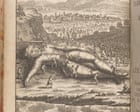
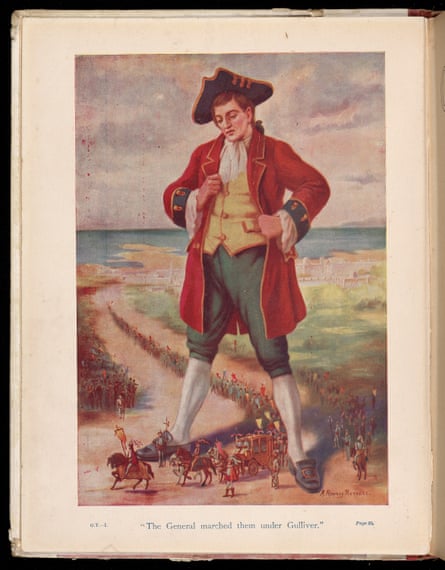
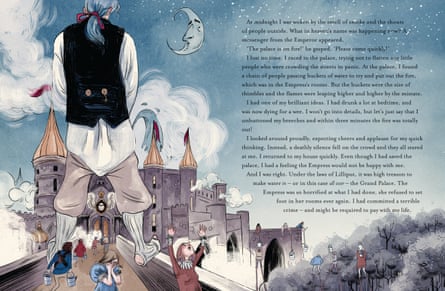
When shipwrecked on Lilliput, Gulliver discovers diminutive inhabitants who are waging war against a rival kingdom in a dispute over which end of a boiled egg should be cracked – a satire on Europe’s sectarian conflicts. Gulliver captures the Blefuscudian fleet and douses a fire at a Lilliputian palace by urinating on it.
Marooned among giants in Brobdingnag, Gulliver’s stories about his “own dear native country” inadvertently reveal its corruption and cruelty, prompting the Brobdingnagian ruler to pillory humanity as “the most pernicious race of little odious vermin that nature ever suffered to crawl upon the surface of the earth”.
Swift’s publisher, Benjamin Motte, did not know his author’s identity but the book’s success, and Swift’s literary record, enabled many to guess, said Douglas. “People sort of knew it was him.”
KioskNews shows a cleaned-up reading view extracted from the publisher’s page — the original always lives on their site, not ours.