China’s overcapacity, a test of Malaysia’s resilience
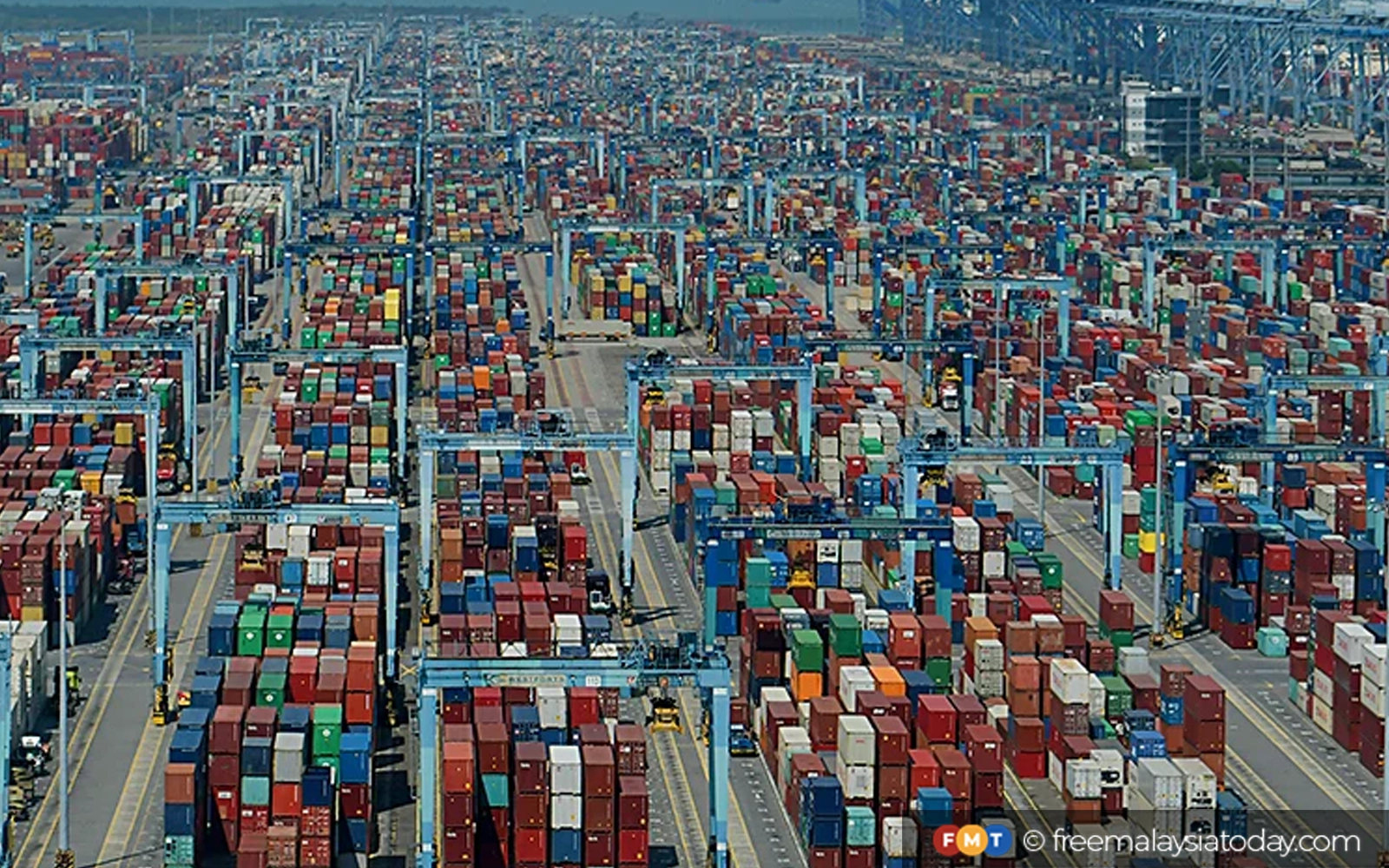
China’s industrial growth and capabilities have been a lesson in economic singlemindedness unmatched in recent history. Much as we might admire it, however, we must recognise that China’s industrial overcapacity has direct – and not necessarily all positive – implications for Malaysia’s own.
While lower-priced inputs bring significant short-term gains to consumers and producers alike, the consistent and prolonged import pressures they create can also pose long-term structural challenges for Malaysian industries, businesses and the broader Malaysian macroeconomy.
Overcapacity cannot be measured by any one given statistic, nor can undue trade or pricing practices be construed as a deliberate act of dumping simply based on volume or import trends. They are as contentious as they are opaque, as precedents brought to the World Trade Organisation have shown.
A significant portion of the trade deficit stems from an increasingly integrated supply chain, where raw components are assembled or finished in Malaysia for onward export to third-party markets. Regardless, the investment, trade and industry ministry (Miti) has been sufficiently concerned to initiate a detailed product audit that aims to differentiate between legitimate industrial inputs and imports that effectively constitute dumping, which might threaten the operational viability of local factories.
Goods from China now account for an estimated 26% to 27% of Malaysia’s total imports. The last full year figures from 2025 put Malaysia’s trade deficit with China at between RM146 billion and RM163.4 billion. This has widened markedly in 2026, with the first-nine-month deficit at RM191.5 billion, or 70% more than in the same period a year earlier.
By contrast, Malaysia recorded a 2025 trade surplus with the US of RM100 billion to RM101.5 billion. The comparison becomes even more vivid when we consider that Malaysia’s total trade surplus grew by 115.7% year-on-year to RM232.4 billion in the first nine months of 2026.
A deficit does not mean that all imports are harmful. The figures do, however, make it crucial that we keep a close eye on local producers, and how the country’s future investment and production capabilities are affected.
The widening influx of lower-cost manufacturing inputs from China has seen local firms simply unable to compete. Domestic factories in the iron, steel, plastics, chemicals and textile sectors have been compelled to scale back production. The dwindling orders mean machinery and labor operating at well below optimal levels, pushing up marginal costs and placing downward pressure on overall productivity.
The steel industry provides a clear example. The Malaysian Iron and Steel Industry Federation reports domestic crude steel capacity utilisation of just 39.1%, compared with a global average of 75%. A Miti anti-dumping investigation found utilisation in galvanised steel at 65% – well below the 80% considered sustainable.
Similarly, SMEs are facing inordinate pressures: local SMEs struggle to compete with not just the more competitive prices but a broader and deeper catalogue of products from China, which benefit from scale, integrated supply chains and, in many cases, wide-ranging subsidies and state support. Sectors such as retail, food and beverage, construction, mechanical workshops and steel have registered the hardest hits.
The influx of well-capitalised foreign businesses has also driven up commercial property rents significantly, crowding out local merchants and vendors already dealing with regulatory and compliance expenses. Nor does the increased commercial activity benefit domestic job markets – many Chinese operators utilise “enclave supply chains” where they bring in their own capital, raw materials and workforce directly from home, limiting whatever spillover effects might have been factored in before.
With negligible to no uptake on local procurement, skills development, technology transfer or jobs creation, the domino effect this creates reverberates across Malaysia’s industrial landscape, posing a very real threat of premature deindustrialisation, i.e. the erosion of manufacturing just as we look to build a more resilient base of higher-productivity activities. The priority should be to deepen local capabilities, not increase dependence on imported products and components.
The last few years have also seen Malaysia grow increasingly exposed to China’s own trade disputes. The US, in particular, and Western markets in general, have been trading tariffs and punitive measures with Beijing across a host of industries, from farming to electronics to rare earths and semiconductors. Ironically, Malaysia’s place in China’s supply chain means it now faces the same scrutiny, but without a place at the table, placing its own access to other export goods and markets at risk with little recourse.
Lower prices are not, by themselves, evidence of unfair competition. Cheaper goods and services have given households much more affordable choices, with Chinese e-commerce platforms, retailers and brands expanding the range of products available to consumers. The concern is whether the competition is sustainable and fair, and whether consumers’ immediate savings come at the expense of local production, investment and reliable supply chains.
Malaysia should respond firmly and on the basis of evidence while honouring its trade commitments. The aim is to deal with unfair practices, secure greater benefits from foreign investment and help viable Malaysian businesses improve productivity. It should not be to insulate local firms from competition.
Miti should first make trade remedies faster and more effective. Reform of the Countervailing and Anti-Dumping Duties Act 1993 should allow investigations to proceed efficiently and duties to be imposed when evidence establishes dumping, subsidisation and injury under the relevant rules. Decisions must be timely and transparent, and ordinary price competition should not be a reason to qualify for protection.
Foreign investors should be mandated to build stronger links with Malaysian businesses. Local content and procurement expectations, designed in line with international obligations, can encourage the use of local suppliers, skills development and technology transfer. Supplier development programmes can help Malaysian firms meet the quality, scale and reliability standards major investors require.
Product standards and customs checks also need to keep pace with cross-border trade. Sirim and the customs department should strengthen risk-based inspections, including of goods sold through cross-border e-commerce. Imported products must meet safety and quality requirements, while origin declarations and product classifications must be accurate. The same standards should apply to local goods.
Support for SMEs should be directed strictly towards investment that raises productivity. Under the New Industrial Master Plan 2030, grants and financing can help smaller firms adopt automation, artificial intelligence and digital systems, strengthen quality control and develop new products. Tie support specifically to explicit improvements in operational or technical capabilities.
Malaysia also needs to move away from business models built on abundant, low-cost foreign labour. Reducing reliance on foreign workers will take a credible productivity strategy built around strategic input from employers, rather than ad hoc restrictions that leave firms unable to operate. Predictable labour policies, investment in automation, technical training and better management can raise output per worker. Workers, in turn, need opportunities to develop the skills required for higher-value jobs.
No single measure will be enough. Trade remedies cannot make firms more productive – investment incentives are worthwhile only if they help build local capabilities, and automation will not deliver much without finance, skills and reliable infrastructure.
Malaysia needs to turn today’s trade and investment flows into stronger domestic productive capacity across all sectors. That means monitoring imports accurately, enforcing trade rules, securing meaningful local participation in investment projects and helping firms move into higher-productivity – and higher wages – activities.
This is the only way that Malaysia can hold its own in a world dominated by China’s industrial might.
Mazli Noor serves on the boards of several public and private companies and is an FMT reader.
The views expressed are those of the writer and do not necessarily reflect those of FMT.
Subscribe to our newsletter and get news delivered to your mailbox.
KioskNews shows a cleaned-up reading view extracted from the publisher’s page — the original always lives on their site, not ours.