Mike Flanagan's 9 Most Evil TV Characters, Ranked
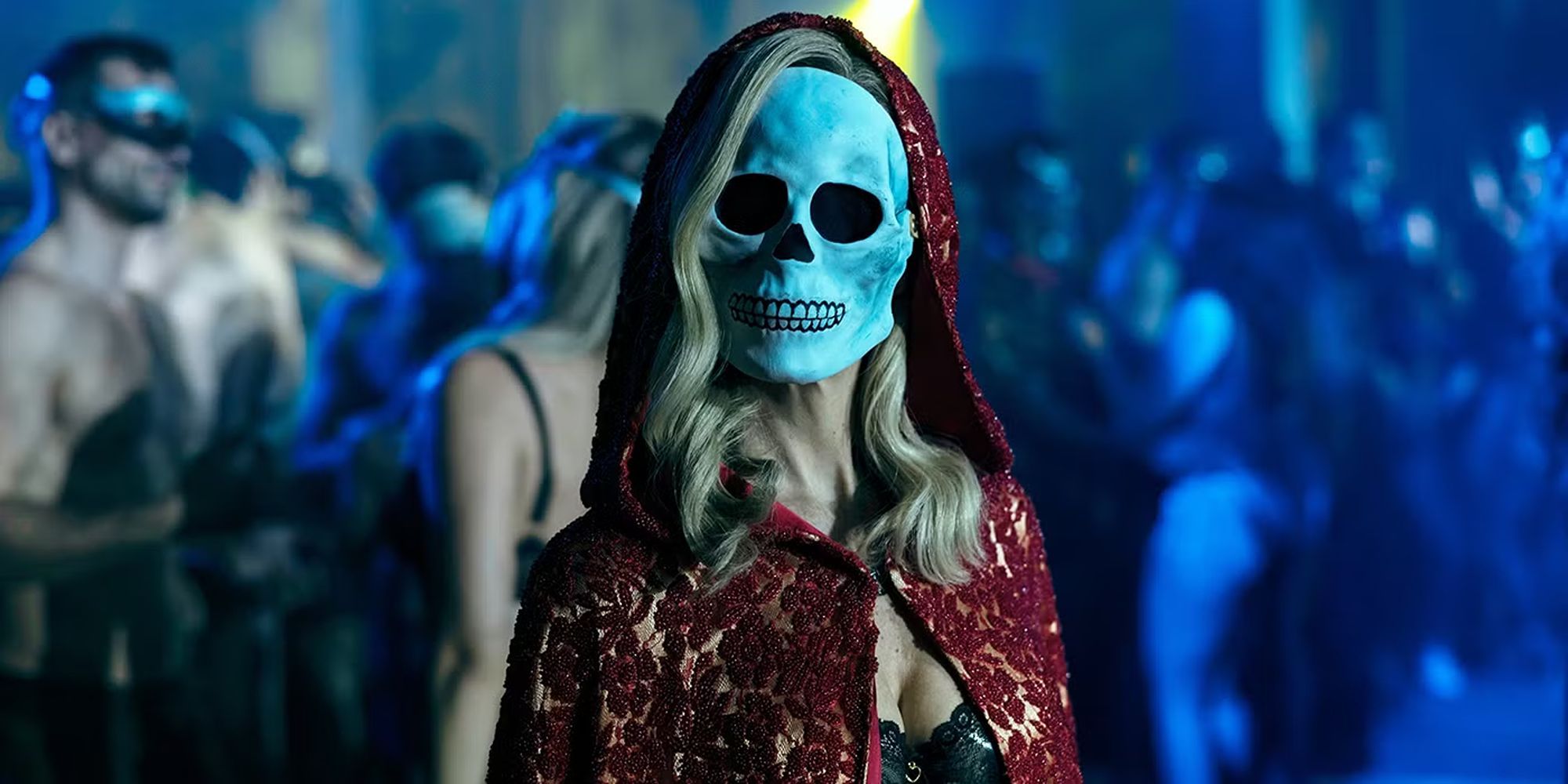

Michael Block is a 14 time GLAM Award nominated writer, producer, and host of the podcast Block Talk. Throughout his time in the entertainment industry, he has worked on and off Broadway as a stage manager, written several produced plays, critiqued hundreds of theatrical performances, drag and cabaret shows, and has produced events randing from drag competitoons to variety concerts!
On Block Talk, he interviews nightlife personalities, covers the wide world of entertainment through features, ranking episodes, and recaps ALL of Drag Race, as well as Dragula and Survivor. He has interviewed hundreds of RuGirls that span the globe at DragCon NYC, DragCon LA, and DragCon UK.
In his free time, he makes one-of-a-kind jewelry and gift baskets with his mom. He is a proud member of the LGBTQ+ community.
Sign in to your Collider account
Spoiler Alert: This list contains spoilers for multiple shows.There may be one individual who has single-handedly revived the horror genre for the small screen, and he goes by the name of Mike Flanagan. The visionary writer and creator built a resume of horror features, but when he transitioned to streaming with Netflix, new doors opened immediately. From new takes on classic texts to an original masterpiece inspired by accessible themes, Flanagan's projects have changed the game in horror.
What makes his shows brilliant is the incredible performances, thanks to some deliciously juicy characters. While many protagonists are a joy to watch, those with a touch of evil truly define the series. We're celebrating the most evil characters from his various television projects. From haunting ghosts to a terrifying neighbor, these characters proudly haunt your nightmares.
9 Dr. Georgina Stanton
'The Midnight Club' (2022)

Let it be known: The Midnight Club remains one of Flanagan's most underrated projects. Originally intended to move beyond the miniseries realm and into a multi-run series, the brilliant adaptation of Christopher Pike's books unfortunately lasted only ten episodes. While much of the series celebrated hope and companionship among eight terminally ill young adults, evil lurked at Brightcliffe Home. And she went by the name of Dr. Georgina Stanton (Heather Langenkamp). Dr. Stanton presented herself as a kind, maternal, and supportive figure who provided a safe space for the teenagers to live out their final days. The truth was, she was something of a much darker individual.
In the finale twist, which likely would have opened the door further to her story, Dr. Stanton is revealed to be bald, wearing a wig, and bearing the hourglass tattoo of the Paragon, the death cult that formerly inhabited Brightcliffe. Dr. Stanton is actually Athena, the daughter of Paragon founder Regina Ballard. She was a woman who, while allowing the teens to congregate nightly, was monitoring their actions while holding onto the dark history that happened under her roof. She is morally gray, but on that spectrum, complicity in sinister actions is rooted in evil. After the show's cancellation, Flanagan revealed on his Tumblr account his intentions had the show continued, including that she founded the hospice to atone for her mother's evil actions. While she's nowhere near as sinister as the individuals to come, she represents the darkness in The Midnight Club.
8 The Lady in the Lake
'The Haunting of Bly Manor' (2020)

Flanagan initially spooked audiences on Netflix with back-to-back haunted mansion stories, the second of which was The Haunting of Bly Manor. Acting as an adaptation of The Turn of the Screw by Henry James, the story follows American au pair Dani Clayton (Victoria Pedretti), who moves to England upon being hired to care for orphaned children Flora (Amelie Bea Smith) and Miles (Benjamin Evan Ainsworth) at the remote country estate, Bly Manor. Dani soon discovers that Bly Manor is haunted by the souls of those who have died on the grounds, as they slowly lose their memories and identities. The series was renowned for its haunting residents, and the first of two of the most evil entities is The Lady in the Lake.
Formerly known as Viola Willoughby-Lloyd (Kate Siegel), the original owner and heir of Bly Manor, upon contracting a terminal lung illness, her sister Perdita (Catherine Parker) smothered her, locked her body in a chest, and tossed it in the nearby lake. With sheer willpower and the refusal to let go, Viola is why the souls get trapped on the estate grounds. Having lost her face, her memories, and sanity, she embarks on nightly walks from the lake to the manor, killing anyone in her way. She is a tragic force of nature whose evil comes from her pure stubbornness. Her blind, instinctual killing routine is indiscriminate, killing innocent children simply for mistaking them for her own. By stripping them of their ability to move on, her slow erosion of others makes her cruel. Of course, there is some empathy for her as, following her death, her sister and husband married. Regardless, The Lady in the Lake personified grief.
7 Adelaide and the Secret Telekinetic Organization
'Carrie' (2026)

If you're a purist or loyalist to Stephen King's iconic story Carrie, you might arrive at this entry quite confused. First, you might expect this spot to go to Margaret White (Samantha Sloyan) or Chris Hargensen (Alison Thornton), but in Flanagan's updated adaptation, they are given enough depth to become more than one-dimensional antagonists. You can't deny their actions are evil, but the adaptation's new addition, Adelaide and her secret cult, outshines them. Relegated to cold opening monologues through seven episodes before making her physical debut, Adelaide (Kate Siegel) poses as a documentary filmmaker interviewing the survivors of the prom night massacre while secretly leading a society of women with supernatural and psychic abilities.
The series' climax, of course, is the prom night massacre. But Carrie White (Summer H. Howell) was not alone. Adelaide sent her mysterious followers to the gym to subdue Carrie, with gunfire in the process. In the finale, it's soon revealed that her main mission is to learn Carrie's whereabouts. Her investigation into Carrie and other young women with telekinesis takes a dark turn when Carrie's sole protector, Emaline West (Thalia Dudek), an astral projector, alerts her to the group as they flee by car. Adelaide is one of the gifted as well, showcasing those skills of compulsion by killing Margaret and forcing her followers to stage her death as a suicide. She is a chillingly manipulative and dangerous figure, exploiting the trauma of the survivors for her own gain. As Siegel shared with Variety, "She doesn't care if you’re good or bad. She's really looking for this one thing, and she believes every woman could have it." That thing is the "shine," a word that was carefully placed into her monologue, alluding to King's other masterpiece, The Shining.
6 Poppy Hill
'The Haunting of Hill House' (2018)

Horror television was forever changed thanks to The Haunting of Hill House. Inspired by the Shirley Jackson novel, the dual-timeline series follows the Crain family as they renovate the titular Hill House in the past, while in the present day, the adult siblings are forced back to the home after a family tragedy. The house preys on the family's individual traumas and fears, but it's one particular entity that drives them mad: Poppy Hill (Catherine Parker). The malevolent ghost was diagnosed as clinically insane as a child. While a patient in a mental institution, she met her husband, William Hill (Fedor Steer), known in the haunted house as the Bowler Hat Man. As a spirit, Poppy appears in a 1920s flapper get-up, serving as a toxic, manipulative force.
Due to her own tragic experiences, she becomes convinced that others must follow her belief that killing children as an act of mercy will keep them safe forever. In the past timeline, Poppy's evil forces are shown as she preys on the mental state of Olivia Crain (Carla Gugino), convincing her that the outside world is a waking nightmare and that the only way to "save" her children is to kill them. Poppy weaponizes maternal love and mental instability. By breaking Olivia, she pushes her into a terrifying, psychotic, dream-like state where she's on the verge of her own evil deeds. Poppy is chillingly charismatic and calculated, as her psychological traps are terrifyingly effective. As a malignant force, she is a core reason the mansion's twisted madness traps the souls within its walls.
Collider Exclusive · 8 Questions · 2 Minutes What Is Your Biggest Horror Nightmare? Elm Street · Chucky · Scream · The Conjuring
Four horror franchises. Four completely different ways of scaring you. One waits until you fall asleep. One makes sure nobody believes you. One is already in your group of friends. And one is in the house with your family. Answer eight quick questions about how you actually watch horror, and find out which nightmare was built for you.
😴Elm Street(Freddy Krueger)
🧸Chucky(Child's Play)
📞Scream(Ghostface)
🕯️The Conjuring(The Warren Files)
01
Which horror scene makes you cover your eyes? Four classic images. One of them is worse than the others for you.
02
You are home alone and you hear a noise. First thought? Everybody has one. It arrives before you have decided anything.
03
Which horror movie rule would you break first? Everybody thinks they would survive. Almost nobody actually does.
04
Something genuinely frightening happens. What do you do? Not in a film. In your actual living room, tonight.
05
How do you actually watch a horror film? Be honest about this one. Nobody is checking.
06
Somebody offers you serious money. Which do you still refuse? The amount does not matter. There is one on this list you are not doing.
07
Which feeling stays with you a week after the film? Good horror does not stop when the credits do.
08
Something wakes you at 3am. What is the worst possibility? Eight questions in, this is the one that decides your nightmare.
The Lights Just Went Out Your Nightmare Is…
Four franchises, four completely different ways of getting underneath your skin. This is the one built out of your particular fear, why it works so well on you, and what it would leave behind.
Elm Street
Your nightmare does not wait outside the door. It waits for you to close your eyes, which you are going to have to do eventually, because nobody has ever won that particular argument.
- Freddy is horror's cruellest idea: a threat that lives in the one place you cannot guard, cannot lock, and cannot avoid forever.
- You are the one who is fine during the film and wide awake at two in the morning. Your own head is where this does its damage.
- These films understood exhaustion as a horror engine. The kids on Elm Street do not lose because they are weak. They lose because they are tired.
- You can lock every door in the house. You still have to sleep.
Chucky
Your nightmare is not really the doll. It is the face of the person you tell, and the way they decide, very kindly, that you have imagined all of it.
- Chucky works precisely because he is absurd. That is the trap: the more accurately you describe him, the less anybody is going to believe you.
- You are the one shouting at the screen because the characters are not listening. You know that feeling from real life too.
- The franchise is at its best when the adults in the room are the real obstacle, and you have met those adults.
- By the time somebody finally believes you, you will have handled most of it on your own.
Scream
Your nightmare has your number, knows your name, and has almost certainly been inside your house before. The worst part is that you already know them.
- Scream is the only one of these where the killer takes the mask off and turns out to be somebody who was at the party.
- You are the person who calls the twist out loud before it lands. You watch people the same way you watch films.
- The franchise made the rules of horror part of the plot, which means the survivors are the ones paying attention. You would be paying attention.
- Everybody is a suspect, including the person who just offered to walk you home.
The Conjuring
Your nightmare is not really about you. It is about the people asleep down the hall, and the feeling that whatever is here is not interested in leaving.
- The Conjuring films are domestic horror. The house, the family, the perfectly ordinary room that quietly stops feeling ordinary.
- Your instinct is to get everybody into one room. Your fear is protective rather than personal, which is rarer than it sounds.
- This is the one franchise where belief is the weapon. The people who come through it are the ones who are not alone and refuse to be.
- Whatever is here did not come for you. It came for the household, and you are the one standing in the hallway.
5 Verna
'The Fall of the House of Usher' (2023)

The truth is, good is not a word used for truly any character in Flanagan's The Fall of the House of Usher. The brilliant Gothic horror thriller, inspired by the works of Edgar Allan Poe, tells the story of corrupt pharmaceutical billionaire twins Roderick (Bruce Greenwood) and Madeline Usher (Mary McDonnell), whose ruthless empire begins to crumble when their heirs start dying one by one under mysterious circumstances. While we'll discuss the siblings in full shortly, another evil force terrorizes the story: Verna (Carla Gugino), a supernatural, shape-shifting entity that acts as the executor of fate, karma, and death.
Flanagan has noted that Verna is not the devil or pure evil; she is a neutral force of cosmic karma. That said, those black eyes exude sinister actions. Verna takes on various human forms, observes and interacts with the Usher family, then orchestrates their demise. She brings about their deaths to mirror the specific nature of their hubris, cruelty, and devastation. From a television perspective, they're each deliciously satisfying. Though she does offer each heir a final reckoning, their fateful end is inevitable. To tie Verna to the larger Poe universe, her name happens to be an anagram of the word "raven."
4 The Angel
'Midnight Mass' (2021)

The Haunting of Hill House and The Haunting of Bly Manor needed to succeed in order for Midnight Mass to become Flanagan's ultimate game changer. The original Gothic supernatural horror story, set on the isolated, dying island community of Crockett Island, follows the denizens whose religious fervor turns dark and destructive when a mysterious, charismatic young priest, Father Paul Hill (Hamish Linklater), arrives. As the religious revival sparked by miracles takes over the town, the town soon learns that Father Paul is actually the aging Monsignor Pruitt, transformed by an ancient, winged, vampire-like creature he mistook for an angel. The miracles result from the congregation unknowingly consuming the creature's blood-infused communion wine.
The Angel (Quinton Boisclair) is a vampire that feeds on blood, burns in direct sunlight, and turns its victims into immortal, bloodthirsty creatures when they die. The Angel never intended to be that in Monsignor Pruitt's eyes. His desperation and delusion forced him to see it as a biblical angel, desperate for redemption, youth, and a revival of faith. It doesn't act out of malice; it's driven by pure survival instinct. It operates like a predatory animal, simply preying on the vulnerable around it. Though not the most evil character in the series, The Angel is responsible for a high body count, including drug dealer Bowl (John C. McDonald) and Mildred Gunning (Alex Essoe).
3 Peter Quint
'The Haunting of Bly Manor' (2020)

It might be unfair to say that Oliver Jackson-Cohen is excellent at playing psychologically manipulative characters, but between The Haunting of Bly Manor and The Invisible Man, it's proof. In the former, he plays Peter Quint, Henry Wingrave's (Henry Thomas) executive assistant and financial associate. Peter enters a toxic, abusive romantic entanglement with Bly Manor's former governess, Rebecca Jessel (Tahirah Sharif), but is killed inside the walls by The Lady in the Lake. After dying, his spirit remains trapped on the grounds. He then convinces Rebecca to possess her body, which inadvertently leads to her drowning. His mission is to leave the grounds with Rebecca by inhabiting the Wingrave children's bodies.
Even though he may be a ghostly entity, his darkness comes from the embodiment of real-world psychological and interpersonal abuse, magnified by his supernatural abilities. He traps Rebecca in a toxic, codependent relationship while manipulating her self-worth, isolating her, and ultimately forcing her into complicity through gaslighting and emotional blackmail. Just when she is about to leave him, he physically traps her through murder. Peter represents the cycle of abuse grounded in reality. Flanagan uses him as a beacon to display how a morally bankrupt, narcissistic abuser behaves when given immortality. In life, he stole from his employer. In death, he stole from his love. He's a selfish predator who was never satisfied.
2 Madeline and Roderick Usher
'The Fall of the House of Usher' (2023)
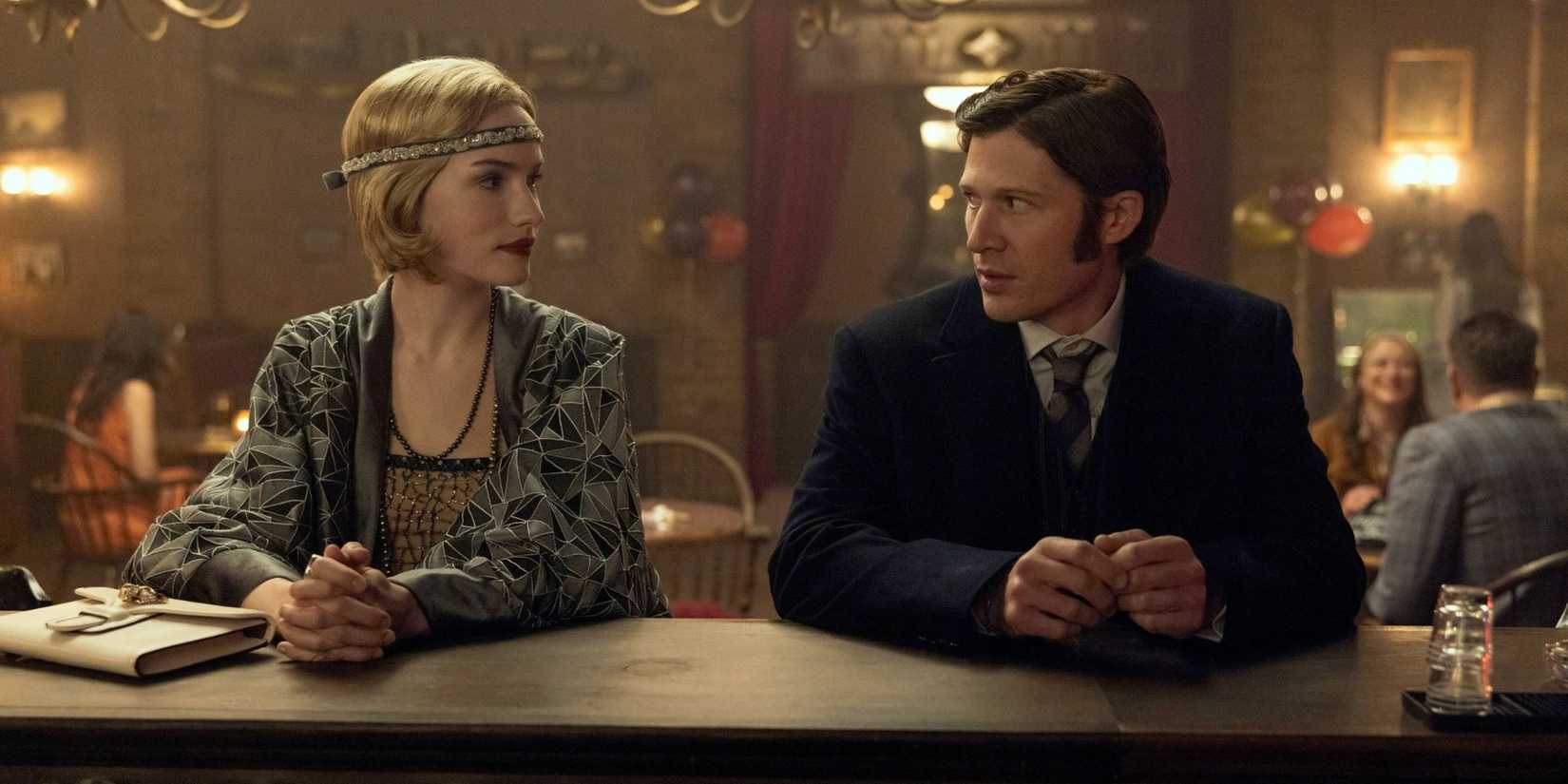
Though we learn just how the inevitable death sentence came to be, the truth is the Usher twins transformed into evil due to life circumstances. It's not an excuse, but their ultimate actions make sense. On New Year's Eve 1979, a young Roderick (Zach Gilford) and Madeline (Willa Fitzgerald) meet Verna at a bar after committing the murder of their biological father, who abandoned them, William Longfellow (Robert Longstreet), to secure their corporate climb. After offering them unimaginable wealth and absolute impunity for their crime, the Ushers eventually came to realize their deadly bargain came with a catch: Their success would last through their lifetimes, but their entire bloodline would die out completely before they passed away.
Their backstory is quite shocking. They are the sole remaining members of an isolated, inbred family line. The odds were almost always stacked against them, so their brush with money and success turns them into the monsters they ultimately become. They knowingly sacrificed thousands of innocent lives, poisoned the public with an addictive opioid, and condemned their own family tree to pre-ordained doom. All for unbridled wealth and ego. They are the core pillars of evil personified. Neither Roderick nor Madeline possess any semblance of empathy. Roderick hides behind a facade of sentimentality, while Madeline acts as the cold, ruthless brains of the operation, viewing everyone, even her own twin, as a movable chess piece. They define generational corruption.
1 Bev Keane
'Midnight Mass' (2021)

Sometimes the darkest of evil is the person who lives right next door. Midnight Mass told a story of a tight-knit, small community. It just so happened that one of their own would be the most evil all along. Beverly "Bev" Keane (Samantha Sloyan) is a self-righteous school administrator and leading member of St. Patrick's Catholic Church. She is a fanatical religious zealot and hypocrite who weaponizes scripture and moral superiority to manipulate Crockett Island. Nothing about her is pious; her actions are pure evil. From exhibiting extreme prejudice, including racism and Islamophobia toward Sheriff Hassan (Rahul Kohli) and poisoning Joe Collie's (Robert Longstreet) dog, she leads by pure darkness. And that's long before he falls for Father Paul's orchestration.
Though the story features supernatural entities, Bev's reign of terror comes from real, grounded malice. She lacks a sympathetic backstory or complex inner conflict. Her motivation is pure, self-righteous ego driven by a guise of a polite, religious facade. When she quotes scripture, she uses that as a crutch to disarm; she actually uses her faith to justify cruelty, bigotry, and power. As the situation on the island spirals, she acts as the ruthless bureaucratic vessel of the apocalypse. She serves as Father Paul's lackey, shooting Sheriff Hassan, locking her neighbors in the burning church, and eventually aiding in burning the entire island. When her grand scheme fails, and the sun rises, she doesn't face her fate with nobility. Rather, she tries to dig herself into the sand like a coward, screaming as she dies. Bev is the most evil character in the Flanagan universe because she is the most authentic and real. Bev is Sloyan's greatest performance and Flanagan's greatest creation. Bev deserves a spot in the horror hall of fame.
KioskNews shows a cleaned-up reading view extracted from the publisher’s page — the original always lives on their site, not ours.