Kerala Officials Begin Search For Wild Tusker, Deploy 2 Elephants
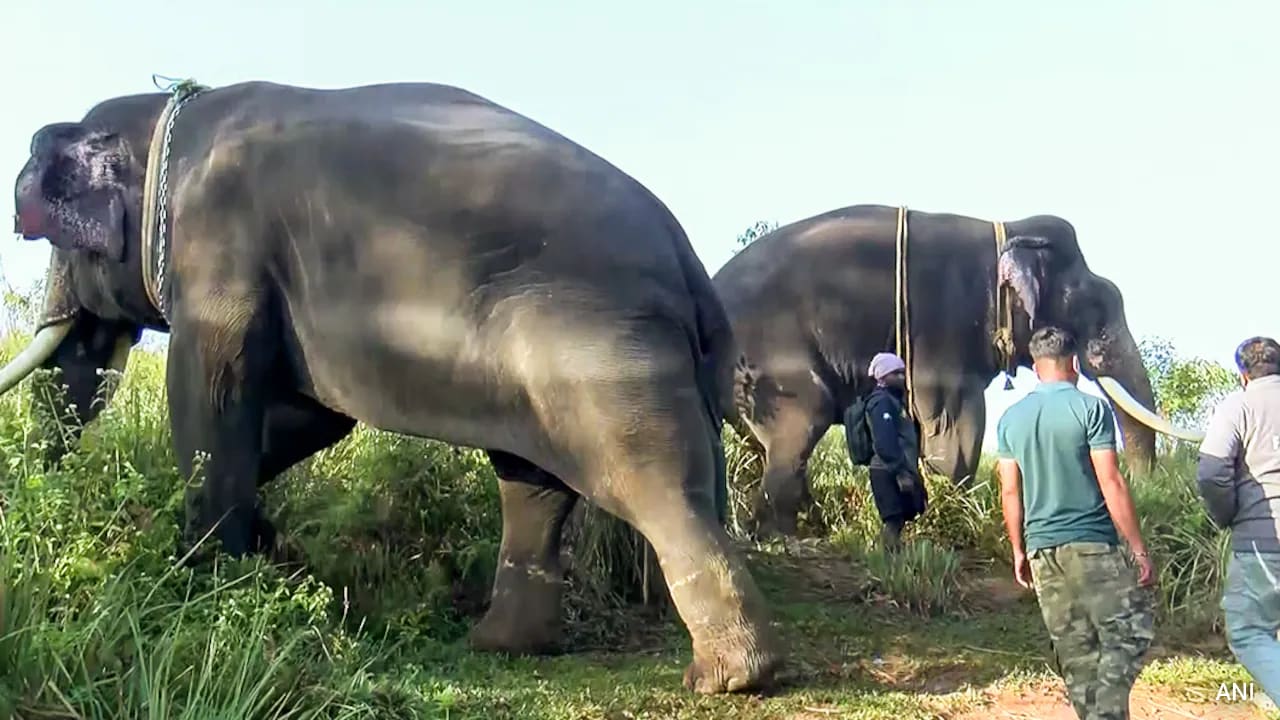
The Kerala Forest Department's mission to tranquilise and radio-collar Chakkakomban, a wild elephant that has been triggering concerns among residents of Chinnakanal and neighbouring areas in Idukki district, has been temporarily halted after the elephant moved away from the tracking team.
Chief Conservator of Forests (CCF) DK Vinod Kumar said the operation would resume at noon. The elephant had moved towards the 80-acre island near the Anayirangal dam, making it difficult for officials to safely administer a tranquiliser dart.
Officials are waiting for the elephant to move to suitable terrain before proceeding with the operation. Tranquilising the elephant near the reservoir could endanger its life if it enters the water after being darted.
According to Kumar, Chakkakomban usually goes to sleep by 8 am and wakes up around 2 or 3 pm. Since the elephant had covered a considerable distance the previous day, officials decided against disturbing it during its resting hours.
The operation began early this morning, with 140 Forest Department personnel splitting into multiple teams to track the elephant, which was initially spotted in the 301 Colony area of Chinnakanal.
Two trained kumki elephants, Vikram and Bharat, brought from Muthanga in Wayanad, were also deployed as part of the mission.
STORY | Two kumki elephants deployed to radio-collar wild tusker in Idukki Two trained kumki elephants were brought to Chinnakanal here on Monday as part of efforts to tranquilise and radio-collar wild elephant Chakkakomban, which has allegedly become a threat to human lives in the area, forest officials said. READ: https://t.co/RkAU67veZo VIDEO | (Full video available on PTI Videos - https://t.co/bIyFWTfmBd)
— Press Trust of India (@PTI_News) November 23, 2026
The Forest Department had conducted a mock drill on Tuesday ahead of the operation, which was scheduled to begin at 6 am on Wednesday. Officials had initially hoped to complete the mission within five hours.
Drones and ground surveillance teams have been deployed to monitor the elephant's movements. Prohibitory orders have also been imposed in the area, restricting public movement to ensure the safety of residents and personnel involved in the operation.
Chakkakomban derives its name from two Malayalam words: 'Chakka', meaning jackfruit, and 'Komban', meaning a tusker.
The elephant earned its name because of its fondness for jackfruit. According to residents, it frequently ventured into human settlements in search of jackfruit and agricultural produce.
Over the years, however, its presence in inhabited areas has become a growing concern. Residents of Chinnakanal, Santhanpara and neighbouring areas have complained of crop damage and threats to their safety due to the elephant's frequent movements near houses and agricultural land.
While the Forest Department intends to fit Chakkakomban with a satellite radio collar and release it back into the Chinnakanal landscape, local residents are demanding its relocation.
The radio collar will enable officials to monitor the elephant's movements and issue advance warnings whenever it approaches human settlements.
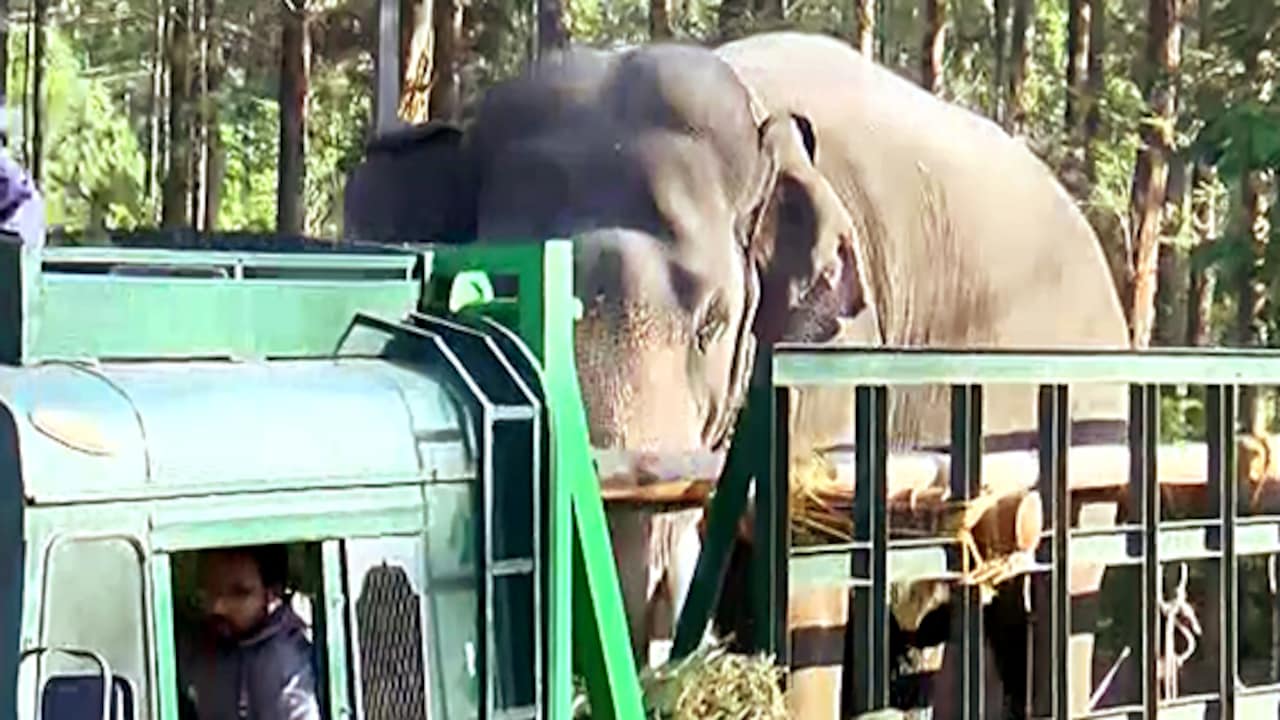
Elephant being brought for the search operation of the wild tusker Chakkakomban.
Photo Credit: ANI
Residents, however, argue that tracking the elephant will not eliminate the threat it poses to their lives and livelihoods. They are demanding that Chakkakomban be relocated to another forest, as was done in the case of Arikomban, another wild tusker from the region.
The Forest Department's immediate plan is to radio-collar the elephant and monitor its subsequent movements. Relocation could be considered if the elephant continues to pose a threat to residents.
The operation has once again brought into focus the growing human-elephant conflict in Kerala's high ranges and the challenge of balancing wildlife conservation with the safety of people living along forest fringes.
For now, the Forest Department is waiting for Chakkakomban to move to a safe location where the operation can be carried out safely without risk of drowning in the dam.
KioskNews shows a cleaned-up reading view extracted from the publisher’s page — the original always lives on their site, not ours.