River-arsenic control plan advances, public confidence low
Ban on mining chemicals to Myanmar, innovative new process, pollution control zone
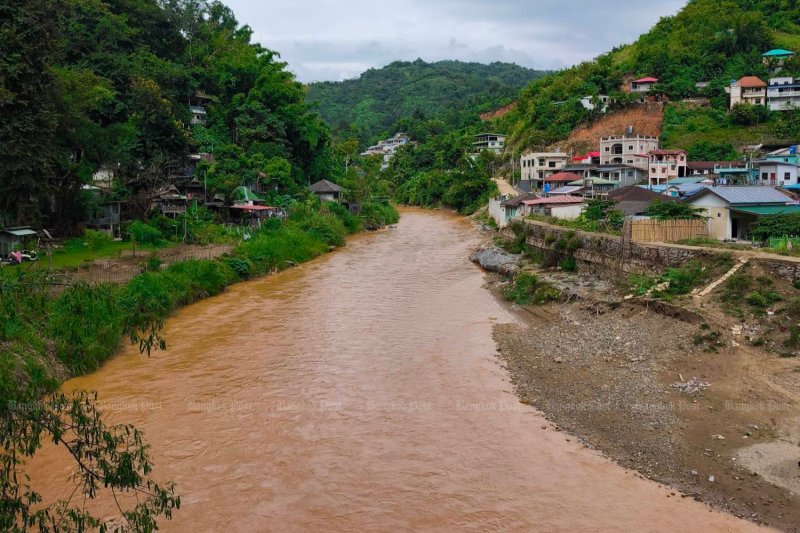
Thailand will block the export to Myanmar of chemicals used in rare earth mining, Deputy Prime Minister Yodchanan Wongsawat said on Sunday, amid mounting concern over cross-border pollution and specifically arsenic contamination of rivers.
The move was aimed at “leveraging every possible avenue", Mr Yodchanan said, It targeted the production of rare earth elements in Myanmar and other “relevant countries”, he said, but did not elaborate.
The government earlier announced on Saturday it planned to designate the Thai side of the Kok River a “pollution control zone” to tackle toxic contamination.
Rampant mining of rare earths in Myanmar has been linked to arsenic contamination of rivers which flow into northern Thailand, sparking public alarm.
A Suan Dusit Poll published on Sunday reported 85.92% of respondents had little or no confidence in the government's ability to resolve the problem.
Thailand, China and Myanmar plan talks on the issue on Nov 24-26.
Meanwhile, the government is stepping up efforts to tackle arsenic contamination flowing from the Kok and Sai rivers, planning an 18-month pilot of an innovative sediment-trapping weir in Chiang Rai.
Simulation results showed the trapping system, designed to capture fine sediment that carries arsenic, could reduce arsenic levels by up to 94.6% if three units were installed along a section of the Sai River between kilometres 95 and 99, deputy government spokeswoman Patdarasm Thongsaluaykorn said on Sunday. The river was projected to then meet water quality standards on 476 out of 523 days.
The process was developed and proposed by the Ministry of Higher Education, Science, Research and Innovation, a portfolio held concurrently by Mr Yodchanan.
The government planned to pilot the system in Mae Sai district of Chiang Rai for 18 months, covering the 2027 rainy season, Ms Patdarasm said. The project was expected to reduce arsenic flowing into rice-growing areas by about 94%, protecting around 27,000 rai of farmland used by 3,356 water users.(continues below)
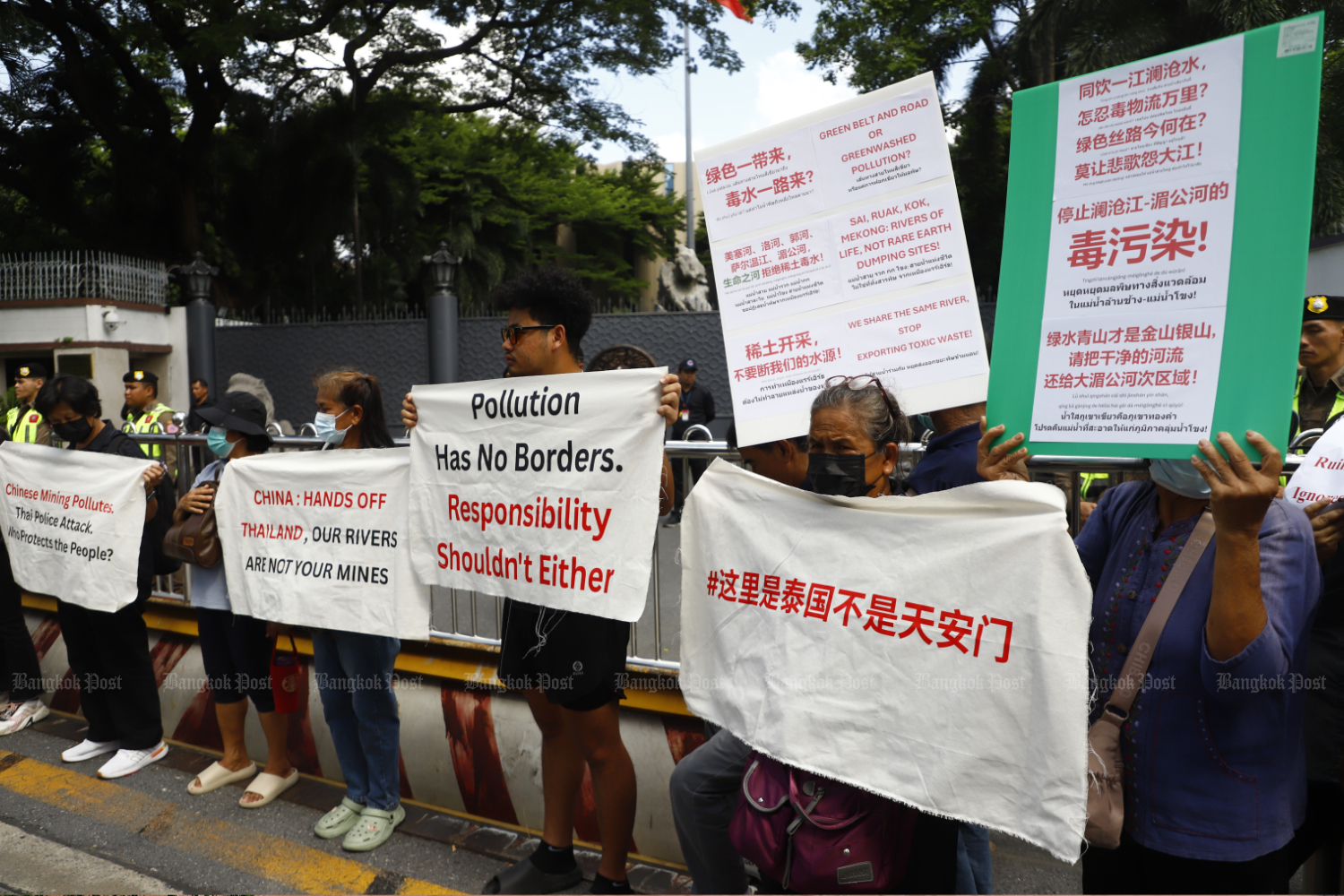
Demonstrators in a symbolic protest outside the Chinese embassy in Chiang Mai on July 8 condemn the alleged use of force against Thai protesters who called for action over cross-border mining pollution contaminating the Kok, Sai, Ruak and Mekong rivers. (Photo: Nutthawat Wichieanbut)
Despite the government's stepped-up efforts that include pollution-control and monitoring measures, public confidence in its ability to tackle the problem remains low. The Suan Dusit Poll survey of 1,193 people, conducted from Nov 17-20 and published on Sunday, found that 41.91% had no confidence in the government's ability to resolve river contamination, while 44.01% had little confidence.
The biggest concern was toxic residues in food, including fish, vegetables and rice, cited by 76.78% of respondents, followed by the safety of tap water and drinking water (75.69%). Another 69.82% were concerned about toxins accumulating in the body and causing long-term health effects.
Asked about obstacles to resolving the problem, 74.35% cited lax law enforcement and potential conflicts of interest, while 71.84% pointed to delays in government action and 67.39% to a lack of continuous monitoring and public disclosure.
Thailand, Myanmar and China are scheduled for a trilateral working group for Nov 24-26, in which data collected from those measures by the Thai agencies will also be used in the discussions, the government said.
KioskNews shows a cleaned-up reading view extracted from the publisher’s page — the original always lives on their site, not ours.