Tom Cruise & Digger Director Clarifies "Weird" Twist In Warner Bros. Comedy

Hannah Gearan (she/her) is has been writing for ScreenRant for over three years. Her deep cinema love traces back to age 11, when she equipped herself with a spiral-bound notebook, rated all the films she watched, and declared herself a critic. About a decade later, she received a BA from Wesleyan University, where she studied Film, Environmental Studies, and Writing. Hannah’s short film, Toxic Faucets, has screened at numerous film festivals, including the Independent Film Festival of Boston (IFFBoston). As a Movie News writer now, she draws upon her vast experience studying, making, and analyzing film as she approaches dynamic breaking stories.
This article contains major spoilers for Digger.
Digger is one of the most bizarre movies of the year, and its star and director explain why.
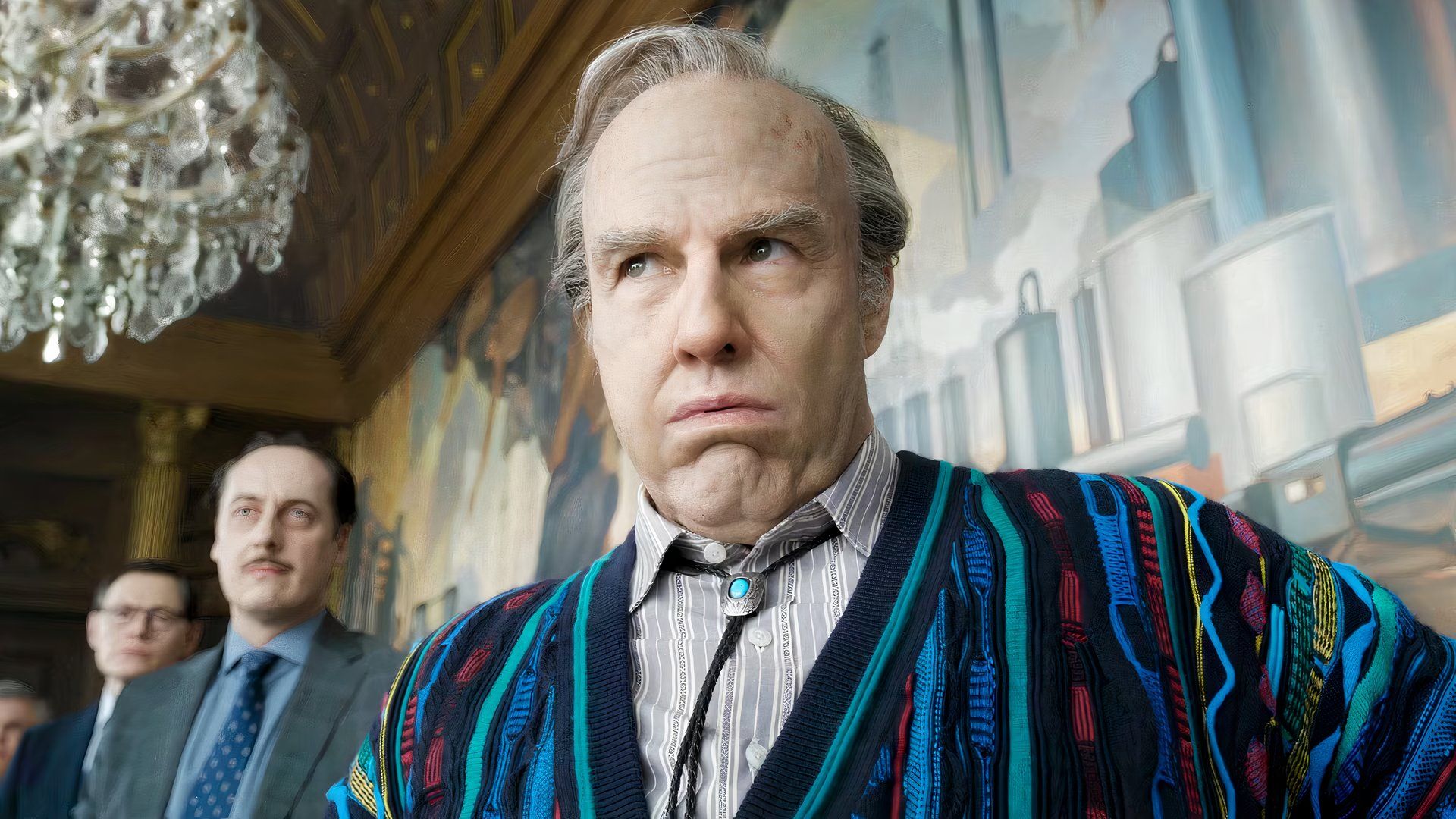
Tom Cruise is Digger. That is what the publicity for the movie has been saying for months, and the finished product attempts to live up to that claim. That is, the wild Alejandro G. Iñárritu-helmed ride centers around Cruise's outlandish character, Digger Rockwell, who works with the United States president and more to save humanity before his self-imposed disaster ruins it forever. Circling around Cruise in supporting roles are John Goodman, Riz Ahmed, Emma D'Arcy, Sandra Hüller, Michael Stuhlbarg, and Jesse Plemons.
In an interview at an industry screening of Digger at the Academy Museum (via Gold Derby), Cruise and Iñárritu clarify Digger's main twist and what it meant for the film. He explains how the twist created new technical requirements for the film, by nature of it being in a theater. It also affected the story itself, as it had to work in more theatrical terms, including there being "a lot of dialogue" as there would be in a play, and how he had to work hard to get the tone to where it is today. Iñárritu elaborates below:
The most challenging thing was that, obviously, we were doing a play and a film, and you are serving two different art forms. [Because the entire film takes place inside of a theater,] the volume and the projection of the voice and the physicality is different from that of a normal film that is close up.
The fact that we had to serve those two things leaves some crumbs for the people to realize what it is. It's not a trick. [Once they get it], they say, 'Oh, that's why it was kind of weird.' If we crossed the line a little bit and suddenly the play was too much play, it was farce, and we didn't want to be there.
[There was] a lot of dialogue [because theater is about] expressing ideas, talking about ideas, and seeing ourselves in those ideas.
[It took time to get Digger's tone right. We once realized] Oh my God, this is not working. This is a piece of s--t.
[Some footage was] too naturalistic and not so funny [but they got it right in] rehearsals and in the physicality. [When actors] suddenly change to B mode [they revealed the] human-vulnerability certainty, instead of this kind of massive thing. [Digger is] a satire with very deep, problematic things that we are dealing with, but everything is performative [and] there is nothing better than these actors and Tom to really make us understand.
Cruise further clarified Digger's bold vision, first claiming that he is actually playing not one, but three characters on screen, which he defines as "Digger A, Digger B, and Curtis." The actor went on to praise the character, saying he has "never seen a character like this ever." Check out Cruise's full quote below:
[There is] Digger A, Digger B, and Curtis. [I read the script aloud so I could] absorb all of his ideas, the tone, the world, the culture, the goals, and the dreams.
I've never seen a character like this ever. I've never seen it onscreen, let alone from [Alejandro's] imagination. [For Digger, I chose to] find the accent [without a dialogue coach]. It's got to find its way with the satire and drama. I'm looking for something emotionally where I can ground a character in an emotional reality.
As an actor, I'm looking for that commonality. I found that by going from Digger to Curtis. I think there's a Curtis in all of us, in some ways. And there's a Digger in all of us.
Digger made a bold move in its marketing campaign: they did not reveal that the movie was actually a play within the film. And in fact, even theater audiences do not get this concretely revealed until about a half an hour into the movie's 2 hour and 9 minute run time. It is eventually revealed when an environmental set piece gets knocked down, and a human (later revealed to be a stage crew person) emerges from underneath to fix it.
That said, Iñárritu certainly did leave "some crumbs" for his audience to better understand what was going on within Digger. Even before the set crumbles apart in the greenhouse scene, there is something off about the look and feel of the scenes. Whenever Rockwell looks out his windows, there's a painting-like aesthetic, indicating the fakeness surrounding him. Furthermore, the scenes go on for uncomfortably and unnaturally long periods of time. This is the dialogue-filled approach that Iñárritu now clarifies; this cadence and the aesthetic are all justified by the secret meta twist.
So far, the twist in Digger is not being received as well as Iñárritu, Cruise, and their team may have hoped. What once was considered a major Oscar contender is now one of the more divisive films of the year, sitting at a nearly even split 51% Tomatometer on Rotten Tomatoes. Mixed early reactions are not helping bring audiences to the theater either. Digger's three-day box office total is predicted to be just $8 million at the domestic box office, a startling low debut for a Tom Cruise film.
Still, no one can claim that Digger did not try something bold. Iñárritu and Cruise's recent interview further highlights the intentionality behind the movie's main choices, and the lengths they went to emulate a play-like experience while still providing a cinematic experience for audiences. Whether critics and audiences think it worked or not is a different question.
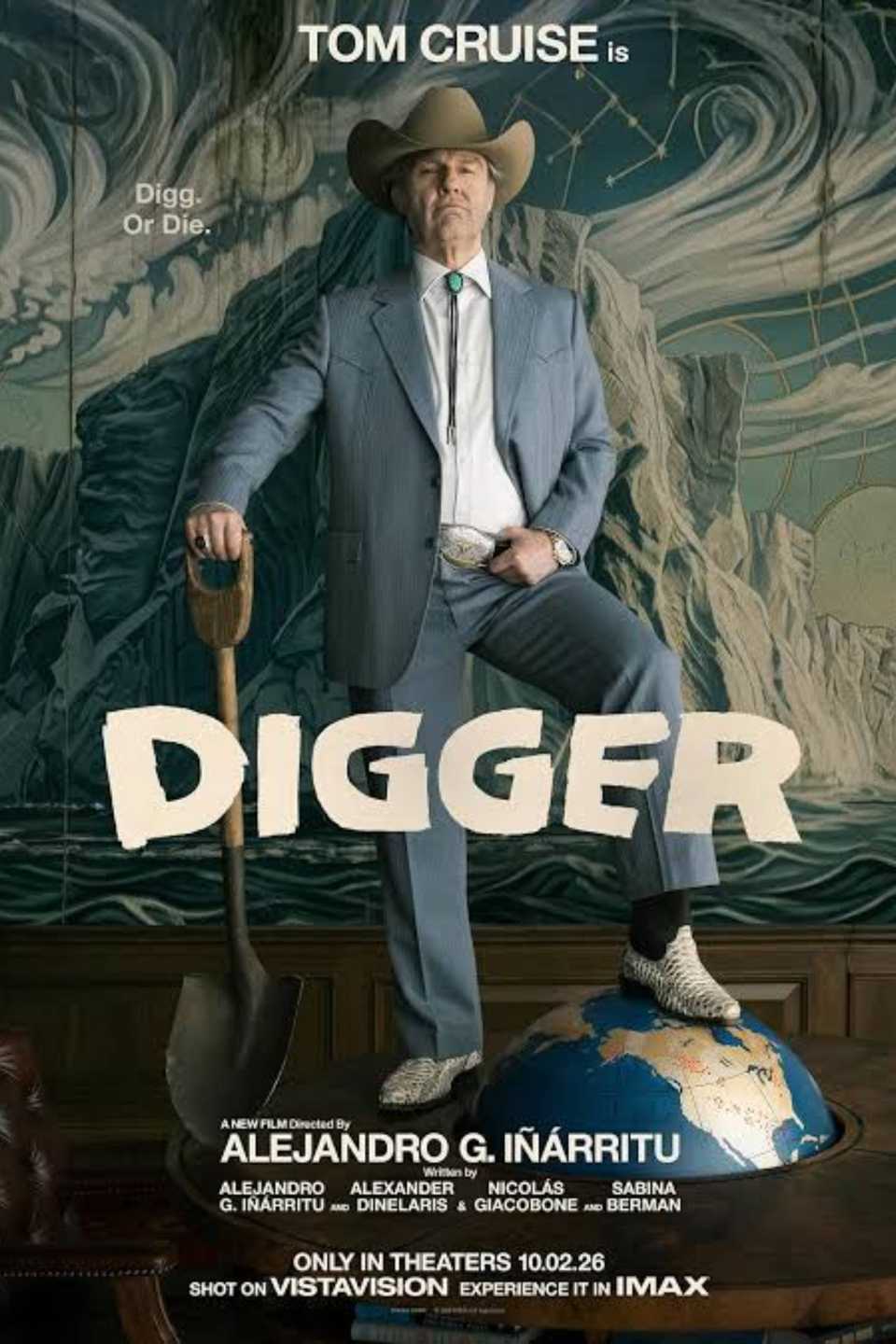
Digger
- Release Date
- October 2, 2026
- Runtime
- 128 minutes
- Director
- Alejandro González Iñárritu
- Writers
- Alejandro G. Iñárritu, Sabina Berman, Alexander Dinelaris, Nicolás Giacobone
KioskNews shows a cleaned-up reading view extracted from the publisher’s page — the original always lives on their site, not ours.