Social activist Bunker Roy, who founded Barefoot College, dies at 81
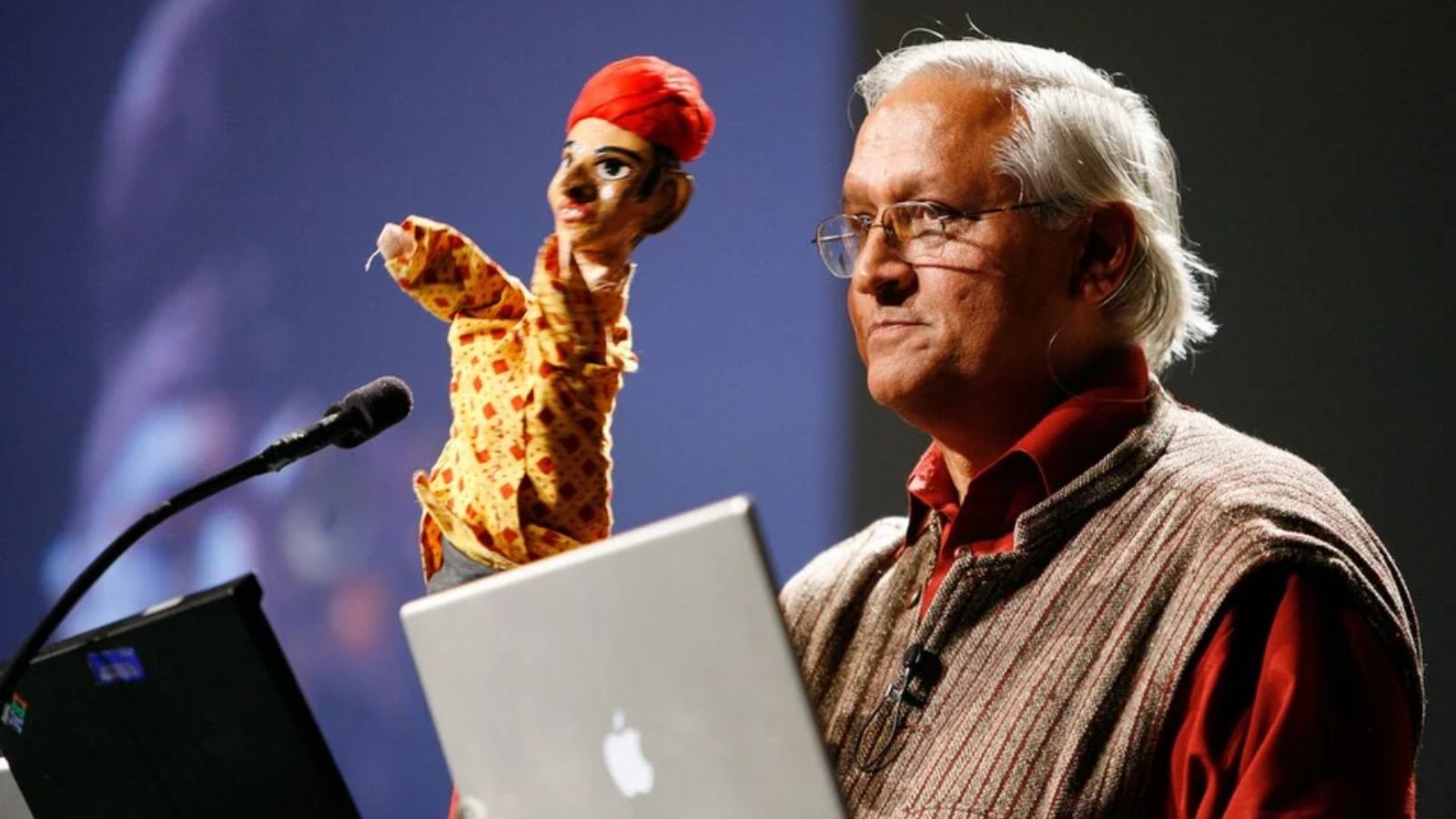
Social activist and rural development pioneer Bunker Roy died on Tuesday in Ajmer’s Tilonia, home of the Barefoot College he founded over half a century ago.
In a statement, his family members and fellow activists said that “Bunker Roy passed away peacefully at 6.15 am this morning with Aruna (Roy) and others around him. He went as he wanted to, in his own home in Tilonia, surrounded by some of the countless people who loved and cared for him deeply and passionately and admired him for his extraordinary lifelong contribution to people, society, India, and the planet.”
His funeral will take place at 4 pm Tuesday in Tilonia.
Born Sanjit Roy in 1945 in an upper middle class Bengali family, Roy was educated at premier Doon School and St. Stephens College in Delhi. He was also India’s squash champion thrice and life seemed comfortable. However, a visit to Bihar during the famine in the mid-1960s upended his worldview; as he told The Indian Express in 2015: “I went to the wrong school, wrong college and came back with a lot of arrogance.”
“After my education, I had a lot of fancy degrees and was told that I could overcome any problem. Then I went to a village in Bihar to help with the famine in 1966, and that experience of not being able to adapt to even a small village changed my life,” he said.
He then spent nearly a year and a half traveling across the country, studying the voluntary agencies, formulating his own plans, and eventually settling in Tilonia, where he started an experimental school that would teach basic applications of engineering, medicine and arts to villagers.
It was driven by Gandhian philosophy that technology should be demystified, and its control decentralised and put into the hands of the rural poor; that there is a difference between literacy and education; that marginalised women should be given equal opportunities to learn; and that we should attempt to conserve our local knowledge.
Story continues below this ad
Cut to 2010, and he was named as one of top 100 most influential people in the world by Time magazine in the ‘Thinkers’ category, one of the many recognitions and awards he received since he founded the College. Last year, King Charles III of the United Kingdom had written to Roy saying that “I am constantly singing your praises whenever I can, especially in Africa. There is much to discuss as I have many initiatives going on around the world…” Prince Charles, as he then was, had first visited the Barefoot Collège in November 1975, and then again in February 1992 together with Princess Diana.
Officially, the Barefoot College “empowers rural marginalised communities worldwide by providing them with access to sustainable solutions in the areas of water, solar, education, health, livelihoods and environment.”
In life and often in work, he was complemented by his wife, eminent activist Aruna Roy, a former IAS officer who left the service for social activism and was a key architect of the grassroots movement that led to the Right to Information Act in 2005.
KioskNews shows a cleaned-up reading view extracted from the publisher’s page — the original always lives on their site, not ours.