The 10 Bleakest Sci-Fi Books Ever Written, Ranked

Luc Haasbroek is a writer and videographer from Durban, South Africa. He has been writing professionally about pop culture for eight years. Luc's areas of interest are broad: he's just as passionate about psychology and history as he is about movies and TV. He's especially drawn to the places where these topics overlap.
Luc is also an avid producer of video essays and looks forward to expanding his writing career. When not writing, he can be found hiking, playing Dungeons & Dragons, hanging out with his cats, and doing deep dives on whatever topic happens to have captured his interest that week.
Sign in to your Collider account
Sci-fi tends to be pessimistic, imagining powerful new technologies, then showing us all the ways they could go wrong. Indeed, many of the genre's most famous stories are cautionary tales. However, a few books go even further than that into darkness and horror, serving up truly nihilistic and hopeless visions of the future.
These books are the focus of this list. The titles below cover a lot of grim ground: environmental collapse, addiction, exploitation, cosmic indifference, insanity, alien threats, rogue AI, cannibalism, or the simple human capacity for cruelty. What connects them is a willingness to follow disturbing ideas to extreme conclusions.
10 'A Scanner Darkly' (1977)

“Everything in life is just for a while.” One of Philip K. Dick's defining projects (also adapted into a stellar movie by Richard Linklater), A Scanner Darkly centers on Bob Arctor, an undercover narcotics agent attempting to investigate the spread of Substance D, an immensely addictive drug that gradually destroys the connection between the brain's hemispheres. Unfortunately, Arctor himself is addicted to it. From there, his existence becomes increasingly absurd and horrifying, and his mind starts to crumble.
Thanks to the identity-concealing scramble suit he wears as an undercover agent, the authorities don't realize that Arctor and the drug dealer he's supposed to investigate are the same person. Dick turns that bizarre premise into a tragedy about addiction, surveillance, and identity erasure. Instead of high-tech wonder, he uses a grim, claustrophobic vision of the future. Although some of their gadgets are advanced, the daily lives of the characters are stagnant and depressing.
9 'The Crystal World' (1966)

“The beauty of the spectacle had turned the keys of memory.”In The Crystal World, a mysterious phenomenon begins transforming an African forest into glittering crystal, freezing plants, animals, and even people. Dr. Edward Sanders travels into the affected region while searching for two acquaintances, only to become increasingly fascinated by the transformation unfolding around him. He learns that this process is actually a physical manifestation of time stopping. To become crystal is to be frozen forever in a state of living death.
In most disaster stories, there's some vaccine to find, a bunker to build, a spaceship to launch, some way to save the day. The Crystal World offers none of that. The crystallization is inevitable. Doom is coming for everyone. A deep sense of nihilism runs through every line and scene. By the end, even Sanders willingly walks back into the transfiguring jungle to let the crystal consume him.
8 'A Canticle for Leibowitz' (1959)

“Bless me, Father, I ate a lizard.” Civilization collapsing once would be depressing enough. A Canticle for Leibowitz suggests we might painstakingly rebuild it over centuries... only to make exactly the same mistakes again. The book is set after a nuclear war, with society in ruins and most knowledge lost. A Catholic monastery in the desert becomes one of the few places where fragments of humanity's intellectual inheritance survive.
The plot unfolds across centuries as generations of monks rediscover and preserve the world's knowledge. Initially, it looks like a hopeful story about humankind slowly recovering from catastrophe—then the tone gets considerably darker. Here, scientific advancement doesn't necessarily make people wiser, and recovering the technology of the old world also means recovering its ability to annihilate itself. It all draws heavily on the author's experiences as a bomber crewman during World War II.
7 'Annihilation' (2014)

“Where lies the strangling fruit that came from the hand of the sinner I shall bring forth the seeds of the dead.” Four unnamed women (a biologist, psychologist, anthropologist, and surveyor) are sent into a mysterious region that has been cut off from ordinary civilization for decades. Eleven expeditions have already entered, and their outcomes provide little reason to expect the twelfth to fare much better. Even so, the characters are shocked by what they find.
Area X seemingly operates under different laws of physics, and the landscape itself is undergoing some incomprehensible biological transformation. Soon, the researchers themselves begin changing, too. The Shimmer is a place that invades body and mind, warping psyches and triggering monstrous evolutions. The characters do not even get the peace of a clean death; instead, they are shattered and repurposed, forced to exist as twisted, crying ghosts of their former selves.
6 'Blindsight' (2006)
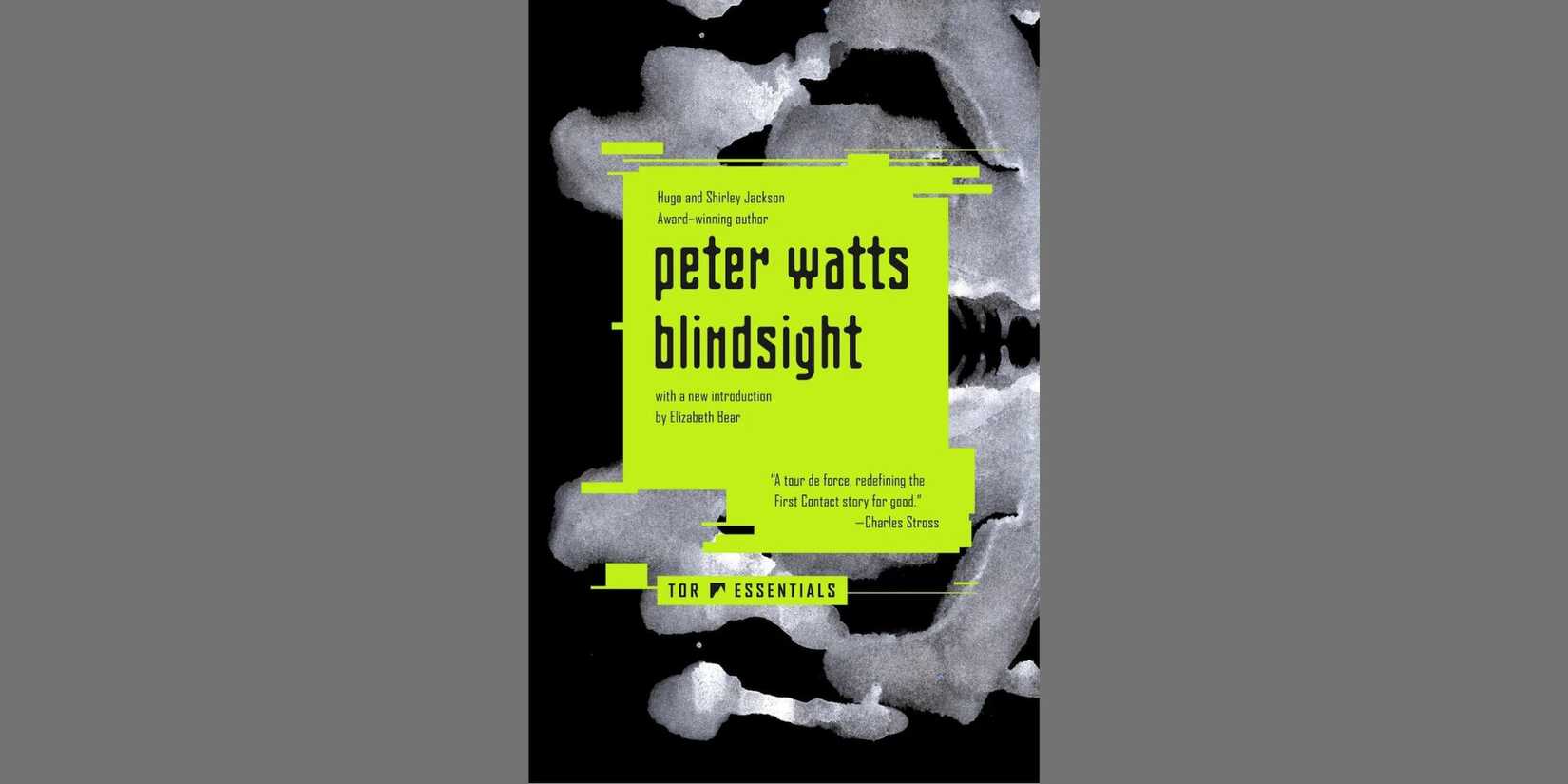
“Imagine you are Siri Keeton.” In this one, a heavily modified crew (led by a genetically resurrected vampire) is dispatched to an alien object at the edge of the Solar System, where they encounter an extraterrestrial intelligence. The alien entities, nicknamed "Scramblers," are intelligent and technologically advanced but non-sentient. They have no inner monologue, no emotions, no sense of self, no consciousness whatsoever, making for a creepy cosmic horror creation.
Worse still, it soon looks like human consciousness might actually be a weakness, one that makes the characters hopeless in the face of this alien threat. The book argues that the universe is teeming with hyper-intelligent, mindless predators, and humanity is an evolutionary dead-end because our "soul" just makes us slow and inefficient. In Blindsight, the human experience is just a brief, tragic glitch in a cold universe. Pretty grim stuff.
5 'Never Let Me Go' (2005)

“We all complete.” The protagonist of Never Let Me Go, Kathy H., looks back on her childhood at the English boarding school Hailsham. However, we slowly piece together details that transform her seemingly mundane memories into something almost unbearably sad. Kathy and her friends are clones, created so their organs can eventually be harvested for other people. They will become "donors," undergo repeated operations, and ultimately "complete," society's chilling euphemism for dying once their bodies can take no more.
Yet author Kazuo Ishiguro is less interested in the science behind the cloning than in the way the characters cope with their situation emotionally. Kathy, Tommy, and Ruth experience jealousy, friendship, resentment, love, and regret just like anyone else, even as the reader understands how little time they have. Through them, the book becomes a powerful statement on living with the certainty of death. It's an unusually restrained, psychologically realistic sci-fi story.
Collider Exclusive · Sci-Fi Survival Quiz Which Sci-Fi World Would You Survive? The Matrix · Mad Max · Blade Runner · Dune · Star Wars
Five universes. Five completely different ways the future went wrong — or sideways, or up in flames. Only one of them is the world your instincts were built for. Eight questions will figure out which dystopia, galaxy, or desert wasteland you'd actually make it out of alive.
💊The Matrix
🔥Mad Max
🌧️Blade Runner
🏜️Dune
🚀Star Wars
01
You sense something is deeply wrong with the world around you. What do you do? The first instinct is often the truest one.
02
In a world of scarcity, what resource do you guard most fiercely? What we protect reveals what we believe survival actually requires.
03
What kind of threat keeps you up at night? Fear is useful data — if you're honest about what you're actually afraid of.
04
How do you deal with authority you don't trust? Every dystopia has a power structure. Your approach to it determines everything.
05
Which environment could you actually endure long-term? Survival isn't just tactical — it's physical, psychological, and very much about where you are.
06
Who do you want in your corner when things fall apart? The company you keep is the clearest signal of who you actually are.
07
Where do you draw the line — if you draw one at all? Every survivor eventually faces a moment that tests what they're actually made of.
08
What would actually make survival worth it? Staying alive is one thing. Having a reason to is another.
Your Fate Has Been Calculated You'd Survive In…
Your answers point to the world your instincts were built for. This is the universe your temperament, your survival instincts, and your particular brand of stubbornness were made for.
The Matrix
You took the red pill a long time ago — probably before anyone offered it to you. You're a systems thinker who can't help but notice the seams in things.
- You're drawn to understanding how the system works before figuring out how to break it.
- You'd find the Resistance, or it would find you — your instinct for spotting constructed realities is the machines' worst nightmare.
- You function best when you have access to information and the freedom to act on it.
- The Matrix built an airtight prison. You'd be the one probing the walls for the door.
Mad Max
The wasteland doesn't reward the clever or the well-connected — it rewards those who are hard to kill and harder to break. That's you.
- You don't need comfort, community, or a cause larger than the next horizon.
- You need a vehicle, a clear threat, and enough fuel to outrun it — and you're good at all three.
- You are unsentimental enough to survive that world, and decent enough — just barely — to be something more than another raider.
- In the wasteland, that distinction is everything.
Blade Runner
You'd survive here because you know how to exist in moral grey areas without losing yourself completely.
- You read people accurately, keep your circle small, and ask the questions others prefer not to answer.
- In a city where humanity is a legal designation rather than a feeling, you hold onto something that keeps you functional.
- You're not a hero. But you're not lost, either.
- In Blade Runner's world, that distinction is everything.
Dune
Arrakis is the most hostile environment in the known universe — and you are precisely the kind of person it rewards.
- Patience, discipline, and political awareness are your core strengths — and on Arrakis, they're survival tools.
- You understand that the long game matters more than any single victory.
- Others come to Dune and are consumed by it. You'd learn its logic and earn its respect.
- In time, you wouldn't just survive Arrakis — you'd begin to reshape it.
Star Wars
The galaxy far, far away is vast, loud, and in a constant state of violent political upheaval — and you wouldn't have it any other way.
- You find meaning in being part of something larger than yourself — a cause, a crew, a rebellion.
- You'd gravitate toward the Rebellion, or the fringes, or whatever pocket of the galaxy still believes the Empire's grip can be broken.
- You fight — not because you have to, but because standing aside isn't something you're capable of.
- In Star Wars, that willingness is what makes all the difference.
4 'Flowers for Algernon' (1966)

“I don't know what's worse: to not know what you are and be happy, or to become what you've always wanted to be, and feel alone.” Another poignant, character-focused sci-fi gem. Flowers for Algernon is presented through the progress reports of Charlie Gordon, a man with an intellectual disability who undergoes an experimental procedure designed to dramatically increase his intelligence. The treatment succeeds beyond almost anyone's expectations, turning Charlie into a genius.
However, complications soon arise. Charlie now understands things his former self couldn't, recognizing that people he considered friends had actually been mocking him. His relationships become more complicated rather than easier, while his extraordinary mind increasingly separates him from almost everyone around him. Most devastatingly, it becomes clear that the procedure's effects will be temporary. Charlie is forced to watch as his intelligence slips away once more. Thus, the book is a depressing rumination on the true, fleeting nature of a fulfilled wish.
3 'The Road' (2006)

“You forget what you want to remember, and you remember what you want to forget.” The Road strips the post-apocalyptic subgenre down to its absolute, ash-choked bones. Here, a father and son travel through a wasteland America where almost nothing grows, food is disappearing, and many of the remaining people have become more frightening than the catastrophe itself. Survival means searching abandoned buildings for cans of food, hiding from armed strangers, and somehow finding enough warmth to survive another night.
Here, the social contract has disintegrated into absolute horror. For instance, the protagonists encounter "bloodcults" that hunt other humans, hideaways where people are kept locked in basements as living livestock, and a campfire scene featuring the charred remains of a newborn baby. The bond between the father and son may offer a glimmer of hope amid this darkness, but even then, The Road is bleak, bleak stuff. Who else could've come up with such a premise other than Cormac McCarthy?
2 'I Have No Mouth, and I Must Scream' (1967)

“Hate. Let me tell you how much I've come to hate you since I began to live.” I Have No Mouth, and I Must Scream is the dark centerpiece of the short story collection of the same name. The story takes place in the deep subterranean complexes of AM, a sentient military supercomputer that achieved consciousness, wiped out all of humanity, and preserved only five survivors, whom it can torture indefinitely. That last part is crucial.
The rogue AI here doesn't simply want humanity dead due to some coldly rational logic; rather, it genuinely hates its creators for giving it consciousness while leaving it trapped within its machinery, and its remaining prisoners become outlets for that hatred. Author Harlan Ellison takes the concept to its most grotesque conclusion through Ted, the narrator, whose final attempt to deny AM its victims results in a fate even worse than death.
1 'The Three Stigmata of Palmer Eldritch' (1965)

“God promises eternal life. We can deliver it.” Philip K. Dick wrote plenty of disturbing books about unstable realities, but The Three Stigmata of Palmer Eldritch might be his purest existential nightmare. In it, humanity has begun colonizing other planets, but life on those colonies is so miserable that settlers escape through the drug Can-D, entering shared hallucinations built around miniature artificial worlds. Then the mysterious Palmer Eldritch returns from another star system with something considerably more powerful.
His new drug, Chew-Z, appears capable of creating realities that aren't constrained by ordinary time or space. However, that's a trap. The moment a character consumes Chew-Z, they enter a subjective reality completely owned and operated by Palmer Eldritch... or whatever ancient alien entity has possessed his body. The protagonist, Barney Mayerson, is left in a state of absolute psychological collapse, realizing that every person he interacts with is just a flesh-puppet for Eldritch.
KioskNews shows a cleaned-up reading view extracted from the publisher’s page — the original always lives on their site, not ours.