5 times French students took to the streets since 1968, and what happened
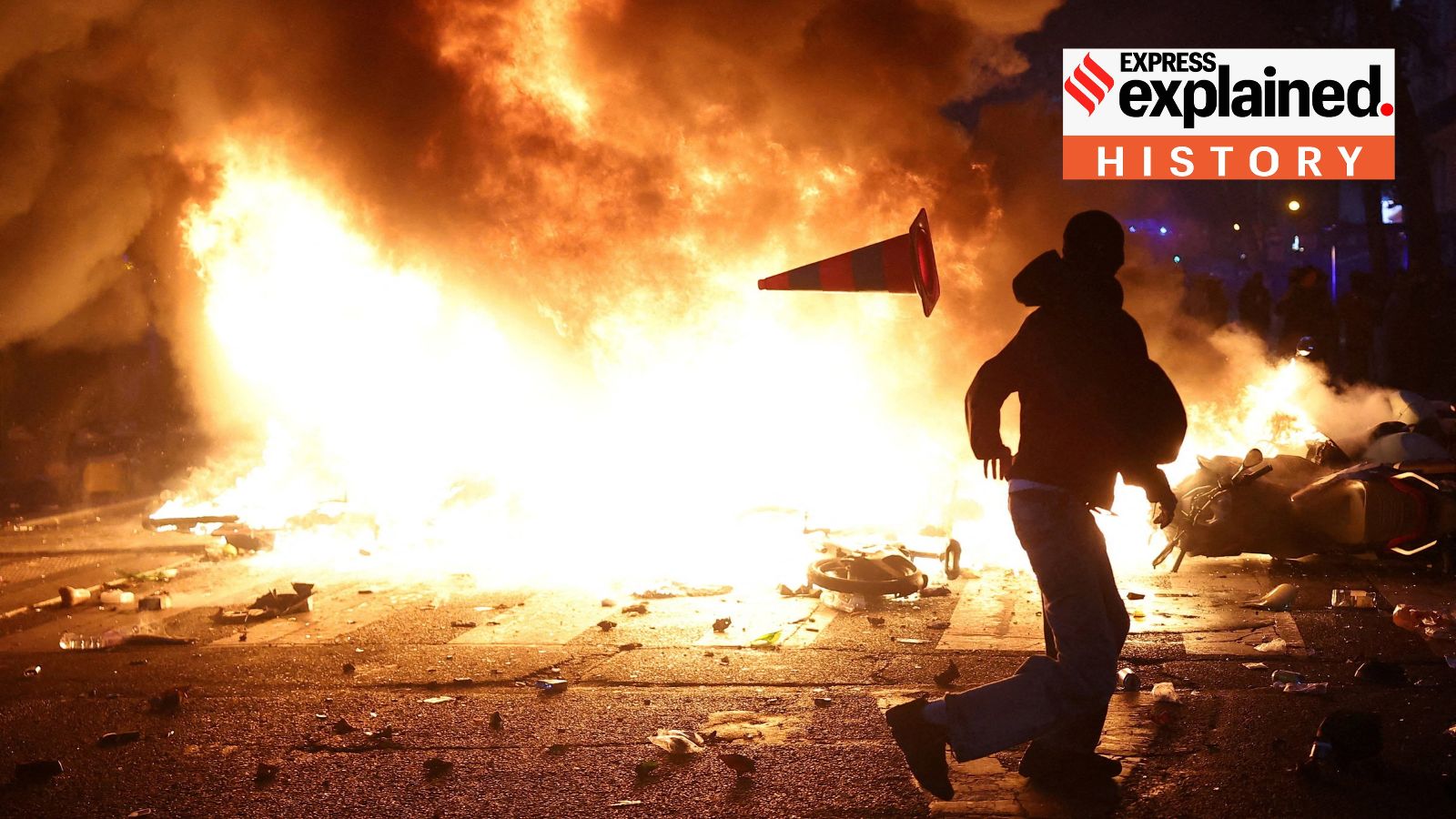
Protesters have also invoked the transformative protests of ‘Mai 1968’ (May 1968), which similarly began as protests against poor university conditions and government repression, and snowballed into a general strike by millions of workers. The 1968 protests very nearly brought down the government of President Charles de Gaulle, led by conservative Prime Minister Georges Pompidou.
In the decades that followed, successive generations in France mobilised against university reforms, unequal access to education, and policies feared to worsen employment insecurity. Some movements forced governments to withdraw proposed laws; others exposed grievances that remained unresolved.
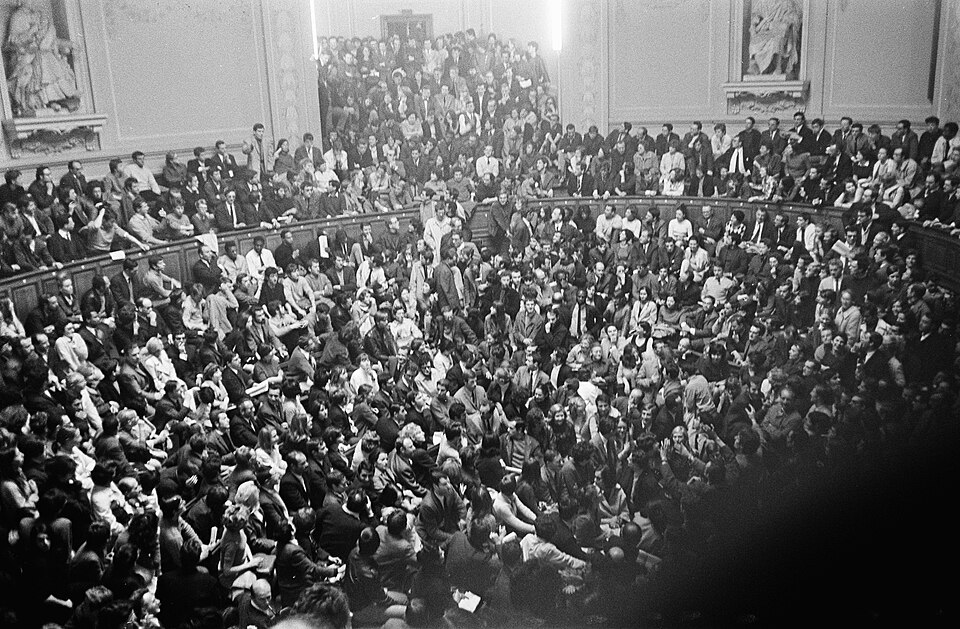 Sorbonne occupied by students, May 1968 (Wikimedia Commons)
1. May 1968: University overcrowding, inequality and a nationwide revolt
Two decades after World War II, France’s higher education system was struggling to accommodate a rapidly growing student population. According to historian John Merriman, university enrolment expanded faster than institutional capacity — from 192,000 in 1958-59 to 478,000 in 1967-68 — squeezing access to already overstretched facilities and resources.
Access to higher education also remained deeply unequal: Merriman noted that only 2% of university students in 1964 were children of workers and peasants. Compounding the problem was institutional rigidity, characterised by outdated rules and convoluted bureaucracy, while a university degree did not guarantee steady employment for new graduates, especially those studying the humanities.
Story continues below this ad
Student demonstrations began at the University of Nanterre, west of Paris, before spreading to the Sorbonne and the Latin Quarter, where clashes with police intensified the unrest. The Sorbonne was closed on May 2, and police entered the campus the following day to evacuate students, escalating tensions.
On the night of May 10–11, dubbed the “Night of the Barricades”, thousands of high school and university students took to the streets of Paris and erected makeshift barricades of cobblestones, overturned cars, iron grates and construction materials. The riot police responded with batons and tear gas. The clashes left hundreds injured and led to hundreds of arrests.
The police response helped generate public sympathy for the students and prompted trade unions to call a general strike in solidarity, even as workers mobilised over their own grievances. Workers occupied factories across France, demanding greater control over working conditions and stronger trade union rights.
By May 20, an estimated 10 million workers had joined the strikes, bringing much of France to a standstill. Negotiations between the government, employers and trade unions produced the Grenelle agreements, which provided for substantial wage increases and stronger trade union rights, although they were not formally signed.
Story continues below this ad
However, the political upheaval did not immediately dislodge Charles de Gaulle. His party won a commanding majority in the June 1968 parliamentary elections, and he remained in office until April 1969, when he resigned following the defeat of a referendum on constitutional reforms.
The protests nevertheless brought changes to university administration and expanded opportunities for student participation. But as Merriman observed, greater access to higher education did not resolve the underlying problems of inadequate funding, institutional inequality and uncertain employment prospects for graduates.
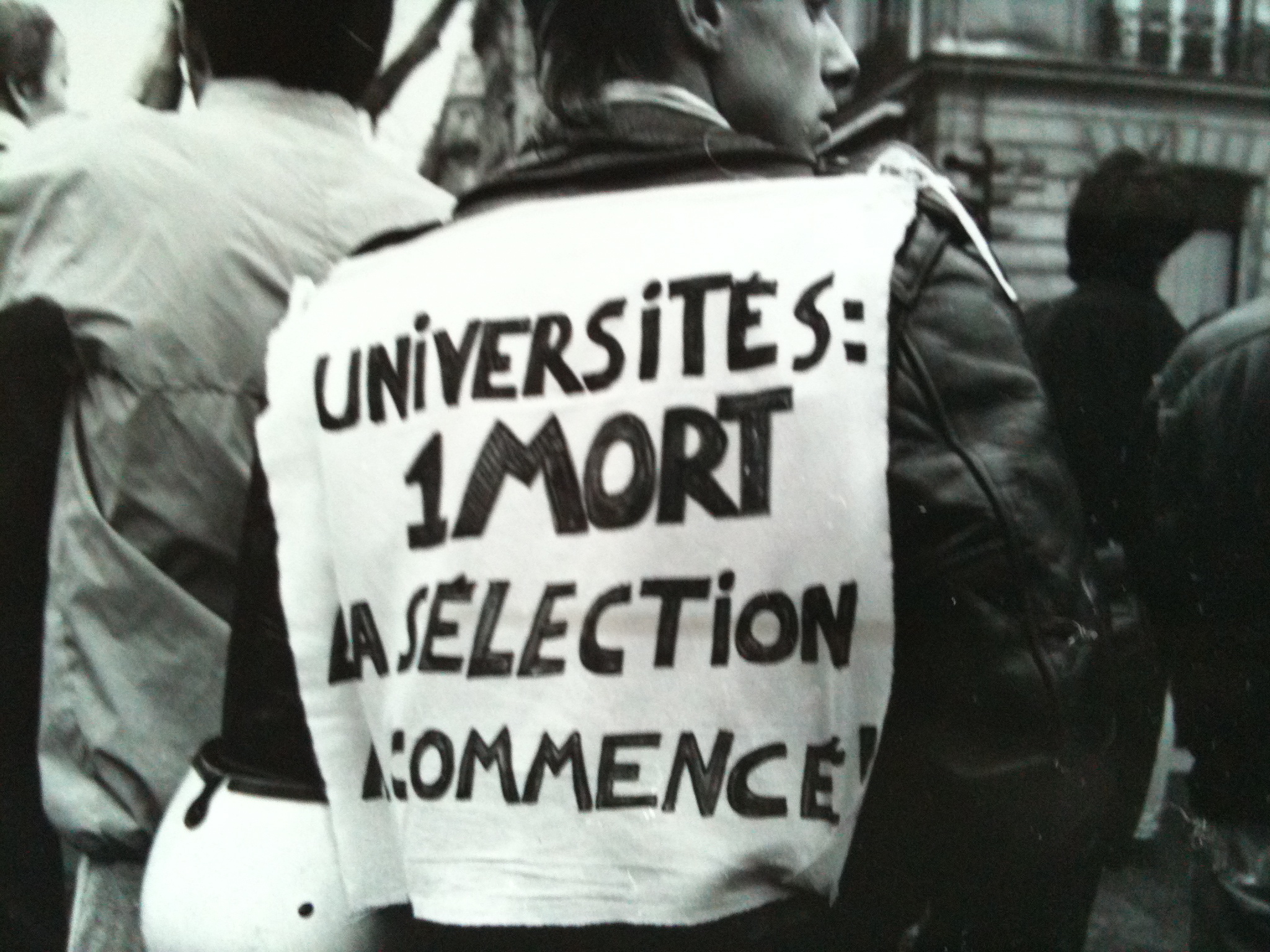 A slogan against the Devaquet bill, which reads: ‘Universities: 1 dead: the selection process begins’, November 1986 (Wikimedia Commons)
2. 1986: University reforms, student protests and a government retreat
In 1986, Alain Devaquet, the junior minister for universities, mooted a higher education reform Bill that sought to increase competition and provide greater autonomy to individual universities. Among other things, the Bill would allow universities to set their own entrance examinations instead of admitting all students who cleared the baccalauréat, the school-leaving examination. It would also allow universities to increase registration and tuition fees. The proposal would also allow universities to issue local or specialised degrees, instead of adhering to the national diploma standard that ensured uniformity.
Story continues below this ad
However, the proposal faced strong pushback from students, who organised mass rallies and strikes. The death of Malik Oussekine, a 22-year-old student who was beaten by police officers in Paris on December 6, also prompted a massive outpouring of anger. The bill was withdrawn on December 8 by Prime Minister Jacques Chirac, while Devaquet resigned amid the crisis.
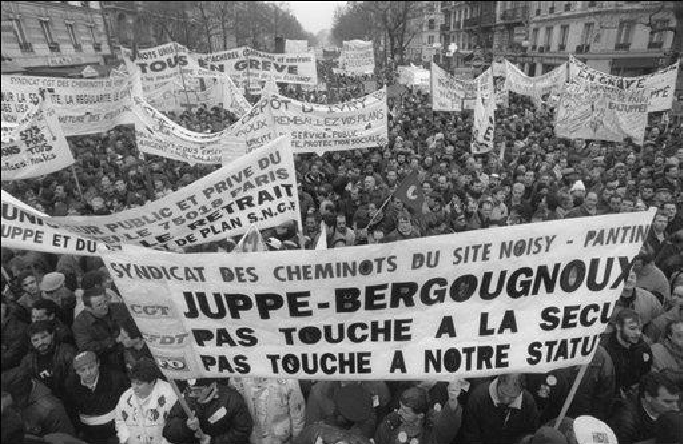 A procession during the strikes against the Juppe Plan, autumn 1995 (Wikimedia Commons)
3. 1995: Education funding cuts and a nationwide wave of strikes
In 1995, French students took to the streets against cuts to education funding and deteriorating university conditions, alongside growing opposition to the conservative government of President Jacques Chirac.
In November, conservative Prime Minister Alain Juppé introduced the Juppé Plan, an extensive programme of social security reforms aimed at containing public spending and bringing France closer to the deficit limits required under the Maastricht Treaty, which established the European Union.
Story continues below this ad
In a bid to reduce the budget deficit from 5% to 3% of GDP, as mandated by the treaty, the Juppé Plan proposed an overhaul of the state healthcare system to reduce soaring deficits, the creation of a new social security levy, the CRDS (Social Debt Repayment Contribution), and changes to public-sector pensions.
The proposals triggered widespread strikes by public-sector workers, particularly railway and transport employees. In December, student protesters joined the broader mobilisation, bringing together grievances over university funding, working conditions and welfare reforms.
The government eventually withdrew the proposed changes to special pension regimes, but went ahead with significant parts of its social security reforms.
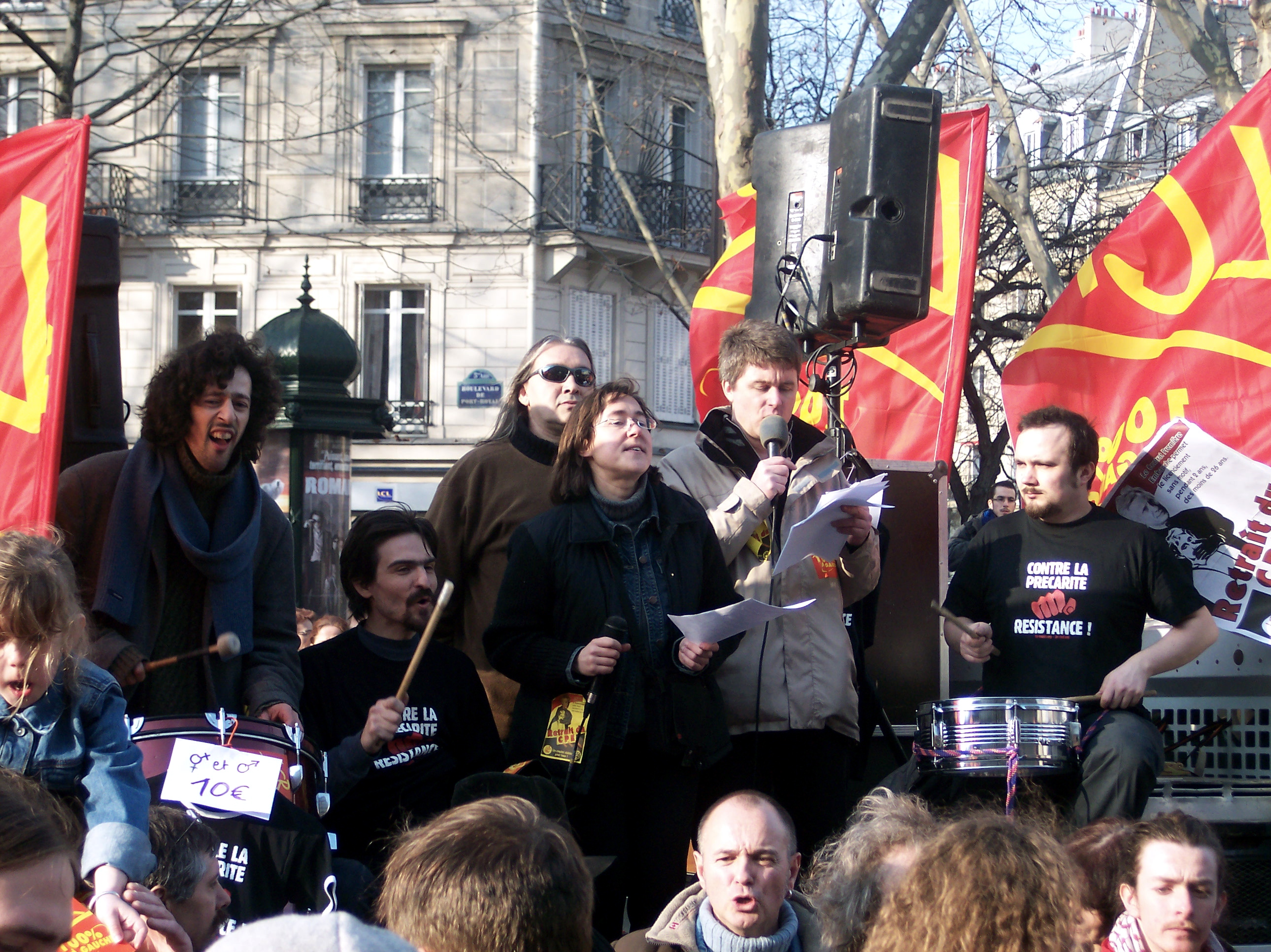 A demonstration against the proposed CPE labour contract, March 2006 (Wikimedia Commons)
4. 2006: Youth employment insecurity and the withdrawal of a controversial labour law
Story continues below this ad
Unlike 1995, the 2006 protests were driven largely by university and secondary-school students, with support from trade unions. The trigger this time was the Equal Opportunity Bill, which introduced a new labour contract, the Contrat première embauche (CPE), or First Employment Contract.’
It would allow employers with more than 20 employees to dismiss workers under 26 without having to provide a reason during the first two years of employment. Opponents feared this would worsen job insecurity and discourage young workers from challenging workplace abuse, including sexual harassment, for fear of losing their jobs.
Following weeks of demonstrations, university occupations and strikes, Prime Minister Dominique de Villepin announced the withdrawal of the CPE on April 10.
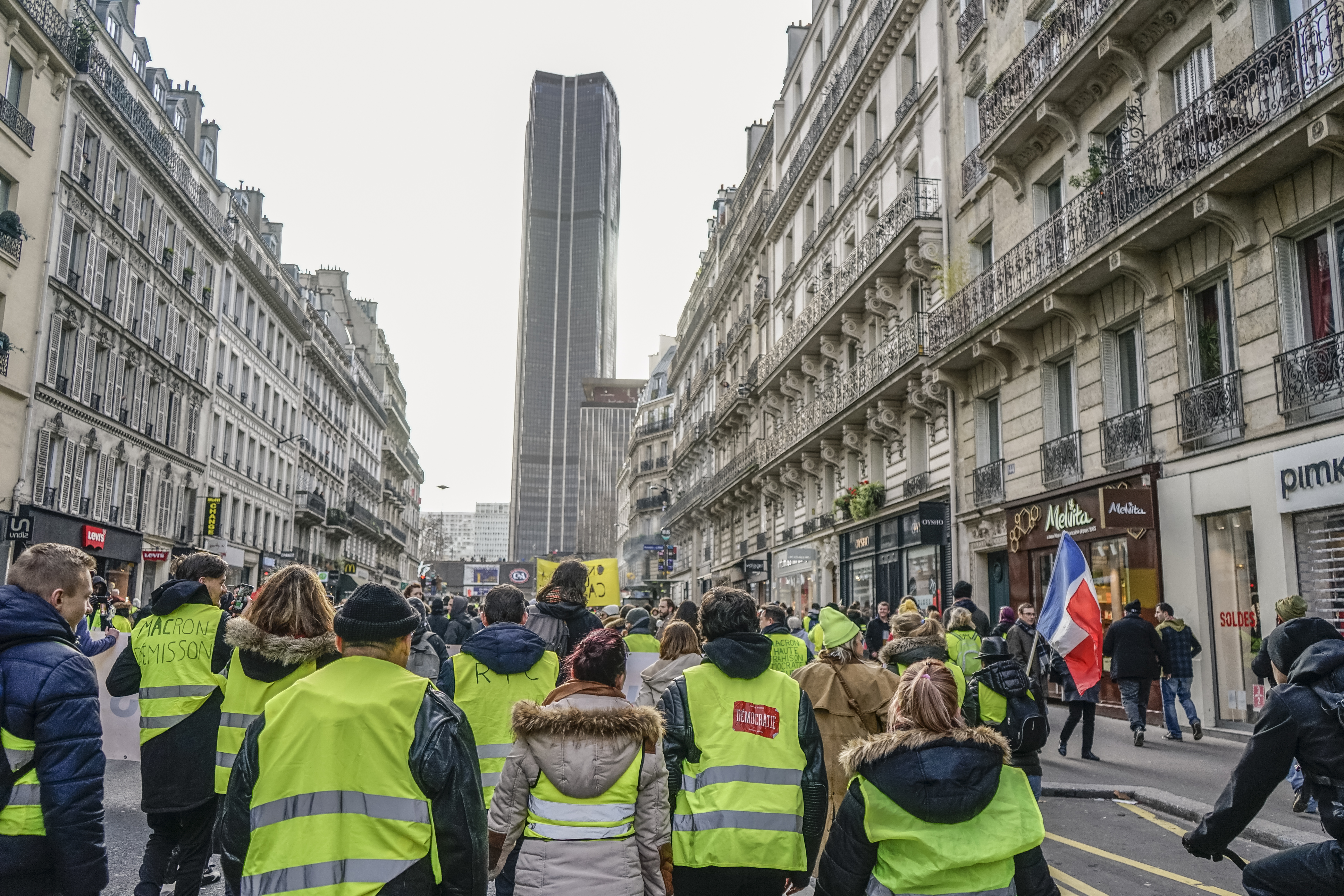 Thousands of yellow vests (Gilets Jaunes) protesters march in Paris, February 2019.
5. 2018: University admissions reforms and fears of greater inequality
Story continues below this ad
In 2018, students protested against President Emmanuel Macron’s overhaul of university admissions, particularly the introduction of Parcoursup, a new online application system.
The reforms allowed universities to assess applicants against course-specific criteria, prompting concerns that the changes would undermine open access to higher education and disadvantage students from poorer backgrounds.
Protesters occupied campuses and disrupted classes and examinations across several universities. However, unlike in 1986 and 2006, the government did not withdraw the reforms. The protests eventually subsided, and Parcoursup remains in place.
Later that year, the Yellow Vest movement, initially sparked by rising fuel costs, brought wider discontent over living costs and economic inequality to the streets. Secondary-school students also mobilised against education reforms, with some drawing inspiration from the movement.
KioskNews shows a cleaned-up reading view extracted from the publisher’s page — the original always lives on their site, not ours.