Up a hill and into a forest: How to tranquilise a 3,000-kg elephant, the Chhattisgarh way
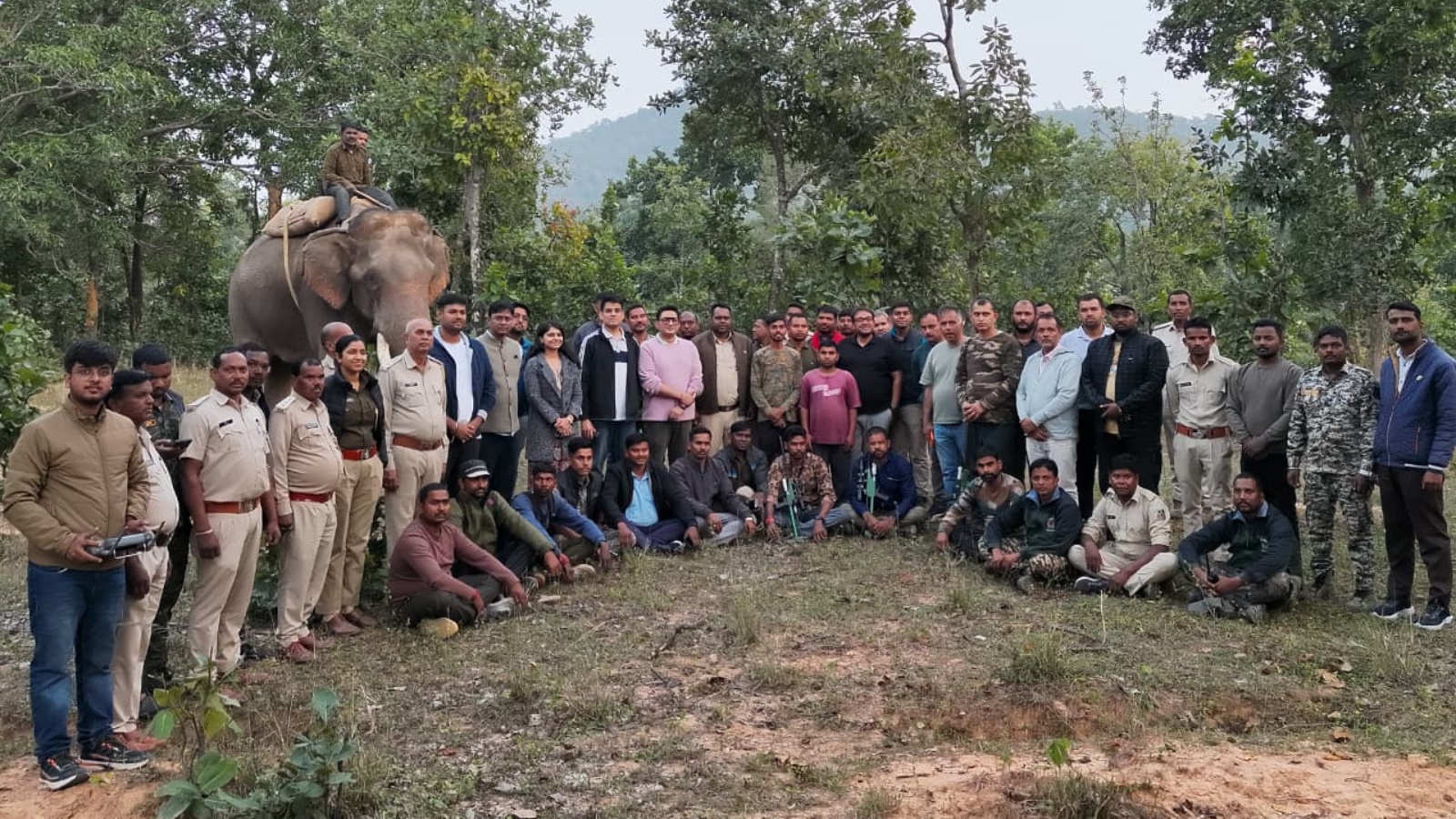
What does it take to tranquillise a 3,000 kg wild elephant in musth? Over 100 people, a vast network of officials and villagers, round-the-clock monitoring and a week-long operation.
That’s how officials from the Chhattisgarh forest department tranquilised Kabra Kaan, the wild elephant believed to have trampled 16 people to death over the last 6-7 months. The hunt, which involved 100 forest officials and staff, three veterinary doctors, two trained elephants, numerous volunteers and drones, ended with the animal being tranquilised on Ramgarh hill in Chhattisgarh’s Surguja district on Wednesday evening. According to officials, the elephant was radio-collared and released back into the wild.
“We spotted the elephant around noon, and by 4 pm we had tranquilised and completed the work of putting a radio-collar around his neck. For the next 48 hours, as a preventive measure, our entire team will monitor his movement to ensure he does not harm anyone,” said Pranay Mishra, Chief Conservator of Forests (Wildlife) and Regional Director of Guru Ghasidas Tiger Reserve in Ambikapur.
Named Kabra Kaan because of the pigmentation on his ears, the 20-year-old elephant is believed to have trampled 16 people to death. (Screengrab)
Named Kabra Kaan because of the pigmentation on his ears, the 20-year-old elephant is believed to have trampled 16 people to death. Over 100 people from the forest department have been hunting for the bull elephant since November 12, using the Hathi Mitra Dal’s volunteer and rapid-response teams to track his movement. By Sunday, the elephant had crossed Surajpur and reached Udaipur Forest, then moved 25 km to Ramgarh hills.
“The herd had moved to Ramgarh hill and was moving 10-15 km within the area. The two Kumki elephants brought for the rescue operation had to be left below the hill. Early on Wednesday, our trekkers and mahouts (elephant handlers) reached the top of the hill – most of it by car and then another 30 minutes on foot — to reach the hill and alert us. After this, a team of doctors was sent to tranquilise the elephant,” said a forest official.
At that time, the elephant had not left the herd, meaning there was a risk that the authorities would be attacked by the herd. “But our trekkers trained and managed to separate him from the herd, then waited for the herd to move ahead. We left the elephant after radio-collaring him. He is slowly moving towards the herd again, and we will monitor him for next two days,” the official said.
Human-elephant conflict data
This comes amid prolonged man-animal conflict in Chhattisgarh, which has claimed many human lives. According to a Wildlife Institute of India Report 2025, 218 elephants died between 2000 and 2023 — 77 due to electrocution, five due to poisoning, one each due to poaching and retaliatory killing, four due to anthropogenic stressors (human-caused threats/pressure), and 12 due to unknown reasons. The remaining deaths were due to natural causes.
At 33, Dharamjaijaigarh reported the most deaths due to human activity, followed by Raigarh (11), Jashpur (10) and Surajpur (9).
Story continues below this ad
During this period, 737 people were killed and another 91 were injured by elephants. Among the divisions, Jashpur, with 152 deaths and 19 injuries, emerged as the most severely affected, followed by Dharamjaigarh (135 deaths, 20 injuries), Surajpur (107 deaths, four injuries) and Korba (64 deaths, four injuries).
The report found that seasonal patterns emerged as a significant driver of conflict, with the monsoon witnessing a rise in human fatalities and injuries. During this period, increased agricultural activities coincide with the seasonal movements of elephants.
According to figures placed before the Chhattisgarh Legislative Assembly in January this year, more than 340 people have been killed in elephant attacks across Chhattisgarh over the past five years.
KioskNews shows a cleaned-up reading view extracted from the publisher’s page — the original always lives on their site, not ours.