SARDINE SQUEEZE: DFFE limits catches to 25% while fish die-off impact uncertain
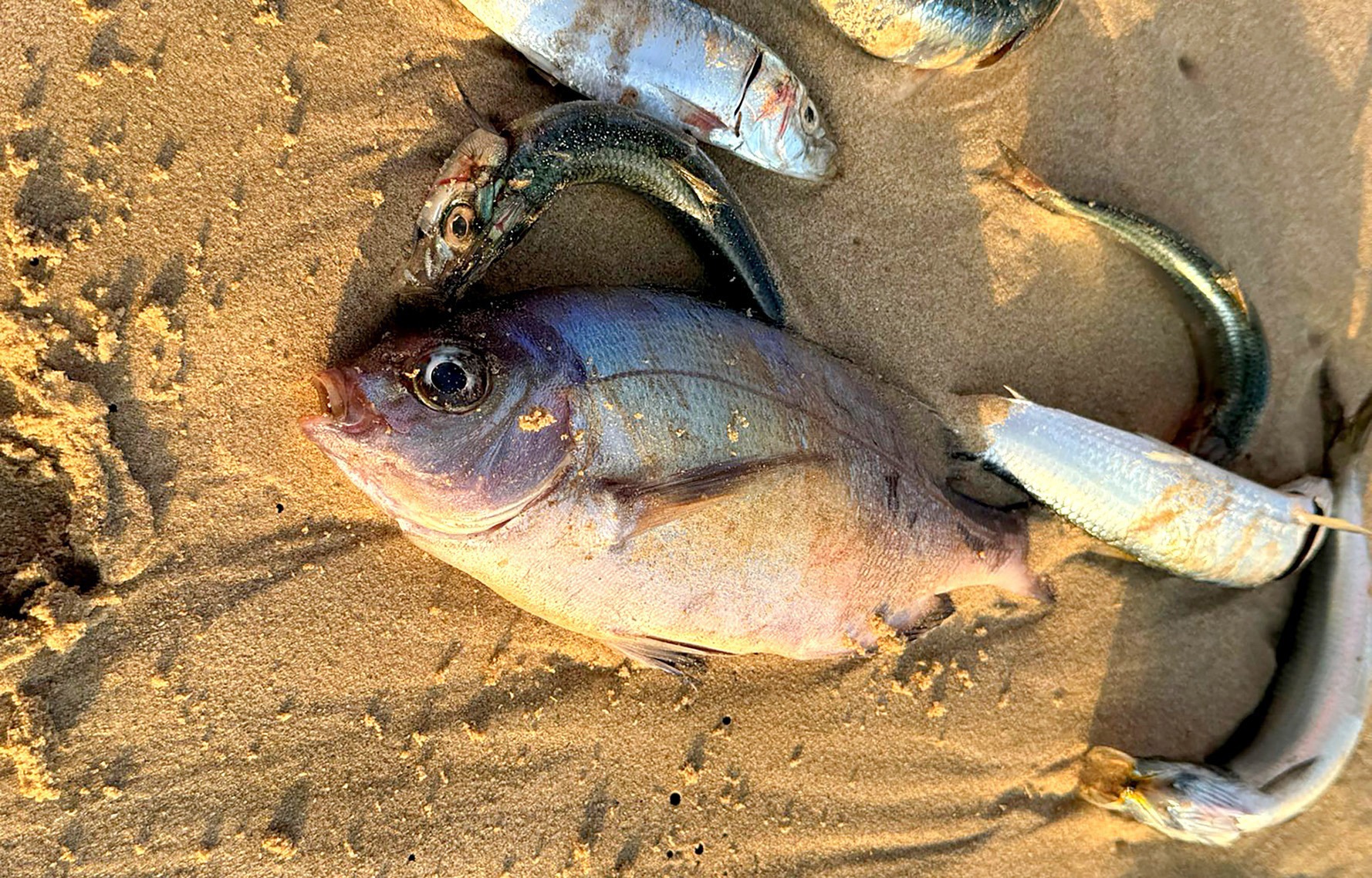
A strict temporary limit has been placed on sardine fishing along the South African coast as government and other roleplayers continue to investigate the cause and impact of mass fish mortalities in recent weeks.
The Department of Forestry, Fisheries and the Environment announced its decision to limit sardine fishing for all permit holders until October, when it plans to conduct comprehensive population surveys on sardines to determine the impact of the mass mortalities believed to be caused by an outbreak of pilchard herpesvirus (PHV).
This means that until 2 October, permit holders may land no more than 25% of their outstanding total allowable catch (TAC) for 2026.
The move by the department has been well received by the fishing industry and conservationists alike, who previously voiced concerns about the spread of the disease, the impact on sardine numbers and the broader loss of food for predators dependent on the fish population.
Investigations into the mass mortality incident began in August after reports of large numbers of dead sardines washing up along the West Coast, between Saldanha and Gansbaai.
The DFFE has since expanded the investigation to include more locations along the southern coastline, Nelson Mandela Bay, Buffalo City and a portion of the Wild Coast after more fish washed ashore. Samples were taken from each location for comprehensive testing.
“Laboratory testing has confirmed pilchard herpesvirus (PHV) in affected sardines from both the Western Cape and the Gqeberha area. This supports a link between the Eastern Cape mortality and the earlier PHV-associated event in the Western Cape,” a department statement said.
“Taken together, the consistent detection of high levels of PHV in affected sardines, its confirmation in Western and Eastern Cape samples, and the observed mortality pattern indicate that PHV is the most likely primary cause.”
The department said the investigation could not rule out harmful algae, marine biotoxins or other environmental factors as “contributing stressors”, but it could say with a degree of certainty that these were not the main cause of the mass mortality incident.
The statement further said that there was no clear indication of how or when the virus reached South African waters, or where exactly it originated.
/file/attachments/orphans/Riaan-SardineLimits1_819306.jpg "Scores of fish were discovered dead at Kings Beach on 27 August (Photo: Gary Koekermoer)")
At a meeting on 4 September, with all the evidence available to it, the department’s Small Pelagic Scientific Working Group (SWG-PEL) determined that it could not with certainty determine how the virus was affecting sardine numbers, as there was no way to compare the numbers of fish that had washed up to those that may have sunk to the bottom of the ocean.
‘Temporary catch limitation’
“Although the magnitude of the mortality remains uncertain, the available evidence did not indicate that it had caused a sufficiently large reduction in the sardine population to warrant a complete closure of the fishery. The SWG-PEL nevertheless recommended a temporary precautionary limitation on catches while further information is obtained, and the DFFE has decided to implement these recommendations,” the department said
DFFE spokesperson Zolile Nqayi explained that the limitations meant permit holders were limited to 25% of their remaining total allowable catch for 2026, and these measures would remain in place until 2 October. During this period, the SWG-PEL would intensify its observations and reassess the situation towards the end of the limitation period.
The true scale of the mortality will become clear only once hydroacoustic surveys are conducted towards the end of October or the beginning of November.
The South African Pelagic Fishing Industry Association (Sapfia) – representing most rights holders for sardine and anchovy fishing in SA – has welcomed the department’s decision.
“We support the structured and evidence-based approach being adopted by DFFE in investigating this extremely concerning event, and we will continue to be actively involved in the gathering of data and information to inform further management action,” Sapfia chairperson Mike Copeland said.
He said decisions needed to be made that would strike a balance between the fishing industry, natural predation and the ecosystem.
He said the hydroacoustic surveys needed to be done timeously so that all roleplayers could have a better understanding of the remaining resources and how this would affect total allowable catches for 2027.
African penguin concern
In Nelson Mandela Bay, Ronelle Friend of Algoa Bay Conservation also welcomed the TAC limits as their main concern was the availability of food for the local African penguin population.
“We were concerned that the survey planned towards the end of October would be too late, but we are happy to hear about the precautionary measures from DFFE.
“While the die-offs seem to have stopped, there is no statistical data available on the current sardine numbers, and our main concern was that our African penguin colonies would enter their moult period in poor condition due to lack of food.”
About a decade ago, Nelson Mandela Bay was home to one of the biggest African penguin colonies, boasting more than 7,000 breeding pairs. Those numbers have dwindled to about 700 pairs.
/file/attachments/orphans/Penguins-2_356504.jpg "African Penguin numbers along the Nelson Mandela Bay coast have dwindled over the last seven years, with breeding pairs nesting on St Croix island dropping by 85%. And conservationists are concerned that the mass death of sardines, the penguins' main food source, could further impact the colony's numbers. (Photo : Ronelle Friend)")
Friend said they would like to see additional teams deployed from other working groups, including those for oceans and seabirds, as well as teams from SANParks, to assist with ongoing investigations.
Senior marine specialist for the World Wildlife Fund (WWF), Craig Smith, said they would have liked to see a complete closure of fishing until the biomass surveys were conducted.
“The WWF believes the most responsible decision would be to close the small pelagic fishery until surveys have assessed the impact of the current die-offs. Thereafter, a sound scientific decision can be made as to whether the fishery can be opened or not.
“Based on what we know about the potential consequences and impact of sardine viral outbreaks in other parts of the world, and increasing evidence that the current die-offs are widespread from the Eastern Cape through Western Cape to Namibia, a precautionary approach is not only biologically prudent, but in the long-term interest of those who depend on this resource for their livelihoods,” Smith said. DM
KioskNews shows a cleaned-up reading view extracted from the publisher’s page — the original always lives on their site, not ours.