A New 'Axis'? 87 Years After Pact Of Steel, A New European Far-Right Tie-Up
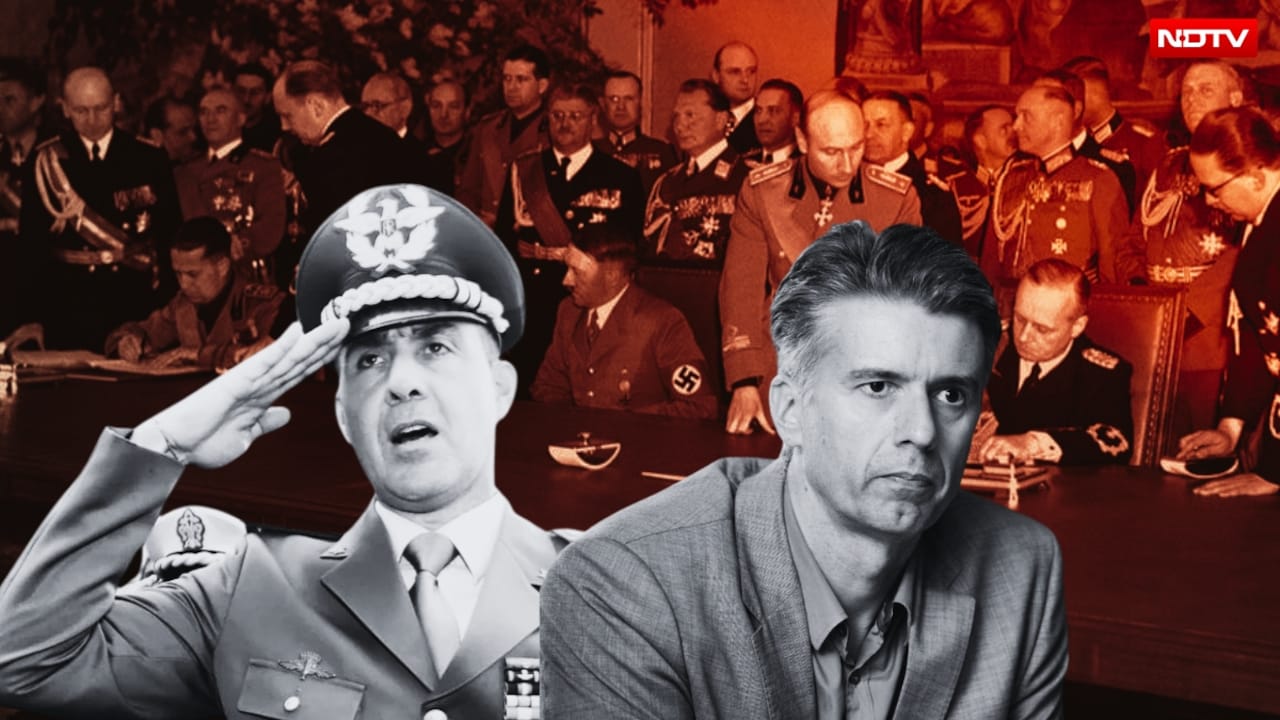
In the city of Orvieto in central Italy, a far-right party of Germany and a far-right party of the host nation stood side by side and called for closer ties between Europe's many neo-nationalist movements and this union brought some historical precedent to mind.
Nearly nine decades after Nazi Germany and Fascist Italy formalised their alliance in the Pact of Steel, senior figures from Germany's far-right Alternative for Germany (AfD) and Future Nazionale, an Italian party positioned to the right of Prime Minister Giorgia Meloni's coalition government, appeared together at a political rally on Sunday.
Advertisement - Scroll to continue
The meeting brought together Roberto Vannacci, the leader of Future Nazionale, and Marc Jongen who is a senior AfD figure.
AfD recently secured a historic state election victory in Saxony-Anhalt. These developments have invited scrutiny of the party's growing influence and the challenges facing German Chancellor Friedrich Merz and his centre-right Christian Democratic Union (CDU).
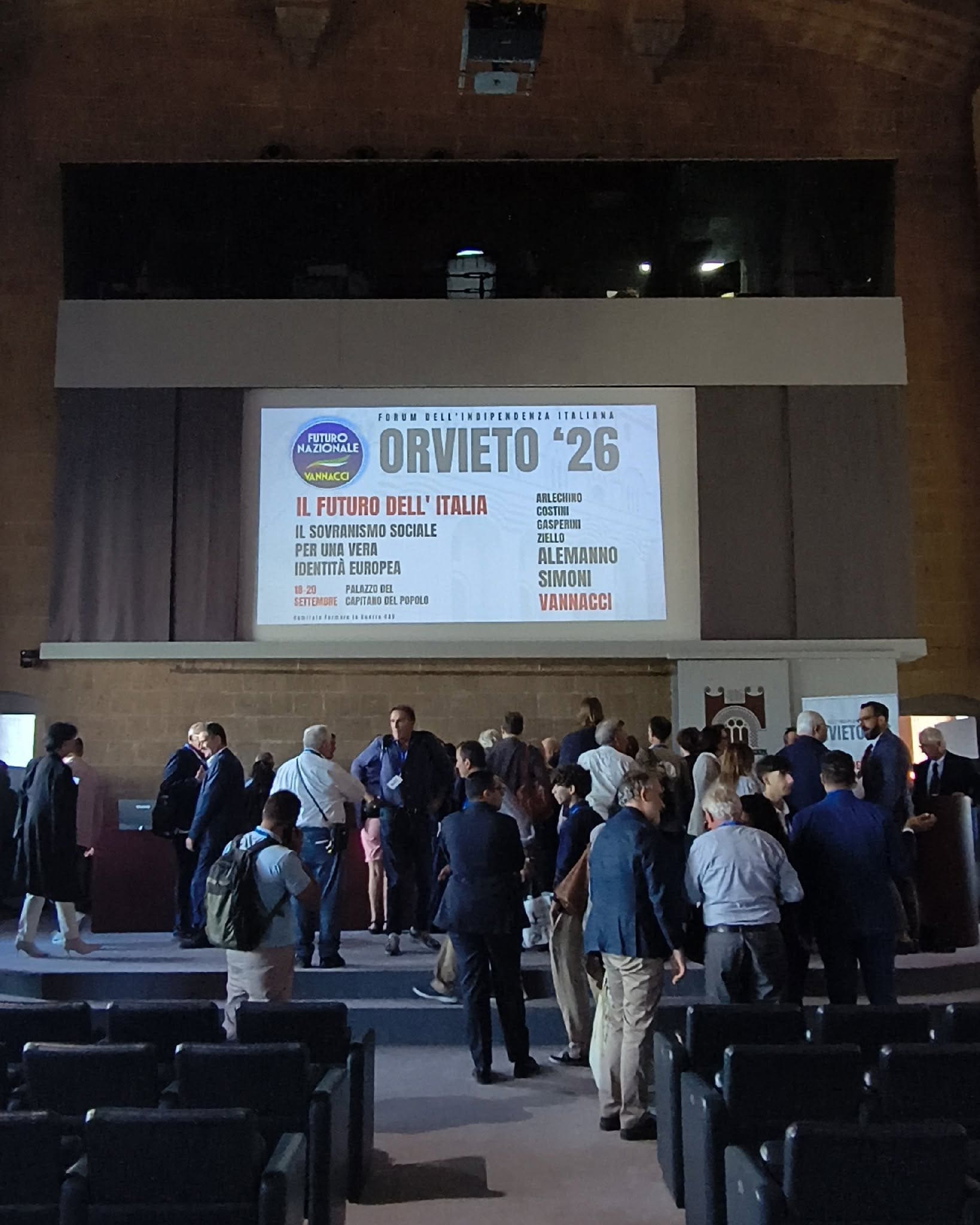
The Historical Comparison
In November 1936, Benito Mussolini announced the Rome-Berlin Axis after drawing closer to Adolf Hitler's Germany. He delivered a speech in Milan celebrating a new treaty of friendship with Germany and announcing a redrawing of Italy's foreign policy. He spoke to a crowd of around 2,50,000 people (figures vary) outside Milan Cathedral, with Nazi officials standing alongside him.
Advertisement - Scroll to continue
The speech was reported by The New York Times the following day, including a commentary on Mussolini's use of the word "axis".
"This Berlin-Rome protocol is not a barrier. it is rather an axis around which all European States animated by a desire for peace may collaborate on troubles," Mussolini said.
Three years later, on May 22, 1939, the two dictatorships signed the Pact of Steel, a military and political alliance that preceded Italy's entry into the Second World War alongside Germany.
The 21st century parties are operating within democratic political systems and are not equivalent to the governments of the 1930s. Yet the renewed links between the German and Italian far-right come against a politically charged backdrop.
At the Orvieto gathering, Vannacci introduced Jongen to the crowd, making light of fears surrounding the German party's far-right reputation.
"'Alarm! Alarming!' they all said, but as you can see he doesn't have a shaved head or tattoos... He is a distinguished professor of philosophy with a great career," Vannacci said, as reported in a report on The Telegraph.
The remark apparently sought to challenge the image of the AfD held by its critics, who associate sections of the party with extremist politics and Germany's Nazi past. The party has faced scrutiny over members with neo-Nazi backgrounds.
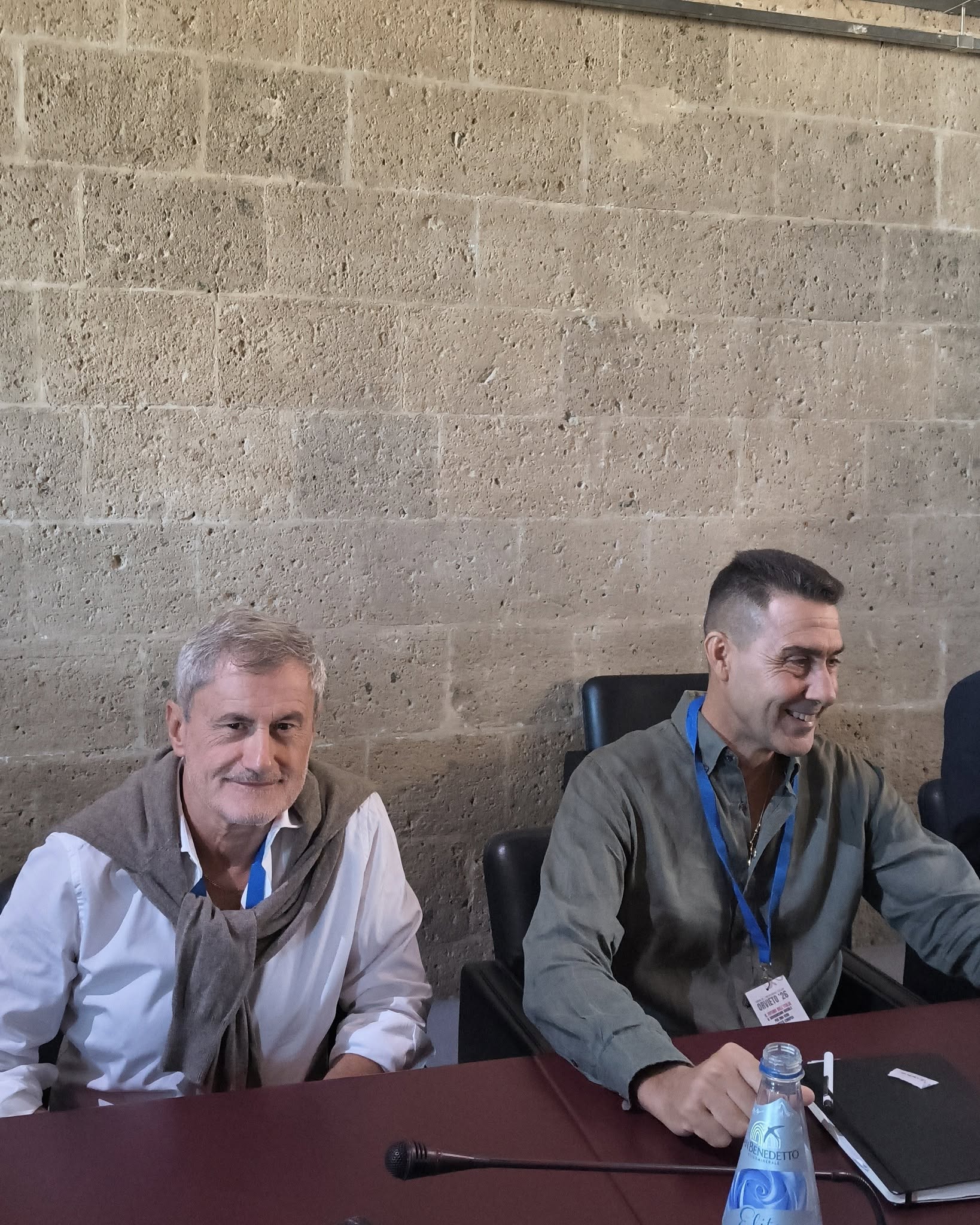
The event was organised by Gianni Alemanno (left), the former mayor of Rome
Jongen, who was born in Italy and raised in the German-speaking region of South Tyrol, responded by speaking about his personal connection to both countries. Italian, he told the audience, was his second language.
This was the first time senior figures from the two countries' farthest-right parties had appeared together openly since the AfD's major victory in Saxony-Anhalt. It also followed reciprocal visits by Italian and German right-wing youth leaders two weeks earlier.
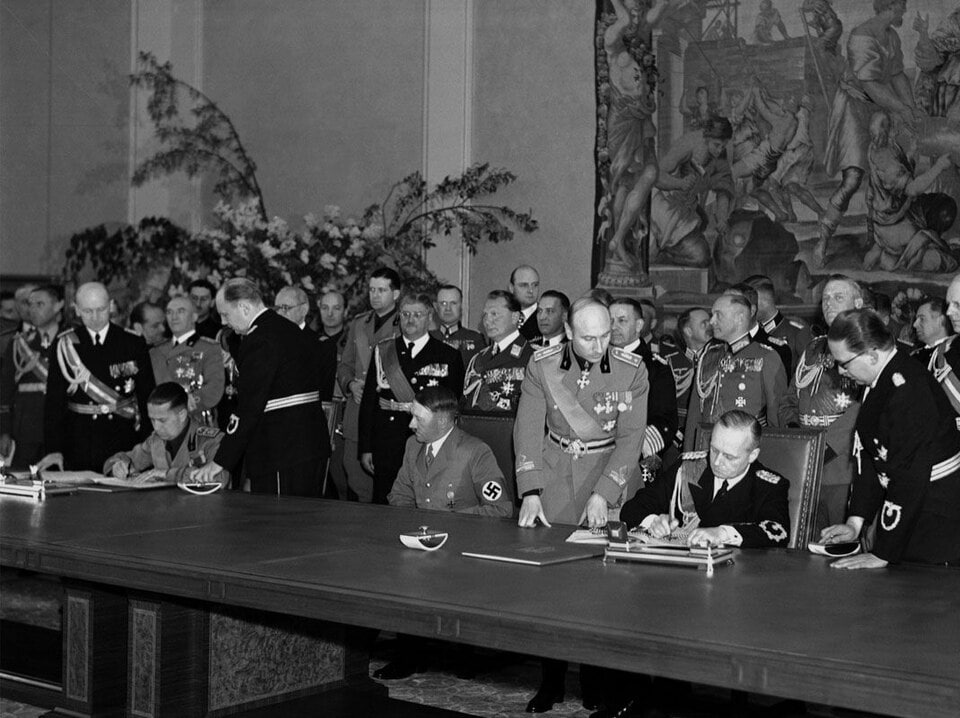
The event was organised by Gianni Alemanno, the former mayor of Rome, and was held under the banner of Orvieto '26.
Alemanno used the occasion to predict that Vannacci could become Italy's leader within the next decade. He also criticised PM Meloni, accusing her government of abandoning its right-wing principles. PM Meloni has not ruled out an alliance with Vannacci, although she has continued to support Ukraine, a position that differs from the views expressed by the Future Nazionale leader.
"Italy and Germany must learn to walk side by side without melting into an anonymous entity of the EU," Jongen said. "There is a European Right that extends beyond state borders ... and we are proud to unite with Vannacci."
"We are a very good fit and actually see ourselves as partner parties, as sister parties, because of all of the parties in Italy, Futuro Nazionale probably represents the goals and values that the AfD in Germany also represents," he added. "We want to preserve the identity of our states, peoples and cultures in peaceful coexistence with neighbouring states, significantly reducing the powers of the European Union in order to return sovereignty to the nations."
Vannacci, a retired general, has described his political approach as the "social Right". His party is positioned to the right of PM Meloni's coalition, and he has sought to distinguish his political approach from the established parties of the Italian right.
Vannacci said Future Nazionale was following the AfD's recent progress and consulting with its German counterparts. He said the party was closely watching the AfD's rise and was "consulting with one another to take advantage of this success for Future Nazionale and the future of Italy".
Stance On Immigration
Like most neo-nationalist topics of discussion, immigration was among the issues that drew the strongest response from the audience in Orvieto. Both Vannacci and Jongen have made opposition to current immigration policies a central part of their political messaging.
Jongen linked the AfD's rise directly to the asylum policies introduced under former German Chancellor Angela Merkel in 2015. He claimed that the policy had generated public opposition and placed pressure on Germany's political system.
"We are known for being welcoming, but this mass invasion is another thing," Jorgen said.

Marc Jorgen
The language shows the AfD's longstanding opposition to large-scale immigration and its criticism of current asylum policies in some European countries. The party has argued that migration places pressure on public services, national identity and the capacity of the state to manage its borders. Critics, however, say its rhetoric has contributed to hostility towards migrants and minorities.
Immigration has been a defining political issue for years for the Italian Right also, particularly in relation to migration across the Mediterranean.
AfD's Breakthrough In Germany
The party predicted on Monday that German Chancellor Friedrich Merz would leave office before the end of the year, following two difficult state election results for his centre-right CDU.
In Mecklenburg-Western Pomerania in northern Germany, the AfD came first, while the CDU recorded 4.9 per cent, falling below the threshold required to remain in the state parliament. The result was described as the CDU's worst since the party was formed in 1945.
No party classified as extreme right in Germany had secured such a large victory in a state election since 1945.
KioskNews shows a cleaned-up reading view extracted from the publisher’s page — the original always lives on their site, not ours.