Exploring the true epicenter of Taiwan
Criss-crossing the mountainous, centrally located Puli Township from north to south, finding a myriad of cultural, spiritual and gastronomic pit stops
By Shane O’Reilly / Contributing reporter


The one-day trip begins at the geographical center of Taiwan: Puli Township’s (埔里) Hutou Mountain Geographic Center of Taiwan Monument (臺灣地理中心碑), embedded at the foot of Nantou County’s dense forested slopes.
It sits entrenched in forest vegetation amid the tall, spindly bodies and spiky heads of the betel nut trees; the air is cool, and its surroundings are mostly silent save the sounds of late-season cicadas.
Roughly two minutes from the first destination, and after a bend in Yongfeng Road (永豐路), there’s a glimpse of a resplendent golden dome on the horizon.
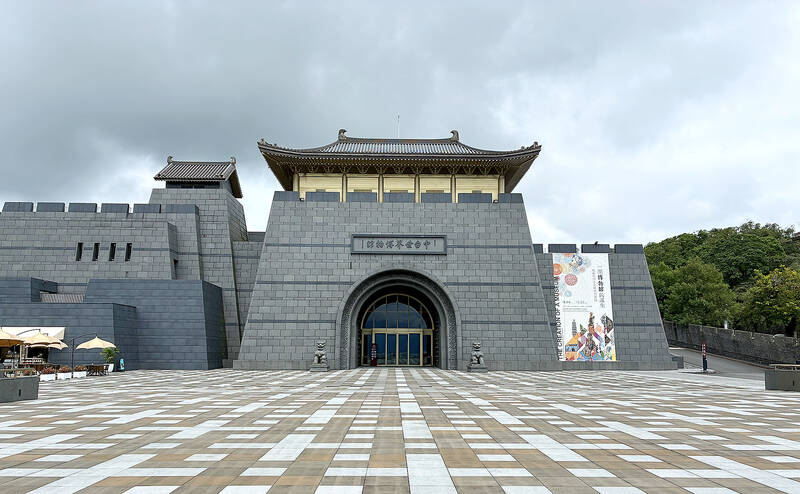
Entrance and exterior of Chung Tai World Museum in Puli Township, Nantou County.
Photo: Shane O’Reilly
It’s the cap of the 135m-tall main building of the Chung Tai Chan Monastery (中台禪寺) located north of Puli Township.
Spread across 40 acres, it’s the world’s tallest Buddhist monastery building, serving as the head of the monastic order of Taiwan and a permanent home to a community of over 1,200 monks and nuns.
Within, there are several majestic halls, grand staircases, and a plethora of robust, towering statues, some standing 12m high. However, any in-depth exploration of the monastery requires a guide, and no photography is allowed.
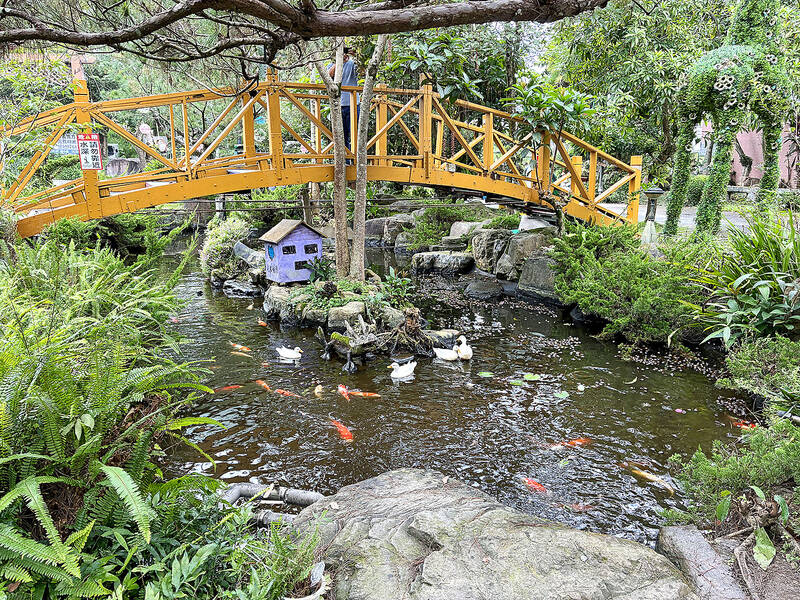
The koi pond with footbridge at Puli Township’s Niu Xiang Chu Garden Restaurant.
Photo: Shane O’Reilly
Outside, opulent grounds encompass the Great Luminance Garden & Bell Pavilion, the beautifully landscaped Miaojue Park & Unity Bridge Park and the captivating Wood Sculpture Gallery.
The corresponding Chung Tai World Museum (中台世界博物館), located a 5-minute drive away, is an enormous feast for the senses.
Set across 22 acres, it’s a vast labyrinth of high-ceilinged showcase rooms connected with winding passageways, and enfilade-type layouts displaying over 1,500 religious artifacts.
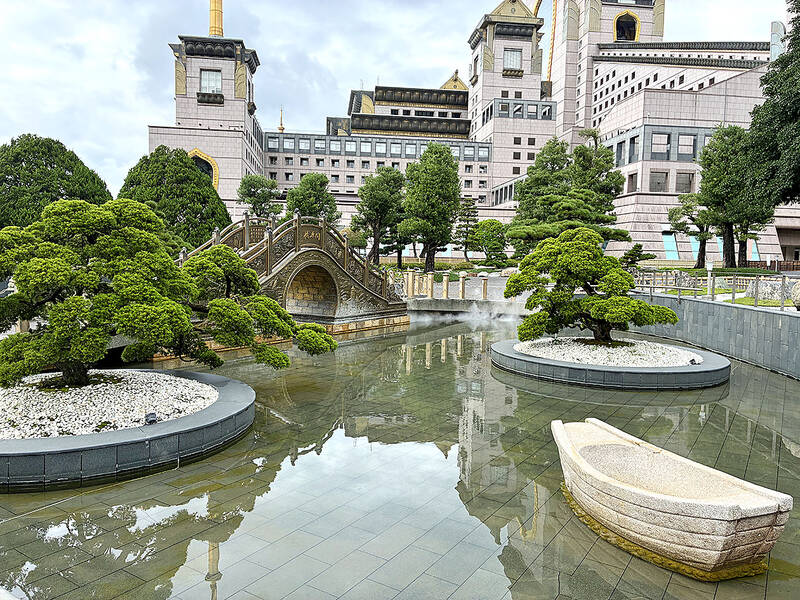
The pond and gardens with Puli Township’s Chung Tai Chan Monastery in the background.
Photo: Shane O’Reilly
The complex is so grand, yet it all feels so hidden from casual travellers, tucked away and enshrouded, available only to those who seek it out.
With a far more central location, the Puli Brewery (埔里酒廠) is an impressive multidisciplinary site.
Known for its production of traditional Shaoxing wine, it’s also an interactive exhibition center with a fascinating Liquor Museum & Shaoxing Story Hall featuring chambers and narrow passageways lined floor-to-ceiling with ancient porous earthenware urns.
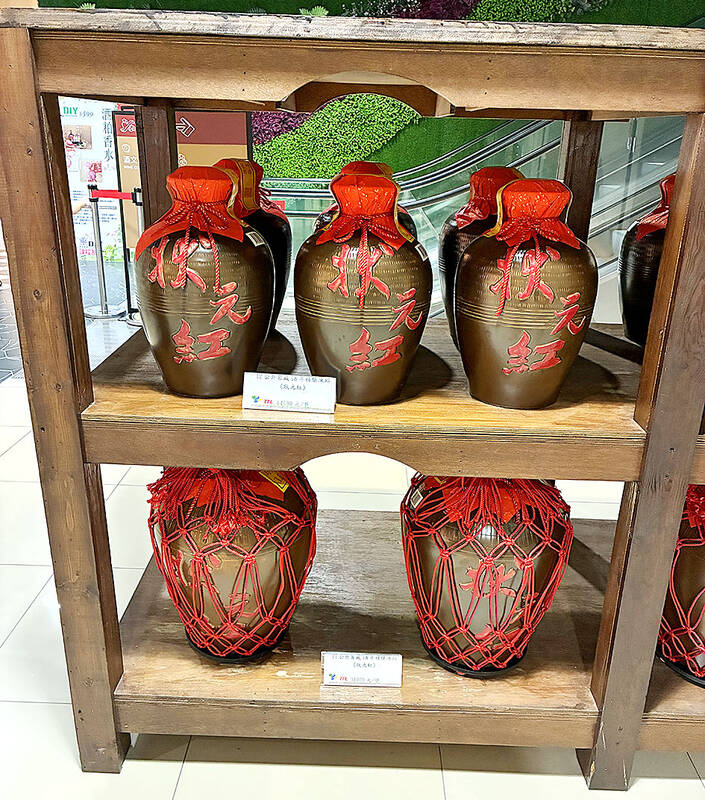
The Puli Brewery’s ready-to-buy wine urns.
Photo: Shane O’Reilly
The wine itself is an acquired taste, but at the sales center you’ll find all manner of locally-crafted goods beyond alcohol, from horse fat soap to shampoos, decorative urns, popsicles, meat products and more.
The nearby Niu Xiang Chu Garden Restaurant (牛相觸庭園餐坊) provides a uniquely playful setting with its Chinese-Style Botanical Gardens replete with wild chickens, ducks and a koi pond.
There’s plenty of children scurrying among a melange of bric-a-brac signposts, totems, props, antiques and giant figurines, while the adults eat at indoor and outdoor tables.
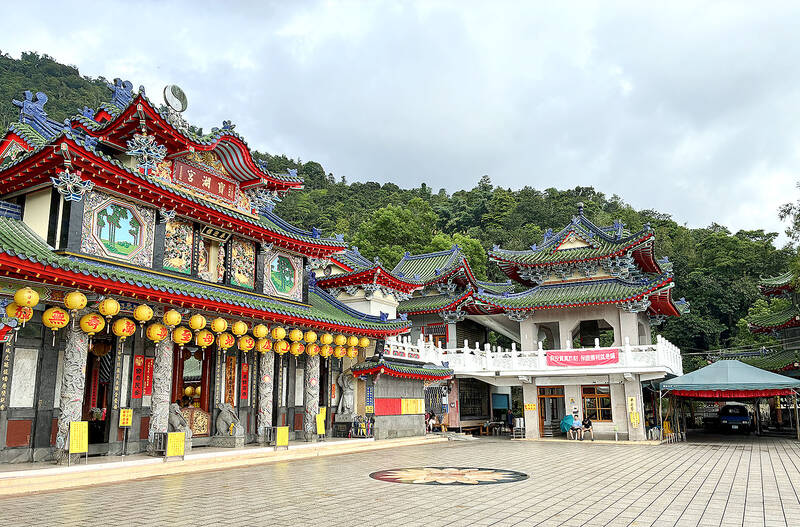
Dimu Temple’s mezzanine and forecourt.
Photo: Shane O’Reilly
Dessert follows at Feeling18 LAB (烘焙研究所), a popular bakery brand. It specializes in artisanal French pastries that can be paired with internationally sourced coffees or milk teas.
The last stop of the day is as famed for its uniquely jade-green roofing as it is for its anomalous setting on the flank of Jinying Mountain (金鷹).
Dimu Temple (地母廟) is an elaborate, colorfully decorated Taoist temple doused in long strings of spherical golden lanterns.
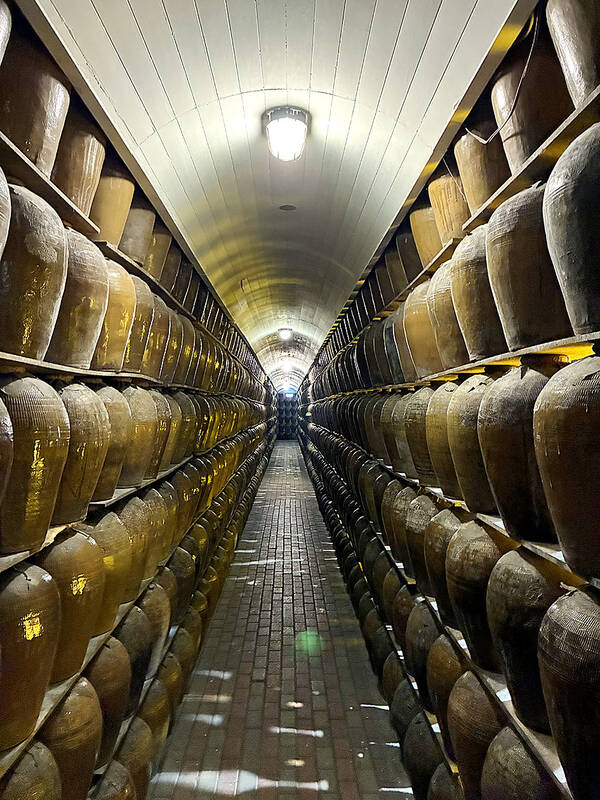
Urns are on display at the Puli Brewery.
Photo: Shane O’Reilly
An unforgettable sight with its back sunk into the mountainside, the structure has formed a mutual architectural and aesthetic symbiosis with its natural surroundings.
A short climb, the steep gradient levels out onto a large tiled forecourt before the main temple hall, adjoined by open balcony wings that allow intoxicating panoramic views of the surrounding basin and mountain range.
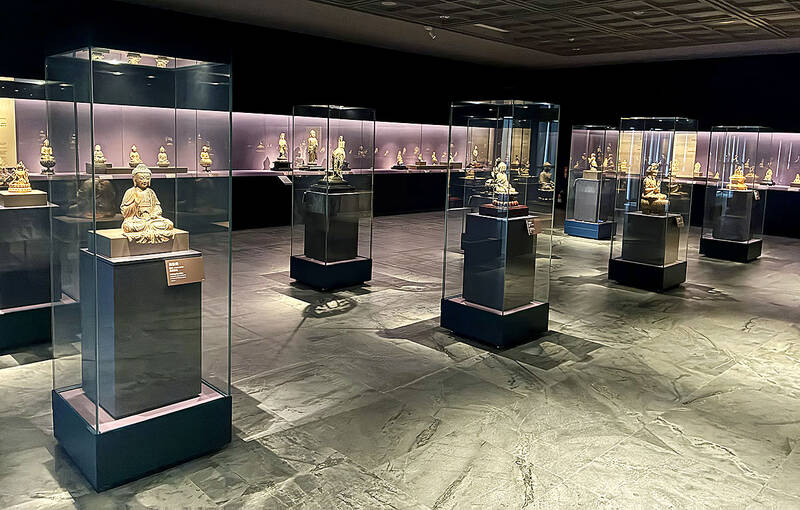
A dimly lit glance at a collection of golden Buddhas.
Photo: Shane O’Reilly
For your information
IF YOU GO
Driving is really the only way to go, as there is no rail service to Puli Township. Bus services are available but would involve multiple connections and hours of travel. General admission at the Chung Tai World Museum is NT$200 per adult, with free entry for children under seven. From the Chung Tai World Museum to the Puli Brewery and Sales Center in Dacheng Borough (大城里) is roughly a 14-minute drive. Entry is free. It’s a further 7-minute drive to the family-friendly Niu Xiang Chu Garden Restaurant (牛相觸庭園餐坊). The menu is moderately priced with an extensive range of both local Hakka dishes and more familiar national plates. It’s a 3-minute walk to the Feeling18 LAB where prices vary from a NT$100 cup of coffee to NT$1,500 boxes of chocolate truffles. There’s plenty of sheltered seating outside to take a break before the 13-minute drive south-easterly to Pipa Borough (枇杷里) and the wondrous Dimu Temple.
KioskNews shows a cleaned-up reading view extracted from the publisher’s page — the original always lives on their site, not ours.