How Singapore confronts AI fears of ‘broken’ career ladder, no pause button
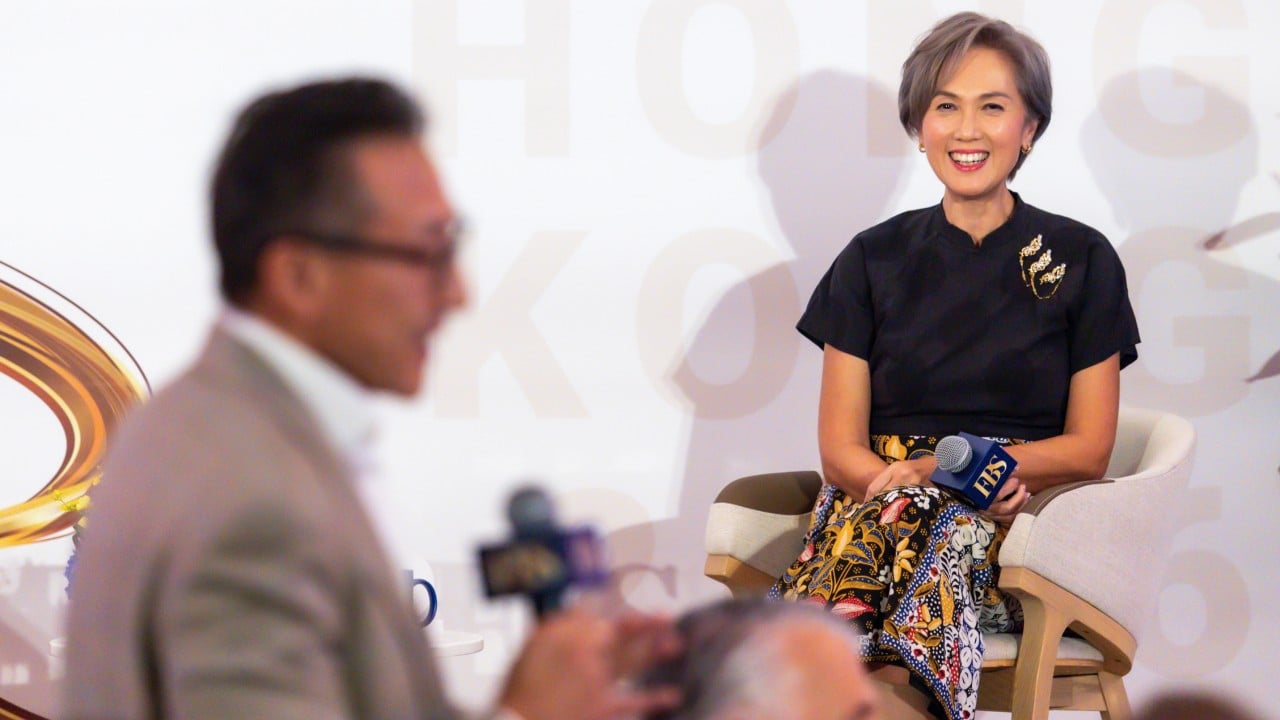
Singapore is seeking to flip the script by turning its land and manpower constraints into reasons to embrace AI instead of fearing it, even as the technology carries the spectre of job losses and cyberthreats in the wrong hands, a senior official has said.
Minister for Digital Development and Information Josephine Teo argued that pragmatism would give her resource-scarce country an edge without becoming overly reliant on any single power or AI provider.
At the Family Business Summit in Hong Kong on Wednesday, co-organised by the South China Morning Post and Blue Pool Capital, Teo also warned that AI was advancing faster than societies could adapt, potentially leaving younger workers facing a “broken rung” on the career ladder, while businesses shifted spending on wages to AI technology.
“AI hasn’t given us much time to pause and reflect more deeply,” Teo said. “think our biggest challenge today is that the timeline is very compressed, whereas human society previously had much more time to adapt to the impact of technological change.”
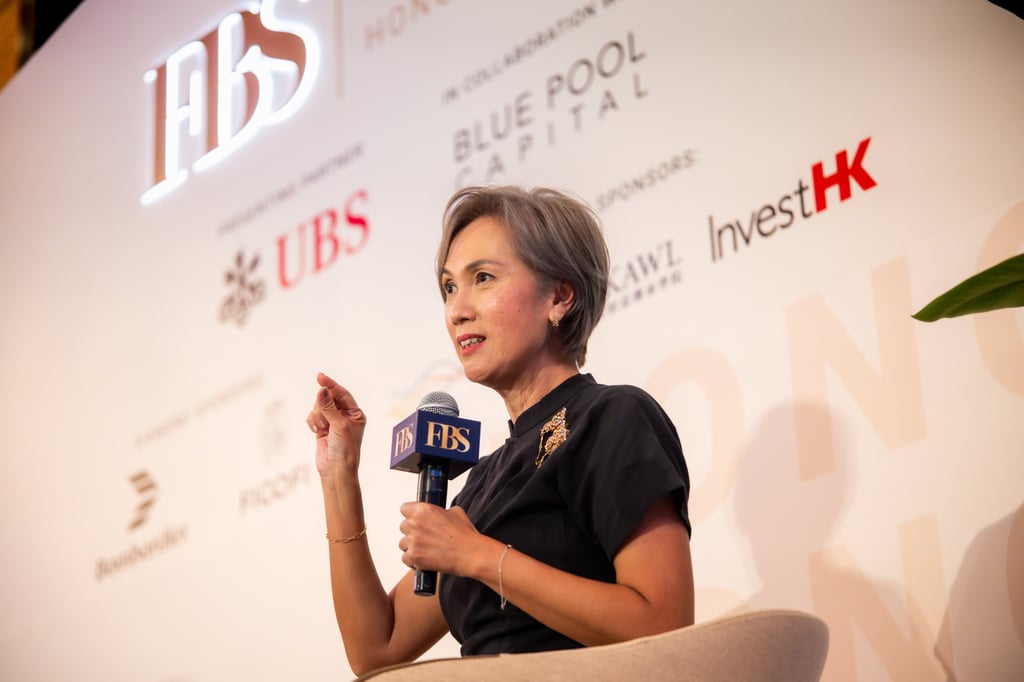
Teo was candid about the looming concerns facing her country, often touted as the regional leader in artificial intelligence.
“If organisations transition into an environment where more of their expenditure goes towards tokens and less towards wages, we have to ask what happens to the revenue model of the state,” she said at a fireside chat attended by some 100 business executives, investors, academics and celebrities.
“What will sustain the way governments deliver public services? So that’s another layer to think about. It’s a very heavy topic for dinner, I’m afraid.”
Singapore’s scarce resources also seem to signal an inevitable limit to its growth, as neighbouring Malaysia excavates land to build data centres. Last month, the state’s monetary authority projected a slowdown in the pace of AI-driven economic growth in its review.
But Teo remains upbeat. “Rather than ask, ‘Is there a limit to how much we can do with AI, given the land and manpower constraints?’, I think we should flip the question around: ‘Wouldn’t we be even more constrained if we didn’t learn to master this technology?
“That was our perspective. The question then becomes: how do we make the most of the resources available to us? That was the approach we took.”
Earlier this year, Teo announced that the state would invest over S$1 billion (US$780 million) over five years into research to strengthen AI capabilities and global competitiveness, including talent development.
On Wednesday, she outlined five imperatives that guide Singapore’s AI policy: infrastructure, workforce and enterprise capabilities, governance, regulations, and international cooperation.
AI sovereignty was a topic among global policymakers, and would be achieved by very few countries if the criteria were building and owning an entire AI stack, Teo said.
“Many countries also have different fiscal priorities. In Singapore’s case, we have an ageing population. From that perspective, I think defining AI sovereignty in terms of ownership is unrealistic,” she said.
“If you define AI sovereignty as being able to use the technology on your own terms, by developing your own capabilities and plugging in to different innovation ecosystems, you stand a better chance and that’s the way we look at it.”
But the city state, often hailed as a neutral ground, is increasingly caught between an intensifying superpower AI rivalry. Singapore was among seven signatories when Pax Silica – a US-led initiative that aims to help partners strengthen supply chains for minerals essential to AI – launched last December.
It has since received and is assessing an invitation to join the Shanghai-based World Artificial Intelligence Cooperation Organisation (Waico), which was formed in July.
Receiving such invitations was “almost like managing an investment portfolio”, said Teo, who noted that Singapore’s participation in such blocs took place at different phases of its development and served different objectives.
“When we receive an invitation to join an initiative such as Waico, we look at it seriously and consider the obligations and commitments involved,” she said. “Waico is a serious organisation with an established structure, so we’re assessing how it fits into our priorities.”
Teo said Singapore engaged in bilateral relations with China through a digital policy dialogue, with both states meeting regularly to discuss issues such as AI safety, governance and adoption.
The minister was also asked if Singapore would be granted access to Mythos – Anthropic’s recent and advanced model which can autonomously identify software vulnerabilities – if the state requested it.
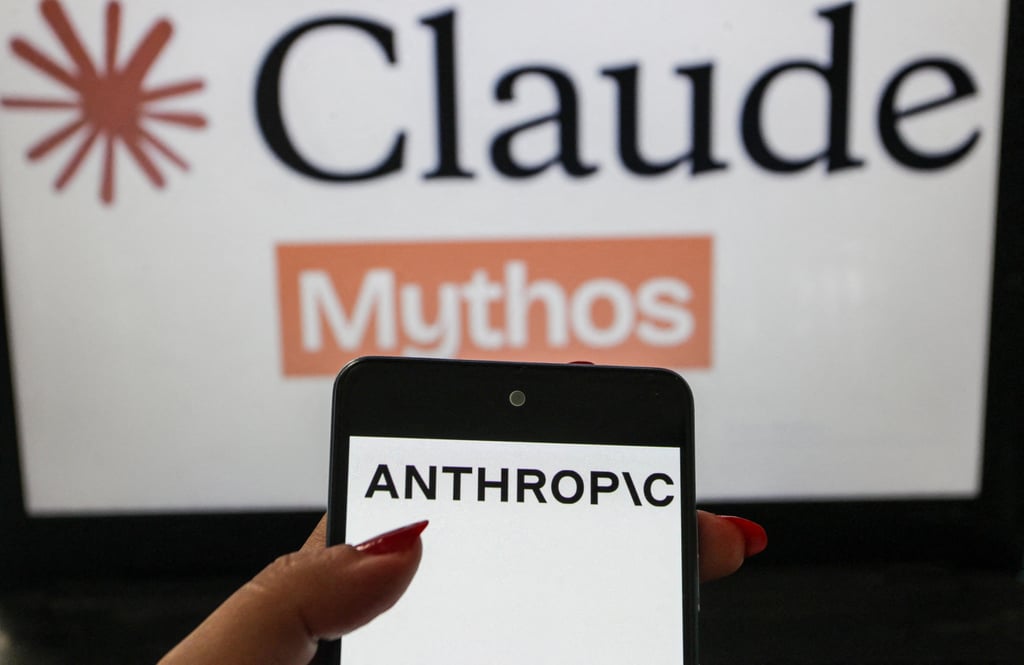
US giant Anthropic, creator of the AI model Claude, picked Singapore for its first office in Southeast Asia which opened last month. A stone’s throw away is Microsoft’s research lab, which was launched last year to study deployment and chase breakthroughs in frontier AI.
In an initiative called Project Glasswing, Anthropic gave a trusted group of governments and companies such as Nvidia and Cisco access so they could start scanning their cybersecurity systems for vulnerabilities and patching them.
“It is helpful to be on Glasswing but do you need to be on it to improve your cybersecurity? The answer is not necessarily,” said Teo, noting that many of Mythos’ capabilities were already available in open models.
The minister said while “it is good to have access” to the most sophisticated technology, “it would be a mistake to think that that’s the only way you can strengthen your own capabilities and cyber defences”.
No Chinese firms were invited to use the model given Anthropic’s labelling of China as an “adversarial nation”, and the company has excluded Hong Kong from its list of supported locations, alongside mainland China and Macau.
Singapore is in constant conversation with China, which has made many open-weight models – an approach Teo says the city state strongly supports.
“We believe it strengthens the environment for AI adoption, but also because we believe it is the only path to ensure that most of humanity can benefit from this technology,” she said.
With AI now dominating most of her portfolio’s job scope, Teo similarly uses the technology in her day-to-day life.
She revealed that she vibe-coded her personal AI agent, which scans the globe for news articles and delivers a summary – curated based on her interest – to her via WhatsApp every morning.
“It reads about 16,000 articles every single day – that’s a lot more than I can manage.”
KioskNews shows a cleaned-up reading view extracted from the publisher’s page — the original always lives on their site, not ours.