Fear, danger and families torn apart: The dangerous new route for Afghans seeking safety in UK
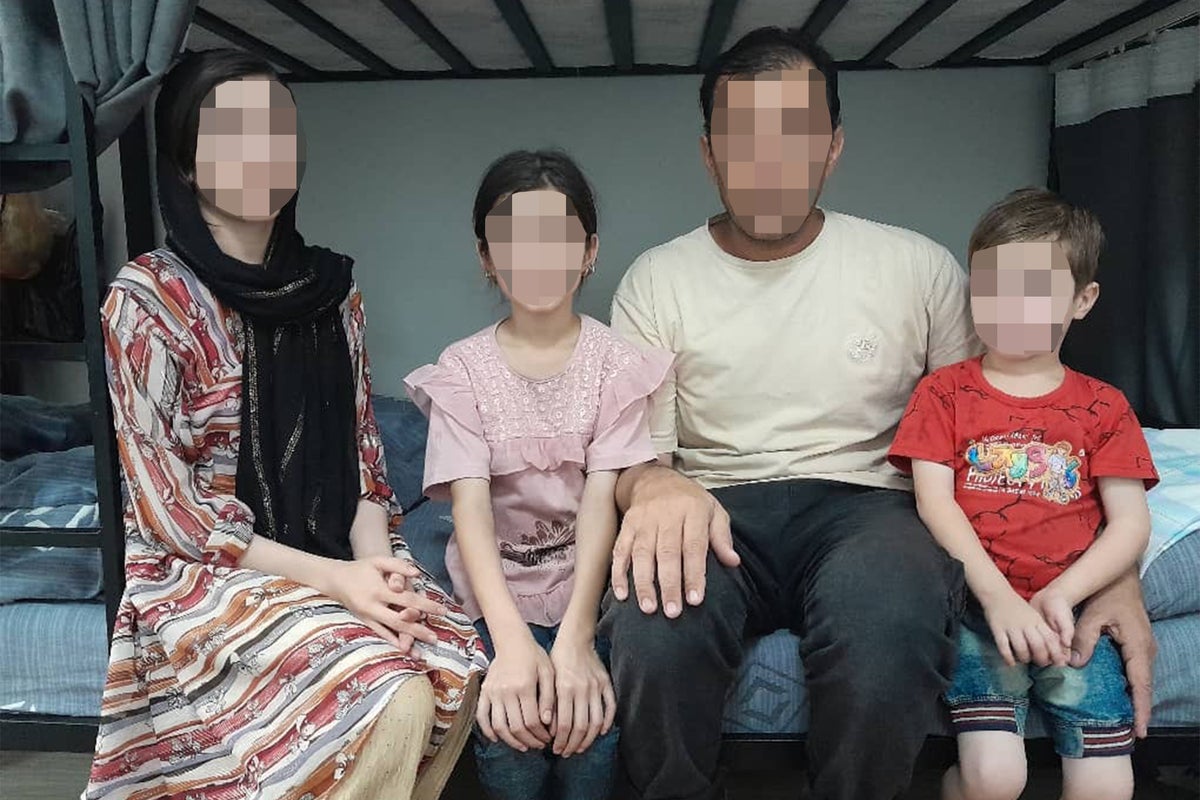
Farhad, a former sergeant in the Afghan special forces, spent his days hiding in the hotel room he shares with two of his daughters, aged 17 and nine, and his four-year-old son.
After years of trying to escape the threat of the Taliban, he had finally been approved to come to Britain because of his service alongside UK troops. But after a U-turn on a promise to evacuate those with ties to the UK, he and his family were told by the Ministry of Defence earlier this year that they must make their own way to a third country before they could access help to travel to Britain.
They even had to fund their evacuation themselves, meaning he made the heartbreaking decision to leave his wife and three other sons – aged 13, 14 and 15 – behind because he couldn’t afford to bring them all.
With border crossings between Afghanistan and Pakistan now closed, Afghan refugees like him have been forced to move to neighbouring Tajikistan, where they can seek visa help from the International Organization for Migration (IOM). But once there, they face months-long waits for approval.
Waiting in the capital city of Dunshabe, Farhad and his children were too scared to leave their hotel, for fear of being deported back into the hands of the Taliban – all the while accruing further debt as they anxiously waited to get the green light to come to the UK.
Their hotel room cost $750 a month, and visas for him and his children cost $1,050 each. He borrowed money from friends and former military colleagues to afford the journey.
Last week, Farhad was finally brought to the UK on an MoD-funded ticket with three of his children. But he worries about the rest of his family and hopes that his wife and three other children can eventually join them in Britain. In order to be reunited, he will have to raise money to help their escape.
Speaking to The Independent from Dushanbe before he was transferred to Britain, Farhad, whose name has been changed to protect his identity, said: “We are in a dire situation. I am in Tajikistan now with three children, but my other three children and my wife are back in Afghanistan.
“Because of financial issues, I wasn’t in a position to bring my whole family. I’ve had my medical checks and biometrics done here after I visited the IOM office. We stay in most of the time and keep a low profile because we are worried that if we are found by the police we will be deported. I have borrowed money from my friends and former military colleagues, which I should be giving back.
“Arap [the UK government’s resettlement programme] told us to wait and not go anywhere, visas were closed to Pakistan. Then we were told to go to a third country - which is Tajikistan or Qatar – where there are IOM offices. It is a difficult wait now, mainly because of the financial issues. I am left with just 500 Somonis [The Tajik currency equivalent to about £40].”
An estimated 3,000 Afghans who have been told they can come to Britain are still in Afghanistan. In total, the MoD estimates that fewer than 7,000 people are still to be relocated to the UK. But many cannot afford the visa fees, which have now risen to around $2,000 each, and accommodation costs to flee.
Those who can have no other choice but to split up their families in order to afford the journey to freedom.
Chair of the Commons’ defence committee, Tan Dhesi MP, told The Independent: “Former Triples who served alongside UK forces should not be separated from their families, driven into debt or left exposed to danger while waiting for the UK to honour promises that should have been fulfilled years ago.
“The committee warned that the current self-move policy risks excluding people the UK has already accepted are eligible for relocation. The government must now set out how it will support those who cannot safely or affordably reach a third country on their own.”
Another former member of the Afghan security forces, who is in the same hotel, said he travelled without his family because only he could secure a visitor visa for Tajikistan.
He hopes that when he gets to the UK he will be able to bring his wife, three sons, and five daughters to safety. Speaking about the situation in Dunshabe, he said: “It is so difficult for us. We have visa but we still cannot go outside. We are prisoners in our room – one day becomes one month.
“If the police here see someone from Afghanistan, they are asking for money. They don’t care about your visa, they often deport Afghans from Tajikistan.”
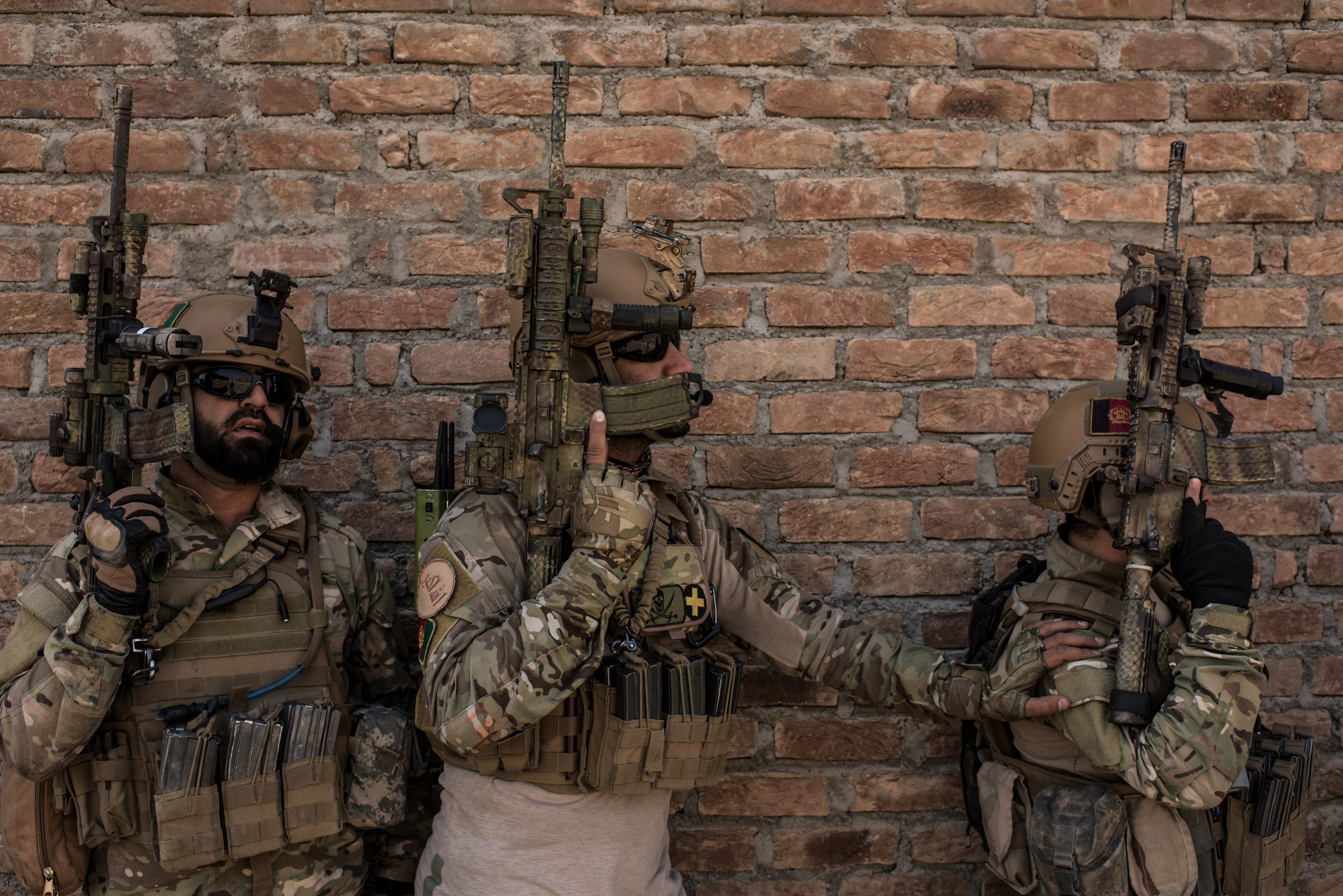
A former engineer in the Afghan special forces, Hassan had been waiting four and a half years when he finally received word that he was eligible to come to the UK due to his service with the British. The email, which came through in January, told Hassan and his family to make their own way to a third country first.
Hassan, whose name has been changed for security reasons, had his data breached by the MoD in 2022 when the personal details of 18,700 applicants to the Afghan resettlement schemes were accidentally leaked outside government. In the years since the Taliban takeover, he has been living in fear of retribution and moving house with his family to evade detection.
The fear of reprisals is something he knows keenly – a former colleague, Noor, a sniper in his unit Commando Force 333, was shot dead days after the 2021 takeover in front of his family.
Speaking from a rented home in Tajikistan, he said he only had enough money to leave with his wife, their two daughters aged two and seven-months-old, and his 16-year-old son from a previous marriage whose mother died in childbirth. He has had to leave his eldest 17-year-old daughter, also from the previous marriage, and his mother behind.
In a further tragedy, Hassan said that days after he arrived in Tajikistan his teenage son was stopped by police on a visit to the shop and deported back to Afghanistan, where he is back with his grandmother. The rest of the family may soon face a similar fate if their UK travel is not approved as their visas run out in October.
MoD policy advises that eligible children under the age of 18 should travel with a guardian or parent to the UK.
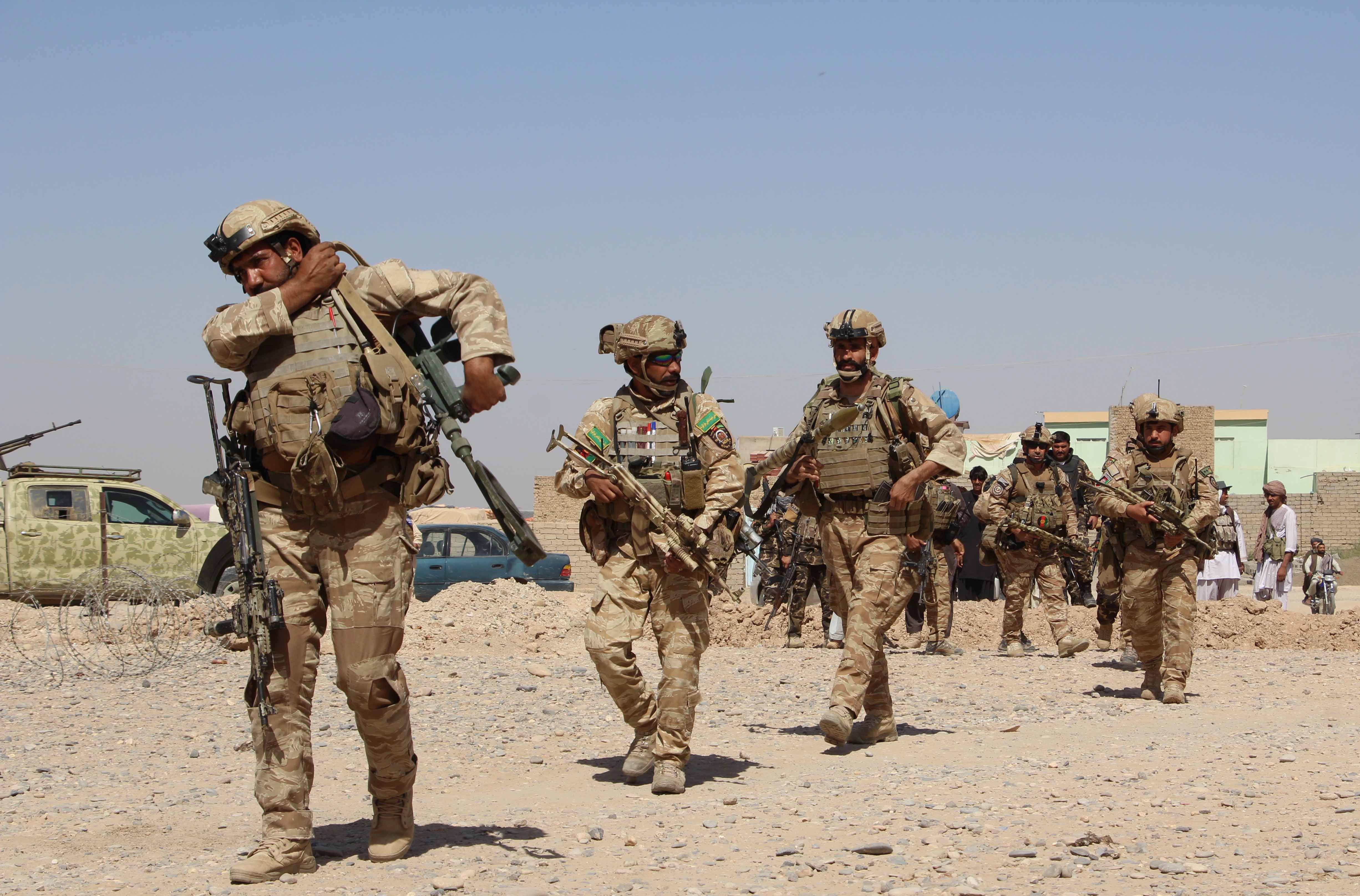
Hassan said: “My main worry is that if I am sent back I will end up in the same fate as my other colleagues who were killed. I have a month and a half left on my visa. The IOM have told me that they are still waiting on my file to be sent over from London so no work has been done on my case yet.
“Our visas are running out, our financial situation is very bad, and there is a risk that we will be sent back.”
Rafi Hottak, a former interpreter for the British army and campaigner for Afghans left behind, said many of those still in Afghanistan “survive only by hiding, frequently changing location and separating from their families”.
Speaking about the risks, he added: “They still face arrest, detention, disappearance, violence and retaliation against relatives.”
Mr Hottak called for support for families trying to evacuate, saying the MoD “must provide practical assistance with visas, travel costs, accommodation and protection from deportation in third countries. Simply telling vulnerable families to relocate themselves would leave behind those who cannot afford to escape”.
Mr Dhesi added: “These cases show the human cost of years of errors and delays. In its recent report, the defence committee described the review of Triples applications as a major corrective exercise, recognising that many former Triples personnel have already spent years facing uncertainty after mistakes in the system.”
An MoD spokesperson said: “It’s absolutely right we to bring Afghans who are eligible, including those who worked alongside UK forces in Afghanistan, to the UK to start a new life. We continue to cover the cost and provision of flights to the UK and provide guidance with the visa process.
“Since the Taliban takeover, the UK has resettled almost 39,000 Afghan men, women, and children through Afghan resettlement schemes.”
An IOM spokesperson said: “IOM has been supporting the UK MoD since March 2025 and in Tajikistan since May 2026. As part of this cooperation, IOM provides pre-departure support to Afghan nationals found eligible for the Afghan Resettlement Programme, helping individuals and families complete the necessary requirements and travel safely to the UK. This includes health assessments, support with UK visa applications and pre-departure orientation.
“IOM’s support and role are limited to these areas and does not involve decision-making related to immigration status, stay or accommodation in Tajikistan.”
KioskNews shows a cleaned-up reading view extracted from the publisher’s page — the original always lives on their site, not ours.