Nearly two billion e-invoices submitted by 268,000 taxpayers as of Oct 1, says Inland Revenue Board
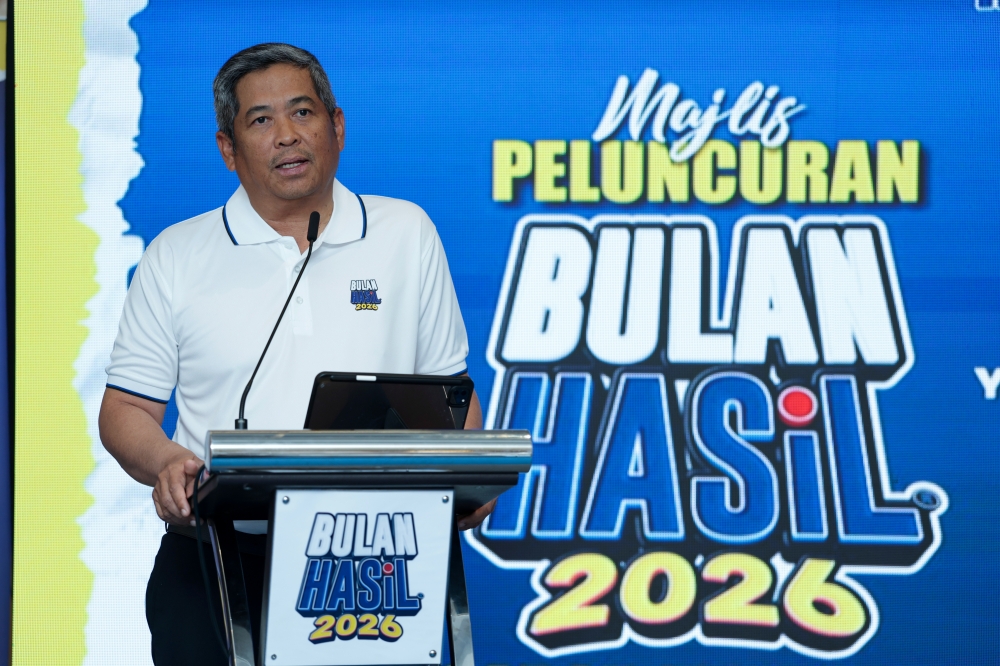

IRB chief executive officer Datuk Abu Tariq Jamaluddin said more than 268,000 taxpayers have submitted 1.99 billion e-invoices as of October 1. — Bernama pic
First Published: Thursday, 01 Oct 2026 2:35 PM MYT
PUTRAJAYA, Oct 1 — More than 268,000 taxpayers have submitted 1.99 billion e-invoices as of October 1, the Inland Revenue Board (IRB) said.
Its chief executive officer Datuk Abu Tariq Jamaluddin said 196,031 taxpayers accounted for submissions under phase four of the e-invoicing rollout.
“The implementation of e-invoicing is being carried out in stages, with the government recently announcing an increase in the exemption threshold from RM1 million to RM3 million.
“This benefits micro, small and medium enterprises (MSMEs), as businesses with annual turnover below RM3 million are no longer required to implement e-invoicing,” he told reporters after officiating the launch of ‘Bulan HASiL 2026’.
The revised threshold, which took effect on September 1, 2026, exempts MSMEs with annual income or sales of less than RM3 million from the e-invoicing requirement.
Abu Tariq said 5,582 taxpayers had submitted e-invoices under phase one, followed by 14,579 under phase two and 51,815 under phase three.
The e-invoicing system was introduced on August 1, 2024.
Meanwhile, he said IRB had more than 620,000 active corporate tax files and over 7.6 million active individual tax files as of August 31, 2026.
In his speech, Abu Tariq said Bulan HASiL, held under the theme “Voluntary Disclosure, Shared Responsibility”, provided taxpayers with an opportunity to return to voluntary tax compliance.
He said IRB had introduced several special initiatives, including the Special Voluntary Disclosure programme (PKPS) covering e-invoicing and stamp duty, as well as the Voluntary Income Tax Disclosure campaign.
“In brief, the PKPS e-Invois focuses on e-invoicing compliance, while the PKPS Duti Setem allows taxpayers to regularise their stamp duty matters with the benefit of penalty exemptions. The Voluntary Income Tax Disclosure campaign, meanwhile, provides an opportunity to correct income declarations,” he added.
One of the key activities under Bulan HASiL is the tax literacy roadshow, which is being held nationwide throughout October 2026. — Bernama
KioskNews shows a cleaned-up reading view extracted from the publisher’s page — the original always lives on their site, not ours.