Butter chicken in space: China prepares halal feast for Pakistan’s first astronaut
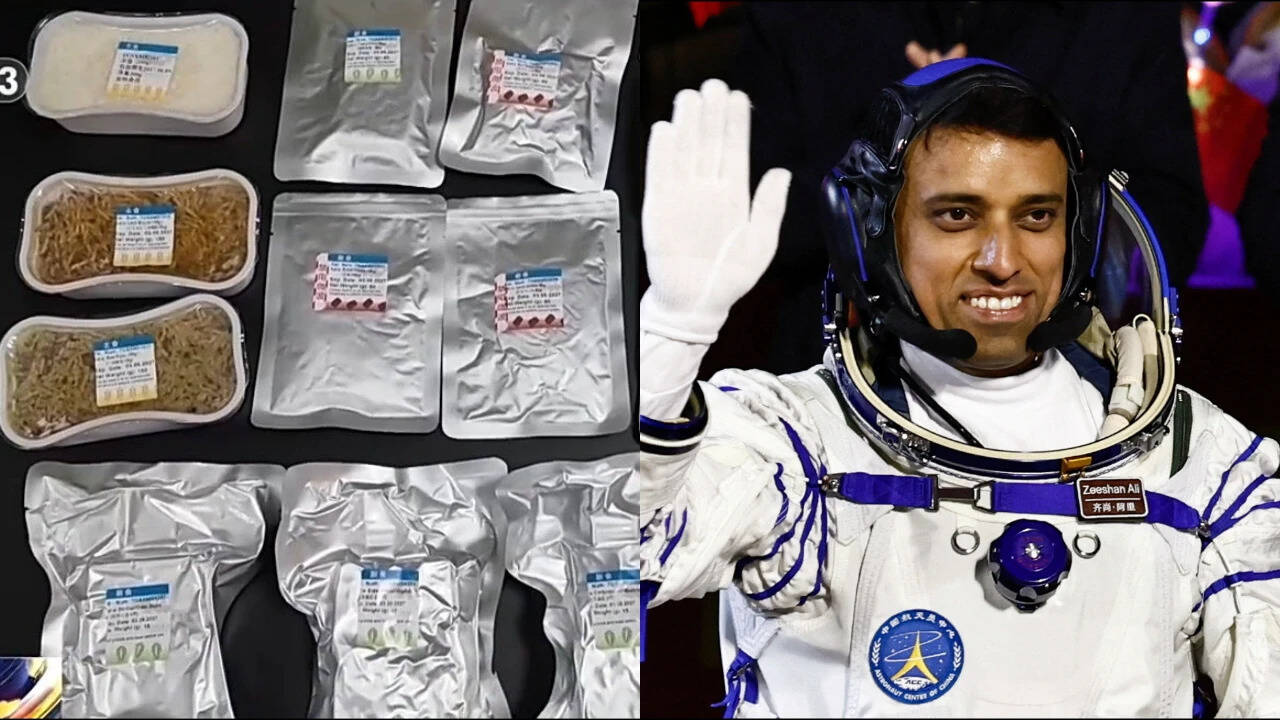
Nihari, korma and a taste of home: Pakistan’s first astronaut gets halal menu in space
Butter chicken, beef nihari, lamb korma, and curried chickpeas (chole) have entered Earth’s orbit aboard the Shenzhou-24 spacecraft. The dishes were specifically picked for Pakistan’s first astronaut, Muhammad Zeeshan Ali, aboard China’s Tiangong space station, making sure his first taste of life in orbit feels a little like home.Ali became the first foreign astronaut to enter China’s space station on Wednesday, arriving aboard the Shenzhou-24 spacecraft with Chinese astronauts Tang Hongbo and Wu Yi. The crew was welcomed by the three astronauts already aboard Tiangong, bringing the station’s population to six during the crew handover.
The China Astronaut Research and Training Centre prepared the food selection to accommodate Ali’s dietary requirements, drawing on South Asian food culture and halal standards.
Researchers developed seven Pakistani-style space foods, with beef nihari, lamb korma, butter chicken and curried chickpeas among the dishes identified in reports by Chinese state media.The recipes were designed to meet astronauts’ nutritional needs while retaining familiar flavours. Researchers considered Ali’s preference for spices such as turmeric and curry, and repeatedly tested and refined the meals before finalising them.
The food production process followed halal requirements, according to reports by CGTN.The menu also reflects a change of taste during Ali’s preparations in China. The original plan included Pakistani spiced milk tea, but after developing a liking for Chinese black tea and rice, Ali requested more of those items for his spaceflight. They were added to the food arrangements.A special dinner for the six astronauts was planned as the two crews met aboard the station, with dishes selected for both Chinese and Pakistani tastes.
Tiangong has previously made a feature of shared meals between crews, including a barbecue prepared in a hot-air oven during an earlier mission.Ali, a serving Pakistan Air Force officer, lifted off from the Jiuquan Satellite Launch Centre in northwestern China on Wednesday alongside Tang and Wu. The spacecraft docked with Tiangong a few hours after launch, and the hatches were opened later that day, allowing the Shenzhou-24 crew to join their colleagues.During his introduction to the Chinese astronauts, Ali recited a couplet by celebrated Pakistani poet Allama Muhammad Iqbal, known as the Poet of the East.“Beyond the stars are even more worlds, there are still even more tests of passion,” he said, later translating the couplet for his crewmates.
Ali said he was “incredibly excited” to become the first foreign astronaut aboard the Chinese space station.“A childhood dream has finally come true,” he said.Beyond the welcome and the special menu, Ali’s short stay will focus on scientific research. He is expected to work on experiments from Pakistan in life sciences and materials science, including studies of cyanobacteria growth and carbon dioxide absorption in microgravity, the resilience of quinoa seeds exposed to space conditions, graphene-based composite protection and the repair performance of self-healing carbon-fibre composites.
KioskNews shows a cleaned-up reading view extracted from the publisher’s page — the original always lives on their site, not ours.