Will Solomon Islands’ Australia treaty prompt China to rethink its Pacific strategy?
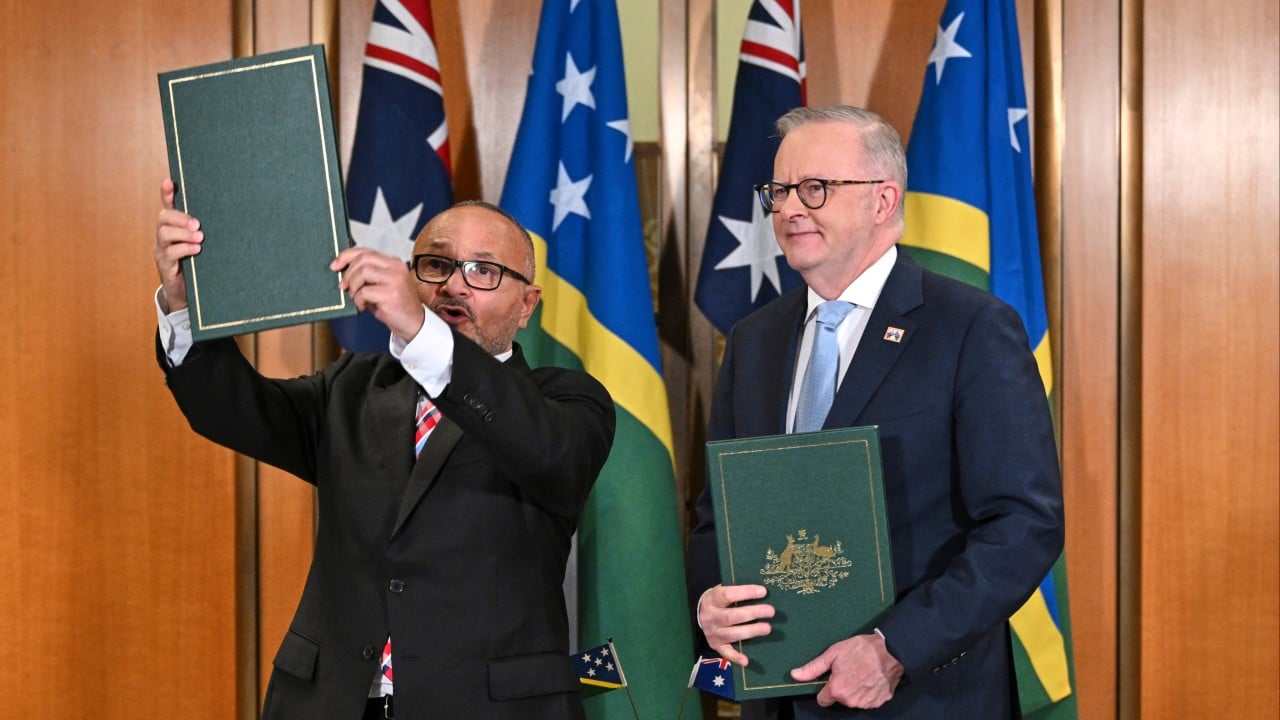
The Solomon Islands’ decision to replace its 2022 security pact with China with a sweeping new Australian treaty may push Beijing to rethink its Pacific playbook, observers say.
While some analysts said Honiara’s pivot reflected hard-nosed domestic pragmatism rather than a regional rush to shut out Beijing, others warned that Beijing must be wary of Canberra using the pact as a foothold to extend exclusive demands from security into economic and development ties.
The assessment was made as the Pacific neighbours signed a treaty on Wednesday in which the Solomon Islands agreed that its territory would not be used to establish foreign military bases and that it would commit to keeping its sensitive infrastructure – including airports and ports – “free from militarisation, any form of foreign interference or unauthorised access”.
The Solomon Islands has affirmed Australia as its main security partner and said it would look to members of the Pacific Islands Forum – of which China is not a member – for future security cooperation needs.
Beijing sought to play down developments, with foreign ministry spokesman Guo Jiakun affirming that China’s ties with the Solomon Islands were based on “mutual respect and equality”, with “no element of geopolitical rivalry”. He added that cooperation “should not target any third party”.
Wednesday’s deal is widely seen as a major setback to China’s strategic position in the South Pacific, a region that has become a key arena for geopolitical rivalry as Beijing expands its economic and diplomatic footprint into Canberra’s traditional sphere of influence.
That has included billions of dollars of investment in infrastructure, from stadiums to hospitals, while Beijing has steadily expanded its security reach through bilateral law-enforcement cooperation – most notably in Honiara, where Chinese police have been training and advising local officers on rotating deployments since 2022.
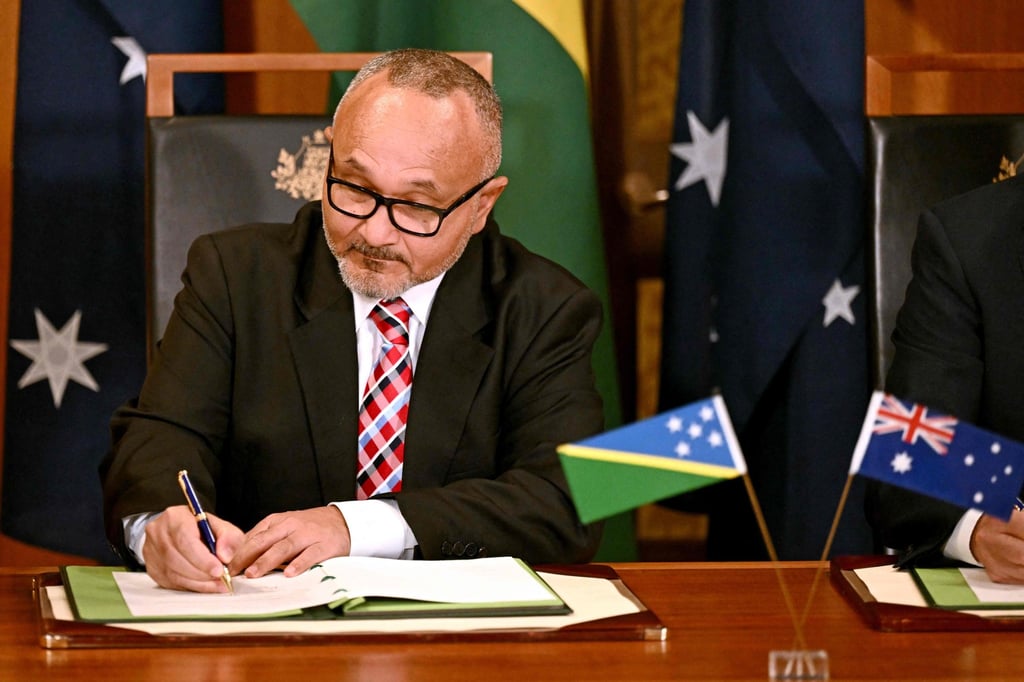
Prime Minister Matthew Wale, who met his Australian counterpart Anthony Albanese in Canberra on Wednesday, declined to comment on the status of the security pact with China, citing nondisclosure clauses.
The Sydney Morning Herald reported on Tuesday, citing unnamed Solomon Islands sources, that Honiara had notified Beijing it would not renew the five-year agreement when it expires in April.
Chen Hong, director of the Australian Studies Centre at East China Normal University in Shanghai, said that if the Solomon Islands did not renew the pact, that would “undoubtedly weigh on bilateral ties, especially strategic trust”.
“However, security cooperation is only one component of the relationship, and the fate of a single agreement cannot be equated with the broader trajectory of bilateral ties,” he said.
But he warned that the real risk to Beijing was that the change could become a starting point for Australia to wade deeper into the Solomon Islands’ foreign policymaking by “extending exclusive demands from security into economic and development areas”.
“In that case, the impact on China-Solomon Islands relations would go far beyond a single security pact,” Chen said.
Edward Chan Sing-yue, a postdoctoral fellow in China studies at the Australian National University, said Beijing’s main concern was avoiding the “geopoliticisation or over-securitisation” of its engagement with the Global South.
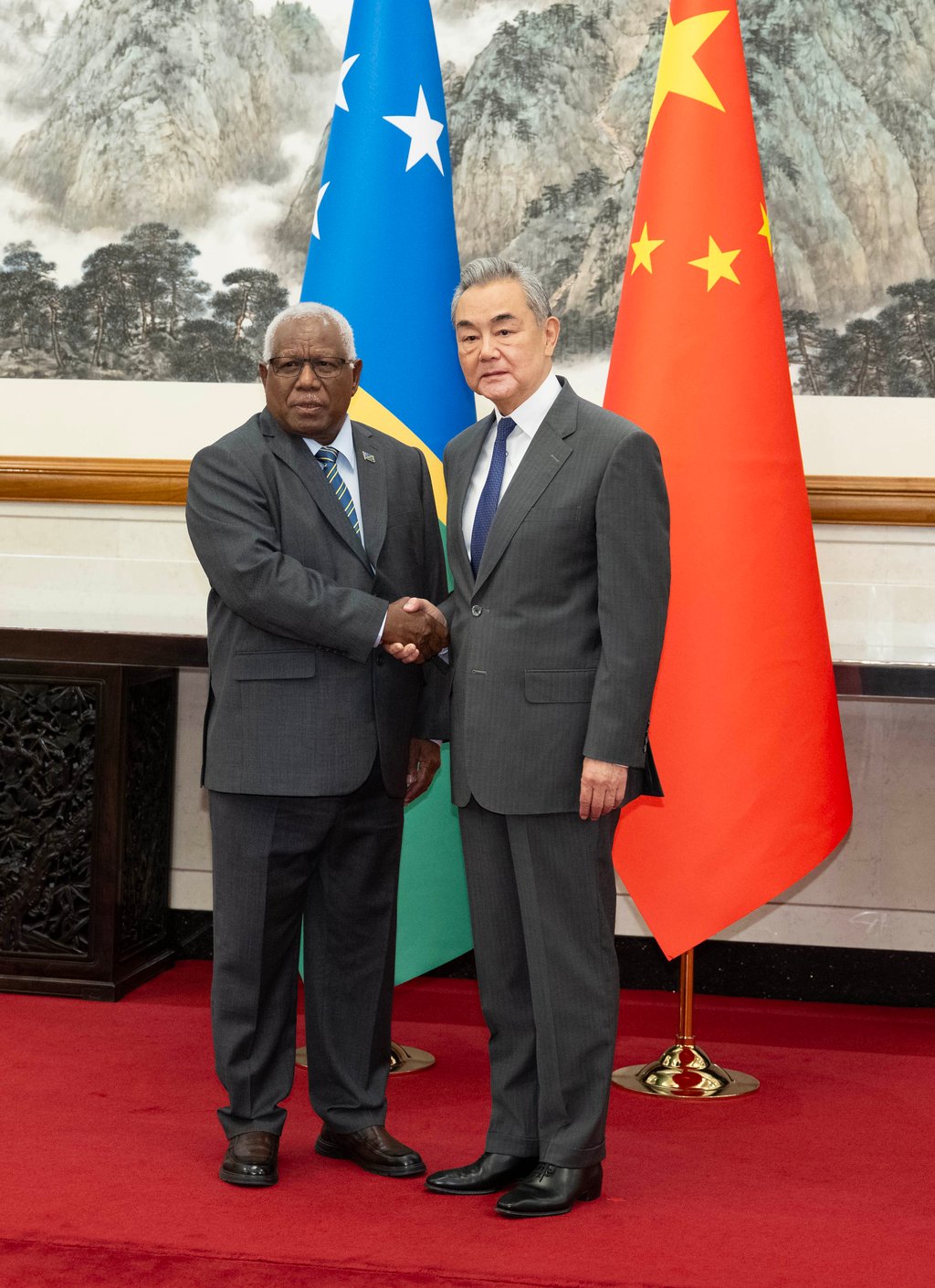
“Beijing needs to think further about how to deepen mutual trust and refine how it works with Pacific island states, including the Solomon Islands, both to maximise mutual interests and to gain a better grasp of local needs and cultures,” he said.
Relations with Honiara, which were only established in 2019, were still relatively new, Chan noted.
“Bilateral ties are still in an exploratory stage, having only been established three years before the security pact was signed,” he said. “Rather than souring the relationship, this episode could prompt Beijing to rethink its partnership model with Honiara – as well as its broader ties with other Pacific island states.”
Under the new deal, Australia will provide “substantial support” for the Solomon Islands’ free education policy, increase investment in sustainable infrastructure, and “strengthen people-to-people connections through culture, sport and the arts”.
Canberra will also expand work opportunities and improve visa arrangements for Solomon Islanders in Australia, according to a joint statement by the two prime ministers.
Wednesday’s treaty is seen as a major step in cementing Canberra’s regional clout, part of a broader push in which Australia has secured security and defence partnerships with Pacific island states, including Papua New Guinea, Vanuatu and Fiji, fuelling speculation that more nations could follow suit.
Sandra Tarte, associate professor in the school of law and social sciences at the University of the South Pacific in Suva, Fiji, said the financial and defence incentives Australia provided were significant and “difficult to turn down”.
“Other countries already have treaties with Australia or are considering them,” she said.
But, she added, it would be naive to assume these countries would rule out ties with China.
“Most Pacific island countries will continue to court China’s economic assistance as well as commercial ties,” Tarte said. “Political changes within these countries may also lead to future diplomatic realignment towards China.”
Beijing would continue to view the South Pacific through a strategic lens, she added.
“While there may be setbacks, China is now an integral part of the region’s security and economic order. This role will only continue to grow in the future.”
Chan noted that Wednesday’s treaty was partly a result of Canberra’s years-long investment in regional ties – through aid, security and people-to-people links – as well as Honiara’s domestic political recalibration following Wale’s rise to power earlier this year. The new prime minister has long been critical of the 2022 security pact with China.
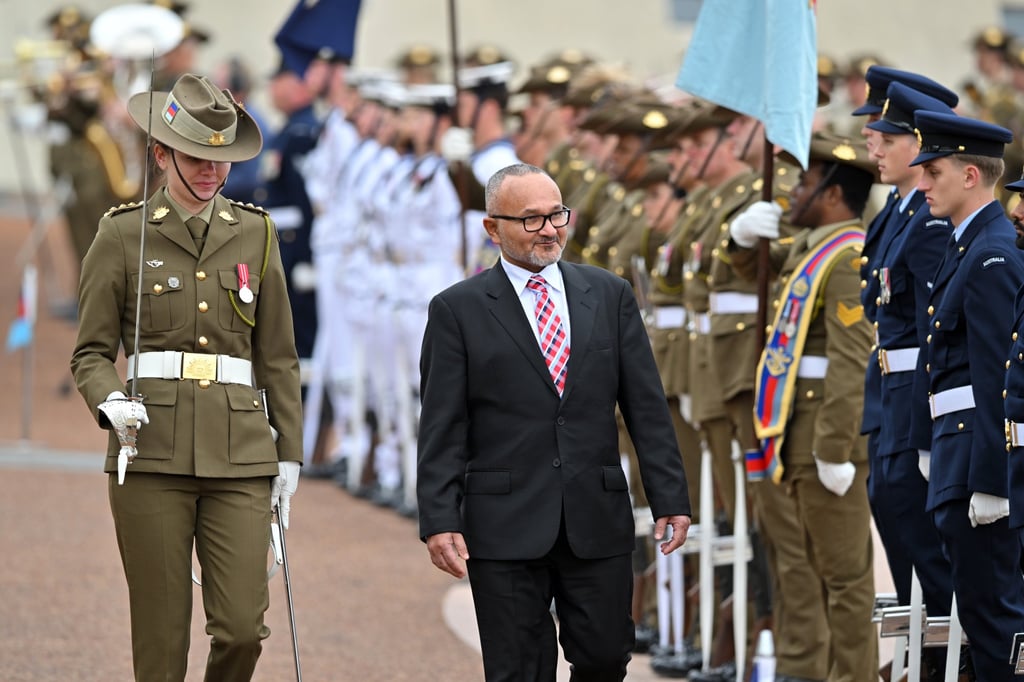
“Pacific island governments are generally reluctant to be drawn into geopolitics or great-power rivalry, and care more about whose terms best serve their national development interests,” Chan said.
“Rather than worrying about a domino effect, it is more accurate to say that Pacific island nations are more proactively leveraging the space created by great-power competition to secure the most advantageous terms of cooperation for themselves.”
Still, observers said, the Solomon Islands’ switch exposed the fragile trust between Beijing and Canberra, even as the two sides were now working to stabilise their broader trade relationship.
“Both governments seem to have realised that the political space for discussing South Pacific issues is narrowing,” Chan said, noting that neither government mentioned the region in its official statement about last week’s meeting between Albanese and Chinese President Xi Jinping in Shenzhen.
Chan noted a mutual wish on the part of Beijing and Canberra to shield their warming economic ties from the dispute. “Both sides now tend to set aside their differences over the South Pacific to keep them from spilling over into the wider relationship.”
KioskNews shows a cleaned-up reading view extracted from the publisher’s page — the original always lives on their site, not ours.