Expert sounds pollution alarm
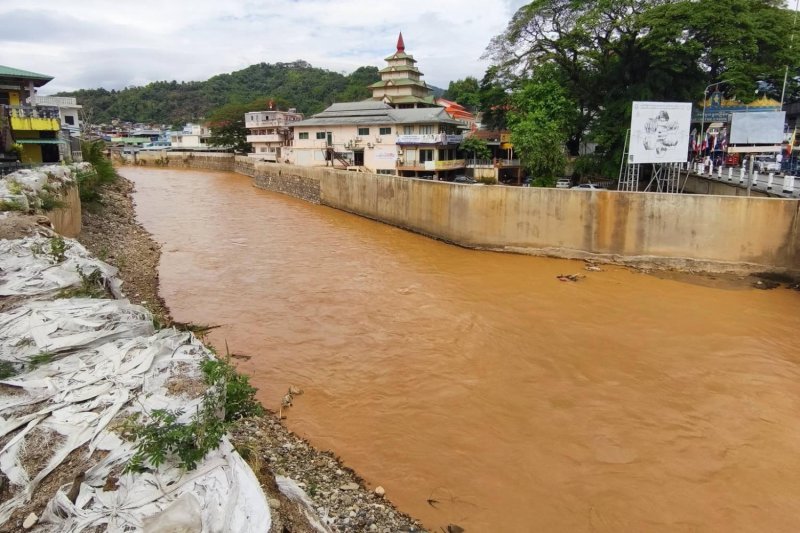
An academic has urged Thailand and its neighbours to act urgently against toxic pollution in northern rivers, warning that switching water sources will not protect communities from contamination linked to mining activities across the border.
The call came after the Provincial Waterworks Authority's Mae Sai branch in Chiang Rai temporarily suspended tap-water production because of excessive turbidity and arsenic in raw water drawn from the Sai River.
Suebsakun Kitnukorn, a lecturer in Mae Fah Luang University's School of Social Innovation, said on Facebook on Monday that switching to the Mekong as an alternative water source would not eliminate the risk of contamination, citing water-quality tests linked to mining activities in Myanmar.
He proposed five measures to tackle pollution in the Kok, Sai, Ruak and Mekong rivers.
These include temporarily suspending mineral imports from Myanmar and exports to China until both countries demonstrate a serious commitment to tackling the pollution, and requiring companies to document the origins of minerals through a traceability system.
He also urged the Thailand-Myanmar Joint Water Quality Inspection Working Group to meet in Mae Sai or Tachileik as soon as possible, as agreed in August.
Mr Suebsakun called on Myanmar ministers to visit communities affected by the pollution in Mae Sai. He also proposed a national committee bringing together government officials, academics, civil society groups and farmers to coordinate efforts to protect six rivers, including the Salween and Kraburi.
The Mae Sai waterworks suspension followed tests on Nov 5-6 that found excessive turbidity and arsenic in raw water. The Pollution Control Department reported turbidity levels exceeding 10,000 NTU and arsenic concentrations of 0.30 milligrammes per litre, beyond the treatment system's capacity. Production was halted for five hours before resuming.
Although normal production and distribution have resumed, about 60 users in higher parts of Ban Pha Daek remained without tap water. Authorities deployed water trucks to supply them.
A separate preliminary inspection at Ban Hua Fai found reddish-brown, murky water containing 0.25mg of arsenic per litre, compared with the standard of 0.01mg.
Officials said heavy rain upstream may have contributed to the elevated metal concentrations.
KioskNews shows a cleaned-up reading view extracted from the publisher’s page — the original always lives on their site, not ours.