US citizen, ‘Chinese blood’: top biologist Yuan Junying caught in debate over returnees
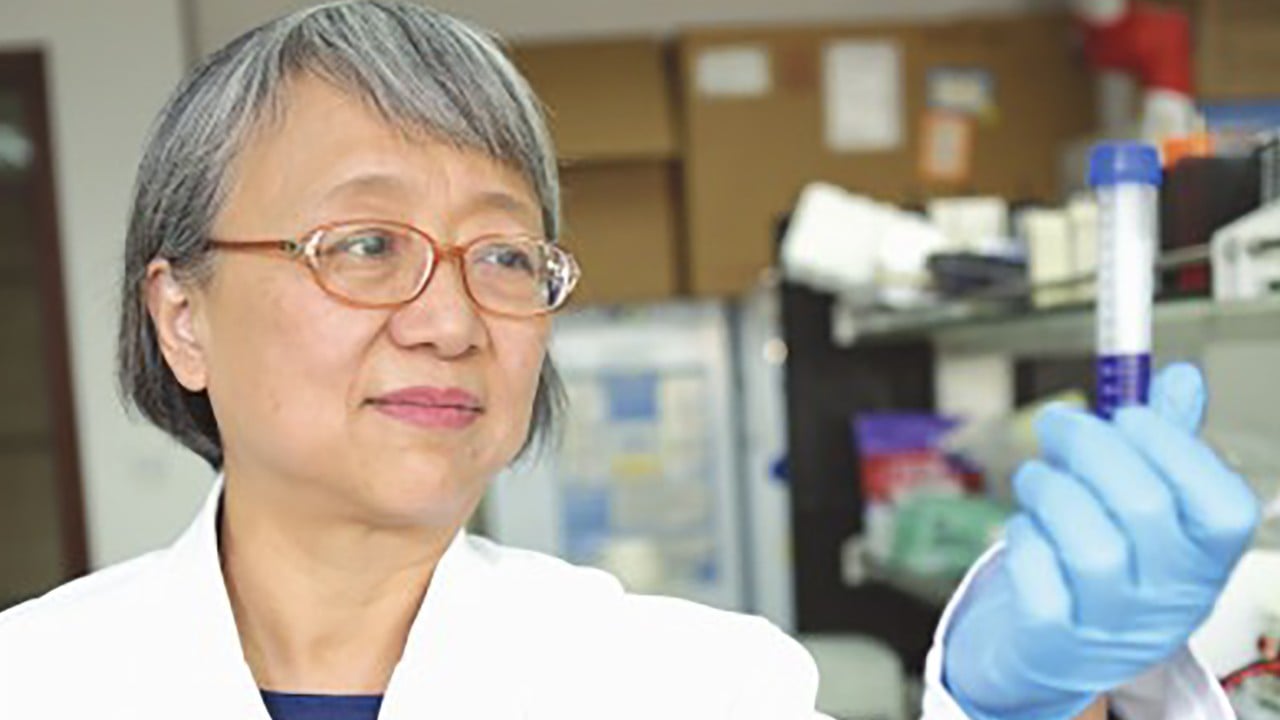
A top Chinese-American biologist who left Harvard University to take up a position in China is facing an online backlash amid a growing debate over whether senior returnees are squeezing out the country’s young scientists.
Yuan Junying, a pioneer in the study of how cells die, drew attention in China late last month when she defended her US citizenship after winning a major science prize at the World Laureates Forum in her hometown of Shanghai.
“I’ve always said my blood is Chinese blood,” said Yuan, who founded an interdisciplinary research centre at the Shanghai Institute of Organic Chemistry in 2012 while still in the United States.
She has run the biology and chemistry centre full-time since her return to China in 2020.
Yuan argued that a passport does not decide who is Chinese. “Nationality comes down to many practical reasons, not because I wanted to be American,” she said at the event.
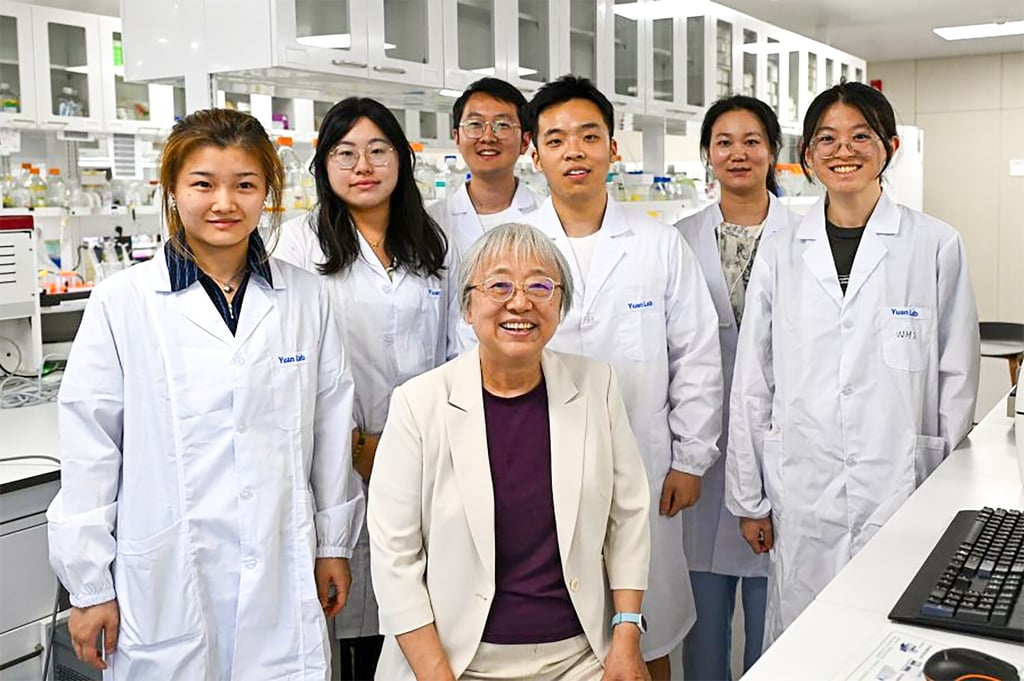
Xiang Ligang, a telecoms commentator with a large online following, said in a social media post that Yuan had returned to China in old age only to grab research funding meant for the next generation, calling her an “ordinary retired old lady”.
He also accused her of “cheating the country” by staying in America after her state-backed study in China in the 1980s.
Yuan did not respond to an emailed request for comment.
Rao Yi, a neuroscientist and chair professor at Peking University who returned from Northwestern University in 2007, came to Yuan’s defence.
“Today China is a proud nation comfortable in welcoming all good people, while both the science and the integrity of Yuan are far above most people,” he told the South China Morning Post.
“Attacking her only shows the narrow-mindedness of the attackers.”
Rao dismissed the claim that Yuan had taken resources from young researchers, saying many of them were grateful for her support over decades.
Hu Xijin, former editor-in-chief of state-run tabloid Global Times, called Xiang’s comments “vicious”. He argued that the anxiety of young researchers should be addressed by reforming the funding and evaluation systems, not by making Yuan a target.
Such concerns are not new in academic circles. Last December, Zhang Hong, a cell biologist and member of the Chinese Academy of Sciences, noted that senior returnees often received tens of millions of yuan soon after arriving back in China, while home-grown scientists doing original work struggled for grants.
A recent STEM PhD graduate from a Beijing university said the bigger squeeze was on promotions, since top posts were scarce and each position filled by a star from abroad could stall careers all the way down the ladder.
“A university only has so much to go around,” said the graduate, who asked not to be named because of the sensitivity of the issue. “When a big name is parachuted in as dean or director, the people in the middle can’t move up, and neither can the hundreds of junior lecturers below them.”
08:30
Why are more Chinese scientists leaving the US to return to China?
Born in Shanghai in 1958, Yuan topped the city’s science exams in 1977, the year China restored its national college entrance exam after the Cultural Revolution.
Five years later, she went to Harvard for her PhD through CUSBEA, a state-organised China-US biochemistry programme whose recruits were widely expected to return home.
Instead she stayed in the United States. Working in the lab of future Nobel laureate Robert Horvitz, Yuan helped discover the first genes that control cell death, then rose to become a full professor and a member of the US National Academy of Sciences.
Over the years she kept close ties with China, especially with the Shanghai Institute of Organic Chemistry. In 2023, she was also elected a foreign member of the Chinese Academy of Sciences.
In a television interview aired last month, Yuan said she had hit a “glass ceiling” in the US. “I really wanted to expand my work with organic chemists, and after coming back, I had a lot more room to do that,” she said.
KioskNews shows a cleaned-up reading view extracted from the publisher’s page — the original always lives on their site, not ours.