This building in Bastar used to house a security camp. Now, it is home to 150 students
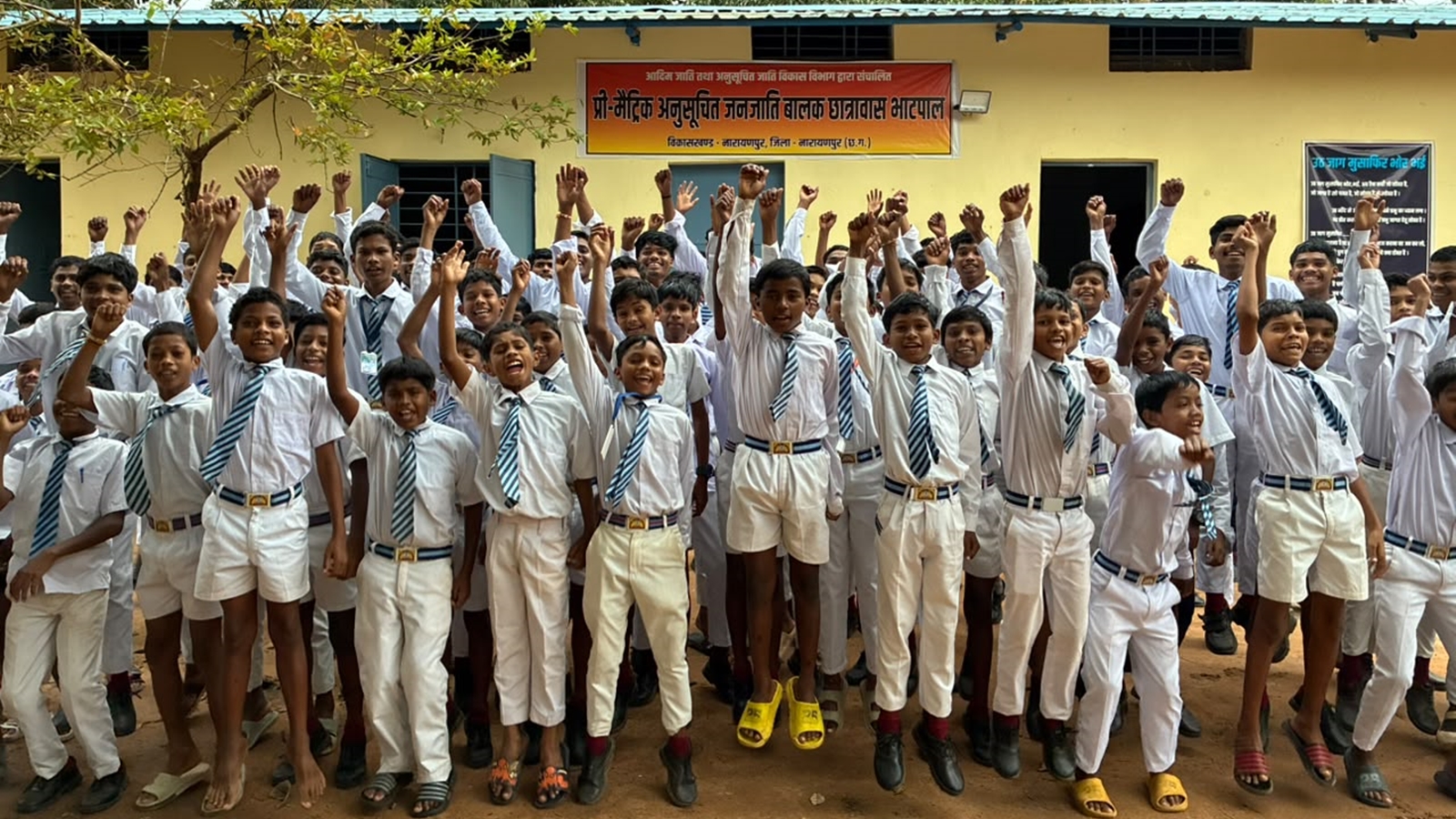
The Bhatpal campus currently houses two hostels for Scheduled Tribe boys studying in pre-matric and post-matric levels. (Express Photo)
Until recently, this building in Chhattisgarh’s Bastar region used to house a security camp, aiding the forces’ fight against Maoists.
Since August, instead of paramilitary personnel, it has been home to students from nearby Maoism-hit areas, including Abujhmad that has seen over a 100 Maoists, including top leaders, being killed in the last two years. Hundreds of others have surrendered.
The Bhatpal campus currently houses two hostels for Scheduled Tribe boys studying in pre-matric and post-matric levels.
“The objective was to address one of the key challenges faced by children from distant and difficult-to-access areas — access to safe accommodation close to school. Previously, this particular area (Bhatpal) had no post-matric boys’ hostel, making it difficult for tribal students to pursue higher education,” said Narayanpur collector Namrata Jain.
“With the establishment of a post-matric hostel for tribal youths for the first time, students from remote areas can now continue their education with access to safe accommodation and better educational opportunities,” said Jain, who recently visited the Bhatpal hostel kitchen and reviewed the quality of food.
The security camp was established here 15 years ago.
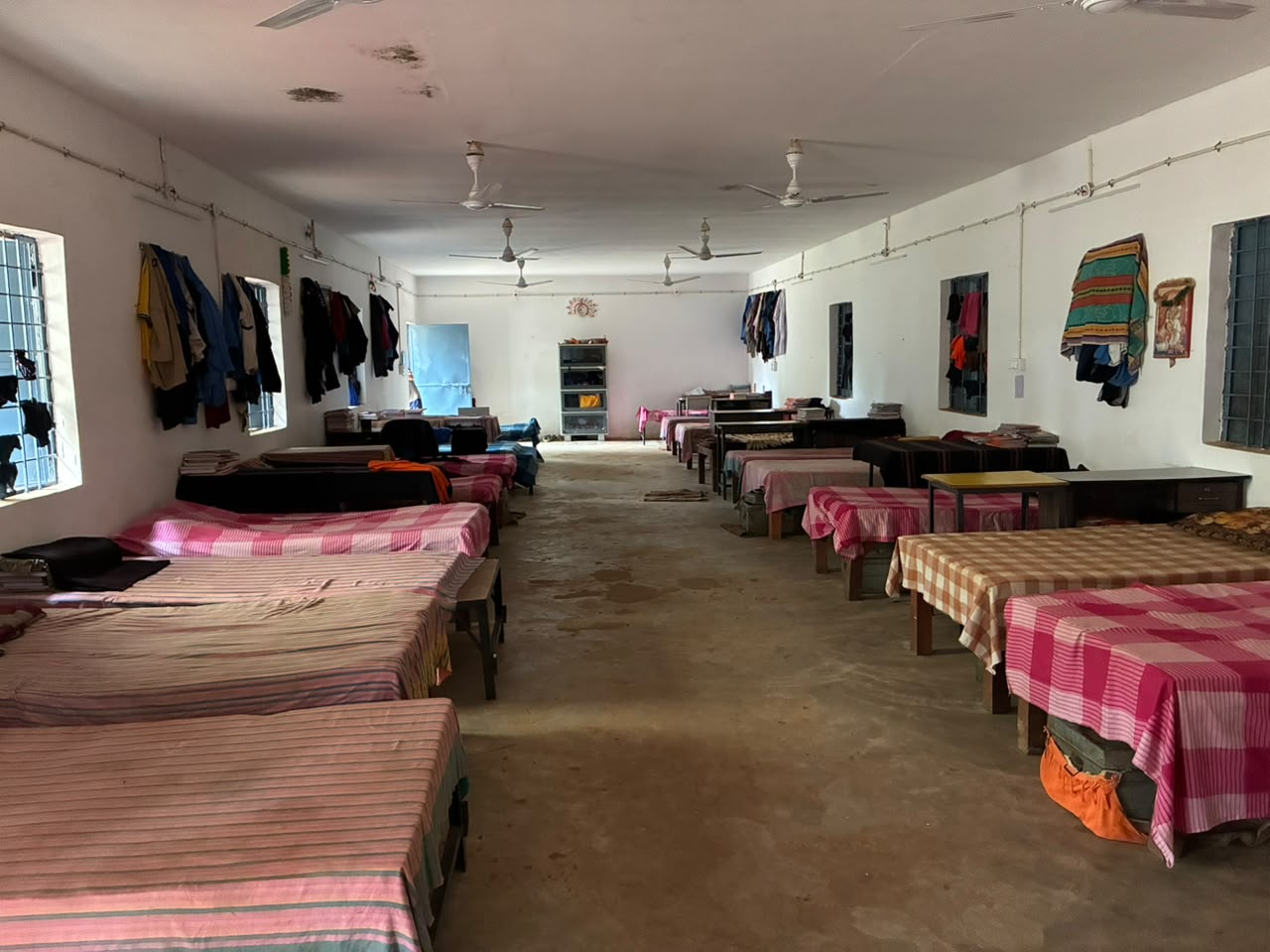 The Bhatpal campus currently houses two hostels for Scheduled Tribe boys studying in pre-matric and post-matric levels. (Express Photo)
The pre-matric hostel caters to students from Classes 6 to 10 and is currently accommodating 114 students. The post-matric hostel, for students of Classes 11 and 12, with a sanctioned capacity of 50 students, is currently accommodating 39 students.
Story continues below this ad
Going by the response to the boys’ hostels – the pre-matric one is running beyond its sanctioned capacity of 100 students – the authorities are planning to set up more such accommodations.
The next one is coming up in Kurushnar, at the entrance of Abujhmad (or Maad, as it is locally known) from the Narayanpur end.
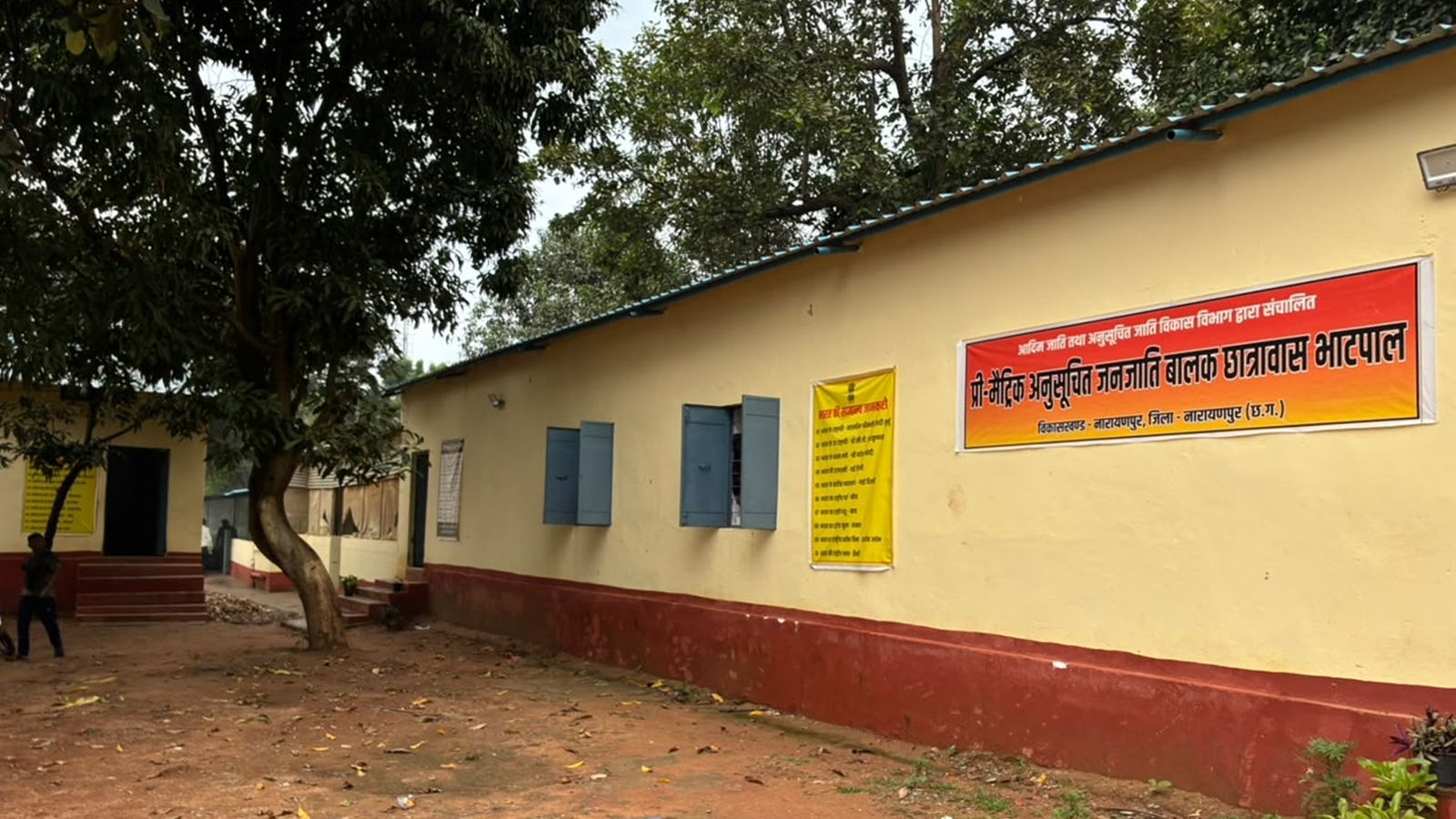 The Bhatpal campus currently houses two hostels for Scheduled Tribe boys studying in pre-matric and post-matric levels. (Express Photo)
In 2011, a residential school was built here after “permission” from Maoists who demanded the school be made without a concrete ceiling or a high boundary wall to ensure forces do not start camping there.
With the Maoists now gone, the security camp established less than a decade ago is being turned into a girls’ hostel, which is expected to be ready in a few days.
Story continues below this ad
Though Bhatpal hostel is away from Maad, it houses students from villages in and around the area. These include Kohkameta, Madamnaar, Orrcha, Nelwad, Chote Donger, Korenda, Chimdi, Remavand and Benoor.
One such student is Komendra from Rajbeda – located around 22 kilometres away. For the Class 12 student, the opening of the post-matric hostel has provided significant relief and taken off the burden of additional expenditure on accommodation.
Earlier this year, a budget of Rs 100 crore was allocated towards turning Maad and Jagargunda in the Bastar region, which were known as hotbeds of Maoism, into “modern education cities”.

Jayprakash S Naidu is a Principal Correspondent for The Indian Express, currently serving as the state correspondent for Chhattisgarh. With an extensive career in frontline journalism, he reports on the political, security, and humanitarian landscape of Central India. Expertise and Experience Specialized Conflict Reporting: Jayprakash is a leading voice on the Maoist/Naxalite conflict in the Bastar region. His reporting provides a critical, ground-level view of: Internal Security: Tracking high-stakes encounters, surrender programs for senior Maoist leaders, and the establishment of security camps in formerly inaccessible "heartland" villages. Tribal Rights & Displacement: Investigative reporting on the identity and land struggles of thousands of displaced tribals fleeing conflict zones for neighboring states. Governance & Bureaucratic Analysis: He consistently monitors the evolution of Chhattisgarh as it marks 25 years of statehood, covering: Electoral Politics: Analyzing the shift in power between the BJP and Congress and the impact of regional tribal movements. Public Policy: Reporting on landmark infrastructure projects (e.g., mobile connectivity in remote zones) and judicial interventions, such as High Court rulings on civil and family law. Diverse Investigative Background: Prior to his current focus on Chhattisgarh, Jayprakash held reported from Maharashtra, where he specialized in: Crisis & Disaster Management: Notable for his extensive coverage of the Cyclone Tauktae barge tragedy (P-305) and the COVID-19 pandemic’s impact on frontline personnel. Legal & Human Rights: Investigative pieces for platforms like Article-14, focusing on police accountability and custodial deaths across India. Environmental & Social Justice: Authoritative reporting on the Hasdeo Aranya forest protests and the approval of major tiger reserves, highlighting the tension between industrial mining and environmental preservation. ... Read More
KioskNews shows a cleaned-up reading view extracted from the publisher’s page — the original always lives on their site, not ours.