Could Beijing’s HQ-17 air-defence system defend PLA amphibious forces from Taiwan strikes?
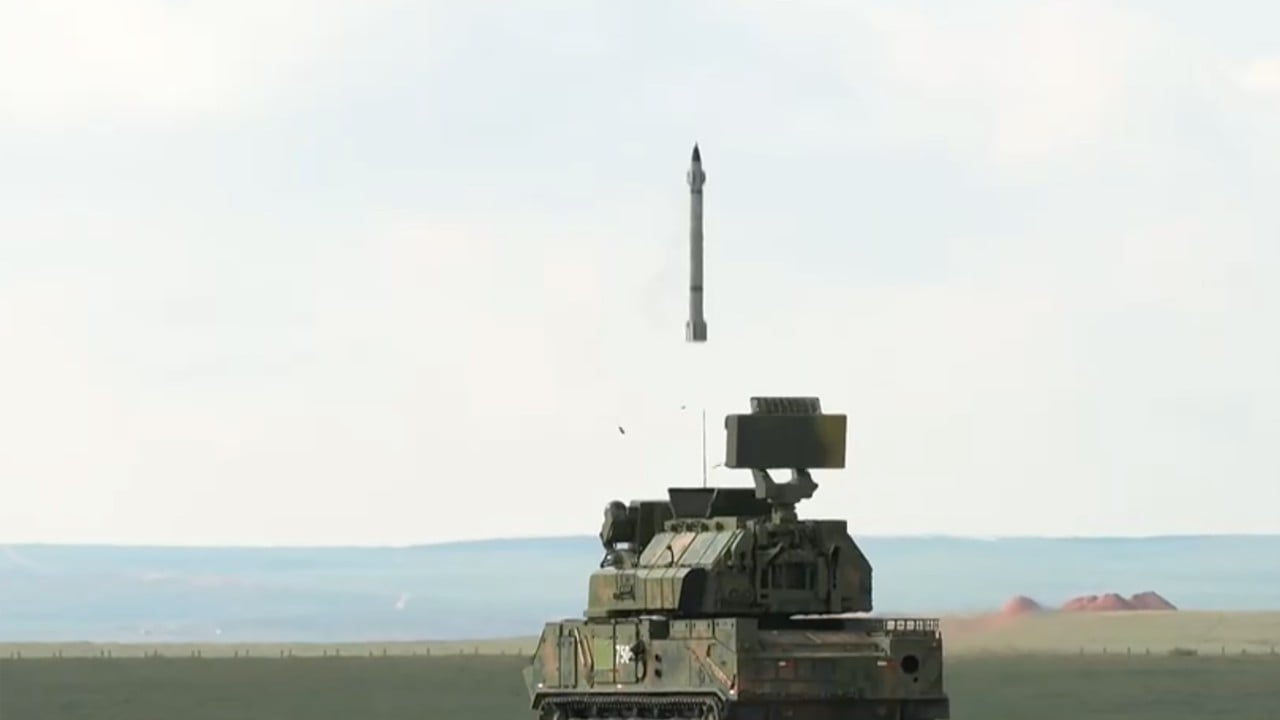
A US Army analysis said the unit probably belonged to the 125th Amphibious Combined Arms Brigade, one of six such PLA Army formations identified by a US Naval War College study as central to a potential landing operation against Taiwan.
Beijing sees Taiwan as part of China to be reunited by force if necessary.
Most countries, including the United States, do not recognise Taiwan as an independent state, but Washington is opposed to any attempt to take the self-ruled island by force and is committed to supplying it with weapons.
The HQ-17 family was developed by the state-owned China Aerospace Science and Industry Corporation, drawing on Russian Tor-M1 air-defence systems acquired from the late 1990s.
It includes the tracked HQ-17, publicly seen in 2014, and the wheeled HQ-17A, unveiled in 2019. The corporation’s Second Academy developed the HQ-17AE export variant, now in service with Pakistan, Saudi Arabia, Serbia and Tajikistan.
Each launcher carries eight vertically launched missiles and its own radar, allowing crews to detect and engage aerial threats independently.
According to defence intelligence provider Janes, the missiles can intercept targets between 1.5km (0.9 miles) and 15km away, at altitudes from 10 metres (about 33 feet) to 10km.
A typical battery has four launchers, supported by command and ammunition vehicles.
02:53
US midterm elections: What the results mean for mainland China, Taiwan and foreign policy
The tracked HQ-17 can search for threats while moving but must stop to fire, and it can engage up to two targets simultaneously.
The HQ-17A is reported to fire at four simultaneously and is assessed by Janes to be capable of launching missiles while travelling at up to 25km/h (15.5mph).
The two versions reflect the different needs of PLA units. A 2025 US Army War College study found heavy brigades operating tracked HQ-17s, while lighter formations built around wheeled vehicles had begun receiving HQ-17As by 2021.
“Fire on the move is not very common for air-defence systems, but the clear logic behind it is that your armoured column can keep moving while remaining under protection from the air-defence system moving alongside it,” said Mark Cazalet, editor-in-chief of defence website Warsight.
Such protection could become increasingly important as Taiwan expands its uncrewed arsenal.
In August, its legislature approved a six-year NT$240 billion (US$7.3 billion) funding framework covering uncrewed systems, including coastal attack and reconnaissance drones.
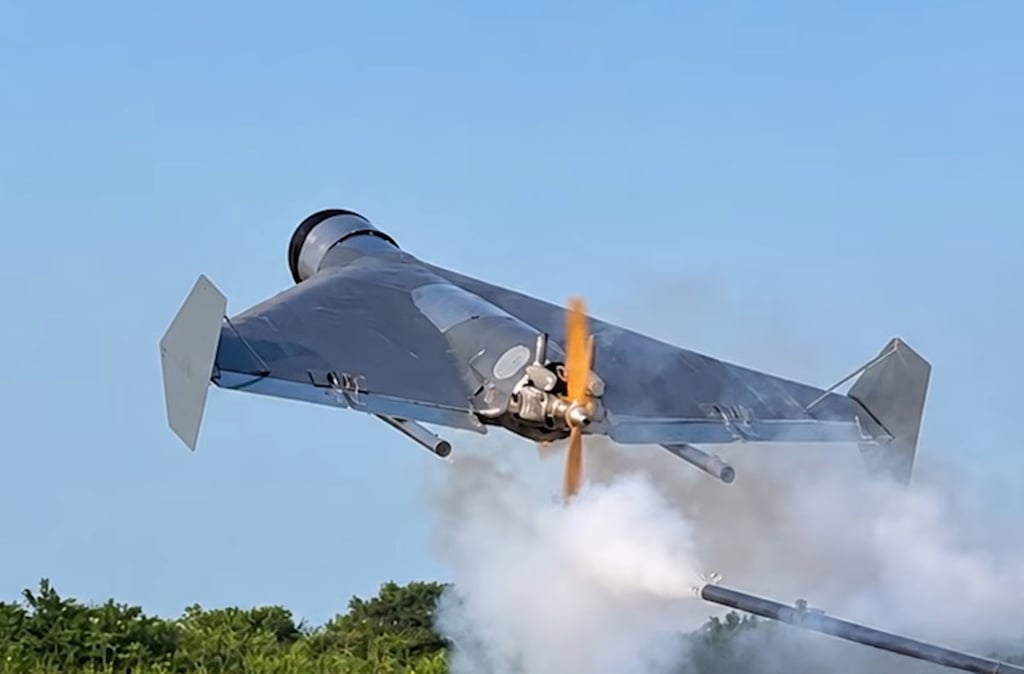
Meanwhile, Taiwanese manufacturer Thunder Tiger has flight-tested a Shahed-style attack drone whose advertised range could put parts of Fujian province within reach, although that range remains unproven.
Russia’s war in Ukraine has also highlighted the dangers facing mobile, short-range air-defence systems such as the Tor, although Moscow’s experience does not necessarily reflect how China’s HQ-17 family would perform.
Cazalet said many early Russian Tor losses occurred while the systems travelled in convoys that were “not expecting Ukrainian resistance”, sometimes with their radars switched off.
But even with crews on alert, the HQ-17 family would face technical limitations.
Cazalet pointed to the limited number of ready-to-fire missiles each launcher carries – eight, compared with 16 on newer Russian Tor-M2 launchers – while Janes estimates that reloading an HQ-17/17A takes about 18 minutes. Its reliance on radar guidance could also make the system easier to detect and attack.
The HQ-17, like the Tor, was designed to counter aircraft, cruise missiles and precision-guided munitions, he added, noting it was “not ideally suited” to small first-person-view attack drones.
More broadly, Cazalet said the main lessons for PLA crews were to remain disciplined and “always on the lookout for possible inbound threats”, while carefully rotating rest periods to ensure someone remained on watch.
He also stressed the importance of deploying weapons and radars to provide overlapping coverage, while sharing information about approaching threats and where they were coming from.
The HQ-17 does not normally operate alone. A February report by the official China Military Online described an exercise involving HQ-17s and PGZ-04A vehicles, which combine anti-aircraft guns and missiles.
Other systems include the Type 625, which combines a rapid-fire cannon with short-range missiles, as well as lasers and microwave weapons designed to counter drones. Whether these newer weapons routinely operate alongside HQ-17 launchers remains unclear.
Protecting mainland coastal staging areas is only part of the challenge. The PLA is exploring ways for amphibious troops to defend themselves against aerial threats while at sea.
In the June exercise, soldiers aboard amphibious vehicles fired shoulder-launched missiles at drones. Separately, unverified images circulating in August appeared to show a Type 19 amphibious armoured vehicle fitted with a laser weapon.
If that vehicle retains its ability to operate in water and the weapon proves effective, it could protect troops on their final approach to the beach without relying entirely on systems ashore.
Together, these developments illustrate some of the air-defence layers the PLA would need for an amphibious operation against Taiwan.
The threats facing those forces would also depend on when a landing operation took place during a conflict and how much of Taiwan’s strike capability remained after earlier fighting.
HQ-17s could play an important role in protecting troops and equipment assembling on the mainland, but their limited range would leave other systems to protect amphibious forces as they moved further offshore.
Yet, even such a coordinated network might not guarantee full protection against a determined adversary, Cazalet warned.
“Fundamentally, any air-defence system on the planet can be defeated with some smart planning, coordination and repeat strikes,” he said.
KioskNews shows a cleaned-up reading view extracted from the publisher’s page — the original always lives on their site, not ours.