Walk the talk: a week learning French with a personal prof in Normandy

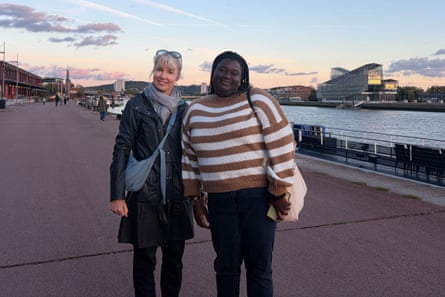
I’m walking beside the River Seine in the French city of Rouen when I realise that I’ve been speaking French – without pausing to find a word or struggle with grammar – for five whole minutes. Anna, my French “prof” for the week, nods encouragingly and so I continue. It’s a breakthrough moment, if only for my confidence.
This is the last day of a DIY language course that I devised when Rouen’s language schools told me they were full for the only week I could get away. When I then enquired about their private tutors, I was told no one was available. This turned out to save me a pretty penny: language school tutors cost €60 an hour while Anna – who I discovered on the website Apprentus – is a cost-effective €19 an hour.
For the last couple of winters I’ve tried to spend a week or so brushing up my “intermediate” French language skills, in situ. A spate of new research on the remarkable cognitive benefits of learning a second language have made me a keen user of apps and podcasts – and yet no amount of AI-generated tutoring can compete with talking to (and being corrected and helped by) a real person.
Learning in situ also comes with a chance to travel, to communicate with dozens of people, to experience the culture that accompanies the language one is trying so hard to learn. Last winter, I went to a language school in Montpellier. Three hours a day didn’t come cheap. The class was large: 12 pupils from across the world. I spent my mornings pinned to a plastic chair in a cramped, tatty classroom, listening to my peers struggle through various exercises.
This isn’t the best way to learn. A recent study published in Nature suggests that moving helps us concentrate, remember and generally learn more effectively. Little wonder that I left Montpellier feeling I hadn’t learned much.
So I was delighted when Anna suggested that we do our two-hour classes on foot round Rouen. “If it rains,” she said, “we can talk over goûter.” Le Goûter is the French tradition of taking a small snack between lunch and dinner – a bit like English teatime.
Having booked Anna (a political sciences student at the University of Rouen Normandy) for 10 hours of French conversation over five days, I reserved a studio apartment (bang in the historic heart of Rouen for less than £60 a night) and bought a ferry ticket from Newhaven to Dieppe. Rouen is a one-hour train journey from the port, and the combined ferry-train ticket (return) cost a thrifty £65.
Anna and I met outside the ornate Saint-Maclou church, clearly both a little nervous. After all, we were about to spend 10 hours alone together, with no prior knowledge of each other. It also turned out that I was Anna’s first pupil since she’d registered on Apprentus. Moreover, she had signed up expecting to help kids with their homework. Instead she got me – a woman old enough to be her mother.
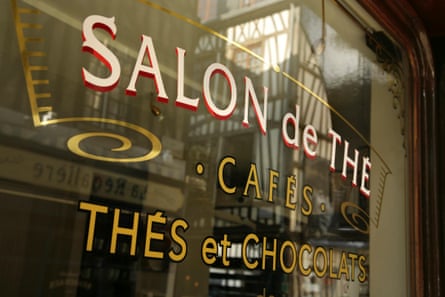
We needn’t have worried. Anna had come straight from a (peaceful) protest march, and within minutes we were chatting away about the concerns of French students, as we strolled. Anna doubled as a tour guide, showing me all her favourite corners of Rouen – while simultaneously correcting my French. When it rained, she introduced me to Rouen’s best tea houses (the Dame Cakes salon de thé was a particular favourite), in effect doubling as my dining companion.
While Anna’s first language is French, she also speaks excellent English, meaning she could explain complex grammar to me. Her Senegal heritage meant that I also learned about the turbulent history of west Africa, as well as being brought up to speed on the ongoing student protests. We spent one fascinating lesson – which also involved riding Rouen’s buses – discussing Senegal’s matrilineal history of priestesses and queens, in French. Who knew? Not me!
after newsletter promotion
Anna’s suggestions for lessons included an outing to Rouen’s Musée des Beaux-Arts (free, as are most of Rouen’s museums) which bills itself as France’s biggest impressionist collection outside Paris. We walked Rouen’s riverside pathways, which run for miles up and down the Seine, and ambled through the city’s beautiful, medieval quarters, stopping to explore areas such as the Place de Vieux-Marché, where Joan of Arc was burned alive. As these areas are largely car-free, we didn’t have to worry about dodging mopeds or shouting over the roar of traffic.
I could have hired Anna for longer, but two hours of one-to-one tuition each day felt optimal for my brain as it struggled to recall a very distant French A-level. I used the rest of my time to read a French novel, listen to French radio and TV, and wander Rouen with the self-challenge of talking to as many people as I could. Imagine my delight when, on my last day, a shop assistant asked me if I was local!
Anna and I finished our week with hugs and promises to keep in touch. My “prof” (the French abbreviation of professeur/e, commonly used to mean teacher) had proved to be informative, knowledgable, cost effective and great fun. And my six days, including food, transport, tutor and accommodation, had cost little more than £600.
On the ferry home, I couldn’t help wondering if human connections like this – an on-foot tutor, guide and new best friend rolled into one – might be the (fun) future of language learning.
Annabel Abbs (writing as Annabel Streets) is the author of The Walking Cure, published by Bloomsbury (£10.99). To support the Guardian, order your copy at guardianbookshop.com. Delivery charges may apply
KioskNews shows a cleaned-up reading view extracted from the publisher’s page — the original always lives on their site, not ours.