WILDERNESS & WATER: Avocados, unanswered questions and a pristine lake in the firing line
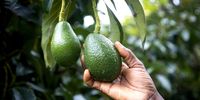
The last time PG Bison turned on the sprinklers near Groenvlei, it was trying to save a pile of burnt timber. After the 2017 Knysna fires, the company pumped groundwater to keep salvaged logs wet until they could be sawn. Now, it wants to use the same boreholes to grow avocados.
To PG Bison, it makes sense to put some of its pine land to work after the timber was sold. According to Charles Scott, committee member of the Wilderness and Lakes Environmental Action Forum (Waleaf), there’s an obvious difference between wetting logs and watering an orchard. The logs didn’t need fertiliser.
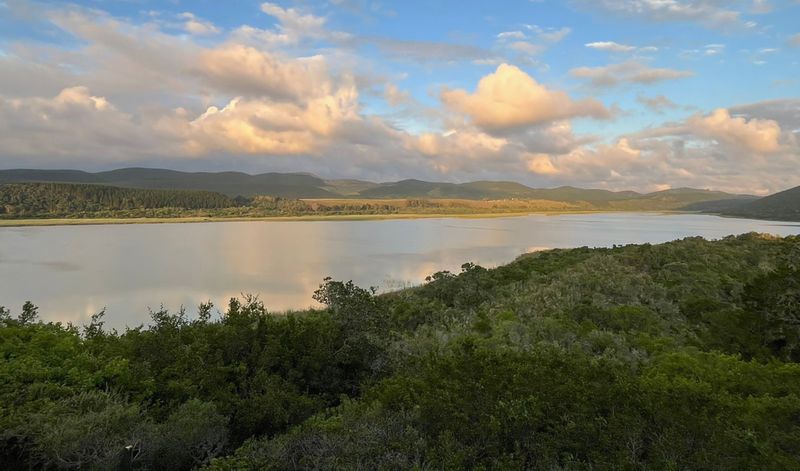
Downhill lies Groenvlei, a beautiful freshwater lake in the Goukamma Nature Reserve. It supports genetically distinct populations of indigenous fish. Professor Mandy Lombard, who has studied the lake for more than 15 years, also reports finding living stromatolites there, rocklike structures built by microbes that depend on fresh groundwater.
The licence issue
PG Bison secured a water-use licence for the orchard in August 2025. Waleaf and CapeNature have appealed. According to Dries Saaiman, PG Bison’s general manager for South Cape operations, the appeal is before the Water Tribunal.
Waleaf puts the proposed draw at 3.83 million litres a day. SANParks has raised a practical objection of its own. Sedgefield may one day need that water.
Saaiman says PG Bison asked for 1.25 million cubic metres a year, about 23% less than it was allowed to use on the timber. That’s an annual allowance. The daily limit has yet to be verified against the licence.
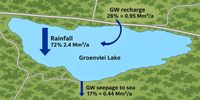
According to Saaiman, the lake level during the four years it watered the logs was already falling when pumping began and rose again when rain fell, even with the pumps running.
Measurements at a borehole near the lake, he said, indicated that groundwater continued to flow towards it. The company’s groundwater specialist concluded that drought explained the low lake levels.
What about a downpour?
For Waleaf’s Gray Rutherford, the water going into the orchard is only half the story. He’s concerned about what it carries out the other side. Some of the dissolved fertilisers, fungicides and pesticides used can travel through the sandy soil into the shallow groundwater and into the lake, he says. Groenvlei has no river flowing through it to carry them away.
PG Bison proposes to drip-feed water and nutrients straight to the roots. Soil-moisture readings would tell growers how much to apply. Saaiman says the company’s water-quality report recommends testing soil at different depths and sampling groundwater in winter and summer so growers can act if chemicals are getting through.
Rutherford sees a breach in that plan. A grower can turn off a drip line, but who turns off the rain? A downpour, he argues, will wash these chemicals below the roots and towards the lake. Too much of these contaminants will accumulate in the lake and do irreversible damage, eventually destroying all its life.
What about the creatures?
Among those backing the challenge, Lombard has a question about the fences. Otters and honey badgers already move through the area. What happens to their routes? And what happens when baboons and vervet monkeys discover the fruit?
Saaiman says the farm plan leaves the indigenous fynbos between the stands intact. “The avocado orchards would be fenced in separate blocks, leaving open routes between them so that wildlife can continue to move through the property.” Those routes would follow existing roads and strips of vegetation. His reply leaves the question of crop-raiding monkeys open.
Assessment called for
Waleaf wants PG Bison to drop the project or commission an independent environmental impact assessment. It has asked the provincial environment department to intervene. Scott says the department’s response was that no contravention had occurred. His point is that by the time there is something in the lake to complain about, it will be too late.
PG Bison says it took legal advice and that both national and provincial environmental authorities confirmed the conversion required no such assessment. “We stand behind the evidence submitted in support of this proposal,” Saaiman wrote, offering Maverick Earth a technical discussion or a site visit.
Waleaf says PG Bison should answer why they persist with their avo farm project, which both CapeNature and SANParks oppose, citing the serious risk to the lake as an International Key Biodiversity Area, a Unesco World Heritage Site, a Garden Route Critical Biodiversity Area and a Provincial Protected Area.
Why, asks Scott, didn’t they engage with these bodies to address these concerns, avoid conducting an Environmental Impact Assessment and Risk Assessment and continue to proceed with a project that conflicts with their own environmental policy approved in August 2023?
That leaves the two sides looking at the same strip of sand. PG Bison is prepared to plant the trees and test what moves through it. Waleaf wants to know what a season of hard rain could carry into Groenvlei before the orchard goes ahead.
On offer are avocados to grace a salad or breakfast toast. At risk is a lake with nowhere to run. DM
KioskNews shows a cleaned-up reading view extracted from the publisher’s page — the original always lives on their site, not ours.