10 Sci-Fi Books To Read Before Kicking the Bucket

Diego Pineda has been a devout storyteller his whole life. He has self-published a fantasy novel and a book of short stories, and is actively working on publishing his second novel.
A lifelong fan of watching movies and talking about them endlessly, he writes reviews and analyses on his Instagram page dedicated to cinema, and occasionally on his blog. His favorite filmmakers are Andrei Tarkovsky and Charlie Chaplin. He loves modern Mexican cinema and thinks it's tragically underappreciated.
Other interests of Diego's include reading, gaming, roller coasters, writing reviews on his Letterboxd account (username: DPP_reviews), and going down rabbit holes of whatever topic he's interested in at any given point.
Sign in to your Collider account
Thankfully, for people who love science fiction literature, we're talking about one of the most diverse and prolific genres in all of speculative fiction, making it so that there are hundreds upon hundreds of sci-fi masterpieces out there for them to explore. There are ten particular books, however, that absolutely everyone who enjoys science fiction should read before kicking the bucket, the most essential cornerstones that the genre has to offer.
Whether we're talking about a foundational modern classic, like Neuromancer, or an even older watershed moment in the genre's history, like The War of the Worlds, these are books so important, influential, marvelously written, and pop-culturally relevant that they should be considered must-read material. Even people who think they don't like science fiction should give these gems a chance.
'Rendezvous with Rama' (1973)

You need to be a really important name to get an entire literary award carrying your name, and there's nothing that Arthur C. Clarke was if not massively important. Many would point to Rendezvous with Rama, the first installment in the Rama series, as the author's magnum opus. One of the most perfect sci-fi books set in space, it's about a human crew who intercepts and explores a massive alien starship that enters the solar system, only for the vessel to depart without ever making contact with humanity.
Winner of all the Hugo, Locus, and Nebula Awards—a tremendous achievement not accomplished by many—, Rendezvous with Rama is the definitive blueprint for the "Big Dumb Object" (BDO) subgenre of sci-fi, which is all about the discovery of mysterious alien structures. It's an essential hard sci-fi narrated with a sense of wonder that perfectly captures the natural thrill of discovery and exploration.
'Neuromancer' (1984)

William Gibson's Neuromancer remains the first and only novel in history ever to win all three of the Hugo, Nebula, and Philip K. Dick Awards, and for good reason. It's the first installment in the Sprawl trilogy, but this novel about a hacker who's recruited to help a rogue AI merge with its sibling and achieve supreme power is best known as the most important pioneer of the cyberpunk subgenre.
With its exploration of themes of AI and humanity's relationship with technology, Neuromancer is also one of the most prophetic sci-fi books of all time, making it even more essential reading than it already was before. It's a cultural blueprint unlike any other, inventing much of the language of the digital age and building the aesthetics of a sci-fi subgenre that has delivered several of the greatest sci-fi stories across all forms of media.
'Do Androids Dream of Electric Sheep?' (1968)
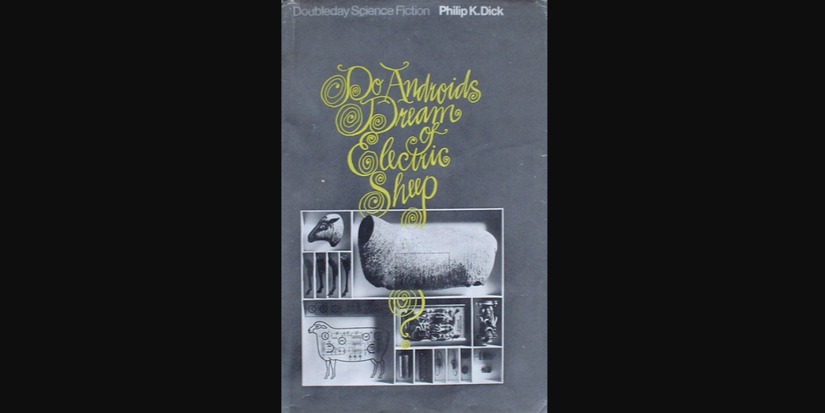
Another one of the most important and massively influential sci-fi authors in history was Philip K. Dick, whose dystopian sci-fi novel Do Androids Dream of Electric Sheep? inspired Ridley Scott's Blade Runner, itself one of those sci-fi movies that everyone should watch at least once in their lives. The book is set on a futuristic Earth, where a bounty hunter is tasked with hunting down a group of rogue human-like androids.
The question of what it means to be human is one that has been explored by science fiction since the genre's birth, but rarely has that theme been explored with as much psychological and philosophical depth as in Do Androids Dream of Electric Sheep? It's one of the greatest sci-fi book masterpieces in history, essential reading for all those who are even remotely interested in this common thematic concern for science fiction.
'Fahrenheit 451' (1953)

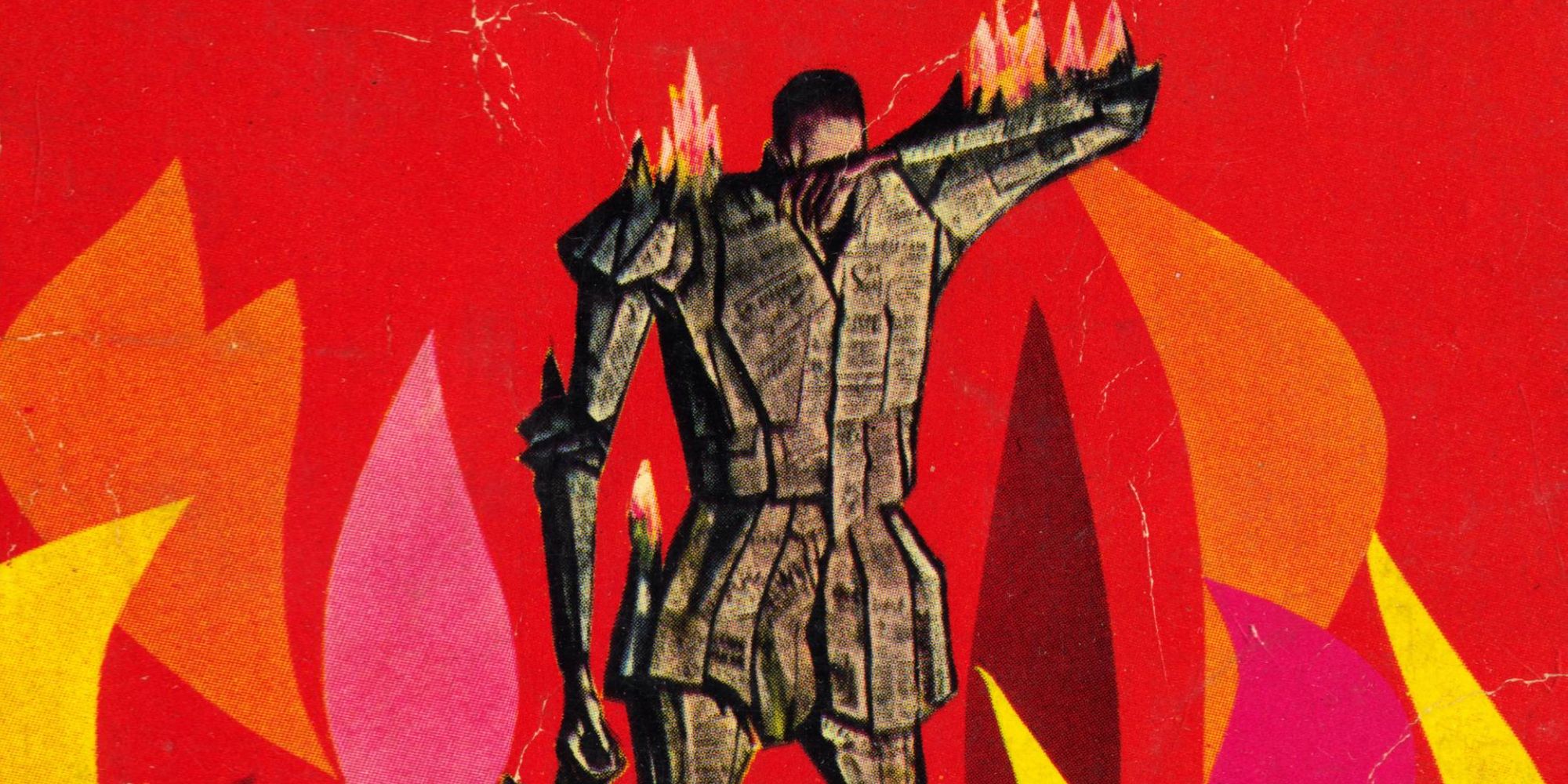
Ray Bradbury's Fahrenheit 451 is one of the most influential dystopian novels in the history of science fiction, following a book burner who rebels against an oppressive society, which sparks a journey of intellectual awakening and survival. It's one of the most essential sci-fi classics to read before kicking the bucket, a razor-sharp commentary on mass media, censorship, and anti-intellectualism.
While other dystopian writers who either influenced Bradbury or were his direct contemporaries wrote about government surveillance or the dangers of hedonism, Fahrenheit 451 is all about a society that willingly abandons deep thought in favor of cheap, fast entertainment. As such, few dystopian books feel as timely as this one; and as such, Fahrenheit 451 couldn't possibly feel any more essential.
COLLIDERInteractive
Long-range scan active
Movies/Science Fiction/Survival Assessment
Collider Survival Assessment
Which Sci-Fi World
Would You Survive?
8 questions · 5 worlds · one honest verdict
Five of the great screen futures, and not one of them is built for comfort. Answer eight questions about instinct, loyalty and the line you would cross, and the scan will tell you which one you would still be standing in. Worlds in range
▦︎The Matrix
◈︎Mad Max
◑︎Blade Runner
▲︎Dune
✦︎Star Wars
Signal lock01 / 08
Question 01 of 08INSTINCT
The world as you know it ends overnight. What is your first move? No wrong answer. There is a wrong hesitation.
Keys 1 to 5 or A to E · Enter to advance
Signal lock02 / 08
Question 02 of 08RESOURCE
You can stockpile exactly one thing. What is it? Choose carefully. You are not getting a second run.
Keys 1 to 5 or A to E · Enter to advance
Signal lock03 / 08
Question 03 of 08THREAT
Which kind of enemy scares you the most? Be honest about what keeps you up.
Keys 1 to 5 or A to E · Enter to advance
Signal lock04 / 08
Question 04 of 08AUTHORITY
How do you handle the people in charge? Every world has them. Even the ones that pretend otherwise.
Keys 1 to 5 or A to E · Enter to advance
Signal lock05 / 08
Question 05 of 08ENVIRONMENT
Pick the place you would rather wake up in: You will be there a while.
Keys 1 to 5 or A to E · Enter to advance
Signal lock06 / 08
Question 06 of 08ALLIANCE
Who do you want standing next to you? Pick one. You only get one.
Keys 1 to 5 or A to E · Enter to advance
Signal lock07 / 08
Question 07 of 08MORALITY
Which line would you cross to survive? Everybody crosses one.
Keys 1 to 5 or A to E · Enter to advance
Signal lock08 / 08
Question 08 of 08PURPOSE
What are you really fighting for? Last question. Make it count.
Keys 1 to 5 or A to E · Enter to advance
Scan completeYou would survive
▦︎ The Matrix The Resistance, Zion You take the red pill, you stay in Wonderland, and I show you how deep the rabbit hole goes.
You would survive The Matrix because you were never fully sold on the version of reality you were handed. You notice the seams. You ask the second question. In a world built to keep people comfortable and incurious, that instinct is the whole fight, and it is why Morpheus would have found you long before you found him. From the Collider file
- The Wachowskis' 1999 film won four Academy Awards, including Visual Effects and Film Editing.
- Bullet time was shot with a rig of roughly 120 still cameras firing in sequence around the actors.
- Keanu Reeves trained in martial arts for about four months before a frame was shot, recovering from neck surgery the whole time.
- It opened the same year as Fight Club and eXistenZ, in a run of films about not trusting the world in front of you.
Red pill energy Pattern spotter Built to question
◈︎ Mad Max The Wasteland Oh, what a day. What a lovely day.
You would survive the Wasteland because you do not waste energy mourning the world that ended. You move, you improvise, and you are very good with whatever is bolted to the thing in front of you. Furiosa would let you drive. That is not a compliment anybody earns easily. From the Collider file
- Mad Max: Fury Road won six Academy Awards in 2016, more than any other film that year.
- George Miller storyboarded the entire film as roughly 3,500 panels before there was a script.
- The chase was shot almost entirely practical in the Namib Desert, with real vehicles and real stunt performers.
- Anya Taylor-Joy and Chris Hemsworth carried the prequel, Furiosa: A Mad Max Saga, in 2024.
Keeps moving Improviser Good with engines
◑︎ Blade Runner Los Angeles, 2049 All those moments will be lost in time, like tears in rain.
You would survive 2049 because you know how to be small in a very loud city. You keep your head down, you do the job, and you hold onto one private thing that belongs only to you. That quiet stubbornness is exactly what both Deckard and K run on, and it is what keeps either of them going when the case stops making sense. From the Collider file
- Blade Runner 2049 won Roger Deakins his first Oscar for cinematography, on his fourteenth nomination.
- The film also took Best Visual Effects, 35 years after Ridley Scott's 1982 original.
- Villeneuve shot it on large-format film and kept the fog and rain practical on set wherever he could.
- Three short films by Luke Scott and Shinichiro Watanabe bridge the 30-year gap between the two movies.
Keeps her head down Private Noir soul
▲︎ Dune Arrakis Fear is the mind-killer. Fear is the little-death that brings total obliteration.
You would survive Arrakis because you think in decades while everyone around you thinks in weeks. You read the room, you learn the customs, you wait. The desert does not reward speed. It rewards people who understand that patience is a weapon, which is the one lesson the Fremen never had to be taught. From the Collider file
- Denis Villeneuve's Dune won six Academy Awards in 2022, including Cinematography and Original Score.
- Hans Zimmer turned down Christopher Nolan's Tenet so he could score Dune instead.
- Dune: Part Two arrived in 2024 and brought in Austin Butler, Florence Pugh and Christopher Walken.
- David Lynch's 1984 version and Alejandro Jodorowsky's unmade one are both their own legends by now.
Plays the long game Reads the room Patient
✦︎ Star Wars A Galaxy Far, Far Away Rebellions are built on hope.
You would survive the galaxy because you never try to survive it alone. You collect people. You end up in the middle of other folks' problems and you stay anyway. Every version of this story, from the Falcon's crew to the Ghost's, runs on somebody exactly like that holding the group together. From the Collider file
- The 1977 original won six Academy Awards plus a special achievement award for sound effects.
- John Williams' score was recorded by the London Symphony Orchestra and became the best-selling symphonic film soundtrack ever.
- Andor took the galaxy somewhere colder and earned Emmy nominations for drama series in both seasons.
- The saga now runs across eleven feature films and a growing shelf of series on Disney+.
Collects people Shows up Hope merchant
Compatibility readout · top three
1
2
3
Copied to your clipboard
Scan filed byCOLLIDERCollider.com · The Sci-Fi Desk
'The War of the Worlds' (1898)

H. G. Wells was one of the most important and influential figures in the history of science fiction and modern literature, pioneering tropes like time travel, genetic engineering, and—of course—alien invasions. Indeed, there's perhaps no alien invasion novel more foundational than The War of The Worlds, in which a dying Martian civilization launches a devastating invasion of southern England despite the human military's best efforts to keep them at bay.
It's one of those sci-fi masterpieces that became a blueprint for the whole sci-fi genre, and even though its pacing and sociological musings may feel somewhat archaic to today's readers, its entertaining value is still every bit as sharp and fresh as it surely must have been back in 1898. Full of biting social commentary and memorable moments, it's a masterpiece so hugely influential that no true fan of science fiction can allow themselves to kick the bucket before experiencing Wells' brilliance.
'Foundation' (1951)

Isaac Asimov's Foundation series is another one of the most important sci-fi book series of all time, but most people would agree that it's also one of those book series that peaked with their first entry. The eponymous Foundation is a cycle of five interrelated short stories, telling the early story of the titular institute and its mission to preserve the best of galactic civilization after the collapse of the Galactic Empire.
...The best possible introduction to the oeuvre of an author who's easily among the most influential in the history of science fiction.
One of those sci-fi books that are perfect from start to finish, Foundation is the best possible introduction to the oeuvre of an author who's easily among the most influential in the history of science fiction. It's a tale of tremendous scale and unbelievable philosophical depth, setting a whole new gold standard for space operas whose effect can still be felt across the subgenre to this day. It's smart, it's deeply nuanced, and it's a love letter to old-school sci-fi as a whole.
'The Left Hand of Darkness' (1969)

Ursula K. Le Guin was one of the most central figures in the history of 20th-century speculative fiction, just as well-known for her fantasy masterpieces as she is for sci-fi gems like The Left Hand of Darkness. It's one of the best Hugo Award winners of all time, about a human sent to an ice-covered planet to persuade its genderless civilization to join an intergalactic alliance.
It was Le Guin's first hugely successful science fiction novel, instantly establishing her as a major voice in the genre. With it, Le Guin demonstrated that far from only being able to tell pulpy stories about fast-paced space adventures with fancy gadgets and spaceships, sci-fi could be genuine high art. A radically subversive thought experiment on themes as complex as gender, sexuality, and humanity itself, The Left Hand of Darkness fundamentally expanded readers' perception of what sci-fi could accomplish.
'Dune' (1965)

Many would very confidently say that Frank Herbert's Dune is the single greatest and most influential sci-fi novel of the 20th century, and it wouldn't be easy to disagree with them. This grand, thematically expansive space opera tells the story of young nobleman Paul Atreides, who survives a political betrayal on the desert planet of Arrakis and has to unite its indigenous people to embark on a destructive religious crusade for revenge.
The reason why Dune has been one of the highest-rated sci-fi books on Goodreads is that on top of being deeply influential, it's also genuinely flawless from cover to cover. Thanks to its patient pacing, its layered character writing, and its fascinatingly nuanced exploration of themes of ecology, politics, power, and religion, it has stood the test of time as one of the most artfully crafted masterpieces in the history of sci-fi literature.
'1984' (1949)
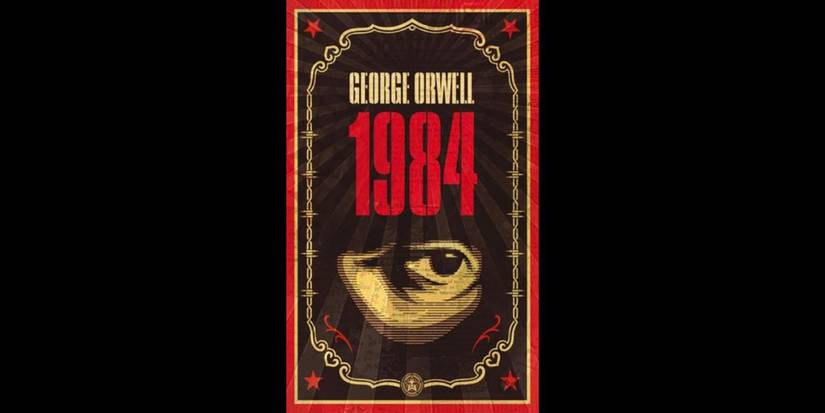
There is perhaps no dystopian sci-fi novel better-known or more influential than George Orwell's 1984, where a low-level Party worker rebels against an all-seeing totalitarian regime. But though most readers may be used to stories of rebellion against oppression that have happy endings, this is one of the most hopeless books of all time, and that's exactly why it's so timeless.
Even after 77 years since its publication, 1984 deals with themes that feel terrifyingly prescient and all-too timely to modern times. But as if its prophetic nature weren't enough, it's also an impeccably-written masterpiece, having created much of the language that people still continue to use to analyze and discuss authoritarianism, propaganda, and the surveillance state.
'Frankenstein' (1818)
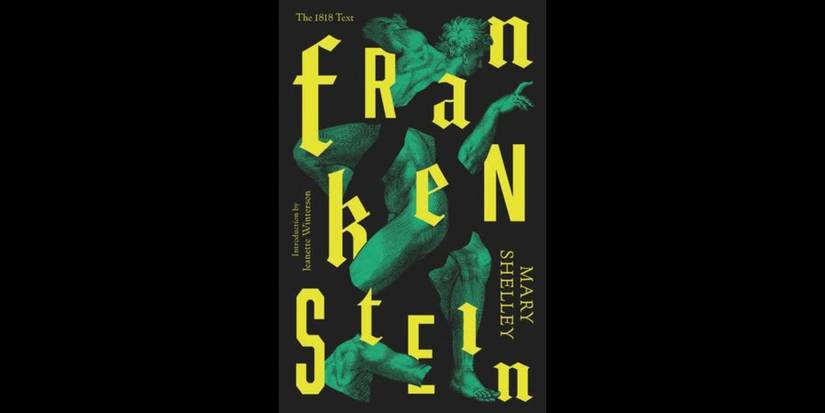
Back in 1816, an 18-year-old Mary Shelley conceived and began writing Frankenstein; or, The Modern Prometheus. Two years later, the novel was published; and thus came to be the book that historians tend to agree marks the birth of science fiction as a genre. The foundations had been laid by other authors before, but it was this story about a young scientist bringing a stitched-together corpse to life that built the first true sci-fi story ever on top of those foundations.
Indeed, Shelley is the grandmother of sci-fi, and that means that there is no science fiction book more essential for anyone and everyone to read—including those who don't tend to love the genre—than Frankenstein. It's one of those classic horror books that are still perfect in 2026, an eternally entertaining and worthwhile read whose philosophical, artistic, and psychological depth has often been imitated and adapted, but never fully matched.

Frankenstein
7 10
- Release Date
- October 17, 2025
- Runtime
- 149 Minutes
- Director
- Guillermo del Toro
- Writers
- Guillermo del Toro, Mary Shelley
-

Dr. Victor Frankenstein
-

The Monster
Dr. Pretorius attempts to find Frankenstein's monster, long believed dead, to further the scientific work started by Dr. Victor Frankenstein decades before.
KioskNews shows a cleaned-up reading view extracted from the publisher’s page — the original always lives on their site, not ours.