Fairfax's $6 Billion IDBI Bank Deal Signals Zest For India's Assets
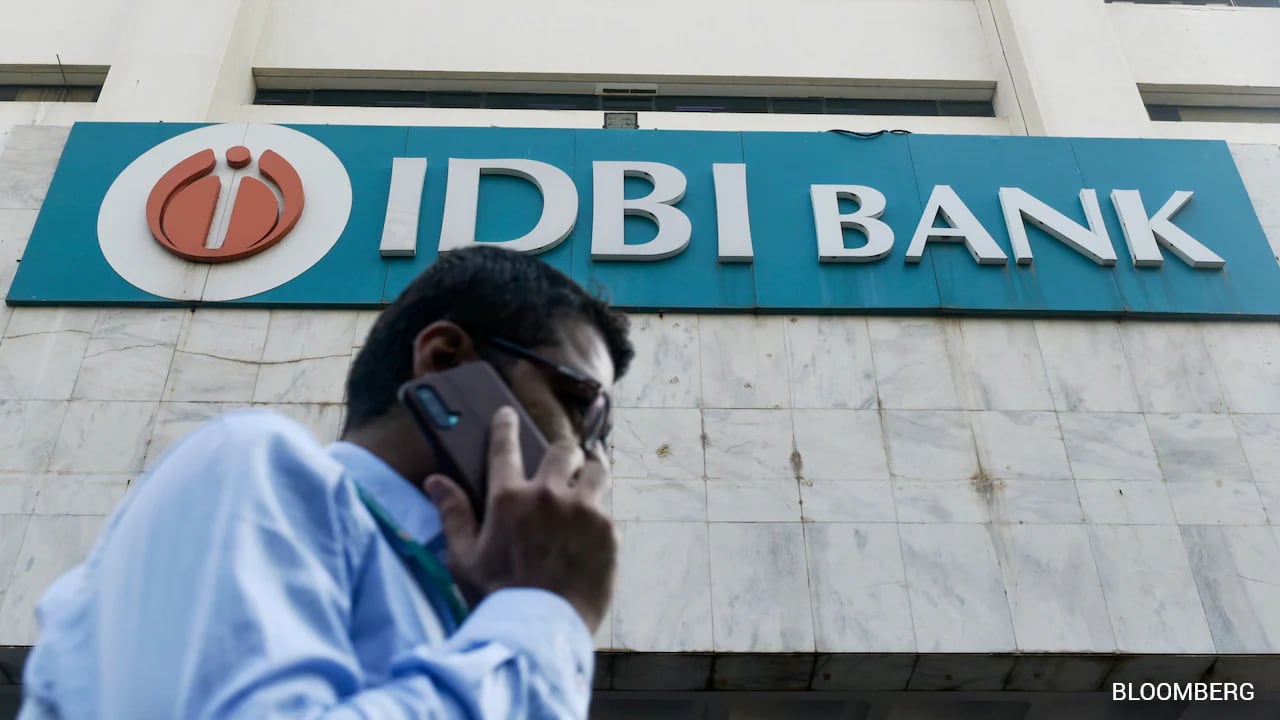
India's sale of a controlling stake in IDBI Bank Ltd. to Canada's Fairfax Financial Holdings Ltd. for nearly $6 billion helps jump-start the South Asian country's push to reform its banking sector and shows the potential for more dealmaking in its rapidly growing financial industry.
The transaction, which saw Fairfax acquire a 60.7% stake in private sector lender IDBI Bank, shows how more overseas investors are seeking a foothold in one of the world's fastest-growing major economies. The deal is one of the country's biggest in the financial sector since Prime Minister Narendra Modi's government began consolidating state-run lenders in 2019.
India's financial services sector could see even more dealmaking as foreigners look to deepen their exposure, hoping for better returns. Blackstone Inc. and other private equity firms are said to be exploring a stake in shadow bank IIFL Finance Ltd. Meanwhile, Japan's Mitsubishi UFJ Financial Group Inc. is studying ways to eventually gain majority control of Shriram Finance Ltd., Bloomberg News has reported.
The interest suggests robust appetite for financial services assets as the population of wealthy citizens expands and earnings of the middle class rise. These moves could signal further stake sales, strategic partnerships and capital-raising deals in the sector, analysts say.
The dealmaking comes as PM Modi pushes for a banking system capable of supporting India's transformation into a developed economy by 2047, with policymakers considering whether the country needs fewer but much larger state-run lenders.
The idea is to tap foreign investments that bring capital, create jobs, boost productivity and strengthen India's economic growth as well as its global competitiveness.
Foreign investors' appetite for the broader financial sector has already reached a record. Deals involving overseas investors in India's financial-services industry totaled about $20.5 billion last year, according to data compiled by Bloomberg. That reflects growing conviction that the country's financial system will be one of the biggest beneficiaries of its economic expansion.
Indeed, recent earnings from Indian lenders show robust lending growth, driven by rising consumption and lower borrowing costs. Non-performing loans are at decadal lows, according to the regulator.
"In a fractured geopolitical world today, India offers growth opportunities within the economy, aided by a strong financial system," said Vivek Ramji Iyer, a partner at Grant Thornton Bharat. "It is this hypothesis, that attracts the financial services sector as an investment opportunity."
Still, such deals come with a string of challenges. IDBI Bank will need to sharpen its competitiveness against larger, better-capitalized private-sector lenders while investing in technology, customer acquisition and its branch network to sustain growth, according to analysts.
Expanding into adjacent businesses such as wealth management and other fee-generating services could help diversify revenue beyond traditional lending and improve returns for the new owner.
Shares of IDBI Bank fell as much as 6.3% Thursday. Fairfax's offer price of 81 rupees per share for IDBI Bank was about 10% below Wednesday's closing price of 90.4 rupees.
"The key challenge will be the execution of the transaction," said Amit Khurana, head of equities at Dolat Capital. "Looking at the various investments Fairfax has in India's financial sector, it will be tricky to execute the deal in a non-disruptive manner given IDBI's work culture and employee union-related issues will likely be a challenge."
Fairfax has a 40% stake in private sector lender CSB Bank Ltd. and has announced plans to own a majority stake in wealth management firm IIFL Capital Ltd. It also holds 15.12% in IIFL Finance. Under India's rules, Fairfax can hold only one bank and it will now have to weigh what to do with its CSB stake.
CSB Bank erased intraday gains to trade 1.3% lower on Thursday.
Eyes on the Prize
Nevertheless, for global financial firms, India presents a prize that is difficult to ignore: a huge under-banked population, rising incomes, rapid digital adoption and a favorable demographic dividend that is generating demand for credit, wealth management and insurance.
Foreign investors have traditionally faced a thicket of ownership restrictions, voting rights of founding firms and controlling stakeholders capped at 26%, as well as regulatory approvals when seeking control of Indian banks. Now the government is proposing increasing foreign shareholding limit in state-run banks to 49% from 20%. It has also allowed 100% foreign direct investment in the insurance sector.
Japanese and Middle East financial giants like Mitsubishi UFJ Financial and IHC Group have stepped up investments in Indian shadow lenders - that have relatively relaxed ownership and voting cap norms - betting on a credit boom in India and growing opportunities in retail and wealth management. Now the Canadians have joined the party.
India is discussing options to create large state lenders, which aligns with the government's need to fund massive infrastructure and industrial projects in Asia's third-largest economy. Currently, only State Bank of India and HDFC Bank rank among the top 100 global institutions by total assets. India is also considering ways to increase the foreign investment cap in state-run lenders to 49% from 20%.
Broadly, the string of deals come at a time when India's banking sector is undergoing a sweeping transformation, moving beyond a legacy of stalled infrastructure projects, stressed loans and uneven access to formal finance. Digital banking was still at an early stage, and lenders were grappling with the fallout of years of bad lending.
The reform cycle that followed brought a sharper recognition of bad loans, insolvency reforms, bank recapitalization, consolidation, stronger governance, wider financial inclusion and the expansion of digital public infrastructure.
By 2026, the sector had shifted from repairing balance sheets to financing a broader cycle of investment and consumption.
India's last big banking overhaul in 2019 merged 10 state-run lenders into four, helping reduce the number of state-owned banks to 12 from 27. The objective was to create institutions with greater scale, stronger balance sheets and the capacity to compete with global banks.
India should make efforts to consolidate banks in such a manner that a few big banks of equal size would be created, without compromising competition in the industry, Soumya Kanti Ghosh, group chief economic advisor of State Bank of India and a member of the prime minister's economic advisory council, wrote in a paper published in August.
(Except for the headline, this story has not been edited by NDTV staff and is published from a syndicated feed.)
KioskNews shows a cleaned-up reading view extracted from the publisher’s page — the original always lives on their site, not ours.