10 Greatest ‘Calvin and Hobbes’ Comic Strips of All Time, Ranked

Michael Block is a 14 time GLAM Award nominated writer, producer, and host of the podcast Block Talk. Throughout his time in the entertainment industry, he has worked on and off Broadway as a stage manager, written several produced plays, critiqued hundreds of theatrical performances, drag and cabaret shows, and has produced events randing from drag competitoons to variety concerts!
On Block Talk, he interviews nightlife personalities, covers the wide world of entertainment through features, ranking episodes, and recaps ALL of Drag Race, as well as Dragula and Survivor. He has interviewed hundreds of RuGirls that span the globe at DragCon NYC, DragCon LA, and DragCon UK.
In his free time, he makes one-of-a-kind jewelry and gift baskets with his mom. He is a proud member of the LGBTQ+ community.
Sign in to your Collider account
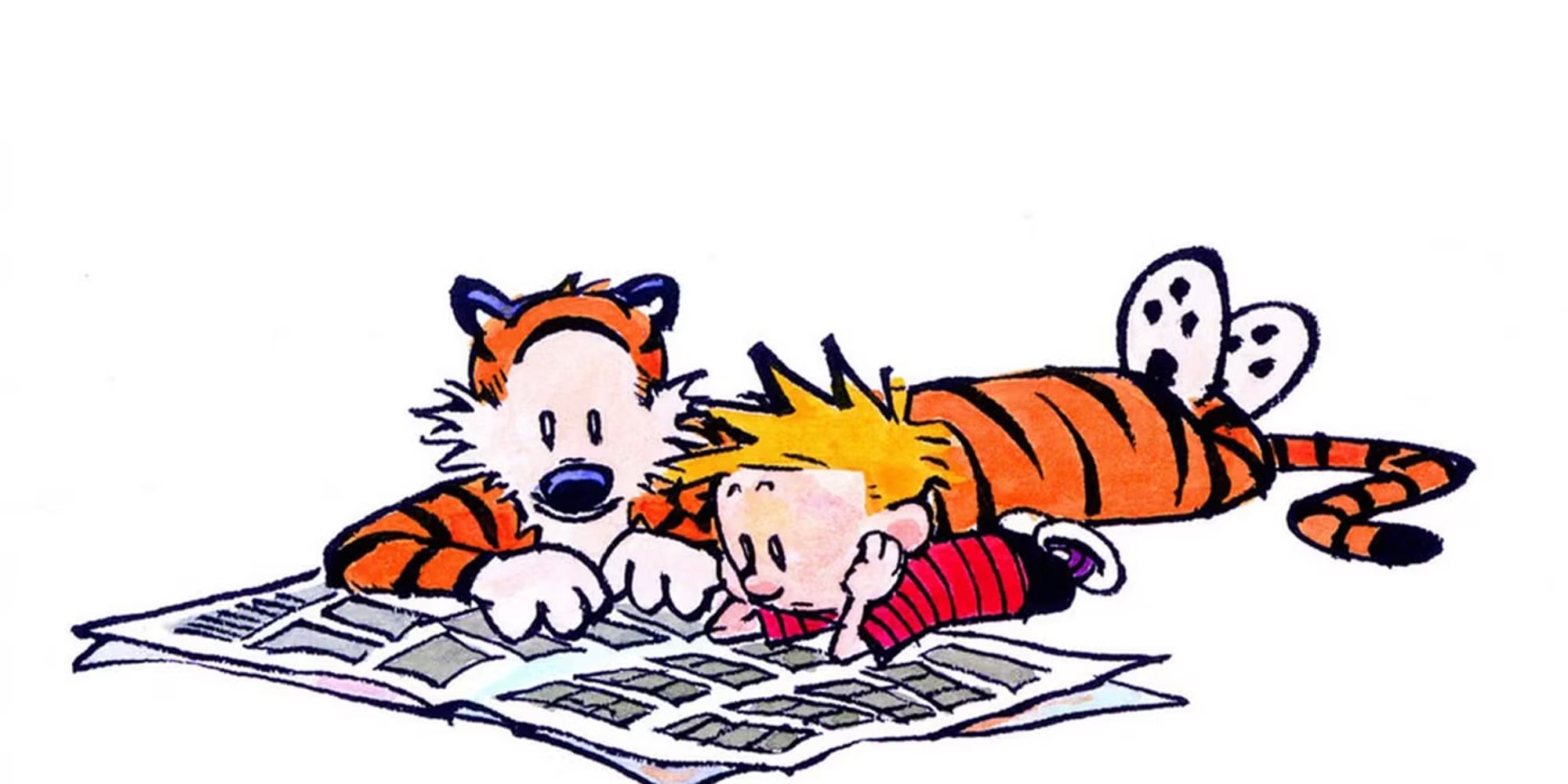
For 10 years, between 1985 and 1995, Americans woke up daily to cartoonist Bill Watterson's imaginative Calvin and Hobbes. The beloved strip follows the adventures of a mischievous six-year-old named Calvin and his wise-cracking stuffed tiger, Hobbes. In each strip, Calvin and Hobbes explore everyday life, childhood, and deep philosophical questions. Most importantly, each strip showcases the incredible bond between the two titular characters.
The brilliance of Calvin and Hobbes lies in Watterson's ability to balance deep philosophical humor with societal and environmental commentary, while keeping the characters imaginative. At its core, the ability to transform mundane objects into extraordinary things celebrates childhood innocence with an adult mindset. With over 3,000 official strips during its run, there are certainly many fan-favorite moments, but these 10 are simply the best. These strips represent a smattering of styles, moments, and eras. Though tons of other favorites could slip in, these 10 are Calvin and Hobbes at its finest.
10 The Snowmen's Death

Sometimes, Calvin and Hobbes went to dark, morbid places. Such is the case for the January 21, 1991, strip featuring Calvin and his dead snowmen. Showcasing the macabre side of Calvin's imagination, the strip portrays a grim scene in which one snowman is shown with its stomach blown open by a toy cannon blast, another features a snowman in distress, and one is shown being hanged. The punchline has Calvin's parents noting that the image has slowed traffic on their street.
The strip pushed the boundaries of a family newspaper comic by introducing pitch-black, surreal existential horror. What is usually an image of joy, the snowman tableau is anything but. The strip subverts suburban life while contrasting adult sensibilities with Calvin's inner world. By hitting with deadpan realism, the strip captures how Calvin's parents aren't necessarily concerned but display the exhausting nature of parenting a child with such a vibrant mind.
9 The First Bedtime

It's important to note the crucial firsts in the history of Calvin and Hobbes. One of the most integral firsts was the first bedtime together. Released on November 20, 1985, Calvin's dad yells at him for making all the noise, but Calvin diverts the blame to his stuffed tiger, Hobbes. Of course, he knows that's impossible; when he leaves, Hobbes pops back to life and calls out Calvin for playing the cymbals. This strip is significant because it's the first time Hobbes is officially referred to by name.
The first bedtime strip establishes Hobbes's dual reality: a stuffed toy when adults are present and a physical comfort when Calvin is alone with him. The milestone moment establishes the deep, cozy, and slightly chaotic bond between the boy and his toy. Hobbes does get the last laugh with the punchline, establishing the balance of power between the pair. Through universal childhood nostalgia, the strip captures the battle between sleep and an active imagination.
8 Calvin and Hobbes Try Out Sunglasses

Maybe you, too, were inspired to try on all the sunglasses on display because you saw Calvin do it. In the March 28, 1986, strip, Calvin is trying to look cool as he shows off a bunch of sunglasses to Hobbes. Unfortunately, Calvin's mom is not on board with the pair he picked, prompting Hobbes to say, "Grown-ups have no taste." A masterclass in visual storytelling, this strip captures the allure of color. With Calvin only appearing in the final frame, this comic's punchline is essentially just a kid having fun, making goofy faces at an imaginary tiger while trying on eccentric, colorful sunglasses.
As Calvin cycles through the various pairs of sunglasses, each frame is brought to life in a different color, representing Calvin's vantage point. It's a rare example where the visual is at Calvin's exact eye level. We see Hobbes just as Calvin does. Hobbes passes judgment for each pair, but it's Calvin's mom who puts the kabash on the fun. The sunglasses strip relies on minimalism, allowing the art to do the heavy lifting. A truly vibrant and striking strip, the color psychology — namely Hobbes calling orange "ew" — is an example of smart writing.
Collider Exclusive · 8 Questions · 2 Minutes Which Netflix Character Would Be Your Best Friend? Dustin · Emily · Wednesday · Gi-hun
Some friends drag you out of the house. Some sit with you on the worst night of your life. Netflix has written both, plus the one who tells you the truth you have been avoiding all week. Answer eight quick questions about how you actually do friendship, and find out which of them was always going to end up in your corner.
🧢Dustin(Stranger Things)
🗼Emily(Emily in Paris)
🕷️Wednesday(Wednesday)
🟢Gi-hun(Squid Game)
01
How do you usually end up making a new friend? The origin story says a lot about the friendship that follows it.
02
What is a perfect Saturday with your best friend? Friendship is mostly built out of very ordinary hours.
03
You call them at two in the morning. What happens? This is the real test of a friendship, and everybody knows it.
04
What do you want from them when you are clearly wrong? The best friendships are the ones that survive being corrected.
05
What do your friends actually value about you? The friend you attract says something about the friend you are.
06
You have a falling out. How does it go? How a friendship repairs itself matters more than how it breaks.
07
What do you actually need a best friend for? Everybody is missing something. The right friend fills that gap.
08
Ten years from now, what keeps the two of you close? Eight questions in, this is the one that decides who you get.
The Group Chat Has Spoken Your Best Friend Is…
Four Netflix characters, four completely different ways of showing up for somebody. This is the one who fits how you actually do friendship, and what having them in your life would be like.
Dustin Henderson
You do not do friendship at half volume, and neither does he. What you want is somebody who says yes to the plan before you have finished describing the plan.
- Dustin is the friend the entire show runs on: loyal past the point of sense, enthusiastic about everything, and incapable of leaving anybody behind.
- You have the same instinct. Your friendships are loud, specific and slightly ridiculous, and they last for decades because of it.
- He is also the one person who would take your strangest interest completely seriously, which is far rarer than it sounds.
- You would have a group chat. It would never once be quiet.
Emily Cooper
You are the friend who makes things happen, and so is she. Together you would be mildly exhausting to everyone around you and completely delighted with yourselves.
- Emily treats an ordinary Tuesday as something that could be turned into an occasion, which is either the best or the worst quality in a friend depending on your energy levels.
- You share her refusal to sit still. Neither of you has ever accepted a night in when something was happening somewhere else.
- She is far more loyal than people give her credit for. She defends her friends loudly, publicly, and occasionally before checking the facts.
- She would post the photo without asking. You would forgive her, because it is a very good photo.
Wednesday Addams
You have no patience for pleasant lies, and she has no ability to tell them. What looks like coldness from the outside is the most reliable friendship on this list.
- Wednesday never says a kind thing she does not mean, which makes the rare ones count for an enormous amount.
- You would rather be told the truth than be made comfortable. She is constitutionally incapable of offering you anything else.
- Underneath all of it she is ferociously protective. She simply refuses to make a performance out of caring.
- Do not expect a birthday message. Do expect her to ruin anyone who wrongs you.
Seong Gi-hun
You look after whoever is having the worst day. So does he. It is the least strategic way to move through the world and the best possible quality in a friend.
- Gi-hun is not the strongest player in Squid Game, or the cleverest. He is the one who keeps choosing to protect somebody else, over and over, at genuine cost to himself.
- You have the same instinct. You notice who is struggling and you stay with them, long after anybody would blame you for leaving.
- He is a flawed friend, and that is part of why it lands. He lets people down, then comes back and tries again, which is more than most manage.
- He would give you his last chance and never once mention that he had done it.
7 That's Our Son

Every so often, Watterson led a multi-week story arc that shared a fun, unique story. In February 1987, it focused on Calvin's school picture day. But three years later, Calvin's chaotic nature came into play. In the November 11, 1990, strip, this Hobbes-less narrative shows Calvin pulling a rapid series of wild, goofy, distorted faces before his parents proudly note, "That's our son!" Though they might be slightly embarrassed, they'll remember them nevertheless.
While the '87 picture day set was iconic, this single story represents Calvin in perfect fashion. It's hilarious, slightly grotesque, and endearing. While it captures core Calvin, it also reveals a bit more about Mom and Dad. It nails the plight parents face when trying to capture a pure moment with their child. While it doesn't go perfectly to plan, it still creates a hilarious and frustrating memory. They adore their wild child.
6 Calvinball

Our wild imaginations often invent ways to keep ourselves entertained. For Calvin and Hobbes, it was all about Calvinball. Irritated by traditional games, Calvinball is an ever-changing game of fun. Making its strip debut on May 5th, 1990, Calvin invents the game immediately after quitting his school's baseball team. As Hobbes exclaims, "No sport is less organized than Calvinball!" Calvin shares the first new rule as they engage in pure joy.
Watterson created the ultimate anti-sport. It's a rebellion against rigid team sports and a way to let those who don't enjoy typical games have the freedom to build their own. A beloved recurring segment, Calvinball is never played the same way. That said, a mask is always required. Thanks to the strip, the concept of Calvinball has been brought into the real world, both as a collegiate game and as a term for chaotic, rule-changing moments.
5 War is Stupid

Out of the mouths of babes. Sometimes, it takes a child's perspective to help us see the world differently. Such was the case in the poignant March 23, 1986 strip, "War is Stupid." The anti-war comic strip serves as brilliant social commentary on the Cold War. Right from the jump, Hobbes asks, "How come we play war and not peace?" and Calvin responds, "Too few role models." From there, Calvin plays as the "fearless American defender of liberty and democracy," and then lets Hobbes be the "loathsome godless communist oppressor." By the end of their game, Calvin realizes this is "kind of a stupid game, isn't it?"
The strip effortlessly manages to bring a deeply philosophical, highly political, and richly profound message to light. Coming at the tail end of the Cold War, Watterson masterfully exposed the pointlessness of total war through a simple children's game. Blending innocent dialogue and moments of dialogue-free introspection, "War is Stupid" is masterfully paced to allow that final panel to resonate. Though written in 1988, the strip remains incredibly timeless and universal. Especially today.
4 Virtue Needs Some Cheaper Thrills

When it comes to iconic strips, sometimes it just needs a brilliant punchline. Such is the case for the February 6, 1994 edition. When Hobbes poses the thought, "Some philosophers say that true happiness comes from a life of virtue," Calvin makes it his mission to subvert that. Calvin spends the panels trying to do the right thing, including doing chores and being well-behaved. It replaces his great desire to pelt Susie with a snowball. But when the deed is done, and his target is hit, Hobbes discovers, "Virtue needs some cheaper thrills."
The panel pokes fun at the old saying but recognizes how hard it is for children to be good when there is no fun payoff at the end. It smartly encapsulates the internal struggle of moral duty and the sheer fun of being bad. Though it may not be the best strip at teaching younger readers to do the right thing, it's exciting nevertheless. It was inevitable that Calvin would revert to his fiendish ways, but Watterson reminds readers that doing the right thing isn't always so bad.
3 Let's Go Exploring

For 10 years, Calvin and Hobbes delighted readers by bringing joy and hope while letting us think about some of the most profound philosophical questions. But it all came to an end on December 31, 1995, when Watterson released his final strip. And for some long-time fans, they believe they saved the best for last. The narrative begins with Calvin and Hobbes standing in fresh, waist-deep white snow. Calvin notes it's a fresh, clean start to the new year, to which Hobbes compares it to a big white sheet of paper to draw on. As Calvin notes, it's a "day of possibilities." They hop on their sleds and end with a beautiful parting message, "It's a magical world, Hobbes, ol' buddy. Let's go exploring."
As Watterson felt he had achieved everything he could, the final strip ended purely. It's a masterpiece of emotion, ending on a note that wasn't finite. The brilliance of the final quote is that Calvin and Hobbes will forever live on, as their imagination knows no bounds. It also reminds us to keep dreaming big. The adventures continue to go on beyond the final panel, as Calvin and Hobbes will always be in our hearts.
2 The Christmas Hug

Christmas morning often brings joy to young minds. One of the purest examples of holiday honesty is the Christmas hug, released on Christmas Day in 1985. In the strip, Calvin notes that he forgot to get Hobbes a gift or a card. Hobbes signals he didn't get Calvin anything either. Instead, he provides something sweeter: a tiger hug. In this sweet, tender moment, Calvin tries to save face by not crying; the story shows that the greatest gift is being in the company of a best friend.
A truly moving strip, the Christmas hug was an early milestone for Calvin and Hobbes, running in the first few months in syndication. While many other strips showcase the friends' chaotic antics, this one highlighted the pure nature of their bond. At the end of the day, Calvin and Hobbes is a story about a young, imaginative boy and his beloved stuffed tiger. The greatest gifts don't have to be materialistic; a deep, loving embrace can be the greatest gift of all.
1 The Baby Raccoon Story

Leave it to Calvin and Hobbes to disclose the meaning of life in a comic strip. Running throughout March 1987, one of the most poignant and philosophical explorations of mortality came in the Baby Raccoon story. The initial story begins with the duo finding an injured, near-death baby raccoon in the woods. Calvin's mom tries to care for the baby, but sadly, it is too weak and passes away. Calvin's dad buries the baby raccoon, forcing Calvin to come to terms with life's finality. As Calvin tells his father, "I'm crying because out there, he's gone. But he's not gone inside me." He'll soon come to realize that death is as natural as birth. It's part of the life cycle.
The sequence of strips was a powerful departure from the usual jokes. Instead, it's a brave, honest, heartbreaking exploration of grief and mortality through the eyes of a child. Through complete emotional honesty, there are no punchlines to be found. It's all about a young boy questioning why a harmless, innocent baby had to die. This story showcases that Calvin has compassion within. He cared deeply for an animal he barely knew, and the lingering grief changed him for good. "The Baby Raccoon" is one of the most important and intimate panels of all.
KioskNews shows a cleaned-up reading view extracted from the publisher’s page — the original always lives on their site, not ours.