Billions of Bogong moths return to Australia as El Niño threatens to spoil the comeback
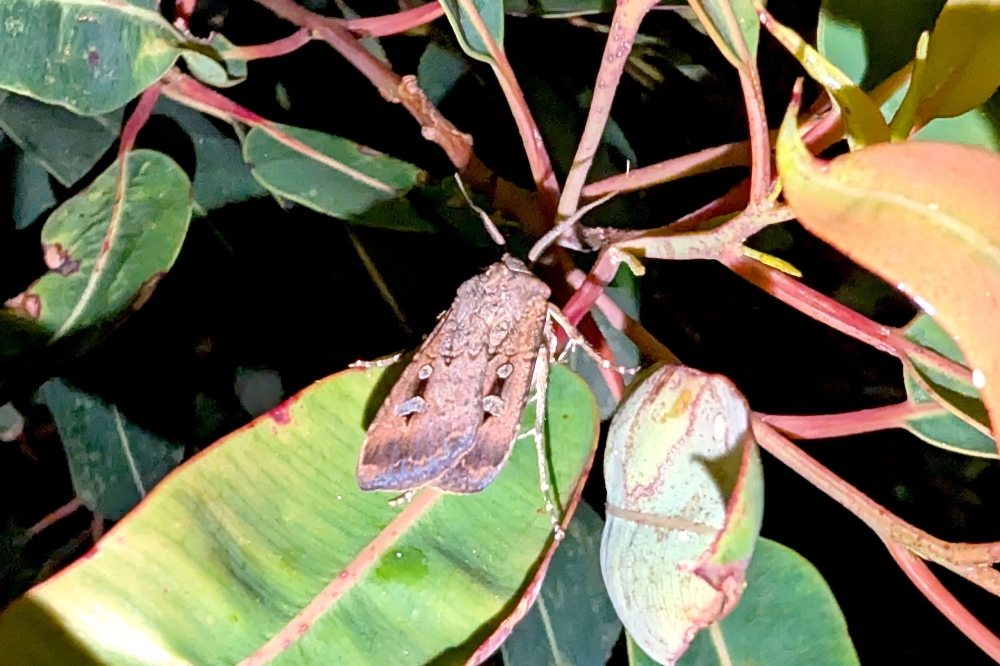

Native to Australia, a Bogong moth rests among leaves in Sydney as billions of the endangered insects return in swarms after a near-extinction event nearly a decade ago. — AFP pic
First Published: Friday, 02 Oct 2026 3:50 PM MYT
SYDNEY, Oct 2 — Moth swarms so thick they can blot out the stars are fluttering across Australia, heralding a migratory spectacle unseen since the creatures’ brush with extinction nearly 10 years ago.
The great migration of the Bogong moth was once a yearly feature of the Australian spring, the insects humming down the nation’s east coast in their billions as they searched for cooler climes.
But drought, pesticides and habitat destruction triggered an unprecedented collapse that began in 2017, eventually wiping out an estimated 99.5 per cent of the Bogong moth population.
While vast clouds of flying bugs might not be everyone’s cup of tea, scientists have been delighted to find that the Bogongs are back.
“There have been happy tears in my office because this is what nature should be,” said conservation biologist Marissa Parrott.
“People are noticing those big swarms again. They can celebrate what I think is one of nature’s great spectacles.”
In a good year, four billion moths or more would escape the inland heat to seek shelter in the alpine caves of eastern Australia.
“So many Bogong moths would come through that they could block out the stars and the moon as they went overhead,” said Parrott, from Zoos Victoria.
Photos showed how the endangered moths clustered together so densely inside their caves, it was impossible to see the rock beneath.
“They get up into the mountains and into these caves, where they make this beautiful tiling pattern,” said Western Sydney University insect researcher Eleanor Drinkwater.
“They cover the walls in this very dense mat of moths.
“They hang out there until the weather starts getting cooler, and they come back down to their breeding grounds.”
Their migration has long fascinated scientists, who have puzzled over how they found their way on a journey they only ever make once.
Celestial navigation
By placing a tether around captive moths and projecting stars on the wall, researchers last year showed how Bogongs used the Milky Way.
They were the first invertebrates – a broad group of animals including spiders, snails and worms – shown to use celestial navigation for such long trips.
Bogong moths are thought to help plants spread pollen and are also a key food source for the mountain pygmy possum, a critically endangered cave-dwelling marsupial.
“They are very, very important to Australian ecosystems,” Drinkwater said.
Drawn towards the blazing stadium floodlights, Bogong swarms caused havoc at the 2000 Olympic Games in Sydney.
Forecasters warned that heavy rain was about to drench the event’s closing ceremony — only to realise the radar had picked up a cloud of Bogongs.
While the Bogong migration continued in the years following the population crash, scientists were aghast at how few moths were making the journey.
“People described going into the caves and finding barely any moths, and just kind of being in shock,” Drinkwater said.
Researchers are still working to better understand what contributed to the Bogong bounce-back, but believe a spate of wetter weather has helped.
With a severe El Nino forecast to send temperatures soaring over summer, scientists hope the rebound is not short lived.
“It’s great they’re back, and we’re really excited they’re back,” said Drinkwater.
KioskNews shows a cleaned-up reading view extracted from the publisher’s page — the original always lives on their site, not ours.