Athlete swims in Strait of Hormuz to highlight Iran war’s impact on wildlife: Video
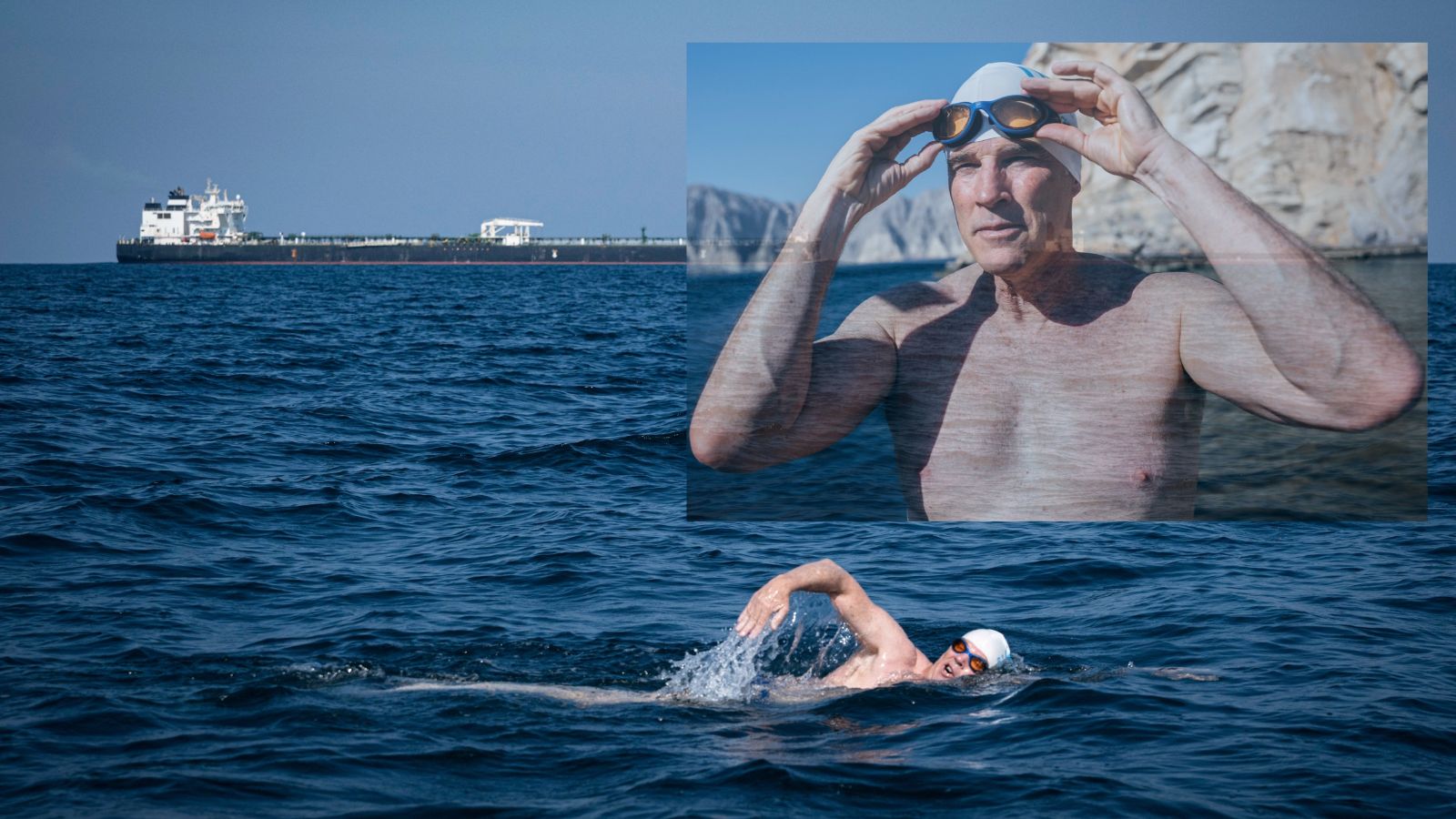
British swimmer Lewis Pugh swam parts of the Strait of Hormuz over three days to show how the Iran war threatens wildlife, saying he heard explosions and saw tankers hit minutes into the swim.
4 min readNov 22, 2026 08:32 AM IST First published on: Nov 22, 2026 at 08:32 AM IST
In this handout photo provided by the Lewis Pugh Foundation, British endurance swimmer and UNEP Patron of the Oceans Lewis Pugh dives into the Strait of Hormuz, off the Musandam Peninsula, Oman. (Photo: AP)
AI Narration
Listen
00:00
British endurance swimmer Lewis Pugh, a United Nations Patron of the Oceans, spent three days this week swimming parts of the Strait of Hormuz to show how the war with Iran threatens the area’s wildlife and habitat, Associated Press reported.
Pugh swam about 15 kilometres (9.3 miles) in total, from the Musandam peninsula to the Cape of Hormuz, while oil tankers were being attacked close by. Pugh, 56, is believed to be the first person to attempt a long-distance swim there since the war began. He says oil leaking from damaged ships could harm dolphins, turtles, coral reefs and mangroves for years.
Explosions minutes into the swim
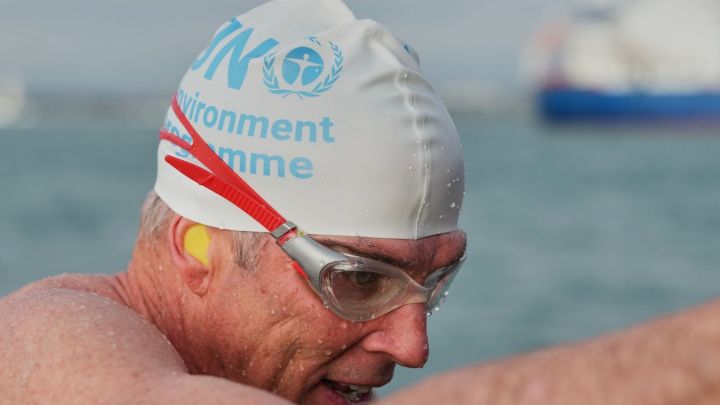
Pugh swam in trunks, goggles and a cap with the UN logo, and did the route in sections over three days. He swam for about six and a half hours in all.
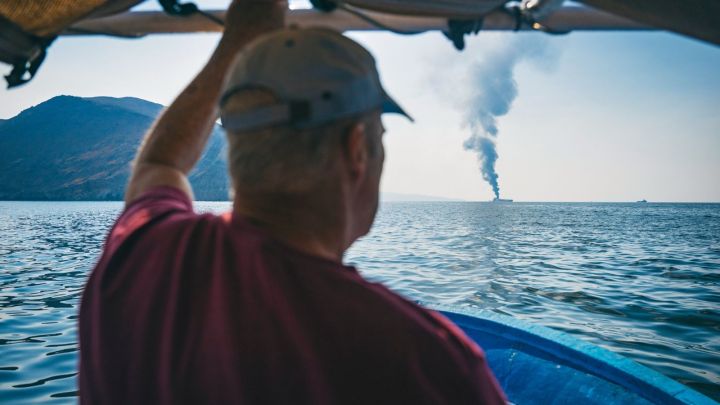
Minutes after he entered the water on Monday, November 16, he heard two loud explosions. “I looked up and I could see that an oil tanker about four kilometers away had been hit,” he told AP after returning to London. Fighter jets then flew in, and he said he knew the team had to leave at once. He later finished the swim after several stops and starts, passing another vessel that sent fireballs into the sky after an attack.
On his second day, he saw a gas carrier struck as he returned to the harbour. He described the smell of chemicals and flames shooting up, with the water around the ship on fire.
Story continues below this ad
Oil spills put wildlife and coastlines at risk
Pugh said the strait is better known as a shipping lane but is also one of the world’s natural treasures. “With all these ships being sunk, this area is under severe threat,” he said, adding that recovery could take years or decades.
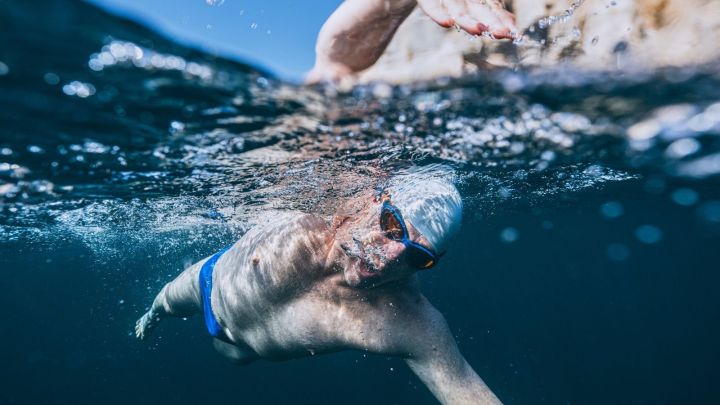
He warned that oil leaking from dozens of tankers damaged since February could cause long-term harm to animals, coastlines, coral reefs and mangrove forests. “When oil gets in there, when chemical pollution gets in there, it becomes very, very difficult to clean up that type of mess,” he said.
On the way in, he saw large groups of dolphins following his boat, along with turtles and ospreys. Before the war, he had seen hundreds of turtles during a swim along the Omani coast.
Attacks on ships in Hormuz
AP said Iran has stepped up attacks in recent weeks on vessels it says used unauthorised routes in the strait, as it tries to impose control over the waterway.
Story continues below this ad
Before the US and Israel launched the war on February 28, about a fifth of all traded oil passed through Hormuz. Several tankers have also hit sea mines laid by Tehran, and some exploded and caught fire, including one last month that was carrying more than 2 million barrels of oil.
Pugh’s record of swims for the oceans
Over 40 years, Pugh has swum in places from Antarctica to the Red Sea and the English Channel to press for stronger protection of the oceans. He was the first athlete to swim across the North Pole and to complete a long-distance swim in every ocean. In 2023, he swam all 315 miles (507 kilometres) of the Hudson River to promote clean rivers. His foundation says his swims have helped win agreements to protect more than 3.5 million square kilometres (about 1.35 million square miles) of vulnerable ocean.
Some people call his mix of swimming and political outreach “Speedo diplomacy”. “Sport opens doors, it creates dialogue,” Pugh said. His message on the Hormuz swim was short: stop the war, open the strait and clean up the pollution.
KioskNews shows a cleaned-up reading view extracted from the publisher’s page — the original always lives on their site, not ours.