The 15 Bleakest Thriller Movies of All Time, Ranked

Updated
Luc Haasbroek is a writer and videographer from Durban, South Africa. He has been writing professionally about pop culture for eight years. Luc's areas of interest are broad: he's just as passionate about psychology and history as he is about movies and TV. He's especially drawn to the places where these topics overlap.
Luc is also an avid producer of video essays and looks forward to expanding his writing career. When not writing, he can be found hiking, playing Dungeons & Dragons, hanging out with his cats, and doing deep dives on whatever topic happens to have captured his interest that week.
Sign in to your Collider account
The thriller is among the most atmospheric and haunting genres in cinema, to the point where levity is scarce and often non-existent. Indeed, thrillers aren't known for their cheerfulness, but even by the standards of the genre, the movies on this list are dark. They don't comfort you; they don't offer justice; they leave you in silence, staring into the void, unsure whether anything good will ever happen again.
These thrillers are the bleakest of the bleak, stories where violence doesn't redeem and where the bad guys don't always get caught. Moral decay, corruption, lack of faith, and an overall sense of doom are all common themes in these pictures, but it's all in service of a great story. Each of the films below is a masterclass in dread, some of them touching on fascinatingly grim philosophical ideas.
15 'Wild at Heart' (1990)

Wild at Heart is the most disturbing of David Lynch’s films because it is the one that has the least presence of hope. While Twin Peaks: Fire Walk With Me has just as much graphic content, Wild at Heart lacks a redeeming character like Laura Palmer (Sheryl Lee); it's a warped, surrealist slant on the “Bonnie and Clyde” story that also includes some of Lynch’s most direct allusions to The Wizard of Oz, a classic with its own dark history.
Wild at Heart lacks the humor of even something like Blue Velvet, which has its moments of satire, and it explores a subsection of Americana that Lynch sees as hopeless. It’s notable as being the last film that Lynch made before Twin Peaks, which was arguably the most commercially successful project that he ever worked on (despite being just as weird). —Liam Gaughan
14 'Miracle Mile' (1988)

Miracle Mile is a film that specifically resonates within the year it was released because it explored a fear of nuclear war that was peaking in the late ‘80s during the very end of President Ronald Reagan’s administration. Nuclear anxiety had been a factor in American culture ever since the end of World War II, but the reality felt even closer during the end of the Cold War; Miracle Mile was unique in how it explores the step-by-step process of what it would be like to be in the midst of a nuclear threat, and what sort of decisions someone would have to make in order to avoid the inevitable.
Miracle Mile is perhaps most disturbing because of the portrayal of fear and confusion, examining how humanity would fall upon its worst impulses during a time when there is no desire for empathy. —Liam Gaughan
13 'Chinatown' (1974)
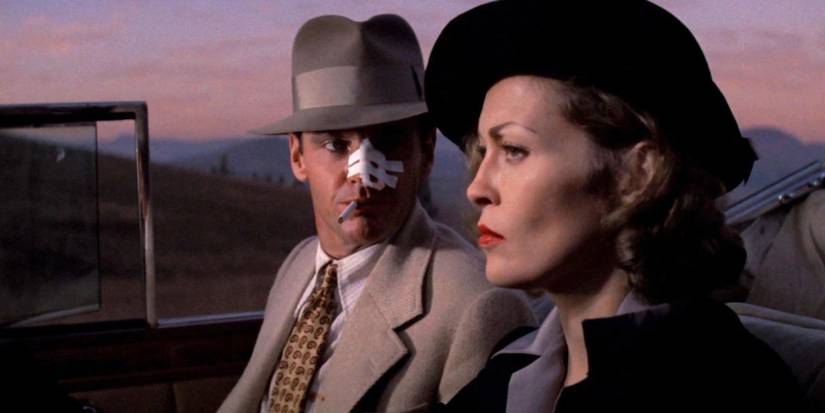
Chinatown has one of the greatest screenplays ever written, and one that alludes to a real tragedy while also condensing the history of Los Angeles into a potent punch in the gut. Screenwriter Robert Towne poured extensive research into studying the corruption of the city’s water supply, and crafted one of the most unforgivable screen villains of all time in Noah Cross, played by acclaimed director John Huston in a subversive role.
Chinatown had a very difficult production that has been well-documented as being one of the most infamous of the “New Hollywood” era, but the result was a timeless classic that ends in the bleakest way imaginable. Although the line “forget it Jake, it’s Chinatown” has now become well-known by pretty much everyone, it has far more impact for those who have seen the film and who understand the context. —Liam Gaughan
12 'Prisoners' (2013)

"Every day, she's wondering why I'm not there to rescue her. Do you understand that? Me, not you. Not you, but me!" Prisoners marinates in despair. When two young girls vanish, their parents unravel. Hugh Jackman plays a father so desperate he turns to torture, convinced a quiet young man (Paul Dano) knows more than he says. Opposite him, Jake Gyllenhaal plays the detective trying to hold the center as everything else breaks.
Through these three men, Denis Villeneuve traps the entire film in a cold, gray purgatory, where hope curdles into obsession and good men do terrible things. There are no easy answers here; every lead hits a dead end, every moral line blurs. The cinematography, by Roger Deakins, feels almost haunted, like the world itself is mourning. And the final scene, a wordless cry from beneath the ground, lingers like a wound. For all these reasons, Prisoners is an endurance test for the characters and us.
11 'Zodiac' (2007)
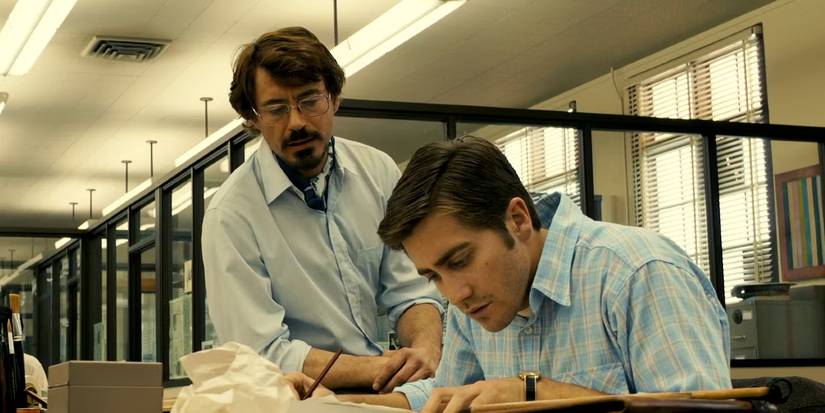
"I need to know who he is. I need to stand there, I need to look him in the eye, and I need to know that it's him." Zodiac has no jump scares, no climactic chase, and no final confrontation with a killer. Instead, there's just the slow spread of obsession. Spanning decades, the film charts the real-life investigation into the Zodiac Killer, who taunted police and the media with cryptic letters and was never caught. Here, David Fincher builds tension not from action, but from the awful weight of time, the way unanswered questions fester and grow.
All the main characters get caught up in the search, but Gyllenhaal's cartoonist-turned-amateur-sleuth becomes truly consumed, sacrificing his marriage and his peace of mind for a truth that might not exist. No matter how hard he searches, the killer remains a shadow, always just out of reach. The horror comes not from what we don't know, but from what we'll never know.
10 'The Vanishing' (1988)
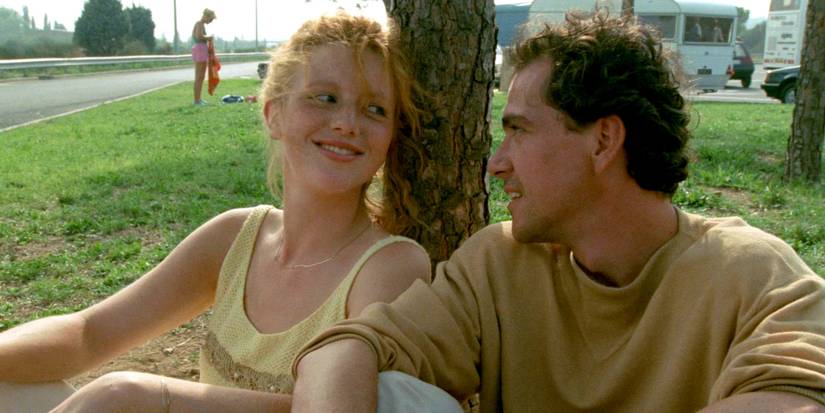
"Where is she?" This Dutch masterpiece begins with a disappearance and ends with a soul-crushing revelation. A woman (Johanna ter Steege) vanishes at a rest stop, and her boyfriend (Gene Bervoets) searches obsessively. Years pass; the audience learns what happened, but he does not. This unusual expositional style and structure create an interesting tension. Still, the film's real impact lies in its cold detachment: no flashy aesthetics, no music cues, no violence played for shock.
Eventually, the man meets the kidnapper (Bernard-Pierre Donnadieu), who calmly explains what he did and why. The boyfriend is given a choice: if he truly wants to know what happened to her, he must experience it himself. And he agrees. From here, the story veers into truly grim territory, and the final image is among the most gutting in cinema. In other words, The Vanishing is a horror movie in disguise, a psychological autopsy that slices without mercy.
9 'Henry: Portrait of a Serial Killer' (1986)

"It's always the same, and it's always different." Henry is not a cat-and-mouse thriller. There's no detective on the killer's tail. In fact, there isn't a clear story arc at all. It's just Henry (Michael Rooker), a soft-spoken drifter who kills without anger or pleasure, only vacancy. We follow him through seedy apartments and nameless alleys, watching him murder with chilling detachment. The violence is ugly, often implied rather than shown, but that only makes it worse.
We're made to sit in the aftermath, watching TV over a corpse or tossing bodies in a river. Henry is less about crime than about the absence of meaning in a world where some people feel nothing at all. Worse still, this aspect of Henry was loosely inspired by real killers. The final scene, involving a suitcase and a quiet drive, may be the single bleakest ending of any serial killer film ever made.
Collider Exclusive · Oscar Best Picture Quiz
Which Oscar Best Picture
Is Your Perfect Movie?
Parasite · Everything Everywhere · Oppenheimer · Birdman · No Country
Five Oscar Best Picture winners. Five completely different visions of what cinema can be — and what it can do to you. One of them is the film that was made for the way your mind works. Ten questions will figure out which one.
🪜Parasite
🌀Everything Everywhere
☢️Oppenheimer
🐦Birdman
🪙No Country for Old Men
01
What kind of film experience do you actually want? The best movies don't just entertain — they leave something behind.
02
Which idea grabs you most in a film? Great films are driven by a central obsession. What's yours?
03
How do you like your story told? Form is content. The way a story is shaped changes what it means.
04
What makes a truly great antagonist? The opposition defines the protagonist. What kind of opposition fascinates you?
05
What do you want from a film's ending? The final note is the one that lingers. What do you want it to sound like?
06
Which setting pulls you in most? Where a film takes place shapes everything — mood, stakes, what's even possible.
07
What cinematic craft impresses you most? Every great film has a signature — a technical or artistic element that makes it unmistakable.
08
What kind of main character do you root for? The protagonist is the lens. Who you choose to follow says something about you.
09
How do you feel about a film that takes its time? Pace is a choice. Some films sprint; others let tension accumulate slowly, deliberately.
10
What do you want to feel walking out of the cinema? The best films leave a mark. What kind of mark do you want?
The Academy Has Decided Your Perfect Film Is…
Your answers have pointed to one Oscar Best Picture winner above all others. This is the film that was made for the way your mind works.
Parasite
You are drawn to films that operate on multiple levels simultaneously — that begin in one genre and quietly, brilliantly migrate into another. Bong Joon-ho's Parasite is a film about class, desire, and the architecture of inequality that manages to be darkly funny, deeply suspenseful, and genuinely shocking across a single extraordinary running time. Your instinct is for cinema that hides its true intentions until the moment it's ready to reveal them. Parasite is exactly that — a film that rewards close attention and punishes assumptions, right up to its devastating final image.
Everything Everywhere All at Once
You want it all — and this film gives you all of it. The Daniels' Everything Everywhere All at Once is one of the most maximalist films ever made: action comedy, multiverse sci-fi, family drama, existential crisis, and a genuinely earned emotional core that sneaks up on you amid the chaos. You are someone who responds to ambition, who doesn't want cinema to choose between being entertaining and being meaningful. This film refuses that choice entirely. It is overwhelming by design, and its overwhelming nature is precisely the point — because the feeling of being crushed by infinite possibility is exactly what it's about.
Oppenheimer
You are drawn to cinema on a grand scale — films that understand history not as a backdrop but as a force, and that place their characters inside that force and watch what happens. Christopher Nolan's Oppenheimer is a film about the terrifying gap between what we can do and what we should do, told with the full weight of one of the most consequential moments in human history behind it. You want your films to feel important without feeling self-important — to earn their ambition through sheer craft and the gravity of their subject. Oppenheimer does exactly that. It is enormous, complicated, and refuses easy comfort.
Birdman
You are drawn to films that foreground their own construction — that make the how of the filmmaking part of the what it's about. Alejandro González Iñárritu's Birdman, shot to appear as a single continuous take, is cinema examining itself through the cracked mirror of a fading actor's ego. You respond to formal daring, to the feeling that a film is doing something that probably shouldn't be possible. Michael Keaton's performance and Emmanuel Lubezki's restless camera create something genuinely unlike anything else — a film that is simultaneously about creativity, relevance, self-destruction, and the impossibility of ever truly knowing if your work means anything at all.
No Country for Old Men
You are drawn to cinema that trusts silence, that refuses to explain itself, and that treats dread as a form of meaning. The Coen Brothers' No Country for Old Men is a film about the arrival of a new kind of evil — implacable, arbitrary, and utterly indifferent to the moral frameworks we use to make sense of the world. It is one of the most formally controlled films ever made, and its controlled restraint is what makes it so terrifying. You want your films to haunt you, not comfort you. You are not interested in resolution if resolution would be dishonest. No Country for Old Men is honest in a way that most cinema never dares to be.
8 'Se7en' (1995)

"What's in the box?" Fincher strikes again. Se7en is structured like a detective story, but it ends as a sermon, a brutal, biblical condemnation of modern sin. Two cops (Brad Pitt and Morgan Freeman) chase a killer who stages grotesque murders based on the seven deadly sins. The crimes escalate, the killer turns himself in, and then comes the twist. The bleakness here is in the movie's philosophy: Its central idea is that the world is broken, and trying to fix it only proves the point.
John Doe (Kevin Spacey) is the embodiment of this worldview, both villain and prophet. His plan is meticulous, and his final act, envy and wrath, turns Pitt's character into both victim and accomplice. Se7en's final shot — a shattered man being driven away as Freeman quotes Hemingway — is pure despair. With scenes like this, Se7en doesn't ask if evil can be defeated; it asks if it even matters, and then it leaves you there, in the rain.
7 'The Pledge' (2001)

"I made a promise. I made a promise." With thematic parallels to Zodiac, The Pledge is about a detective who can't let go of a case, even when he should. Jack Nicholson is Jerry Black, a retired cop who swears to a grieving mother he'll find her daughter's killer. But the deeper he dives, the further he drifts from reality. Jerry becomes convinced he's found the killer and even uses a single mother and her child as bait, but the killer never comes, the trap never springs, and Jerry loses everything: His job, his love, his mind.
This is a film that dismantles the classic thriller arc and replaces resolution with ruin. Sean Penn directs everything with a deft, unsparing touch. The final scenes, in particular, are almost unbearable. They show a broken man muttering to himself in a gas station parking lot, abandoned by everyone. It adds up to one of the cruelest and most honest deconstructions of crime-fighting heroism ever filmed.
6 'Nightcrawler' (2014)

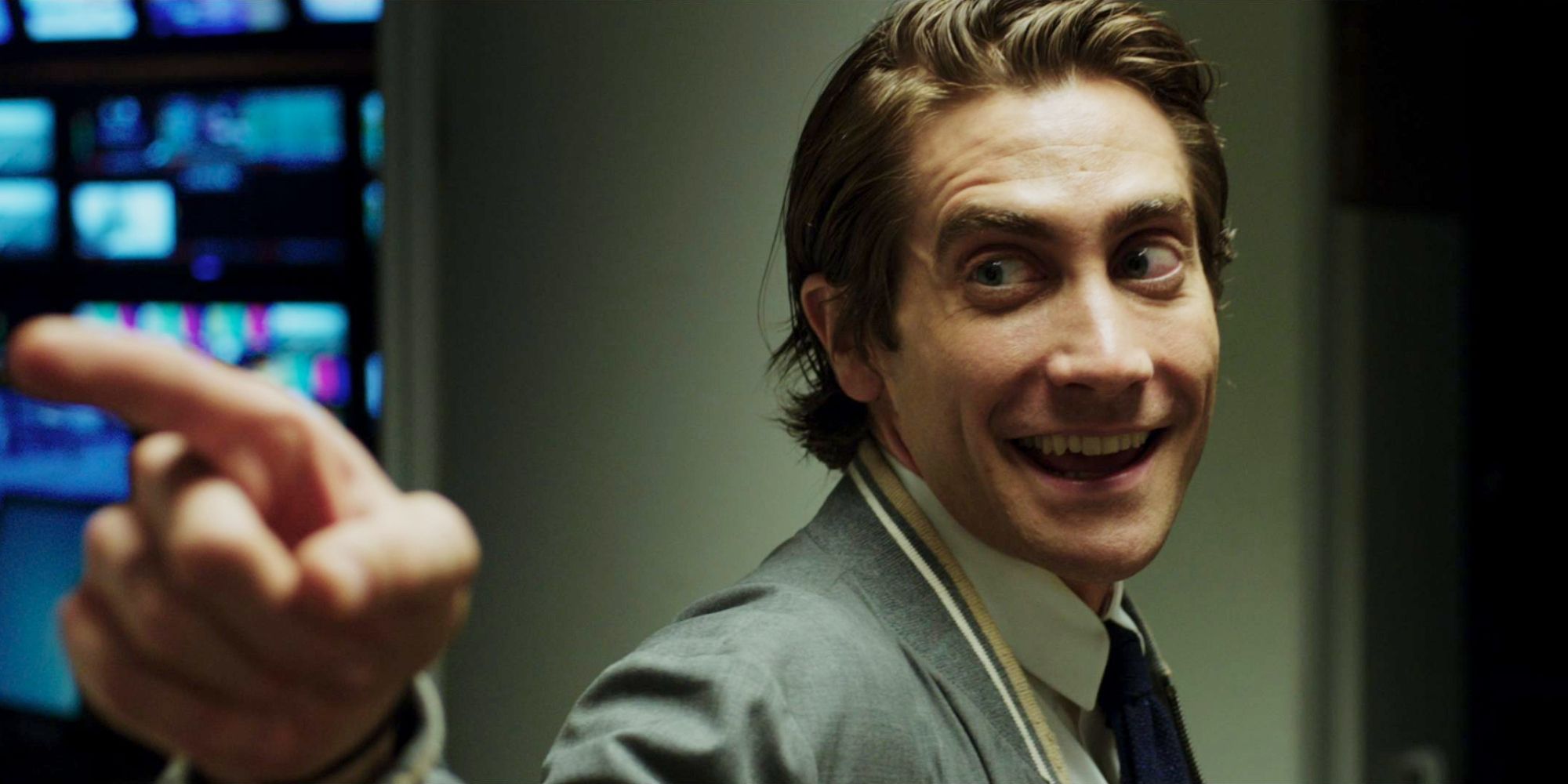
"If it bleeds, it leads." Nightcrawler shows us a world where ambition has no bottom. Gyllenhaal returns in a very different mode, turning in a chilling performance as Louis Bloom, a wide-eyed sociopath with a thousand-yard stare and an unnerving smile. He discovers that filming late-night crimes for local news is both profitable and thrilling. He gets the footage no one else can, because he has no shame. Lou manipulates scenes, stages accidents, and lets people die, all in pursuit of the perfect shot.
Worse still, this plan works out well for him. The movie ends not in Lou's comeuppance but in his promotion. Thematically, Nightcrawler is pitch black, showing us the news cycle as a meat grinder where suffering becomes content. In this world, monsters don't hide; they build brands. These ideas arguably resonate even more today than they did on release. Now, politicians and pundits everywhere are turning real pain into fodder for their ambitions and profit.
KioskNews shows a cleaned-up reading view extracted from the publisher’s page — the original always lives on their site, not ours.