This Sci-Fi Cult Classic Was Officially Cancelled for Costing $1 Million Per Episode

Kelcie Mattson is a Senior Features author at Collider. Based in the Midwest, she also contributes Lists, reviews, and television recaps. A lifelong fan of niche sci-fi, epic fantasy, Gothic horror, elaborate action, and witty detective fiction, becoming a pop culture devotee was inevitable once the Disney Renaissance, Turner Classic Movies, BBC period dramas, and her local library piqued her imagination.
Rarely seen without a book in one hand and a cup of coffee in the other, Kelcie explores media history (especially older, foreign, and independent films) as much as possible. In her spare time, she enjoys video games, amateur photography, geeking out over music, and attending fan conventions with her Trekkie family.
Many television series have been cancelled before they could fulfill their potential, with low ratings usually taking the blame for their unfortunate fate. Failing to capture audience interest was never quite the problem for Farscape. The reasons behind the science fiction show's controversially abrupt ending were more complicated than diminishing returns – not unlike how the show itself evolved into an underrated yet landmark genre work. The brainchild of Rockne S. O'Bannon and Brian Henson, Farscape became one of Syfy's — then known as the Sci-Fi Channel — flagship programs of the early 2000s.
At the time, networks still favored episodic programming; a new threat emerged each week, and characters often remained relatively static, with the consequences of their experiences and decisions rarely determining future plots. Audiences could drop in at almost any moment without needing seasons' worth of backstory, but the ease of that hook lacked tactile emotional heft. Farscape's rule-breaking approach — serialized genre storytelling, cinematic production, galactic-sized stakes, and a group of charmingly flawed antiheroes led by a wisecrack-a-minute protagonist — earned the space opera a devoted fan base (including none other than Superman and Guardians of the Galaxy director James Gunn) and cemented its legacy as a gutsy, eccentric, and electrifying cult classic.
O'Bannon, Henson, and Syfy all shared plans for a fifth and concluding season, with Syfy announcing Seasons 4 and 5 as a joint two-season renewal. However, before the fourth season wrapped filming, the news every creator dreads struck like a sledgehammer: despite those previous plans, Farscape wouldn't return for Season 5. Although the resulting outcry prompted Syfy to explain its rationale with in-depth statistics, the reasons weren't entirely traditional. Farscape's slight decline in ratings played a role in its untimely end, but the astronomical production costs required to realize its ambitious vision combined with a lack of financial patience ultimately proved to be its downfall.
Why Was 'Farscape' So Expensive To Make?

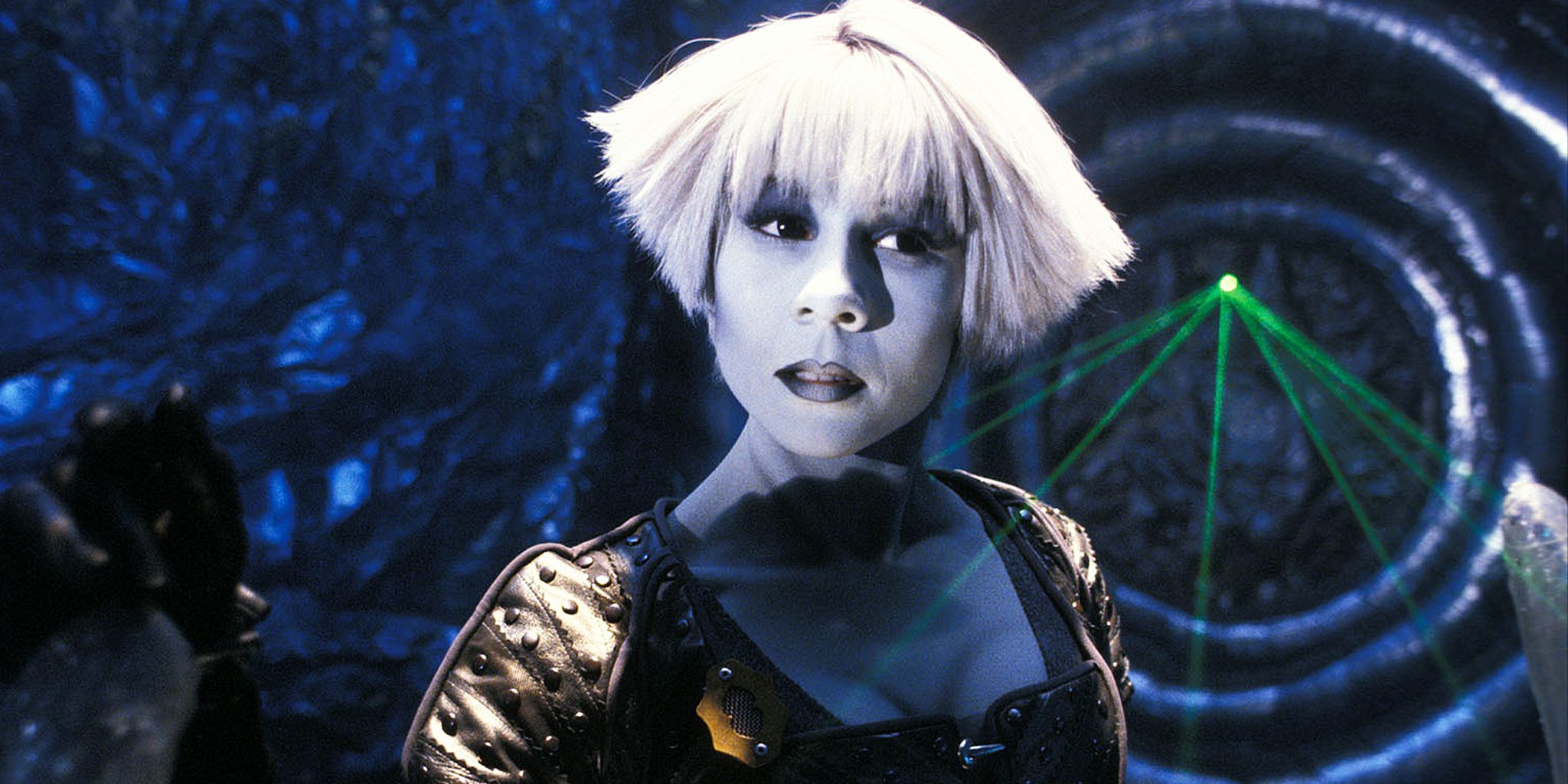
Farscape was filmed in Australia as a co-production between the Jim Henson Company, Hallmark Entertainment, and Australia's Nine Network. Like other sci-fi sagas following in the Star Trek franchise's footsteps, the series unfolds in a distant part of the galaxy, thanks to a wormhole snapping up Earth-based astronaut John Crichton (Ben Browder) and spitting him back out into an uncharted corner of the Milky Way. The lone human everyman among a bunch of escaping criminal aliens — all stuck aboard a living symbiotic ship, no less — finds himself targeted by hostile extraterrestrials with agendas of their own. Meanwhile, all the overwhelmed Crichton wants is to avoid trouble and return home.
Although its increasingly fearless choices retained ardent fans and immense critical acclaim across its first three seasons, Farscape's viewer numbers dipped during its fourth season. Simultaneously, its production costs rose "between seasons 3 and four," according to Syfy's official FAQ page, clarifying why the cable network chose to rescind the promised fifth season. Before the correlating ratings drop and budget rise, "the cost-benefit ratio was far more equitable — Farscape was the highest rated original series on the Channel and it consistently performed well." Circa Season 4, "Farscape was failing to meet its advertising estimates and its continuation for a full 22-episode fifth season no longer made financial sense."
That per-episode budget surpassed $1 million, as reported by the Chicago Tribune. Compared with today's biggest streaming productions, $1 million per episode might no longer sound especially astronomical. For an ambitious cable science-fiction series in the early 2000s, however, it amounted to a fortune, particularly when advertisers weren't receiving the revenue results they wanted. After striving to find a feasible way to complete the series, including — as stated by the FAQ page — "an aggressive pursuit of a shortened 13-episode season 5" that was guaranteed "to incur [Syfy] significant financial penalties," Syfy deemed Farscape's expenses too high to sustain for even an abridged season. During a 2018 retrospective with Syfy Wire, O'Bannon also cited complications with the "German investors" who had recently purchased the Jim Henson Company:
"As I understand it, the Sci Fi Channel kind of just as a negotiating ploy, to see if there was some wiggle room on the licensing fee for Season 5, had said in that case we'll just cancel it, and the German company leapt on that because they didn't want to have to deficit another season of a show that wasn't an inexpensive show."
'Farscape's Budget Limitations Couldn't Keep Up With the Sci-Fi Series' Ambition
Farscape's finances might have inadvertently cost (no pun intended) the series its concluding season, but even though the show's expensive puppetry and grand scope made it difficult to sustain financially, no one can argue against the investment. Farscape helped pioneer a dramatic structure that few other series were courageous enough to risk tackling. These techniques — especially the series' immersive visual texture and increasingly twisty narrative — are now commonplace in almost any modern series. Similar to Star Trek and Babylon 5, Farscape's logistics required a revolving array of freshly built sets and on-location landscapes, but went several steps further with grand space battles combining models, stunts, and CGI, and the most distinct aspect of all: the Jim Henson Company.
Suspension of disbelief about aliens and interstellar travel is one thing, but recurring puppet characters are another. No one randomly tuning into Farscape one weeknight expected two puppets to be part of the series' main cast, nor for said puppets to make fart jokes, have sex, and reduce viewers to tears courtesy of the puppeteers' remarkable performances.
Yet expectations and traditions never stopped Farscape. The series' modus operandi was crafting a genre epic where the universe's vast grandeur reflected the operatic stakes of its character-driven narrative. Television's default episodic style didn't entirely eliminate character growth, but it certainly suppressed its potential. Farscape prioritized serialized arcs that built upon past seasons and developed emotional throughlines. The crew's piercing vulnerabilities and unappealing, yet dramatically rich, fallibility informed their future arcs, decisions held lasting consequences, and Crichton's planet-shattering, star-crossed romance with Aeryn Sun (Claudia Black) defied the traditional will-they-won't-they trope — an allure designed to keep viewers tuning in, but which often sacrifices the payoff necessary to make the emotional engagement satisfying. Farscape broke the rules and soared because of it.
However, the cumulative effect of its multi-tiered ambition caught up with it. As much as it's crucial that we champion artistry over profit, the film and television industry is also a business. Conversely, that business comes with its own cost: finite resources and conglomerate shareholders limiting individual creativity. In 2003, Farscape's distressing yet somewhat understandable cancellation left the cast, crew, and fans alike with a brutal cliffhanger that might have become one of television's most devastating conclusions, if a kinder fate hadn't later intervened on Farscape's behalf.
The Season 4 finale, titled "Bad Timing" (a nod to the cancellation), sees Crichton prevent an intergalactic war by sacrificing his one chance to return to Earth. But the tumultuous life he's spent years creating with his shipmates-turned-found-family has found a light at the end of the tunnel: Aeryn is pregnant with their son. Elated, Crichton proposes. Moments after Aeryn accepts, an unknown enemy craft blasts the lovers into countless crystalline shards. Even though everyone suspected Farscape's days were over, the episode's final frame includes a "To Be Continued" text overlay — a challenge to Syfy as much as a statement emphasizing the audacious narrative intent that defined Farscape.
'Farscape's Final Fate Defied the TV Odds
John and Aeryn might resign themselves to their temporary deaths during their last seconds, but their friends' gut-wrenching screams accurately summarized the viewers' distress. The "Scaper" fan community used the powers of the internet to their advantage through their "Save Farscape" website and the magic of email. The online world wasn't in its infancy, nor were fan-driven letter-writing campaigns rallying behind a cancelled series a new phenomenon. But in Farscape's case, internet services boasted nowhere near the literal bandwidth to which we're now accustomed. Syfy's inbox couldn't keep up with the thousands of emails advocating for the conclusion Farscape deserved. (In fact, fans even took it upon themselves to mail in their bras to the corporate headquarters to get executives' attention.)
Although the fan response didn't allow the crew to fulfill their full vision, it played a part in securing 2004's follow-up miniseries, Farscape: The Peacekeeper Wars. Henson, O’Bannon, and executive producer/writer David Kemper crammed the majority of their full-season plans into three hours. Unsurprisingly, The Peacekeeper Wars is a rushed and flawed resolution that, nevertheless, remains a far cry better than the established alternative. From inception to production, Farscape was always a series that defied the odds. Its ultimate fate did the same, stumbling from dismay and tragedy to a happier ending thanks to grit, stubbornness, heart, and lightning-in-a-bottle luck.
KioskNews shows a cleaned-up reading view extracted from the publisher’s page — the original always lives on their site, not ours.