Event Horizon’s Rotten Tomatoes Score Doesn’t Reflect Its Status As A Sci-Fi Horror Classic
Event Horizon’s RT Score Is A Lie, And 29 Years Later It’s Finally Getting The Respect It Deserves

Sky Blanton is a Movie Contributor at ScreenRant with professional experience covering movies, television, and pop culture. Her published work spans news, interviews, features, and opinion pieces, with a focus on film, franchise storytelling, and the entertainment industry.
She earned her bachelor's degree in Communications with a concentration in Professional Writing and a minor in Business Writing from Southern New Hampshire University.
It is difficult to look at Event Horizon’s 36% Rotten Tomatoes score and reconcile it with the movie people have spent nearly three decades obsessing over. This is the film where a rescue crew finds footage of the Event Horizon’s missing passengers tearing each other apart as a distorted voice warns, “liberate tutemet ex inferis.” Its gravity drive has opened a gateway beyond known space, and the crew gradually realizes that whatever happened during the ship’s seven-year disappearance may have come back with it.
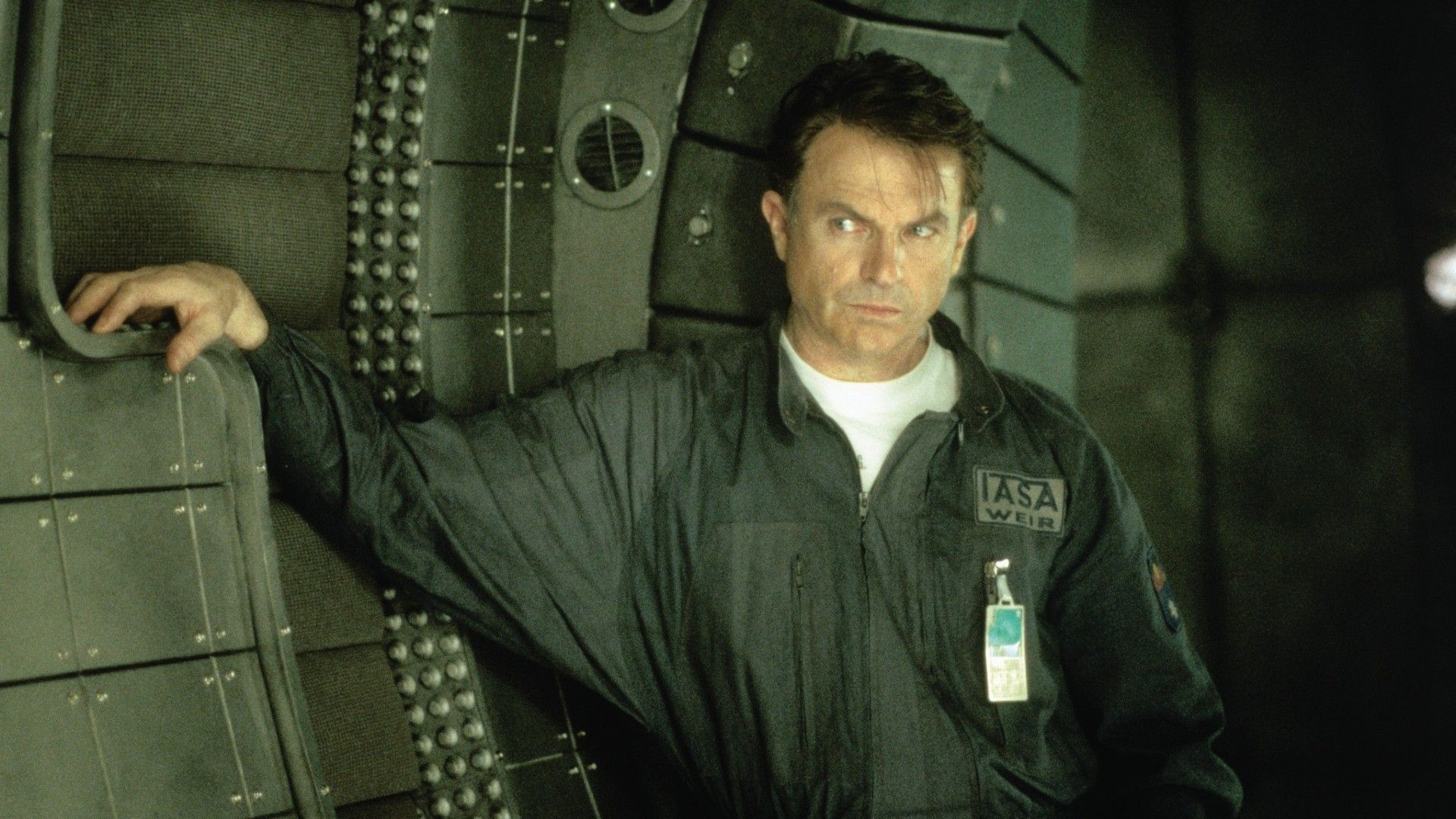
Critics in 1997 were far less impressed. Many dismissed Event Horizon as a bloody, derivative sci-fi horror movie, and audiences did not rescue it at the box office. It earned about $42 million worldwide against a reported $60 million budget. Yet some of the moments once written off as gratuitous became the ones fans remember best. Dr. Weir standing before the crew with his eyes gone and declaring, “Where we’re going, we won’t need eyes to see,” has long since outlived the reviews that buried the movie.
That 36% looks stranger the further Event Horizon gets from 1997. Its cathedral-like interiors, infamous lost footage, horrifying glimpses of the original crew’s fate, and refusal to reveal exactly what exists beyond the gravity drive still give viewers plenty to argue about. What was dismissed as a grim Alien knockoff became one of the most recognizable cult sci-fi horror movies of the ’90s. Twenty-nine years later, Event Horizon has earned a reputation its Rotten Tomatoes score still does not reflect.
What Critics Said About Event Horizon At The Time

When Event Horizon hit theaters in 1997, the criticism went well beyond its gore. Many thought they had seen too much of it before. The Washington Post’s Stephen Hunter argued that Alien had already covered much of the haunted-spaceship territory, then criticized Event Horizon for burying its story under noise and gore. He was also unimpressed by what the film eventually revealed about the force aboard the ship.
Roger Ebert had a similar problem, although he was much more enthusiastic about what worked. He praised the detailed spacecraft, convincing technology, and creepy atmosphere, even writing that the opening drew him closer to the screen. His problem was what came afterward. Ebert argued there was not enough substance beneath the style and compared the crew’s hallucinations to Solaris, where similar ideas were explored more deeply instead of primarily being used for scares.
Kenneth Turan of the Los Angeles Times was also very critical of the violence, arguing that the movie repeatedly used its technical skill to repulse and overwhelm its audience. Still, he praised its special effects and model work. Even the harsher reviews found things to praise in Event Horizon. The problem was that most critics thought its atmosphere and visuals were buried beneath too much gore and a story that borrowed too heavily from other sci-fi horror films.
Why They Were Wrong

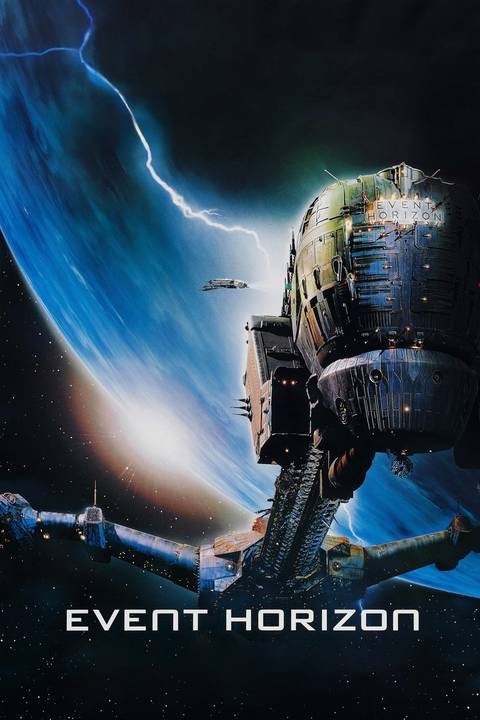
The comparisons to Alien were never completely off base. Anderson has said Alien, 2001: A Space Odyssey, and The Haunting were all screened during pre-production. What critics missed was how differently Event Horizon used those influences. The ship itself was partly inspired by Notre Dame Cathedral, and that influence shows in its towering passageways, shadowy chambers, and gravity drive that looks more like an altar than a piece of machinery (via Space.com). Once Miller and his crew start exploring the ship, those spaces make every hallway and chamber feel like somewhere they were never meant to be.
That lack of a clear explanation is also part of what makes Event Horizon so unsettling. Justin disappears into the gravity drive and comes back catatonic before suddenly trying to launch himself through an airlock. Peters keeps seeing her injured son aboard a ship he could not possibly be on, while Miller is haunted by the crewman he was forced to leave behind during an earlier mission. Even Weir can only describe the place beyond the gateway as a dimension of “pure chaos.” By then, the crew knows the ship brought something back with it. What the movie never does is explain exactly what that something is.
The movie’s rough edges are obvious, especially once everything begins collapsing around Miller’s crew, but that is also when its horror becomes hardest to shake. Weir tears out his own eyes after seeing his dead wife, the original crew’s final recording flashes through mutilation and violence almost too quickly to process, and Miller eventually finds himself facing a transformed Weir inside the gravity-drive chamber. Those scenes are excessive by design, but they also make the Event Horizon feel increasingly corrupted the deeper the crew goes. Nearly three decades later, those are the images people still associate with the movie.
- Release Date
- August 15, 1997
- Runtime
- 95 minutes
- Director
- Paul W. S. Anderson
- Writers
- Andrew Kevin Walker, Philip Eisner
- Producers
- Jeremy Bolt, Lawrence Gordon, Lloyd Levin
KioskNews shows a cleaned-up reading view extracted from the publisher’s page — the original always lives on their site, not ours.