Environmental Impact Assessment: Coexisting with Taiwan’s macaques
Formosan rock macaques raid orchards, snatch hikers’ snacks and disperse seeds in Taiwan’s forests. At Shoushan, coexistence starts with keeping human food out of their reach
By Steven Crook / Contributing reporter


Whether they’re snatching food out of hikers’ hands in Shoushan National Nature Park (壽山國家自然公園) or raiding fruit farms, Formosan rock macaques (Macaca cyclopis) often get bad press.
On several occasions over the past two decades, the Taipei Times and its Chinese-language sister newspaper, the Liberty Times, have reported farmers’ complaints that Taiwan’s only non-human primate species ravages their orange, persimmon, pineapple, pomelo and summer squash crops.
Some believe the apparent increase in human-macaque conflict is due to the number of macaques growing rapidly. But, as Radio Taiwan International reported on Sept. 7, surveys conducted by citizen scientists suggest that the total population “hasn’t changed significantly over the past 20 years, remaining between 250,000 and 300,000.”
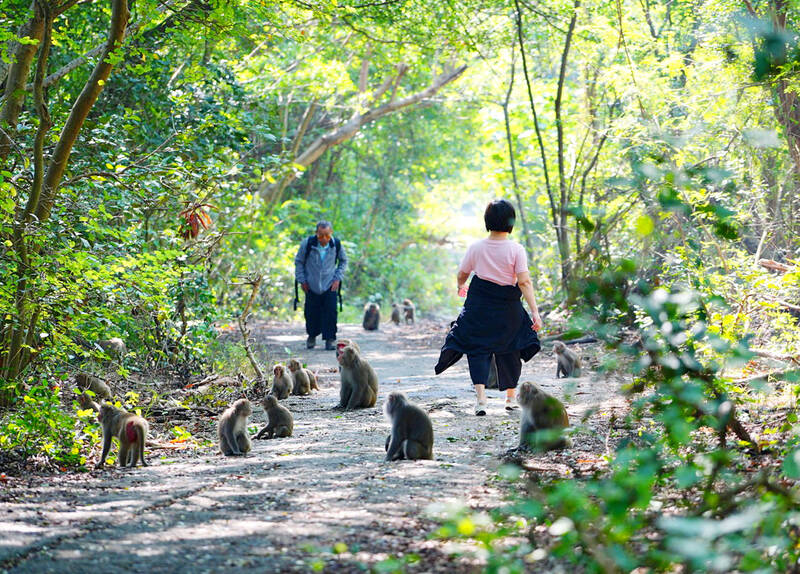
Coexisting peacefully with Taiwan’s non-human primates is easy if you don’t carry in your hands a bag that looks like it could contain food, say those who study macaque behavior.
Photo courtesy of the Association for Coexistence with Macaca Cyclopis
COVID-19 may have exacerbated tensions between Taiwan’s two primate populations. During the pandemic, unable to travel abroad and keen to avoid crowded urban centers, more Taiwanese than ever spent their vacations camping or hiking in hill areas.
Few of those who see macaques as an annoyance are aware that pathogens flow in both directions. Both humans and macaques are susceptible to various diseases, including Cercopithecine herpesvirus, dengue fever, and amebiasis, according to an expert quoted by Taipei Times (Jan. 31, 2024). In humans, all three can be fatal.
WHAT MACAQUES DO FOR THE ECOSYSTEM
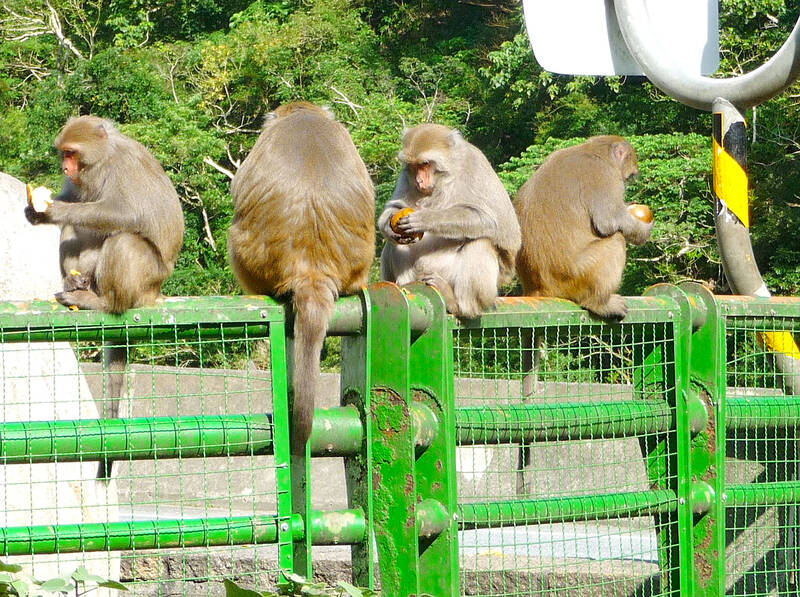
Dengsian Bridge on Highway 23 in Taitung County is famous for the macaques that gather by the roadside.
Photo: Steven Crook
Formosan rock macaques are true omnivores. Researchers have found that they eat more than 300 plant species, consuming fruit, flowers, new leaves and even bark. They also catch caterpillars (which they rub on branches or between their palms to remove the larvae’s irritating hairs), grasshoppers, frogs, lizards and the occasional bird’s egg. They’ve been observed eating soil — a habit scientists believe provides essential minerals such as calcium, potassium and magnesium while neutralizing the bitter defensive compounds in leaves.
Their feeding habits play a crucial ecological role. When they eat figs, berries and other wild fruits, they spit out or defecate seeds hundreds of meters from the parent tree. This dispersal is key to the genetic exchange that keeps tree populations healthy and helps pioneer plants colonize bare, landslide-disturbed ground, reducing erosion.
It’s not surprising if some people think Taiwan is overrun by monkeys. No large wild mammal is as consistently easy to spot in broad daylight as the Formosan rock macaque. Troops numbering 20, 30 and sometimes more than 60 can be spotted in wooded foothills in every county and special municipality on Taiwan’s main island. Most groupings comprise two or more adult males, several adult females and a throng of youngsters.
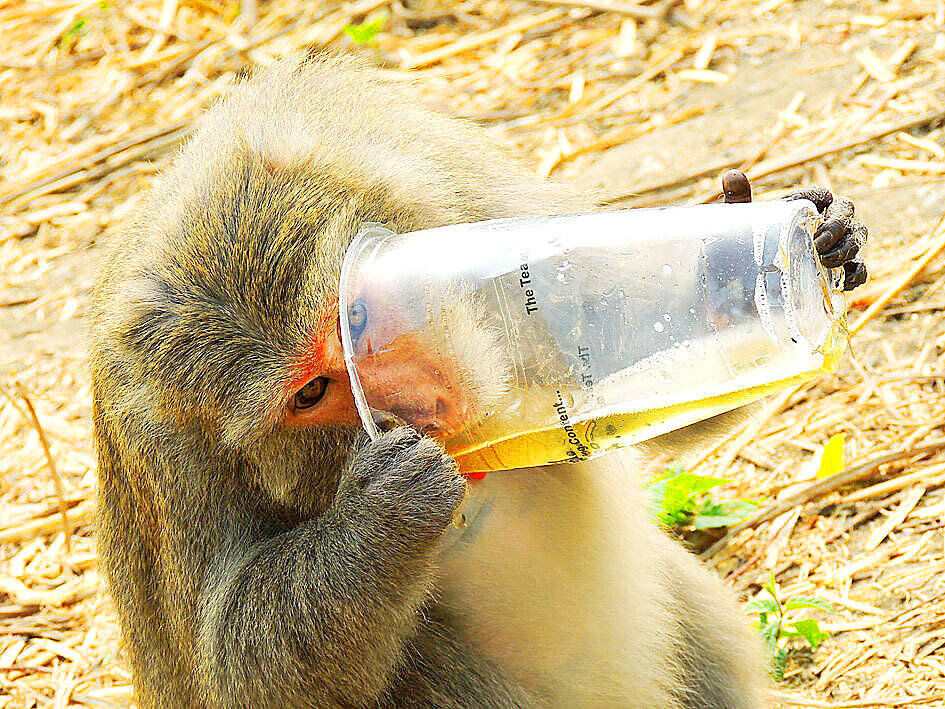
A macaque in Kaohsiung’s Shoushan National Nature Park drinks from a plastic cup.
Photo courtesy of the National Nature Park
According to Lin Mei-yin (林美吟), secretary-general of the Association for Coexistence with Macaca Cyclopis (台灣獼猴共存推廣協會), many people are surprised to learn that “macaques possess a highly cohesive matriarchal society that isn’t male-dominated. Females are the main structure of the macaque community, while males need to move around constantly. To avoid inbreeding, they cannot stay in the same group for long periods.”
This behavior, which naturalists call female philopatry, is displayed by several other local species. Among certain bats, including the Formosan leaf-nosed bat (the largest insectivorous chiropteran on the island), it’s the norm. Young female Formosan sambar deer and Formosan Reeves’s muntjac stay near their mothers, whereas young males disperse when they reach sexual maturity to avoid competition with dominant stags.
‘BAD MONKEYS’?
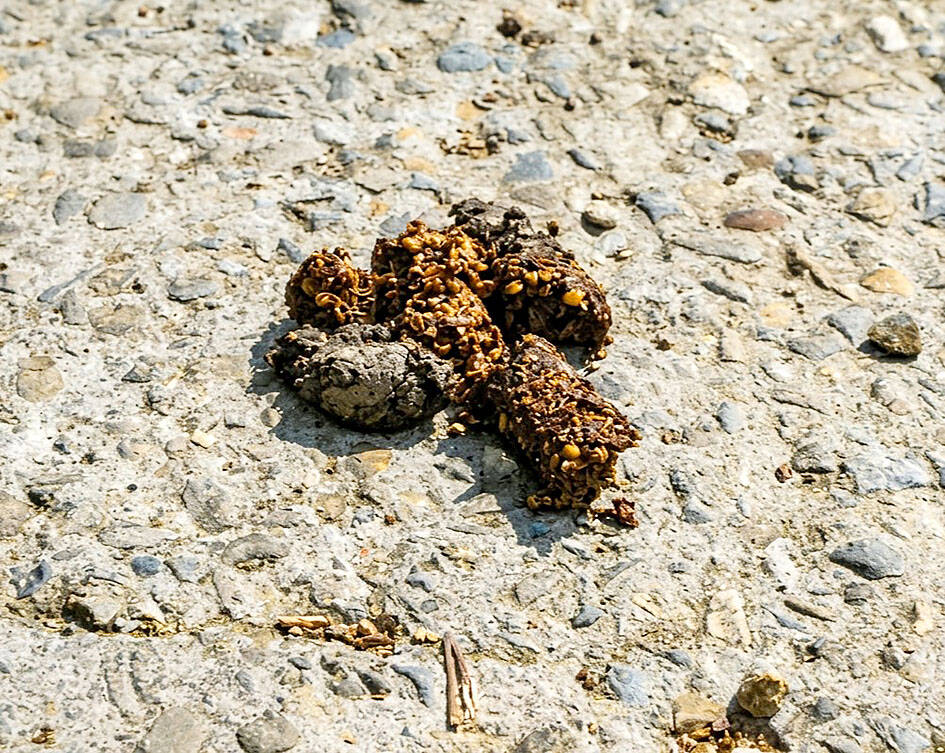
This scat, deposited by a Formosan rock macaque in Nantou County’s Jioujiou Peaks Nature Reserve, suggests a diet that includes fruit, fibrous plant matter, and small seeds.
photo: Steven Crook
Lin concedes that, given the agricultural losses macaques cause, “the label of ‘pest’ may be difficult to remove.” Yet people should remember that these animals and their ancestors have been living in Taiwan since the Middle Pleistocene — far longer than humans — and that they’re simply acting on their foraging instincts. Only after they’ve been educated about the species’ behavior do they understand that macaques grabbing food doesn’t mean they’ve “gone bad,” or that Mother Nature isn’t providing enough sustenance. Rather, it’s because they’ve come to associate the plastic and paper bags humans carry with food, she adds.
Lin describes the overall state of human-macaque relations as “polarized yet gradually improving.” The number of people showing a willingness to peacefully coexist with monkeys — for instance, by joining her association’s guided ecotours — is growing. However, she says, the government’s decision in early 2019 to change the status of the species from “protected wildlife” to “general wildlife” under the Act on Wildlife Conservation (野生動物保育法) led to some individuals believing that Formosan rock macaques can be abused, killed or kept as pets. (The Animal Protection Act (動物保護法) prohibits private ownership, breeding or importation of Macaca cyclopis.)
Urban sprawl and agricultural development in the foothills have fragmented habitats, increasing the overlap between human domains and macaque territories.
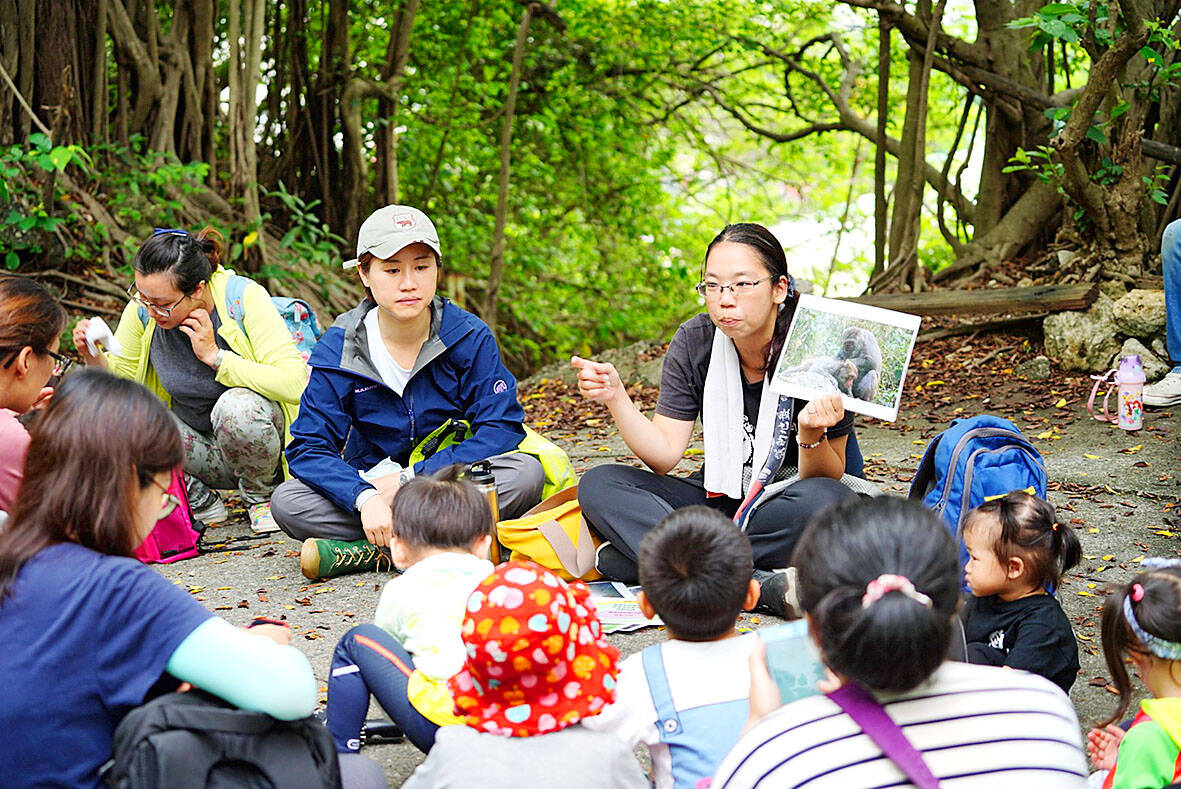
The Association for Coexistence with Macaca Cyclopis aims to help the Taiwanese public better understand the Formosan rock macaque.
Photo courtesy of the Association for Coexistence with Macaca Cyclopis
“At the same time, there’s a lack of connection between macaque habitats. When they come down from higher elevations to find new habitats and form new troops — which is entirely normal behavior — humans perceive it as disturbance,” Lin says.
Asked if the authorities should modify the way they deal with human-macaque conflict, Lin argues in favor of a policy shift from compensating farmers whose crops are damaged and trying to remove troublesome troops, to addressing root causes.
“The government should continue to promote and subsidize electric fences designed to keep monkeys out, while strengthening environmental management around farmlands,” she says.
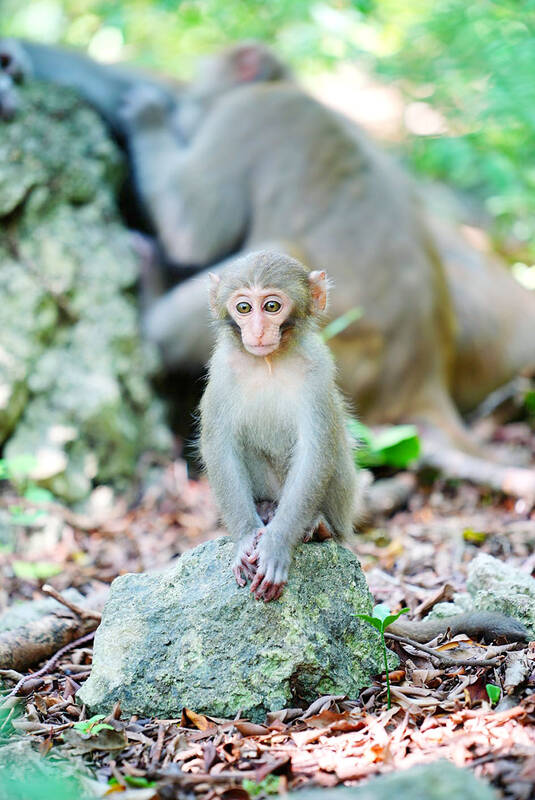
A pest or a precious native animal? The Formosan rock macaque deeply divides public opinion.
Photo courtesy of the Association for Coexistence with Macaca Cyclopis
Lin also hopes all reports of illegal capture can be strictly investigated, and that sites where macaques may interact with tourists be more effectively regulated. Since 2018, anyone who feeds a macaque at Shoushan risks an on-the-spot fine of NT$5,000 to NT$10,000, and park officials have attributed a steep drop in the number of monkeys to their enforcement efforts. In other national parks such as Yangmingshan (陽明山), feeding or provoking wildlife carries a fine of up to NT$3,000.
“Incorporating wildlife coexistence education into daily outreach work could significantly reduce the conflict between residents and macaques. Coexisting with wild animals is something our generation needs to learn,” Lin says.
“We must learn to respect each other’s boundaries, starting with understanding body language and behavioral responses, while managing our own actions, such as not unnecessarily displaying food,” she says. “When we’re willing to replace fear with understanding and vilifying with science education, the humans and wild animals on this island of Taiwan can truly find a balance for peaceful coexistence.”
Steven Crook, the author or co-author of four books about Taiwan, has been following environmental issues since he arrived in the country in 1991. He drives a hybrid and carries his own chopsticks. The views expressed here are his own.
KioskNews shows a cleaned-up reading view extracted from the publisher’s page — the original always lives on their site, not ours.